
Maharashtra
No unlawful assembly of five or more persons in Greater Mumbai from March 14-28: Official

Mumbai, March 13: The Mumbai Police have issued prohibitory order for restricting movement and unlawful assembly of five or more persons from 00.01 hours on March 14 and ending at 24.00 hours on March 28 in Greater Mumbai. The order has been issued by Akbar Pathan, deputy commissioner and executive magistrate on behalf of the Mumbai Police Commissioner.
“Whereas, based on the information received from various sources, ti is apprehended that there is likelihood of breach of peace and disturbance of public tranquility and also there is grave danger to human lives and loss of properties. On that account, ti is considered expedient to issue prohibitory order for restricting movement and unlawful assembly of five or more persons for prevention of breach of peace, disturbance to public tranquility and danger to human lives and loss of properties and to prevent any kind of riot or affray in the areas under the control of Commissioner of Police, Brihanmumbai,” reads the order.
According to the order, procession of any persons and any use of loudspeakers, amplifying instruments, musical band and bursting of crackers in any procession by the assembly have been prohibited.
However, the prohibition contained in the order is exempted for marriage ceremony and matrimonial functions, funeral assemblies and procession on way to crematoriums/burial places,statutory meeting of companies, clubs, co-operative societies, other societies and associations, social gathering and meeting of clubs, co-operative societies, other societies and associations to transact their normal business and assemblies in or around Cinema houses, theatres or any place of public amusement for the purpose of watching films, dramas or performances as the case may be.
In addition, the prohibition contained in the order is exempted for assemblies in or around courts of law and offices of the Government and local bodies in discharge of Governmental or Semi-Governmental functions, assemblies in or around schools, colleges and other educational institutions for academic activities, and assemblies in factories, shops, and establishments for normal trade, business and callings.

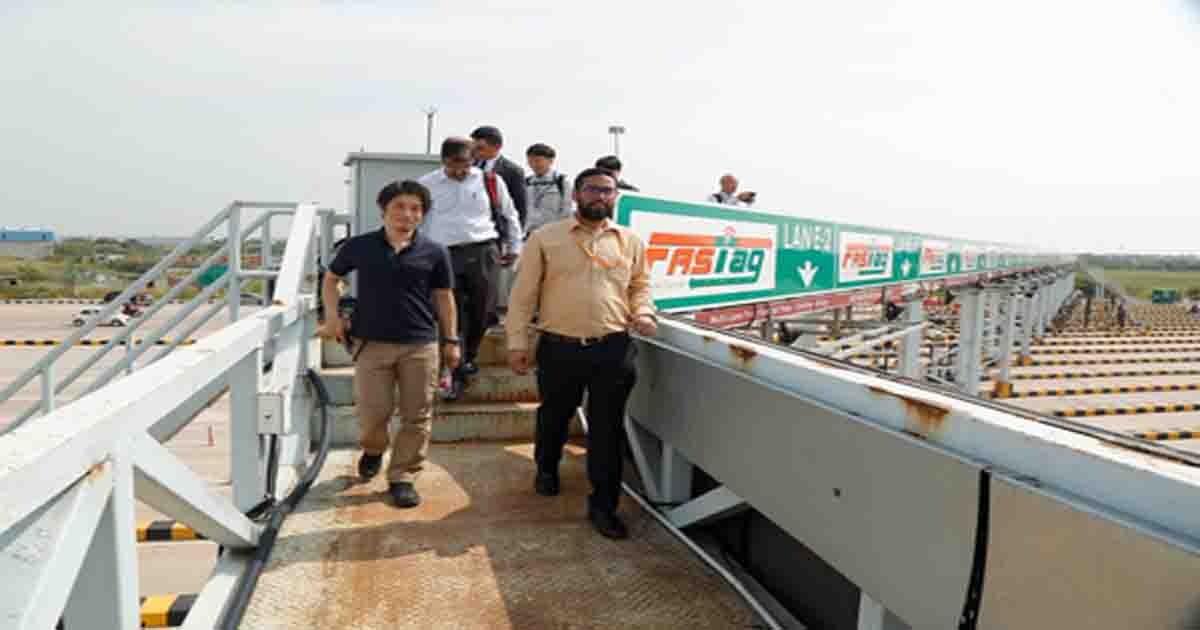
A Japanese delegation visited the Multi-Lane Free Flow (MLFF) tolling system in Mundka-Bakkarwala on Friday on the sidelines of the 12th India–Japan Joint Working Group Meeting on Roads and Road Transportation.
The MLFF system provided insights into India’s technology-driven initiatives for seamless and efficient highway travel.
At the MLFFs, the National Highways Authority of India (NHAI) uses a combination of RFID-based FASTag electronic toll collection, automatic number plate recognition (ANPR) and AI analytics to allow vehicles to pass through charging points without stopping, slowing down or remaining in a designated lane.
MLFFs have already been installed at Choryasi in Gujarat, Mundka in Delhi, Gharaunda in Haryana and Daulatpura and Manoharpura in Rajasthan.
While 12 further locations have been awarded for conversion, tenders have also been launched covering an additional 104 toll plazas around the country.
The MLFF at Choryasi on the Surat–Bharuch section of NH-48 was the first to become operational.
The one at Mundka on Delhi’s Urban Extension Road-II was the second.
The expansion plan represents a significant shift from India’s traditional barrier-based toll plazas.
Rather than moving immediately to satellite-based toll collection, the Indian government has opted to build on the country’s established FASTag system and combine it with ANPR and AI.
Expert committees had recommended further consideration of GPS-based barrier-free tolling because of security, privacy and operational control issues, the Ministry of Road Transport and Highways has indicated.
FASTag and ANPR/AI was thus selected as the technology for the current MLFF programme.
The session of the India–Japan Joint Working Group on Roads and Road Transportation Sector was successfully held at Bharat Mandapam in New Delhi.
Discussions focused on advanced construction technologies, bridge and tunnel engineering, sustainable infrastructure and digital innovations, fostering the exchange of technical expertise and best practices.
“The meeting reaffirmed both nations’ commitment to safe, sustainable and technology-driven road infrastructure, aligned with the vision of Viksit Bharat @ 2047,” the Ministry said in a statement.
Maharashtra
‘Everything exposed’: CM Fadnavis targets Cong, CJP over Prashant Bhushan’s ‘regime change’ remarks

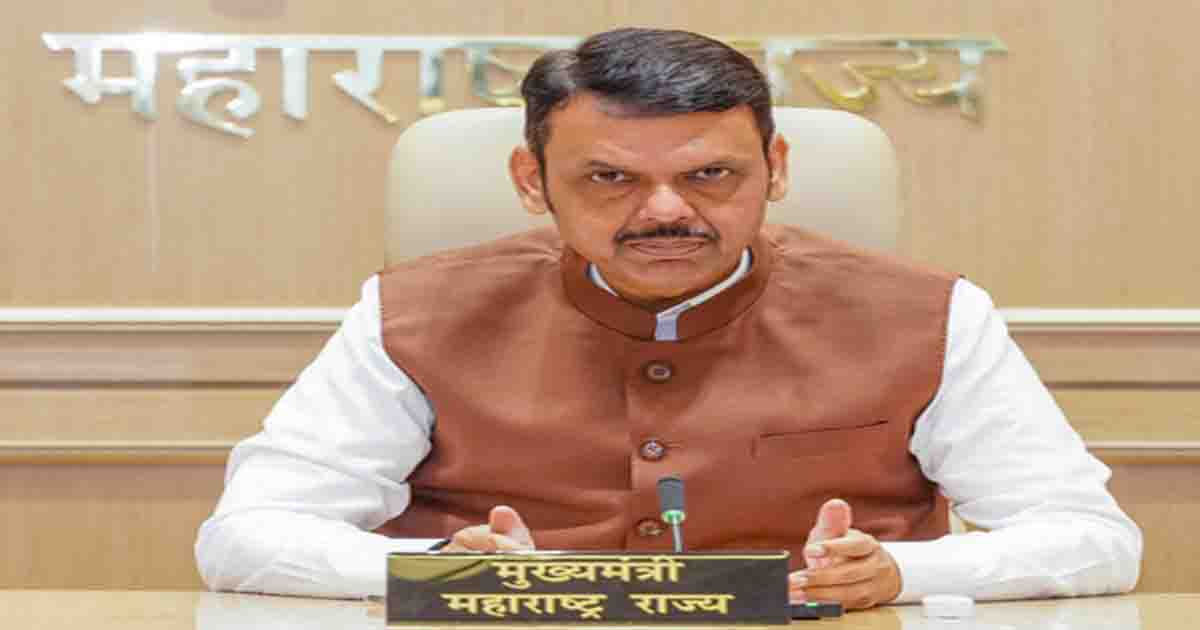
Mumbai, Oct 16: Maharashtra Chief Minister Devendra Fadnavis on Friday launched a scathing attack on the opposition and the CJP, declaring that “the hidden truth is finally out” following the controversial “regime change” statement by senior advocate Prashant Bhushan.
Taking to social media platform X, CM Fadnavis shared a video clip of Bhushan’s remarks, captioning it: “It’s done, bro, everything is exposed!! After all, it was all about ‘Regime Change’.. the hidden thoughts have finally slipped onto the lips.”
CM Fadnavis accused the opposition of using protests as a smokescreen to fuel anarchy and seize power. He alleged that various demonstrations — whether involving students or farmers — alongside campaigns spreading caste and linguistic discord or attempting to tarnish India’s constitutional institutions, are all part of a calculated political game aimed at capturing the seat of power.
The row erupted after Prashant Bhushan, during a press conference alongside CJP representatives and figures like Neha Bora (who previously surfaced during NEET-related protests), openly discussed objectives tied to a “regime change”.
The remarks sparked immediate political fallout. Defence Minister Rajnath Singh also weighed in heavily on the issue, accusing the opposition of exploiting the youth for political mileage and attempting to engineer a Bangladesh-style upheaval in India by undermining key democratic and constitutional institutions.
Following intense backlash and accusations of plotting systemic chaos under the guise of peaceful activism, CJP representatives, including Abhijeet Dipke, scrambled to issue clarifications. In a late-night press conference, Dipke backpedalled on the remarks, asserting that their protests were not aimed at regime change, but rather confined to demanding the resignation of Chief Election Commissioner Gyanesh Kumar. However, ruling coalition leaders maintain that the slip of the tongue has exposed the opposition’s core agenda, providing the Bharatiya Janata Party (BJP) with fresh ammunition to question the motives behind ongoing anti-establishment protests.
Earlier, CM Fadnavis criticised opposition and activist groups while defending Chief Justice of India (CJI) Surya Kant’s decision to decline a meeting with protesters.
Speaking during a media interaction, he accused opposition parties and outfits of running a systematic design to undermine India’s core constitutional institutions and usher in an “ultra-Leftist” brand of anarchy.
Defending the CJI’s refusal to meet demonstrators, CM Fadnavis asked, “Which Constitution states that the Chief Justice of India should meet protesters and marchers?” He emphasised that the CJI acted well within his constitutional rights and praised the judiciary’s stance that grievances must be legally addressed inside courtrooms rather than through street pressure.
CM Fadnavis alleged that a well-crafted conspiracy is underway to systematically devalue independent pillars of democracy, such as the Supreme Court, the Election Commission, and the Reserve Bank of India (RBI). He noted that the ultimate goal of these groups is to convince citizens that constitutional frameworks cannot deliver justice.
Commenting on recent demonstrations — including those by Congress and civil groups — CM Fadnavis distinguished between lawful democratic protest and chaos. Pointing to instances where crowds allegedly crossed the line with provocative sloganeering, he asserted that when thousands with criminal records mobilise to disrupt public order, it amounts to outright anarchy rather than peaceful dissent.
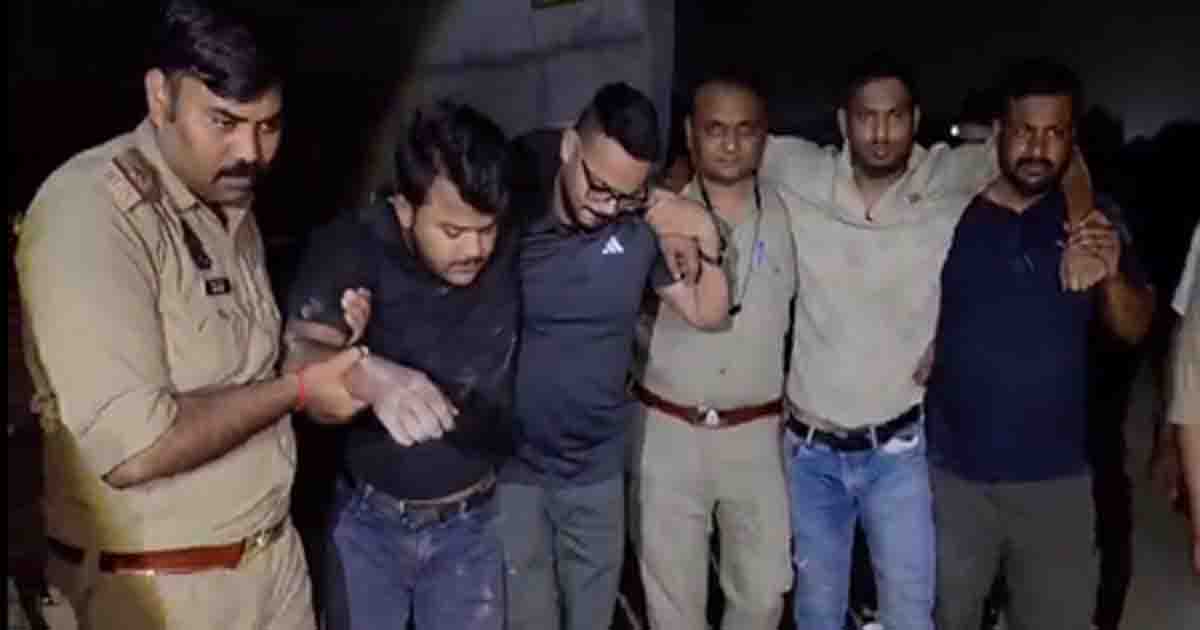
Kanpur, Oct 16: Two wanted accused who were absconding in connection with a cow slaughter incident in the Nawabganj police station area were injured in a police encounter in the Fazalganj police station area in Uttar Pradesh’s Kanpur on Friday.
Police arrested both accused and admitted them to a hospital for treatment. They are being interrogated in connection with the case.
According to police, the cow slaughter incident occurred during the intervening night of October 7 and 8, in the Nawabganj police station area. After cow remains were recovered from the spot, police registered a case under relevant sections of the law.
Teams comprising the Special Weapons and Tactics (SWAT) unit, surveillance, cyber and Nawabganj police were formed to investigate the case. Police arrested one accused on Thursday, while the search for the remaining suspects continued.
On October 16, police received information about the presence of two wanted accused in the Fazalganj police station area. Acting on the tip-off, teams from Fazalganj police station, SWAT, surveillance and the cyber unit jointly launched a search operation and cordoned off the area.
Police claimed that the accused opened fire at the police team with the intention of killing the personnel. In retaliatory firing, both accused sustained gunshot injuries.
The injured accused were subsequently taken to a hospital for treatment. Deputy Commissioner of Police (Central) Atul Srivastava said the accused were being interrogated and that further legal action would be taken based on the facts and evidence gathered during the investigation.
Separately, on October 15, two veterinary officers were suspended over alleged serious negligence in connection with the recent deaths of cattle during heavy rainfall in Badaun.
Departmental action was ordered against the Chief Veterinary Officer, while the Divisional Additional Director was directed to submit a response within 15 days. Suspension and disciplinary action were also recommended against the Block Development Officers of the two blocks concerned.

Nifty, Sensex see firm recovery after RBI’s support to rupee

Trump says Russia ‘asked to be represented’ at G20, would ‘love to have’ Putin

Rights Body flags escalating human rights abuses in Bangladesh during EU meeting

Eight killed as minibus falls into ditch on Delhi-Mumbai Expressway in Rajasthan’s Kota

Delhi Police registers multiple FIRs over violation of prohibitory orders in CP; warns repeat offenders of action

Rahul, Cong ecosystem want to force regime change: BJP after Neha Bora praises B’desh Gen-Z protest

BJP pays tribute to ex-President Abdul Kalam, recalls his enduring influence on generations of India’s youth

Mumbai Cyber Cell arrests 6 members of organized gang in major operation; Beware of cyber fraudsters; Digital arrest has no legal status; DCP Bajrang Bansode

INDIA bloc begins protest march against ECI

Maha Congress stages agitation against Gyanesh Kumar
-

 Crime4 years ago
Class 10 student jumps to death in Jaipur
-

 Maharashtra2 years ago
Mumbai Local Train Update: Central Railway’s New Timetable Comes Into Effect; Check Full List Of Revised Timings & Stations
-

 Maharashtra2 years ago
Mumbai To Go Toll-Free Tonight! Maharashtra Govt Announces Complete Toll Waiver For Light Motor Vehicles At All 5 Entry Points Of City
-

 Maharashtra2 years ago
False photo of Imtiaz Jaleel’s rally, exposing the fooling conspiracy
-

 National News2 years ago
Ministry of Railways rolls out Special Drive 4.0 with focus on digitisation, cleanliness, inclusiveness and grievance redressal
-

 Maharashtra2 years ago
Maharashtra Elections 2024: Mumbai Metro & BEST Services Extended Till Midnight On Voting Day
-

 National News2 years ago
J&K: 4 Jawans Killed, 28 Injured After Bus Carrying BSF Personnel For Poll Duty Falls Into Gorge In Budgam; Terrifying Visuals Surface
-

 Crime2 years ago
Baba Siddique Murder: Mumbai Police Unable To Get Lawrence Bishnoi Custody Due To Home Ministry Order, Says Report