
International News
Trump says Russia ‘asked to be represented’ at G20, would ‘love to have’ Putin

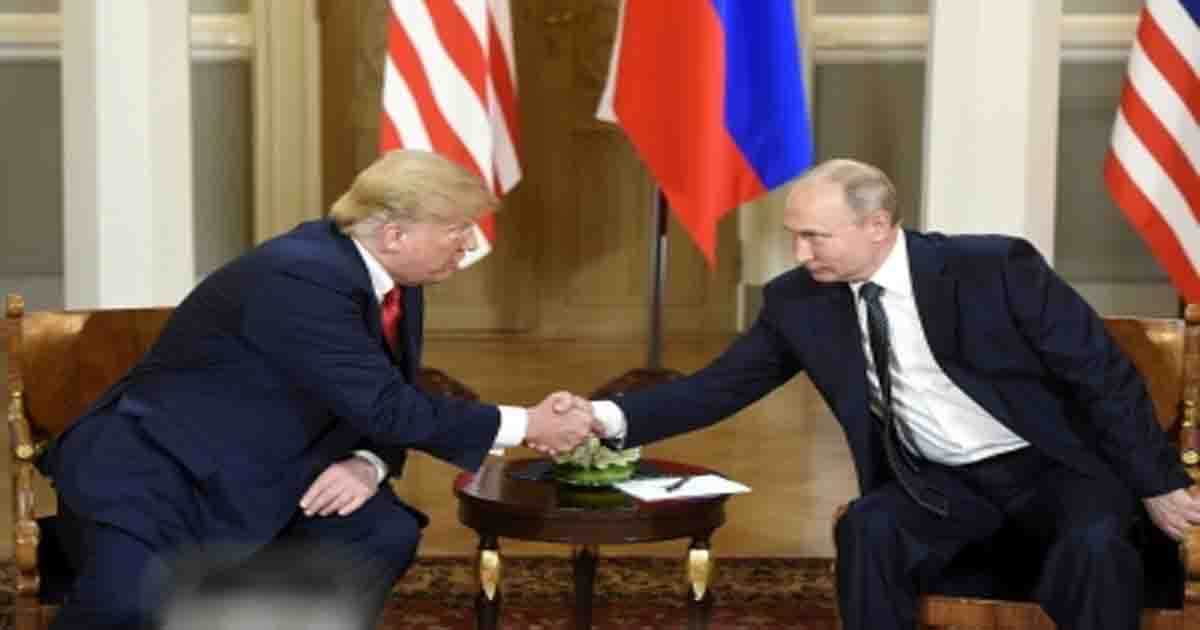
Washington, Oct 17: President Donald Trump said Russia had asked to be represented at the G20 meetings the United States is hosting this year, and that he would welcome Russian President Vladimir Putin.
Asked by reporters at the White House before departing on Marine One whether Putin was coming to the G20, Trump said, “No, no, they asked to be represented. I don’t know if he’s coming. Certainly would love to have him,” he said.
Trump raised the G20 himself while answering a question about fuel prices. “And one more, because on the G20 meetings, you had Russian representatives go to those meetings,” he said.
The United States holds the G20 presidency in 2026. Secretary of State Marco Rubio will host the G20 Foreign Ministers’ Meeting in Atlanta, Georgia, on October 30 and 31, according to the State Department. Trump will host the Leaders’ Summit on December 14 and 15 at Trump National Doral in Miami, Florida, the State Department has said.
Russia and India are both members of the G20. India hosted the grouping’s summit in New Delhi in September 2023.
Trump also said he would like to reach a nuclear deal with China and Russia but is not counting on it happening this year.
On the war in Ukraine, Trump was asked whether he had forgotten that it was Putin who started the war. “Well, you know, I know the details, okay? And at some point I’ll release the details. But I don’t care anything except for one. I want that war ended,” he said.
“25,000 soldiers on average a month are being killed. Last month was 32,000 soldiers,” Trump said. “I deal with both of them. I think they want that war ended there, and I think it’s going to end. That’s all I care about. I want that war to end.”
Asked about restrictions on Ukraine’s use of Starshield, Trump said, “No, we didn’t do that at all.”

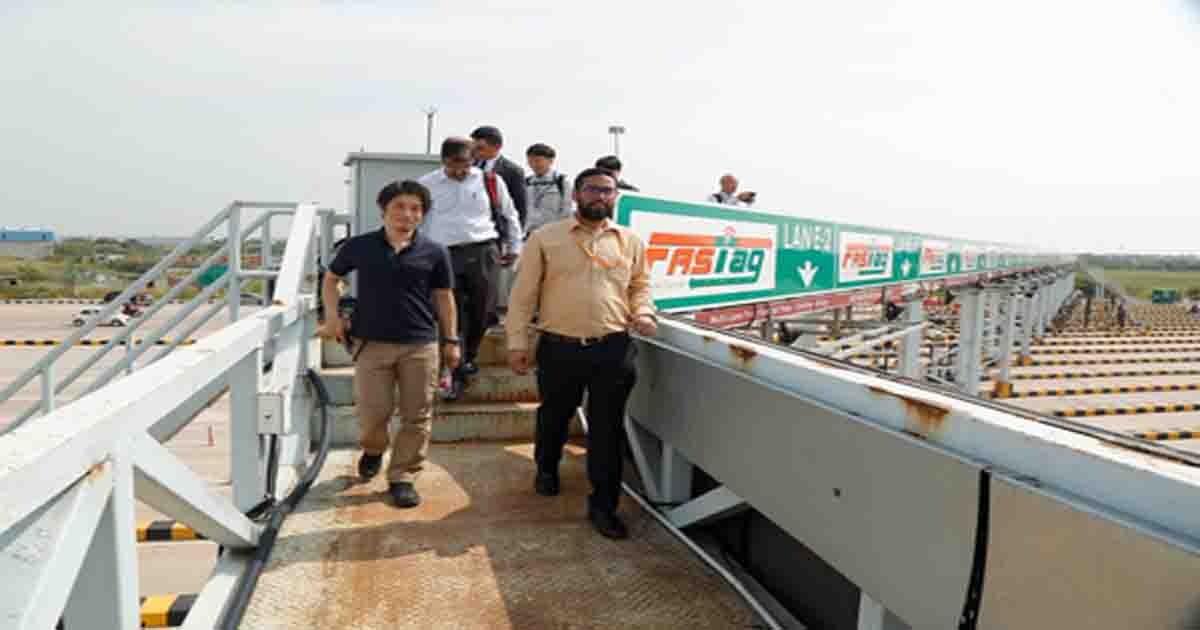
A Japanese delegation visited the Multi-Lane Free Flow (MLFF) tolling system in Mundka-Bakkarwala on Friday on the sidelines of the 12th India–Japan Joint Working Group Meeting on Roads and Road Transportation.
The MLFF system provided insights into India’s technology-driven initiatives for seamless and efficient highway travel.
At the MLFFs, the National Highways Authority of India (NHAI) uses a combination of RFID-based FASTag electronic toll collection, automatic number plate recognition (ANPR) and AI analytics to allow vehicles to pass through charging points without stopping, slowing down or remaining in a designated lane.
MLFFs have already been installed at Choryasi in Gujarat, Mundka in Delhi, Gharaunda in Haryana and Daulatpura and Manoharpura in Rajasthan.
While 12 further locations have been awarded for conversion, tenders have also been launched covering an additional 104 toll plazas around the country.
The MLFF at Choryasi on the Surat–Bharuch section of NH-48 was the first to become operational.
The one at Mundka on Delhi’s Urban Extension Road-II was the second.
The expansion plan represents a significant shift from India’s traditional barrier-based toll plazas.
Rather than moving immediately to satellite-based toll collection, the Indian government has opted to build on the country’s established FASTag system and combine it with ANPR and AI.
Expert committees had recommended further consideration of GPS-based barrier-free tolling because of security, privacy and operational control issues, the Ministry of Road Transport and Highways has indicated.
FASTag and ANPR/AI was thus selected as the technology for the current MLFF programme.
The session of the India–Japan Joint Working Group on Roads and Road Transportation Sector was successfully held at Bharat Mandapam in New Delhi.
Discussions focused on advanced construction technologies, bridge and tunnel engineering, sustainable infrastructure and digital innovations, fostering the exchange of technical expertise and best practices.
“The meeting reaffirmed both nations’ commitment to safe, sustainable and technology-driven road infrastructure, aligned with the vision of Viksit Bharat @ 2047,” the Ministry said in a statement.
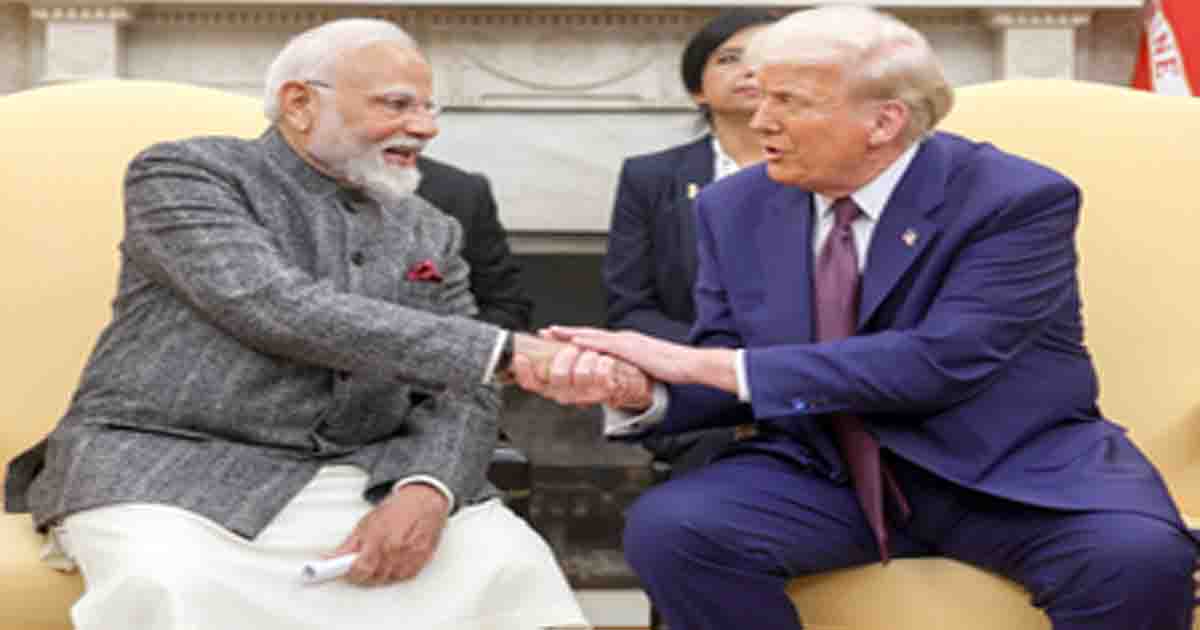
Washington, Oct 16: A long-awaited trade agreement between India and the United States is almost complete, with only one or two per cent of negotiations remaining, a senior US official said, signalling that the two countries are approaching a breakthrough after months of high-level discussions.
The official said the biggest issues had already been resolved and that negotiations were continuing at the highest political levels, including between President Donald Trump and Prime Minister Narendra Modi.
“The biggest items have been settled. I mean …., it’s pretty much done. We have that one, one or two per cent left,” the official told reporters during a State Department briefing on Friday.
The remarks came ahead of Secretary of State Marco Rubio’s scheduled visit to India, where he will hold discussions with Indian government officials and leading business executives in Mumbai and Jamnagar.
The official said the two governments remained in constant contact over the proposed agreement.
“We are actively engaged every single week,” the official said, adding that high-level discussions on the trade deal were taking place regularly.
The official cited recent diplomatic engagements involving US Trade Representative Jamieson Greer, India’s Commerce Minister Piyush Goyal and conversations between Trump and PM Modi as evidence of the momentum behind the negotiations.
However, the official also identified a significant complication that had delayed the agreement.
An earlier understanding had been linked to the International Emergency Economic Powers Act, or IEEPA, but the legal framework had to be reconsidered after the law was struck down, according to the official.
The development forced negotiators to revisit elements of the proposed agreement and contributed to several additional months of discussions.
Despite those complications, the official expressed optimism that the remaining differences could be resolved soon.
Rubio is scheduled to travel first to Uzbekistan for meetings with Central Asian leaders before proceeding to India.
In Mumbai, he will meet Indian government counterparts and senior executives from some of the country’s largest companies.
The official said the decision to visit Mumbai rather than New Delhi reflected the administration’s growing emphasis on commercial diplomacy and Indian investment in the United States.
Rubio will also travel to Jamnagar.
The official said Washington was seeking closer engagement with India across information technology, pharmaceuticals, defence cooperation and other sectors.
Further visits by senior American Cabinet officials are also anticipated next year as both governments seek to expand bilateral engagement.
International News
ISI hikes India espionage budget to Rs 1,300 cr; targets Navy, IAF via HUMINT network

New Delhi, Oct 16: Pakistan’s Inter-Services Intelligence (ISI) has reportedly raised its annual espionage budget targeting India to Rs 1,300 crore following last year’s Operation Sindoor, with funds focused on building a Human Intelligence (HUMINT) network within the Indian Navy and Indian Air Force, according to intelligence officials.
An Intelligence Bureau official said that before Operation Sindoor, the ISI’s budget for espionage against India was Rs 800 to Rs 900 crore.
“However, post Operation Sindoor, there has been a hike in this sum of up to Rs 1,300 crore. The reason why the budget has been hiked is that Pakistan wants to trap high-value targets within India’s defence forces,” the official said.
In recent months, the ISI has been specifically focusing on setting up a massive Human Intelligence (HUMINT) network within the Indian Navy and Air Force.
Offices handling sensitive information are targeted through honey-traps or by exploiting security vulnerabilities. The cost of establishing such networks has risen sharply over the past year, with high-value targets now being paid between Rs 15 lakh and Rs 25 lakh, compared with Rs 10 lakh to Rs 15 lakh before Operation Sindoor.
Another official said the ISI has long sought to establish a human intelligence (HUMINT) network within the Indian armed forces.
“While several such cases have been reported in the past, the current level of urgency and the intensity of efforts are significantly higher than in 2015, 2019 and 2021, when major espionage cases were busted in the Indian Navy,” the official said.
The official added that the espionage cases reported in October 2026 were the most worrying, underscoring the ISI’s intensified efforts to establish a HUMINT network within the Indian Navy.
Coordinated operations by the Andhra Pradesh police in Visakhapatnam, the National Investigation Agency (NIA) and the intelligence agencies have led to the arrest of 18 persons.
They were arrested for allegedly sharing secrets and other sensitive information of the Visakhapatnam Naval Dockyard with Pakistani Intelligence Operatives (PIOs).
What is alarming is that of the 18 arrested, 13 are Indian Navy personnel. The number of Navy personnel who have been trapped as part of this operation by Pakistan only suggests how deep Pakistan seeks to penetrate the system.
This also explains why Islamabad has raised its budgets so drastically to gather sensitive information about the Indian defence forces.
In 2016, there was a major ISI honey-trap crackdown after it was found that several junior-level naval personnel had passed on sensitive information.
In 2001, four naval personnel were arrested for sharing sensitive information. In December 2019, the agencies launched Operation Dolphin Nose to bust a Pakistan-linked honey trap network that was based out of the Eastern Naval Command in Visakhapatnam, the Western Naval Command in Mumbai, and Karwar.
Officials say that this time around the stakes are much higher. Islamabad wants to avenge the humiliation and losses it faced during Operation Sindoor.
During a series of high-level meetings, it was decided to hike spending for espionage-related activities in India. It was also decided that the biggest spending would be to set up a massive HUMINT network in the Indian defence forces.
While budgets to the tune of up to Rs 25 lakh per person were fixed for trapping defence personnel, funding has also been set aside for logistics and SIM card networks, CCTV surveillance modules, and digital and media propaganda.
Officials said the cost of recruiting and operating these networks ranges up to Rs 40,000 per person, depending on the operation. Pakistan is currently focusing heavily on the Indian Navy, followed by the Indian Air Force (IAF).
The aim is to observe the capabilities of both these arms of the Indian armed forces.
Officials say that the earmarking of a higher budget for espionage activities against India is a major cause for concern.
Earlier, a substantial portion of Pakistan’s defence budget was earmarked for such activities. However, these allocations are now under scrutiny and have drawn criticism from political leaders and the public.
“For the current year, Pakistan has allocated a staggering PKR 3 trillion for the defence forces, and this has been questioned by many. To avoid further scrutiny, the army and the ISI have decided to ramp up narcotics, arms and ammunition smuggling and counterfeiting so that it can be used for espionage activities in India,” the officials say.
Another official said that the creation of the HUMINT network within the Indian defence is worrying on various levels. Going by the modus operandi, it does not look like they trapped these personnel for one particular piece of information.
Pakistan wants to play the long game whereby it would keep paying these personnel, who in turn would give information on an almost day-to-day basis. The modus operandi is similar when it comes to the IAF, and Islamabad is looking to build up a major HUMINT network with the hope that its armed forces would have the operational advantage over India, the official said.

Leftist groups accuse cops of harassing women protestors; demonstrate outside Delhi Police HQ

‘Youth power aligned with ‘nation first’ ideology’: HM Amit Shah on ABVP’s Odisha poll victory

One killed as DTC bus runs into pedestrians in Delhi Anand Parbat

Delhi Police rescue 19 women, arrest 10 in raids on two spas in city

Nifty, Sensex see firm recovery after RBI’s support to rupee

Rahul, Cong ecosystem want to force regime change: BJP after Neha Bora praises B’desh Gen-Z protest

BJP pays tribute to ex-President Abdul Kalam, recalls his enduring influence on generations of India’s youth

Mumbai Cyber Cell arrests 6 members of organized gang in major operation; Beware of cyber fraudsters; Digital arrest has no legal status; DCP Bajrang Bansode

INDIA bloc begins protest march against ECI

Maha Congress stages agitation against Gyanesh Kumar
-

 Crime4 years ago
Class 10 student jumps to death in Jaipur
-

 Maharashtra2 years ago
Mumbai Local Train Update: Central Railway’s New Timetable Comes Into Effect; Check Full List Of Revised Timings & Stations
-

 Maharashtra2 years ago
Mumbai To Go Toll-Free Tonight! Maharashtra Govt Announces Complete Toll Waiver For Light Motor Vehicles At All 5 Entry Points Of City
-

 Maharashtra2 years ago
False photo of Imtiaz Jaleel’s rally, exposing the fooling conspiracy
-

 National News2 years ago
Ministry of Railways rolls out Special Drive 4.0 with focus on digitisation, cleanliness, inclusiveness and grievance redressal
-

 Maharashtra2 years ago
Maharashtra Elections 2024: Mumbai Metro & BEST Services Extended Till Midnight On Voting Day
-

 National News2 years ago
J&K: 4 Jawans Killed, 28 Injured After Bus Carrying BSF Personnel For Poll Duty Falls Into Gorge In Budgam; Terrifying Visuals Surface
-

 Crime2 years ago
Baba Siddique Murder: Mumbai Police Unable To Get Lawrence Bishnoi Custody Due To Home Ministry Order, Says Report