
National News
NIA has over 93% conviction rate, highest among all probe agencies: Amit Shah


Union Home Minister Amit Shah on Thursday said the National Investigation Agency (NIA) has the highest conviction rate of 93.25 per cent among all probe agencies in the country.
Speaking at the 13th NIA Raising Day, Shah added that in a short span of 13 years, the Agency has registered more than 400 cases, filed charge sheets in 349 cases, arrested 2,494 accused, as well as convicted 391 accused.
The Union Home Minister said the NIA must further strive for 100 per cent conviction rate and recognition as a world-class probe agency.
Under Prime Minister Narendra Modi’s vision for a terror-free India, he added that in recent years, the NIA and the Unlawful Activities (Prevention) Act has been strengthened after amendments by Parliament.
“Earlier, the NIA had the right to declare any terror outfit as terrorist organisation but now any individual can also be declared as terrorist and so far 36 ultras of different terror outfits have been declared individual terrorist under the amended UAPA,” the Home Minister said, adding that now the NIA has been authorised to probe terror cases related to endangering the interests of the country or Indian nationals abroad as well.
Shah said putting an end to terrorism is necessary for keeping human rights intact.
Referring to investigations conducted by the NIA in Jammu and Kashmir, the Home Minister said the Central probe agency has destroyed the terror funding channels of terrorists in the union territory.
For the first time in 2018-19 the NIA acted on dismantling the terror funding channels in the union territory and choked all pipelines that used to feed the terrorists there, he added.
“Now it is almost impossible to send terror funding in the union territory, for this all credit goes to NIA,” Shah said.
He added that the NIA has registered many cases against overground workers and sleeper cells of terror outfits during 2021-22 and dismantled the supply of weapons and logistics.
A total of 105 cases have been registered by the NIA in left wing extremism regions in which 876 people have been named and 796 have been arrested while in 94 cases, charge sheets have been filed and 100 accused have convicted so far, the Home Minister said.
He added that the police and probe agencies must adopt new investigation techniques based on data and digital evidences and information.
“We need to create database and with the help of digital forensic. Recently, the NIA has been assigned to create a national database on narcotics, fake currencies, terror funding, bomb explosion, and terrorism and the agency has been executing this well.
“Once this national database is created, this will be shared by all the probe agencies, including state police and the data of the states will also be shared by these national agencies which will help in faster investigation which will eventually lead to higher rate of convictions,” the Home Minister said, adding that if the data is stacked separately it is trash.


Business
Viksit Bharat and Samunnat Nepal: 10-pillar roadmap to reshape, deepen ties between India and Nepal

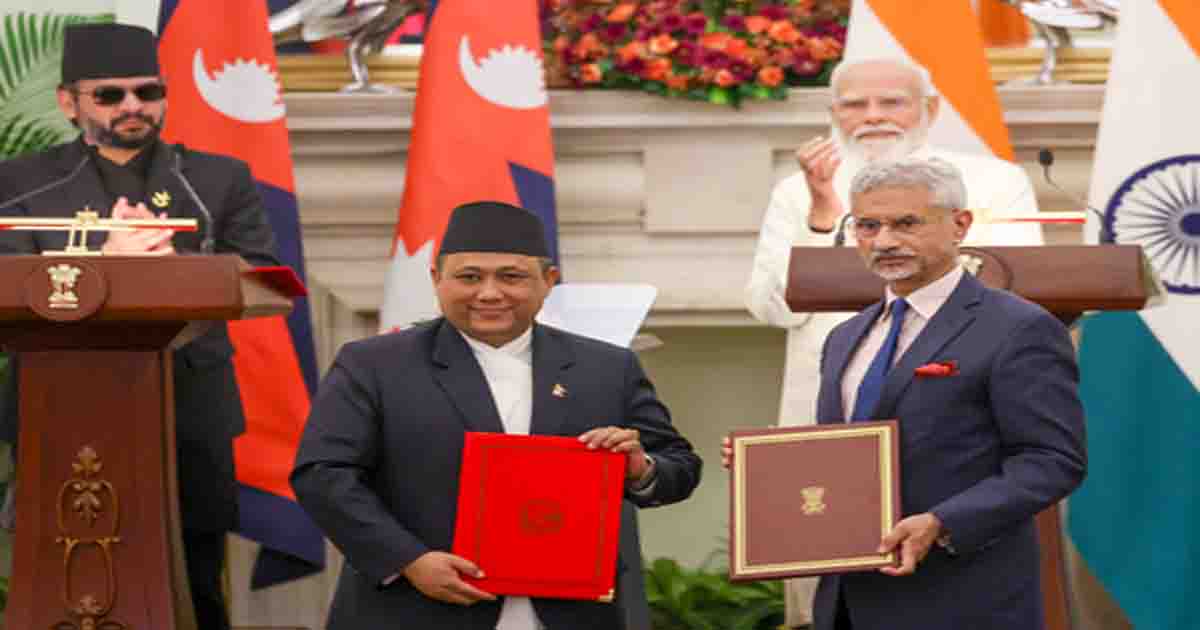
Nepal and India on Monday unveiled a 10-pillar joint vision aimed at reshaping their bilateral partnership and providing a roadmap for future cooperation.
The 10 pillars of the joint vision cover economic and development cooperation, physical and digital connectivity, energy and water resources, climate resilience, good governance, technology and innovation, education and skills development, sports, culture and tourism, health, and agriculture.
Titled ‘Viksit Bharat and Samunnat Nepal: Re-imagining the Partnership’, the joint vision was adopted during Nepali Prime Minister Balendra Shah’s two-day State Visit to India at the invitation of his Indian counterpart, Prime Minister Narendra Modi.
The first pillar of the joint vision document is ‘Comprehensive Economic and Development Partnership’. Under this pillar, the two countries agreed to review existing frameworks and agreements governing trade and investment to facilitate a more comprehensive economic partnership. They will also explore new transit connectivity arrangements and air routes to improve access between the two countries.
The document states that India’s national vision of ‘Viksit Bharat 2047’ and Nepal’s aspiration of ‘Samunnat Nepal’ have several complementarities that could be leveraged to further strengthen the extensive economic ties between the neighbouring countries.
Under this pillar, the two countries will cooperate in establishing cross-border special economic zones and industrial parks near the Nepal-India border. These zones are expected to promote export-oriented manufacturing and strengthen links with regional supply chains in manufacturing and other processing industries.
Under the second pillar, titled ‘Physical and Digital Connectivity’, the two sides will also cooperate in developing information technology parks, while India will encourage investment in Nepal’s priority sectors.
The joint vision document says that arrangements will be pursued to enhance investor confidence and improve the ease of doing business in Nepal.
Nepal and India have agreed to accelerate several cross-border connectivity projects, including railway links, integrated check posts, petroleum pipelines and digital payment systems, with a view to strengthening economic cooperation and people-to-people ties.
The third pillar is ‘Energy, Water Resources and Climate Resilience’. The two countries have agreed to strengthen cooperation in hydropower development, cross-border electricity trade, water resources management and climate resilience, with a focus on promoting investment, accelerating multipurpose projects and improving disaster preparedness.
Good Governance is the fourth pillar of the joint vision document. Under this pillar, the two countries have agreed to strengthen cooperation through the exchange of digital technology, technical expertise and best practices, while expanding training opportunities for civil servants and cooperation between government institutions.
Under the agreement, India and Nepal will exchange technical expertise and best practices in digital public infrastructure, covering digital identity, payment systems and e-governance. Such cooperation will be pursued in accordance with globally recognised principles of digital sovereignty and data protection and will support the implementation of Nepal’s Digital Nepal Framework.
The fifth pillar is ‘Technology, Space and Innovation’. Under this pillar, the two countries have agreed to deepen cooperation in technology, innovation and space research, including plans to establish a Startup Centre of Excellence in Kathmandu and a Digital Nomads and Innovation Hub in Pokhara, in western Nepal.
The sixth pillar is ‘Education and Skill Development’. Under this pillar, the two countries have agreed to strengthen cooperation in education and skill development, including exploring the establishment of a branch campus of an Indian Institute of Technology (IIT) in Nepal and expanding scholarship opportunities for Nepali students in emerging academic disciplines.
Sports is the seventh pillar of the joint vision. Nepal and India have agreed to strengthen cooperation in sports development, including establishing a national cricket coaching and training academy in Nepal with Indian support and expanding opportunities for Nepali players to train in India.
Under the agreement, India will support the establishment of a national cricket coaching and training academy in Nepal, alongside the development of cricket infrastructure at both national and provincial levels.
Players from Nepal’s provincial cricket teams will also be given opportunities to train at national cricket training academies in India.
Nepal and India have agreed to strengthen cultural and tourism cooperation by developing cross-border religious tourism circuits, organising annual youth cultural festivals and promoting collaboration between universities and tourism entrepreneurs.
These initiatives are outlined under the eighth pillar, titled ‘Culture and Tourism’. The two countries will work together to develop religious tourism circuits and new destinations by linking important cultural and pilgrimage sites in both countries.
The proposed initiatives include a Ramayana circuit connecting Janakpur in Nepal with Ayodhya in India; a Buddhist circuit linking Lumbini, Bodhgaya, Sarnath and Kushinagar; and a Shiv-Shakti circuit connecting Kathmandu’s Pashupatinath Temple with Varanasi. Sister-city agreements will also be pursued to strengthen these links.
Under the ninth pillar, ‘Health’, the two countries have agreed to strengthen cooperation in the health sector, including upgrading Nepal’s National Medical Laboratory, establishing Jan Aushadhi Kendras to provide affordable medicines and expanding healthcare infrastructure across the country.
The 10th pillar is ‘Agriculture’. Under this pillar, the two countries have agreed to strengthen cooperation in agriculture and livestock development, including establishing an agro-industrial park in Chitwan with grant assistance from India to promote value addition to Nepali agricultural products.
The proposed agro-industrial park will aim to increase the value of agricultural products by supporting processing and other value-addition activities. The document states that India will provide grant assistance for its establishment.
The two countries have also agreed to expedite the implementation of the 2026–2030 Work Plan between India’s Indian Council of Agricultural Research (ICAR) and Nepal’s Nepal Agricultural Research Council (NARC).
As part of efforts to strengthen Nepal’s agricultural and livestock sectors, India will organise specialised training programmes for Nepali government officials, farmers and other agriculture-related professionals.
The two countries have also agreed to activate a High-Level Monitoring Group to accelerate the implementation of bilateral projects and initiatives. The mechanism will meet at least once every six months.
The monitoring group will be led by Nepal’s Foreign Secretary and India’s Ambassador to Nepal. It will oversee the implementation of projects and initiatives envisaged under the joint vision document and facilitate the necessary clearances and approvals to expedite their execution.
The two Prime Ministers also agreed that the monitoring group will submit its reports to the India-Nepal Joint Commission, which is co-chaired by the foreign ministers of both countries.
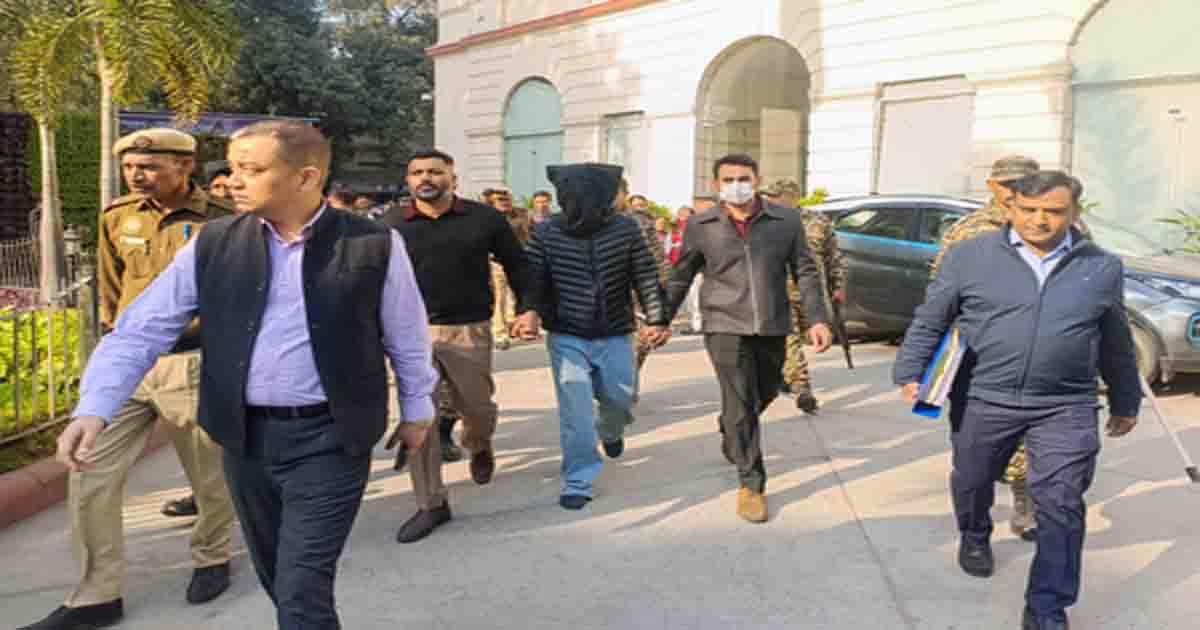
The Supreme Court on Monday dismissed a plea filed by Jasir Bilal Wani alias Danish, an accused in the Red Fort blast case, seeking default bail on the ground that the National Investigation Agency (NIA) had failed to file its chargesheet within the 90-day period of custody.
A Bench of Justices Prashant Kumar Mishra and Shree Chandrashekhar refused to interfere with the Delhi High Court’s decision rejecting Wani’s claim for default bail, observing that the High Court had rightly applied the law governing the extension of the investigation period under the Unlawful Activities (Prevention) Act (UAPA), read with Section 187 of the Bharatiya Nagarik Suraksha Sanhita (BNSS).
Wani had contended that he was entitled to default bail after 90 days of custody, as the NIA had not filed the chargesheet within the statutory period. He argued that following the enactment of the BNSS, the extended investigation period of up to 180 days under Section 43D(2) of the UAPA could no longer be invoked in his case.
Earlier, the Delhi High Court, in its judgment passed on August 18, held that the provision allowing the investigation period to be extended up to 180 days under the UAPA continued to apply even after the enactment of the BNSS.
The High Court had ruled that the reference to Section 167 of the erstwhile Code of Criminal Procedure (CrPC) in Section 43D(2) of the UAPA must be construed as a reference to the corresponding provision under Section 187 of the BNSS in terms of Section 8(1) of the General Clauses Act, 1897. “Thus, the Appellant is not entitled to default bail after 90 days merely because there is no reference to Section 187 of the BNSS in Section 43D(2) of the UAPA,” the High Court had observed.
The High Court further held that Wani had lost his right to challenge the extension of the investigation period by failing to assail the initial extension order at the appropriate stage. It found that the trial court had granted the first extension on February 13, 2026, but Wani challenged it only subsequently, after the second extension and rejection of his default bail application.
The NIA had initially sought an extension of the investigation period beyond 90 days, citing the need for further investigation. The trial court granted an additional 45 days on February 13, 2026, taking the period to 135 days, and subsequently allowed another extension of 45 days on March 27, 2026, extending the permissible period to 180 days.
Wani had moved an application seeking default bail on February 15, 2026, under Section 187(3) of the BNSS. However, the trial court rejected his plea on March 30, 2026, following which he approached the Delhi High Court challenging the extension orders and denial of default bail.
During the pendency of the matter before the High Court, the NIA filed its chargesheet against Wani on May 14, 2026. A Bench of Justices Prathiba M. Singh and Vikas Mahajan subsequently held that he could not claim default bail on the basis of the expiry of the initial 90-day period.
Wani was arrested on November 17, 2025, in connection with the November 10, 2025, vehicle-borne improvised explosive device (VBIED) blast near the Red Fort in Delhi, which claimed 11 lives and left several others injured.
The NIA has named Wani among the 10 accused in its 7,500-page chargesheet in the case. The anti-terror agency has alleged that the accused were associated with Ansar Ghazwat-ul-Hind (AGuH), an outfit considered an offshoot of Al-Qaida in the Indian Subcontinent. The alleged mastermind, Dr Umer Un Nabi, was killed in the explosion.
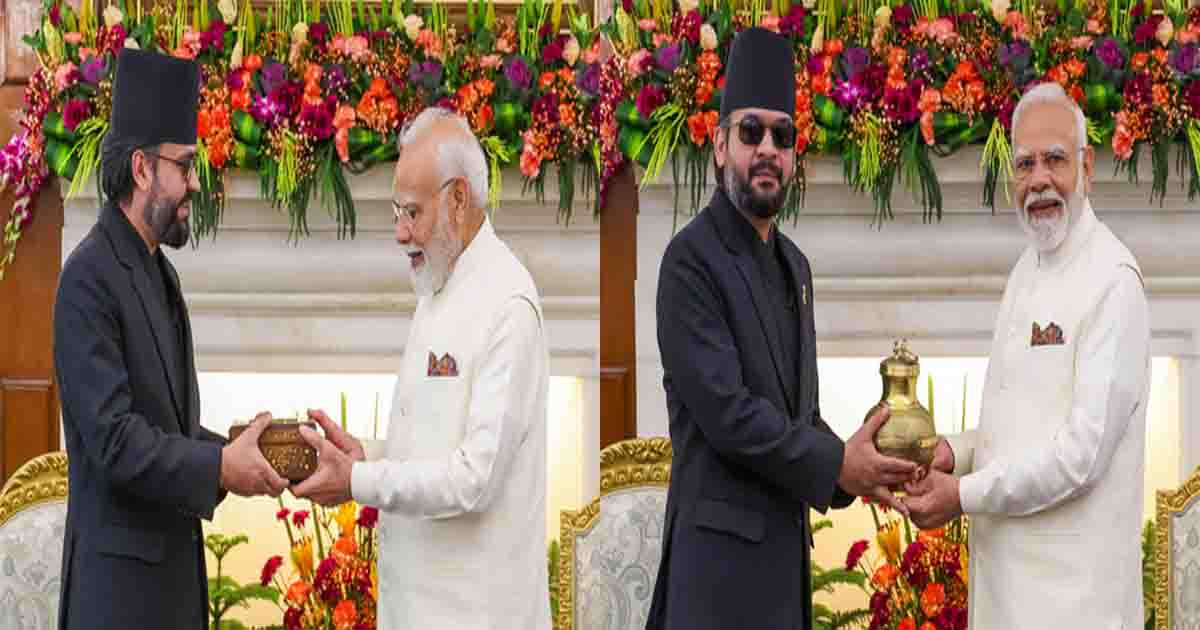
Highlighting the deep-rooted religious, cultural and civilisational ties between India and Nepal, Prime Minister Narendra Modi on Monday presented sacred Ganga Jal from Kashi in a brass urn, a Banarasi brocade stole in a Sadeli box and a Kalamkari Sampoorna Ramayana painting to Nepali PM Balendra Shah during his State Visit to India.
The sacred Ganga Jal from Kashi, presented in an intricately crafted brass urn, symbolises purity, devotion and divine blessings. Originating from the holy Ganga near the revered Kashi Vishwanath Temple, the offering holds special significance in reflecting the spiritual bond between Baba Vishwanath of Kashi and Lord Pashupatinath of Kathmandu, both revered manifestations of Lord Shiva.
The gift symbolises the deep-rooted religious, cultural and civilisational ties between India and Nepal, conveying blessings of peace, prosperity and spiritual unity while strengthening the enduring friendship between the two nations.
Prime Minister Modi also presented a Banarasi brocade silk stole from Varanasi, featuring intricate motifs and shimmering zari work crafted by skilled master weavers. The stole is presented in an exquisite Sadeli box from Gujarat, showcasing intricate geometric inlay and traditional woodworking.
Together, the two creations celebrate the rich artisanal heritage, generational craftsmanship and cultural legacy of Varanasi and Gujarat, reflecting India’s enduring tradition of handmade excellence.
The third gift was a monumental Kalamkari Sampoorna Ramayana painting, depicting the major episodes of Lord Rama’s journey, from his birth and exile to the victory over Ravana and return to Ayodhya.
Hand-painted on cotton in the traditional Srikalahasthi style of Andhra Pradesh using a bamboo pen (kalam) and natural dyes, the artwork showcases India’s rich heritage of storytelling, devotion and traditional craftsmanship.
The painting also symbolises the enduring spiritual and cultural bond between India and Nepal, connecting Ayodhya, the land of Lord Rama, with Janakpur, revered as the birthplace of Goddess Sita, and reflecting the shared heritage, friendship and values of the two nations.

Viksit Bharat and Samunnat Nepal: 10-pillar roadmap to reshape, deepen ties between India and Nepal

Shahid Kapoor and Saif Ali Khan catch up with warm hugs and cheerful banter

SC upholds Delhi HC order denying default bail to Red Fort blast accused

PM Modi gifts Ganga Jal from Kashi, Kalamkari Ramayana painting to Balendra Shah

Three youths killed, two injured as car crosses divider and collides with truck in Pune

Congress trying to protect 3 crore Bangladeshi infiltrators in voter list: HM Shah

Red Fort car blast probe exposes blueprint for spread of terror modules across India

Trump flags Iran targets as talks continue

‘Conspiracy, not accident’: NCP on Ajit Pawar death

BJP, Shiv Sena slam Mallikarjun Kharge for terming Diwali ‘Khushiyon ka Eid’
-

 Crime4 years ago
Class 10 student jumps to death in Jaipur
-

 Maharashtra2 years ago
Mumbai Local Train Update: Central Railway’s New Timetable Comes Into Effect; Check Full List Of Revised Timings & Stations
-

 Maharashtra2 years ago
Mumbai To Go Toll-Free Tonight! Maharashtra Govt Announces Complete Toll Waiver For Light Motor Vehicles At All 5 Entry Points Of City
-

 Maharashtra2 years ago
False photo of Imtiaz Jaleel’s rally, exposing the fooling conspiracy
-

 National News2 years ago
Ministry of Railways rolls out Special Drive 4.0 with focus on digitisation, cleanliness, inclusiveness and grievance redressal
-

 Maharashtra2 years ago
Maharashtra Elections 2024: Mumbai Metro & BEST Services Extended Till Midnight On Voting Day
-

 National News2 years ago
J&K: 4 Jawans Killed, 28 Injured After Bus Carrying BSF Personnel For Poll Duty Falls Into Gorge In Budgam; Terrifying Visuals Surface
-

 Crime2 years ago
Baba Siddique Murder: Mumbai Police Unable To Get Lawrence Bishnoi Custody Due To Home Ministry Order, Says Report