
International News
New video links timing of school strike to US attack on nearby IRGC facility in Iran: Media

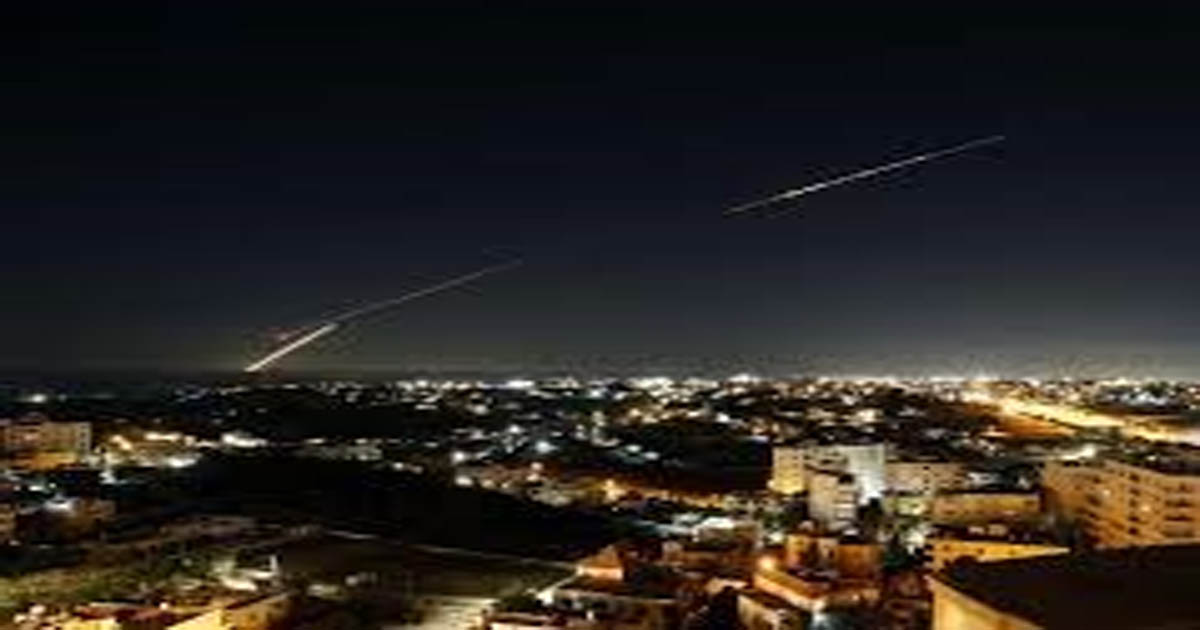
Washington, March 9: A newly emerged video appears to show a US airstrike targeting a building at an Islamic Revolutionary Guard Corps (IRGC) naval base in Minab, Iran, adjacent to an elementary school where Iranian state media says more than 160 pupils were killed on February 28.
The footage, posted by the semi-official Iranian news agency Mehr News, is the first to show missiles striking the area and adds to a growing body of evidence that appears to contradict recent claims by US President Donald Trump casting blame on Iran, Xinhua news agency reported quoting the CNN report.
In the footage, filmed from a nearby construction site, a munition consistent with a US Tomahawk Land Attack Missile (TLAM) can be seen before striking a location inside the IRGC base, said the report, noting that Israel does not operate the Tomahawk missile.
Sam Lair, a research associate at the James Martin Center for Nonproliferation Studies, told CNN the munition in the video matches the characteristics of a Tomahawk missile.
“First, it fits the visual characteristics of a TLAM. The cruciform shape with centrally mounted wings and a tailkit at the back. Second, the video was taken about 250 meters from the likely impact point. That means the munition has to be large. This rules out other munitions in the US stockpile with similar visual characteristics like the GBU-69B,” Lair was quoted as saying.
“The geolocated video shows a cruise missile hitting one of the centrally located buildings at the base,” said Lair, adding that while the video does not show the moment of impact on the school, it “was likely part of the same strike and would have been accompanied by other, similar cruise missiles.”
Other weapons experts CNN has consulted agreed with the assessment, said the media outlet.
Trump on Saturday blamed Iran for the Minab school strike, despite analyses from CNN and multiple other media outlets.
Iran has blamed the United States for the Minab school strike, according to Iranian state media.
At least 1,332 Iranian civilians, including women and children, have been killed and thousands more injured since US-Israeli airstrikes on Iran were launched on February 28, Iran’s UN ambassador Amir Saeid Iravani said Friday.

Business
G7 Summit: PM Modi, Prez Trump discussed West Asia, India-US trade deal & bilateral cooperation across sectors: MEA

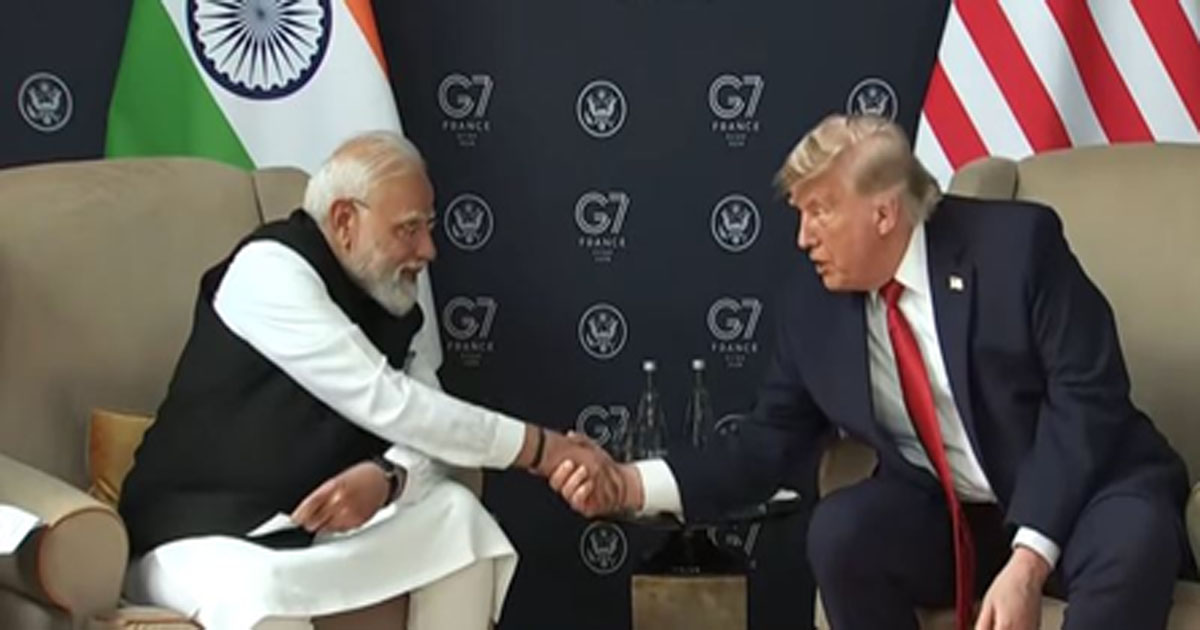
Evian (France), June 18: The Ministry of External Affairs (MEA) said on Thursday in an official statement that Prime Minister Modi met the US President Donald Trump on the sidelines of the G7 Summit in France’s Evian and discussed end of West Asia conflict, significant progress in the India-US interim trade deal and bilateral cooperation in terms of defence, strategic technologies, energy, and trade sectors between the two countries.
Prime Minister Modi commended President Trump for his efforts that had resulted in an understanding to end the ongoing conflict in West Asia and restore peace and stability across the broader region, the MEA statement said.
The Prime Minister also underlined the importance of maintaining freedom of navigation and unimpeded commerce in the Strait of Hormuz and the need to ensure the safety of seafarer, the MEA statement added.
Taking to his official social media plaform X, PM Modi said: “Pleased to meet President Trump in Evian. We reviewed the sustained progress in our bilateral cooperation in trade, energy, defence, technology and people-to-people ties. Conveyed India’s appreciation on the progress in the efforts for restoring peace and stability in West Asia. Keeping the Strait of Hormuz open is vital for the global economy. Reiterated the importance of ensuring the safety and security of civilians, including seafarers.”
“Both PM Modi and President Trump reviewed the substantial progress achieved under the India–US COMPACT (Catalysing Opportunities for Military Partnership, Accelerated Commerce and Technology) since their meeting in Washington D.C. in February 2025,” the MEA said in the statement.
The two leaders welcomed key developments across the defence, strategic technologies, energy, and bilateral trade sectors, the MEA statement added.
“The leaders noted with particular satisfaction the significant progress made in negotiations towards an interim Bilateral Trade Agreement and instructed their officials to work towards a “balanced, mutually beneficial, and commercially meaningful agreement at the earliest”. The US Trade Representative Jamieson Greer, will be visiting India next week in this connection.”
“Prime Minister Modi and President Trump reaffirmed their commitment to further strengthening the India-US Comprehensive Global Strategic Partnership and advancing cooperation across all domains for the mutual benefit of the two countries and their people,” the MEA added.
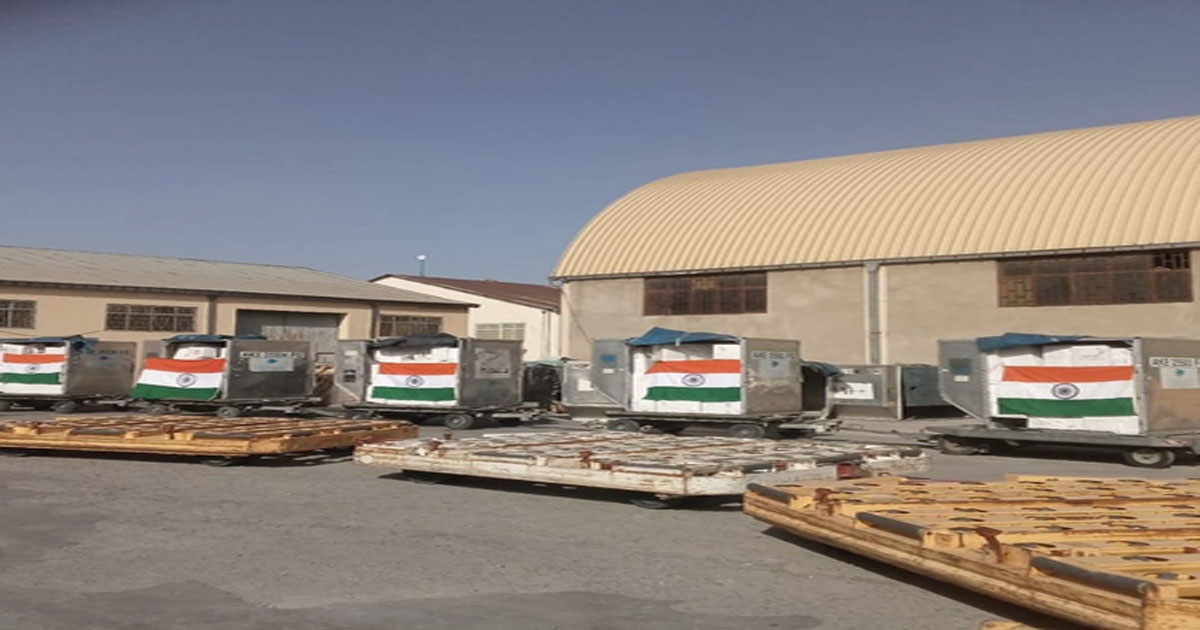
Kabul/ New Delhi, June 17: Continuing with its humanitarian support for Afghanistan, India on Wednesday delivered another 5 tonnes of essential medicines to Kabul, reflecting its long-standing commitment to the welfare and well-being of the Afghan people.
Taking to X, the Ministry of External Affairs (MEA) spokesperson, Randhir Jaiswal, said, “India delivers another 5 tonnes of essential medicines to Kabul, reaffirming its enduring commitment to humanitarian assistance and the well-being of the Afghan people.”
This comes amid India’s sustained efforts to provide humanitarian support to Afghanistan, including through the supply of essential medicines and other aid.
Last week, the MEA reaffirmed New Delhi’s commitment to peace, stability and development in Afghanistan and the wider region, highlighting the enduring civilisational links between India and Afghanistan.
Addressing a weekly media briefing in New Delhi, MEA spokesperson Jaiswal cited India’s recent statement at the United Nations Assistance Mission in Afghanistan (UNAMA) briefing, underscoring India’s continued humanitarian assistance and development partnership with Afghanistan.
“Afghanistan, we had a meeting yesterday in New York where you saw our Permanent Representative (PR); he made a statement on the UNAMA briefing where we have reiterated that India and Afghanistan are contiguous neighbours. As civilisational states, our ties have spanned centuries. We stand in favour of peace and stability in Afghanistan and in the region so as to foster development and stability in the region. We also talked about our development cooperation, our longstanding friendship and development cooperation that we continue to do in Afghanistan on the side of food security, medicine, pharma support and health,” Jaiswal stated.
Earlier on May 22, India delivered 20 tonnes of Bacillus Calmette–Guerin (BCG) and Tetanus & Diphtheria (Td) vaccines to Kabul to boost immunisation efforts among Afghan children.
“India delivers 20 tonnes of critical dry materials for BCG and Tetanus & Diphtheria (Td) vaccines to Kabul to augment Afghanistan’s Child Immunisation Programme. More consignments are underway. India is committed to support the friendly people of Afghanistan in the health sector,” the MEA posted on X.
Evian, June 17: Leaders of the Group of Seven (G7) on Wednesday issued a joint statement on key geopolitical issues, reaffirming their support for Ukraine, welcoming a breakthrough agreement between the United States and Iran, and underscoring their commitment to a free and open Indo-Pacific.
On Ukraine, the G7 leaders said they remain united in their support for Kyiv amid its ongoing conflict with Russia. “We, the Leaders of the G7, stand united in our unwavering support for Ukraine in defending its freedom, sovereignty, and territorial integrity,” the statement said.
The leaders pledged to step up military assistance, including the delivery of additional air defence systems, interceptors and long-range capabilities. They also signalled readiness to support increased military production in Ukraine through licensing arrangements.
Highlighting what they described as a “new momentum” in the conflict, the G7 committed to increasing pressure on Russia through stronger sanctions, particularly targeting the oil and gas sectors. The statement noted that leaders considered it “the right moment to proceed with additional measures” following a deal supported by US President Donald Trump that led to the reopening of the Strait of Hormuz.
On the Middle East, the G7 welcomed a newly announced agreement between the United States and Iran. The leaders described the deal as providing “an historic opportunity to prevent Iran from acquiring any nuclear weapon and tackling the threats related to its regional and ballistic activities.”
The statement reaffirmed the group’s position that “Iran will never obtain a nuclear weapon” and expressed support for a broader diplomatic framework aimed at securing long-term peace and stability in the region.
The G7 also endorsed efforts led by France and the United Kingdom to restore confidence in maritime security in the Strait of Hormuz and facilitate the resumption of commercial shipping. Leaders reiterated that unrestricted transit passage remains “the bedrock of international trade.”
Addressing regional conflicts, the group called for an immediate ceasefire in Lebanon and backed efforts to disarm Hezbollah. In Gaza, the leaders pledged to accelerate humanitarian assistance and reconstruction efforts while calling for an end to violence in the West Bank.
Turning to the Indo-Pacific, the G7 stressed the importance of maintaining a rules-based order and opposed unilateral attempts to alter the status quo through force or coercion.
“We reaffirm our opposition to any unilateral attempts to change the status quo, in particular by force or coercion, in the East and South China Seas and across the Taiwan Strait, which should only be resolved peacefully through dialogue,” the statement said.
The leaders also expressed deep concern over North Korea’s nuclear and ballistic missile programmes, reiterating their commitment to the complete denuclearisation of the Korean Peninsula in accordance with United Nations Security Council resolutions. They also called for coordinated action against North Korean cryptocurrency theft and cybercrime.
The statement concluded by supporting international efforts to address global economic imbalances and welcomed China’s participation in the Global Convergence for Growth Summit hosted by French President Emmanuel Macron earlier this month.

Public representatives have high confidence in Shinde’s work, Uddhav Thackeray MPs did not have confidence in his leadership: Milind Deora

Mumbai Municipal Corporation and Customs Department sign MoU for conservation and restoration of Mahim Fort

Operation Tiger rebel MPs in Maharashtra should be disqualified: Abu Asim Azmi

Additional Municipal Commissioner (Western Suburbs) Dr. Vipin Sharma reviewed the functioning of the Hospital Management and Information System.

As 6 MPs of Uddhav Thackeray-led Shiv Sena-UBT set to join Shinde faction, Sanjay Raut unveils legal action plan

G7 Summit: PM Modi, Prez Trump discussed West Asia, India-US trade deal & bilateral cooperation across sectors: MEA

Trump, Netanyahu hold phone talks after Iranian missile fire: Israeli state media

Virar Citizens Protest Demolition Drive In Arnala; Police Block Lal Bawta March, Sit-in Held On Road

Indian equity markets trade higher as Iran-Israel tensions ease

Rubio says Hamas disarmament key to Gaza rebuild
-

 Crime4 years ago
Class 10 student jumps to death in Jaipur
-

 Maharashtra2 years ago
Mumbai Local Train Update: Central Railway’s New Timetable Comes Into Effect; Check Full List Of Revised Timings & Stations
-

 Maharashtra2 years ago
Mumbai To Go Toll-Free Tonight! Maharashtra Govt Announces Complete Toll Waiver For Light Motor Vehicles At All 5 Entry Points Of City
-

 Maharashtra2 years ago
False photo of Imtiaz Jaleel’s rally, exposing the fooling conspiracy
-

 National News2 years ago
Ministry of Railways rolls out Special Drive 4.0 with focus on digitisation, cleanliness, inclusiveness and grievance redressal
-

 Maharashtra2 years ago
Maharashtra Elections 2024: Mumbai Metro & BEST Services Extended Till Midnight On Voting Day
-

 National News2 years ago
J&K: 4 Jawans Killed, 28 Injured After Bus Carrying BSF Personnel For Poll Duty Falls Into Gorge In Budgam; Terrifying Visuals Surface
-

 Crime2 years ago
Baba Siddique Murder: Mumbai Police Unable To Get Lawrence Bishnoi Custody Due To Home Ministry Order, Says Report