
National News
NEET-PG admissions: SC allows counselling with 27% OBC and 10% EWS quota

The Supreme Court on Friday cleared the decks for postgraduate medical counselling and admissions, including the Other Backward Classes (OBC) and economically weaker sections (EWS) reservations for the current academic year, 2021-22.
A bench headed by Justice D.Y. Chandrachud and A.S. Bopanna upheld the constitutional validity of 27 per cent reservation for OBC and 10 per cent EWS for the NEET-UG and NEET-PG. However, the top court added that it would decide on the rationale of criteria of Rs 8 lakh income for EWS category in March this year.
On Thursday, after conducting a day-long hearing on petitions challenging the validity of EWS quota in postgraduate medical admissions and the Centre’s argument favouring the quota, the court said there is a situation, where in national interest, the counselling has to begin, which was also a key demand of protesting resident doctors.
A bench comprising Justices D.Y. Chandrachud and A.S. Bopanna said: “We are in a situation, where in the national interest the counselling has to begin.”
Solicitor General Tushar Mehta, representing the Centre, argued that all candidates eligible for the EWS quota, as per existing criteria, have got their certificates for registration and added that seats in all the government colleges have been increased to accommodate the EWS quota.
“So, this will not harm the chances of general category students…”, he added.
Mehta also clarified that super-speciality courses have no reservation and none of the judgments remotely suggests that there cannot be reservation in PG courses. On the aspect of the EWS quota, he said there was a study, application of mind, and wide consultation when the government decided to fix the Rs 8 lakh income limit.
The Centre has accepted the report of a three-member panel constituted to revisit the EWS criteria. The panel, in its report, said: “Firstly, the EWS’s criteria relates to the financial year prior to the year of application whereas the income criterion for the creamy layer in OBC category is applicable to gross annual income for three consecutive years.”
The panel added: “Secondly, in case of deciding the OBC creamy layer, income from salaries, agriculture, and traditional artisanal professions are excluded from the consideration whereas the Rs 8 lakh criteria for EWS includes that from all sources, including farming. So, despite being the same cut-off number, their composition is different and hence, the two cannot be equated.”
After hearing the parties in the matter, the top court reserved its judgment on the petitions challenging the 27 per cent reservation for Other Backward Classes (OBC) and 10 per cent reservation for EWS in all-India quota seats for postgraduate medical courses.
As many as 15 per cent seats in MBBS and 50 per cent seats in MS and MD courses are filled through all-India Quota from the candidates selected through the NEET.


New Delhi, Oct 7: At least one child was killed and seven people rescued after a five-storey building collapsed in Delhi’s Seemapuri area on Wednesday, officials said.
Several others are still feared trapped in the debris as rescue operation is underway.
Speaking to media, Shahdara Deputy Commissioner of Police (DCP) Rajendra Prasad Meena said: “Seven persons have been rescued so far.”
Earlier, North East Delhi District Magistrate Ajay Kumar told reporters, “According to preliminary information, the building collapsed between 3 to 3:15 p.m. We received the call by 3:25 p.m., accompanied with location and video details.”
Mentioning that he also oversees the District Disaster Managament Authority (DDMA), Kumar said: “The officials and personnel of the DDMA and the NDRF were immediately informed about the incident and called at the site.”
He added that the SDM, police personnel and MCD officials also reached the spot at the earliest.
Ajay Kumar also said that since the building collapsed on the road, the people trapped include a few passersby and ragpickers.
“According to locals, four to five people might be trapped under a heavy slab, whose voices can be heard from outside,” he said while adding that rescue operation is underway.
A local Salim told media that children are also trapped inside the debris.
Fire Officer Manish Kumar, part of the team carrying out rescue operations, said that the Delhi Fire Service received the call of the incident at 3:30 p.m.
“Some sounds can be heard from under the slabs, so more casualties might be trapped inside. Efforts are underway to rescue those trapped,” he told media.
Speaking to media, a local said that two of his family members have been rescued.
“My daughter, son-in-law and two other children have been rescued and sent to the hospital. Six to seven more people might be trapped inside, rescue operation is underway to bring them out,” he added.
The tragedy in Seemapuri occurred a month after a five-storey building, housing a paying guest accommodation, collapsed in Delhi’s Satya Niketan area, claiming seven lives, including five students.
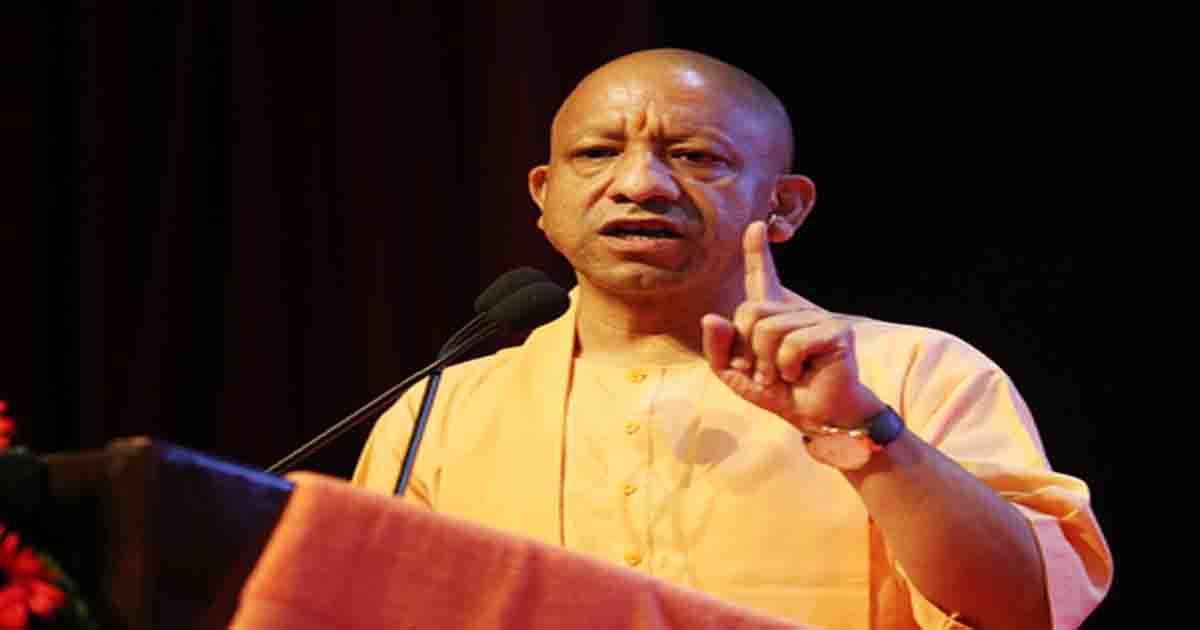
Lucknow, Oct 7: Uttar Pradesh Chief Minister Yogi Adityanath on Wednesday took a jibe at the Samajwadi Party (SP), saying that the Rajya Sabha polls in the state have depicted that the results of the upcoming Assembly elections will come down to “80 per cent for the NDA and 20 per cent for the PDA”.
This comes a day after the Samajwadi Party chose to field two candidates for the Rajya Sabha polls, paving the way for its two candidates and the BJP’s eight candidates to win unopposed.
Addressing a gathering in Lucknow, CM Adityanath said: “The Rajya Sabha elections in Uttar Pradesh have depicted what the results of the Assembly polls are going to be. The fight has again come to 80-20.”
“80 per cent (of seats) to the NDA and 20 per cent to PDA,” the Uttar Pradesh Chief Minister remarked.
“You are about to witness what is going to be the condition of the PDA,” he said, while taking a jibe at the Samajwadi Party’s acronym “PDA”.
SP Chief Akhilesh Yadav had coined the term ‘PDA’, which, according to the party, stands for ‘Pichhda’ (Backward classes), ‘Dalit’, and ‘Alpsankhyak’ (Minorities).
On Tuesday, Akhilesh Yadav, in a post on social media platform X, said: “Now our eyes are not on three, but on 403.”
His remark is being viewed in reference to the SP choosing not to field a third candidate for elections to the Upper House of the Parliament, despite intending to do so earlier.
Meanwhile, Chief Minister Yogi Adityanath made the remarks while addressing the ‘Seva Jyoti Yatra – Vikasit Bharat Sankalp Sabha’ at Patel Park in Lucknow’s Hazratganj.
Speaking at the occasion, the Chief Minister hailed Prime Minister Narendra Modi’s 25 years of public service, describing it as a historic journey from a small village in Gujarat to the global stage, saying the milestone was a matter of pride for every Indian.
“Today is a day of pride for every Indian, as Prime Minister Narendra Modi is completing 25 years of dedicated public service. On this occasion, on behalf of the people of Uttar Pradesh, I extend my heartfelt congratulations and greetings to the Prime Minister. I also extend my heartfelt congratulations to all the people of the state and every party (BJP) worker on this momentous occasion,” CM Adityanath said.
He mentioned that Prime Minister Modi had completed 25 years of continuous service, first as the Chief Minister of Gujarat and subsequently as the Prime Minister of India.
International News
PM Modi thanks world leaders for warm wishes on completing 25 years as head of government

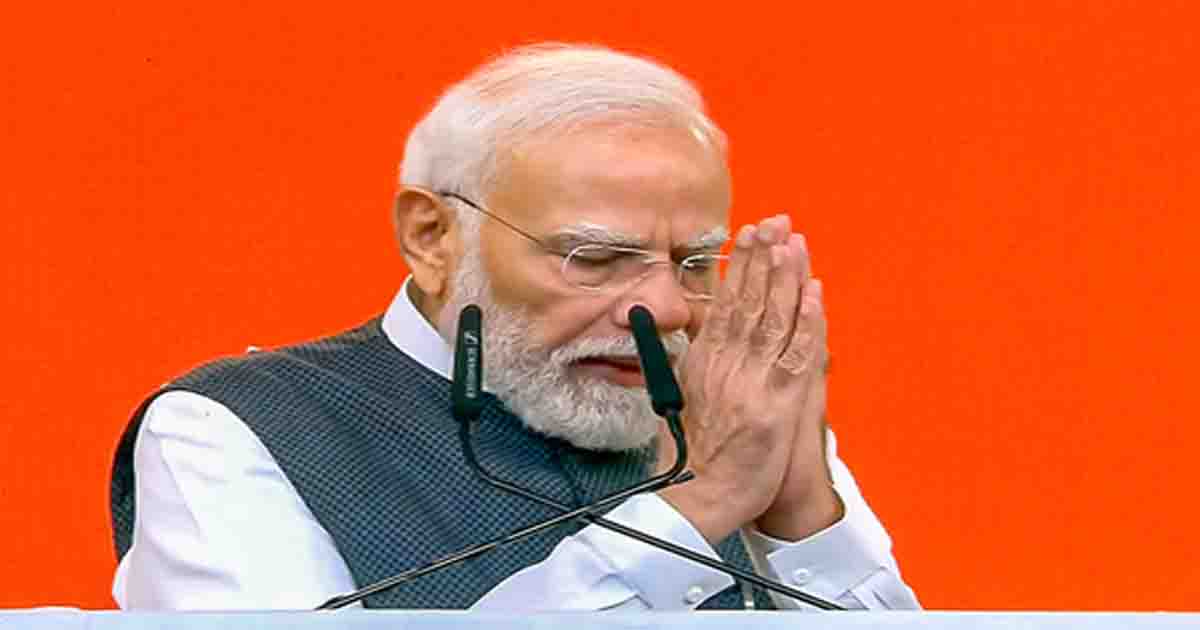
New Delhi, Oct 7: Prime Minister Narendra Modi on Wednesday thanked world leaders for their warm wishes as he completed 25 years as the head of the government.
PM Modi thanked Nigerian President Bola Ahmed Tinubu for the warm wishes and expressed readiness to continue cooperation to further strengthen the Strategic Partnership and advance a shared vision for a more inclusive, prosperous and peaceful world.
“Thank you, President Tinubu. India and Nigeria are close partners and leading voices of the Global South. I look forward to continuing our cooperation to further strengthen our Strategic Partnership and advance our shared vision for a more inclusive, prosperous and peaceful world,” PM Modi posted on X.
He also thanked his Dominica counterpart Roosevelt Skerrit for the warm wishes and noted that India deeply values its partnership with Dominica and looks forward to strengthening it further.
“Thank you, Prime Minister Skerrit, for your warm wishes and thoughtful words. India deeply values its enduring friendship with Dominica. We look forward to further strengthening our partnership and working together for the shared progress and prosperity of the people of our nations,” Prime Minister Modi wrote on X.
PM Modi thanked his Belgian counterpart Bart De Wever for the wishes and expressed readiness to work with him to further strengthen the partnership between India and Belgium.
“Thank you, Prime Minister Bart De Wever, for your wonderful wishes. I look forward to working with you to build on the positive momentum in our relations and further strengthen our bilateral partnership,” he said.
Thanking Philippines President Ferdinand R. Marcos Jr., PM Modi said that India values its Strategic Partnership with the Philippines and looks forward to deepening friendship.
In response to the Philippines President’s wishes on X, PM Modi wrote, “Thank you, President Ferdinand Marcos Jr., for your wishes. India deeply values its Strategic Partnership with the Philippines. I look forward to our continued engagement and further deepening of the friendship between our nations.”
PM Modi thanked Bhutanese counterpart Tshering Tobgay for the heartfelt message and noted that both nations are bound by an “enduring partnership” rooted in mutual trust and understanding.
“Thank you, Prime Minister Tobgay, for the warm and heartfelt message. India and Bhutan are bound by an enduring partnership rooted in mutual trust and understanding. I look forward to continuing our close cooperation to advance our shared vision of Viksit Bharat and a prosperous Bhutan,” PM Modi posted on X.
PM Modi appreciated Botswana President Dumo Gideon Boko’s warm wishes and expressed readiness to work with him to further strengthen close ties.
“I deeply appreciate your warm wishes, President Duma Boko. India greatly values the friendship with Botswana and I look forward to working together to further strengthen our close ties,” PM Modi wrote on X.
The congratulatory messages from world leaders came as PM Modi on Wednesday marks 25 years of uninterrupted leadership as head of government. He began his tenure as Gujarat Chief Minister on October 7, 2001, and became Prime Minister of India in 2014.
In October 2001, PM Modi was chosen to replace Keshubhai Patel as Gujarat Chief Minister at a difficult time for the state, which was still dealing with the aftermath of the devastating Bhuj earthquake as well as political and administrative challenges. He remained Chief Minister until 2014 before moving to national politics.
PM Modi’s tenure as India’s Prime Minister has been marked by an expanded international profile for the country, with the government pursuing greater diplomatic engagement, stronger relations with major powers and a prominent role for India in the Global South.

Israeli military says struck 1,00,000 Mideast targets since October 2023

Akshay Kumar mourns Nana Patekar demise, says ‘it’s hard to believe you’re gone’

Indian equity markets open flat; financial shares drag

Randeep Hooda to late Nana Patekar: When I first saw him in Parinda, didn’t think I was watching an actor

Iran to carry out preemptive strikes if needed to prevent ‘enemy’ attacks: Army

Gift to President Putin part of PM Modi bid to globally display India’s heritage

PM Modi’s warm camaraderie with Putin, Xi on full display at BRICS Summit

Complaint against Netflix & Mukesh Chhabra for inappropriate language on ‘India’s Got Latent 2’

INDIA bloc begins protest march against ECI

Maha Congress stages agitation against Gyanesh Kumar
-

 Crime4 years ago
Class 10 student jumps to death in Jaipur
-

 Maharashtra2 years ago
Mumbai Local Train Update: Central Railway’s New Timetable Comes Into Effect; Check Full List Of Revised Timings & Stations
-

 Maharashtra2 years ago
Mumbai To Go Toll-Free Tonight! Maharashtra Govt Announces Complete Toll Waiver For Light Motor Vehicles At All 5 Entry Points Of City
-

 Maharashtra2 years ago
False photo of Imtiaz Jaleel’s rally, exposing the fooling conspiracy
-

 National News2 years ago
Ministry of Railways rolls out Special Drive 4.0 with focus on digitisation, cleanliness, inclusiveness and grievance redressal
-

 Maharashtra2 years ago
Maharashtra Elections 2024: Mumbai Metro & BEST Services Extended Till Midnight On Voting Day
-

 National News2 years ago
J&K: 4 Jawans Killed, 28 Injured After Bus Carrying BSF Personnel For Poll Duty Falls Into Gorge In Budgam; Terrifying Visuals Surface
-

 Crime2 years ago
Baba Siddique Murder: Mumbai Police Unable To Get Lawrence Bishnoi Custody Due To Home Ministry Order, Says Report