
Maharashtra
Mumbai Weather Update February 9, 2026: Smog Returns As AQI Slips Into Severe Category Across Several Areas


Mumbai: Mumbai woke up to a bright and unusually warm morning on February 9, but the brief spell of clear weather quickly gave way to a familiar concern. As the day progressed, a thick layer of smog settled over the city, reducing visibility for early commuters and once again highlighting the persistent air pollution problem troubling the metropolis.
According to the India Meteorological Department (IMD), the city is expected to experience partly cloudy skies with hazy conditions through the day. Temperatures are likely to remain between 18°C and 33°C, similar to the pattern observed over the past two to three days. While the weather forecast appears stable, air quality data paints a far more worrying picture.
Raising AQI concerns
Mumbai’s overall Air Quality Index (AQI) stood at 304 on Monday, placing it in the ‘Severe’ category. The figures show a sharp deterioration within a short span, as the AQI had been recorded at 167, categorised as ‘Poor’, around 9 pm the previous night. Health experts warn that prolonged exposure to such air can cause respiratory distress, eye irritation, and increase the risk of long-term health complications, even among otherwise healthy individuals.
Hindu Colony Records ‘Hazardous’ Air Quality
Several localities reported extremely high pollution levels. Hindu Colony recorded an AQI of 418, falling into the ‘Hazardous’ category. Other areas were not far behind, with Wadala Truck Terminal Station 1 at 399, Kannamwar Nagar at 395, Savitribai Phule Nagar at 392, and Chembur West at 388, all in the ‘Severe’ bracket and close to the 400 mark. The rising numbers have once again raised concerns about the effectiveness of ongoing measures to tackle the city’s air quality crisis.
In contrast, a few pockets reported comparatively lower, though still concerning, readings. Parsi Colony recorded the lowest AQI at 65, followed by Gamdevi Station 1 and Hira Nagar at 68 each, both in the ‘Moderate’ category. Magdoot and Thakur Village recorded AQI levels of 120 and 123 respectively, placing them in the ‘Poor’ range.
With pollution levels fluctuating sharply across neighbourhoods, the city continues to grapple with a worsening air quality situation that shows little sign of immediate relief.
As per standard air quality classifications, AQI values between 0 and 50 are considered ‘good’, 51 to 100 ‘moderate’, 101 to 200 ‘poor’, 201 to 300 ‘unhealthy’ and levels above 300 are classified as ‘severe’ or ‘hazardous’.


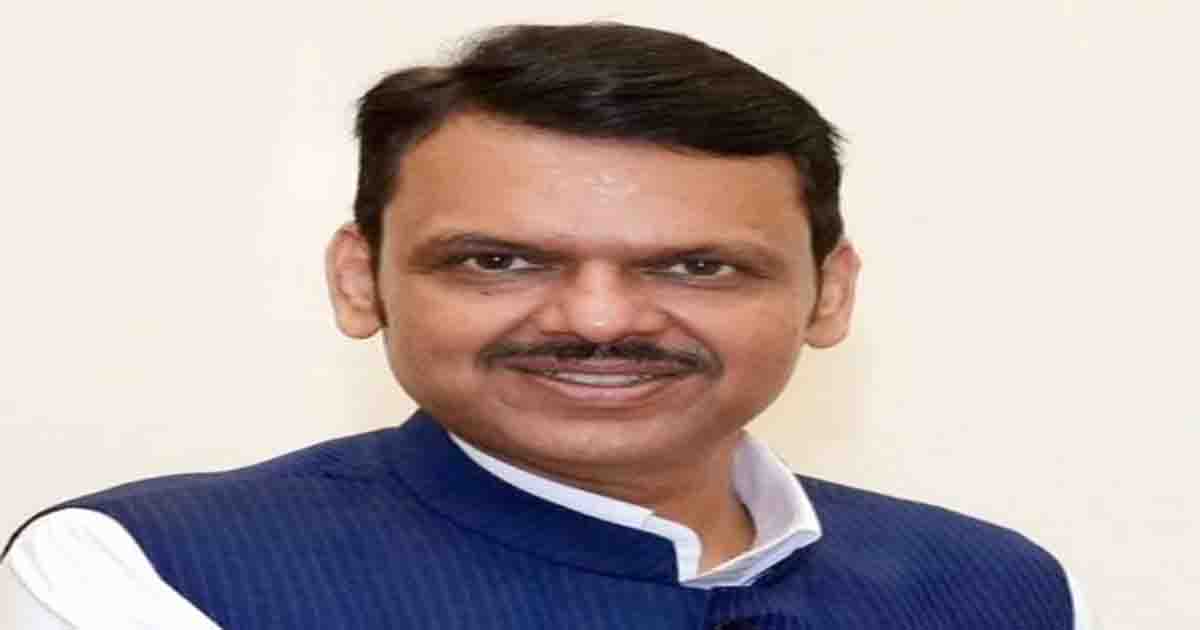
Chief Minister Devendra Fadnavis announced on Wednesday that the Maharashtra government has set an ambitious target to attract $100 billion in infrastructure investments over the next five years.
As part of this vision, approximately $50 billion is being invested in the Mumbai Metropolitan Region (MMR) to develop metro networks, roads, flyovers, tunnels, and other civic infrastructure.
Additionally, the state plans to develop a ‘Third Mumbai’ around the Navi Mumbai airport area and a ‘Fourth Mumbai’ along the Virar-Vadhavan belt.
Addressing the Third World Mayors’ Conference in Mumbai—organised to mark the centenary year of the All India Institute of Local Self-Government—CM Fadnavis emphasised the need to view cities not as problems, but as engines of economic growth.
The event was attended by Union Minister of State for Housing and Urban Affairs Tokhan Sahu, Mumbai Mayor Ritu Tawde, and mayors, municipal administrators, and urban development representatives from India and abroad.
Highlighting the economic weight of urban centres, CM Fadnavis noted that cities contribute roughly 65% to the country’s GDP, and more than half of Maharashtra’s population resides across nearly 400 cities.
Planned urban development, he said, can simultaneously drive economic progress and improve living standards. Reflecting on past policies, he stated that earlier attempts to curb urbanisation led to unplanned growth, slums, inadequate civic amenities, water shortages, and waste management issues.
He credited Prime Minister Narendra Modi for shifting the narrative after 2014 to view urbanisation as an opportunity for development.
Planned around the Navi Mumbai International Airport, CM Fadnavis informed that Third Mumbai will feature dedicated hubs including an Edu-City, Sports City, Medi-City, Innovation City, and a Global Capability Centre (GCC) City. The educational hub will accommodate around one lakh students and host campuses of 12 world-class universities, seven of which have already commenced operations.
According to the CM, the Virar-Vadhavan corridor is slated to become the Fourth Mumbai. One of the country’s largest ports is being constructed at Vadhavan, which Fadnavis expressed confidence would rank among the top 10 ports globally. The region will be connected to Mumbai via the bullet train and a super expressway. Over $50 billion is being poured into MMR for a 300-km-plus metro network, roads, tunnels, water supply, and sewage treatment projects.
CM Fadnavis pointed out that the 22-km Atal Setu has already reduced travel time to the Navi Mumbai airport to about 40 minutes, with plans to bring it down to 30 minutes next year.
Referring to the Dharavi redevelopment project, the Chief Minister stated that residents will be provided with well-equipped housing. Within the next decade, Dharavi is projected to transform into a major commercial hub, complementing the Bandra-Kurla Complex (BKC). Alongside building new cities, the state has adopted a policy of redeveloping and rejuvenating older urban centres across Mumbai, Pune, Nagpur, Nashik, and Chhatrapati Sambhajinagar, he said.
CM Fadnavis noted that global capital is readily available, but attracting investment requires political willpower, determination, and viable, high-quality projects rather than funding alone.
Chief Minister—drawing from his own experience as the Mayor of Nagpur—reminded mayors that they are the first point of accountability for citizens regarding roads, water, sanitation, and basic amenities. He urged municipalities to study and replicate successful urban models from cities like Indore, Ahmedabad, and Mumbai.
Concluding his address, CM Fadnavis assured delegates that the state government would positively review and implement actionable recommendations emerging from the conference’s discussions.
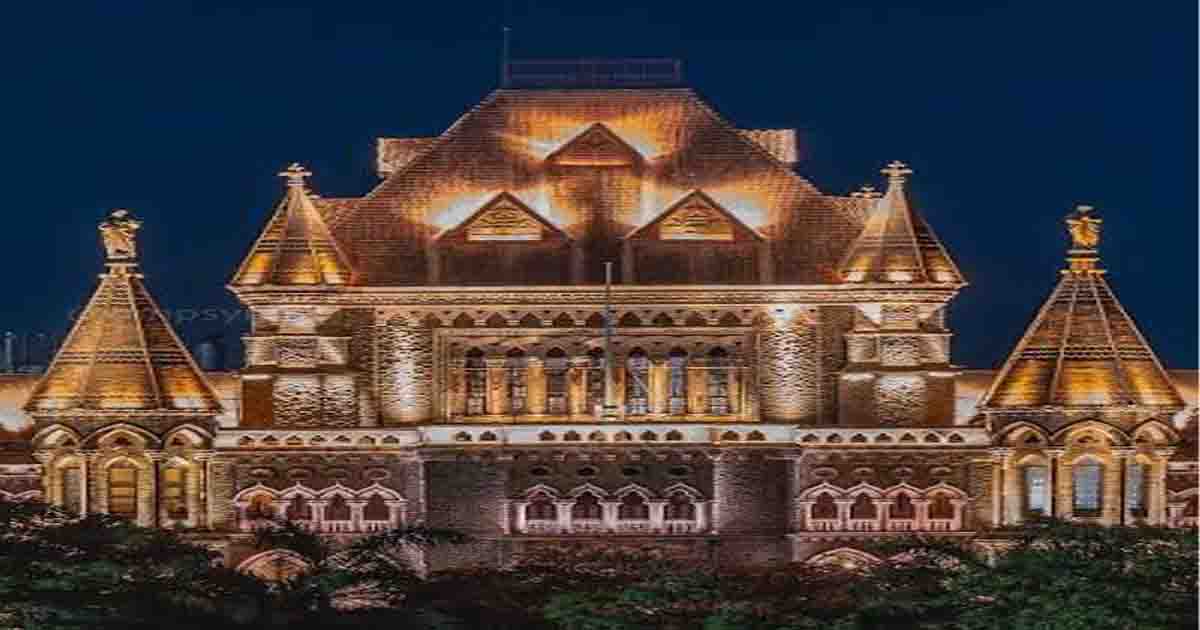
In a significant ruling regarding the Haji Ismail Haji Habib Masjid (located at the Mumbai Musafir Khana), the Bombay High Court has clarified that offering prayers in the dilapidated mosque is prohibited due to the risk of an accident. The High Court has requested a structural audit report of the mosque building and has adjourned the matter until Monday. A dispute had been ongoing concerning the Pakmodia Masjid, located in Bohri Mohalla; the Brihanmumbai Municipal Corporation (BMC) had declared the structure dilapidated and affixed a notice to it. This action was subsequently challenged in the High Court, which provided relief by halting any demolition proceedings. Now, however, the High Court has imposed a ban on offering prayers within the mosque. Furthermore, certain so-called journalists circulated misleading reports claiming that the mosque is owned by Dawood Ibrahim—a claim that has caused considerable resentment among the Muslim community. Muslims and the mosque’s congregants have alleged that this misinformation was spread with ulterior motives. It has been clarified by Ghulam Mansoori that a mosque is the “House of God”—it belongs to Allah, not to Dawood Ibrahim.
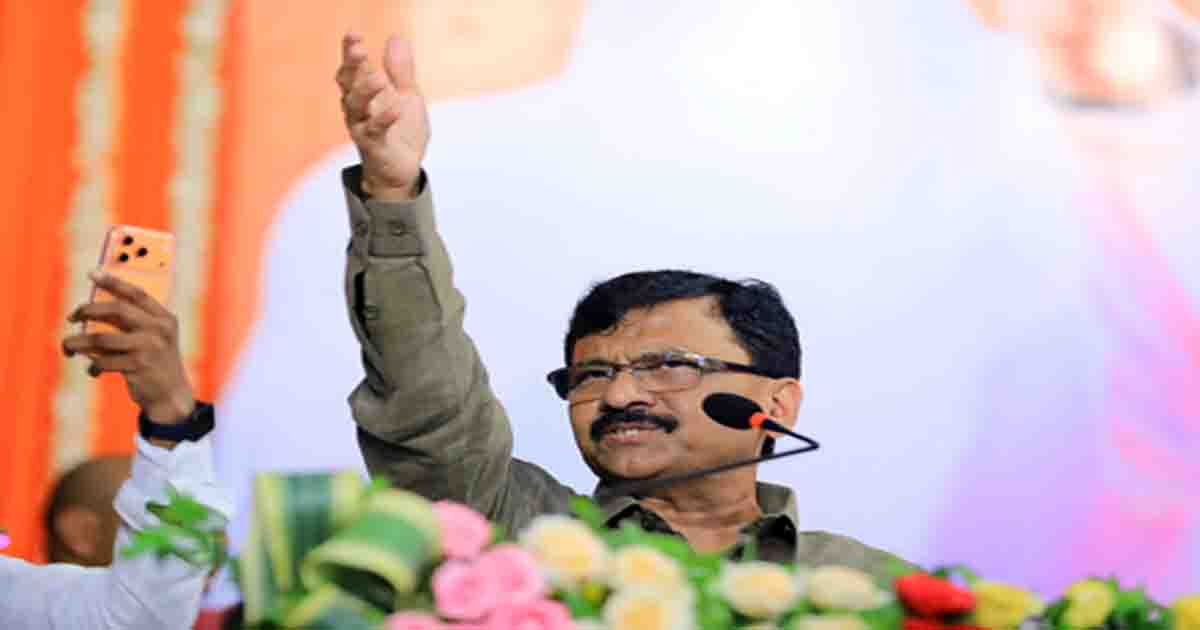
A major political controversy has erupted in Maharashtra after Shiv Sena (UBT) MP Sanjay Raut on Wednesday accused Social Justice Minister Sanjay Shirsat of demanding a Rs 5 crore bribe to clear a Rs 25 crore proposal for a training centre in Latur.
However, Minister Shirsat has strongly refuted the allegations, launching a sharp counter-attack against Raut and the Thackeray faction.
Addressing a press conference during his visit to Chhatrapati Sambhajinagar, Raut levelled serious corruption charges against Minister Sanjay Shirsat and Chief Minister Devendra Fadnavis’s government, following up with posts on social media.
According to Raut, Narsing Udgirkar, a social activist and leader from the Matang community in Latur, met him and shared his ordeal. Udgirkar had submitted a complete Rs 25 crore proposal to establish a training centre named after Lokshahir Annabhau Sathe in Latur to provide competitive exam coaching and educational programs for Dalit and Matang youth.
Despite fulfilling all documentation requirements, Udgirkar’s file was allegedly stalled. Raut claimed that Officer on Special Duty (OSD) Siddharth Bhandari told Udgirkar the work would not proceed without meeting the minister. When Udgirkar met Minister Shirsat face-to-face, the minister allegedly demanded Rs 5 crore in exchange for clearing the Rs 25 crore project.
When Udgirkar pleaded that he was working for the upliftment of Dalits and could not afford such a massive sum—offering only a small amount—Minister Shirsat allegedly refused to approve the proposal, which remains pending. Raut challenged authorities to summon Udgirkar and verify the facts.
Minister Shirsat held a press conference to dismiss the charges as baseless and politically motivated, turning the tables on the Thackeray faction. Minister Shirsat challenged Raut to show proof of even a single Rs 25 crore proposal approved by him in the last two years.
He clarified that as a minister, he does not have the authority to approve proposals exceeding Rs 10 crore, as such projects require the Chief Minister’s permission.
Hitting back at the Shiv Sena (UBT), the minister questioned the integrity of the previous Maha Vikas Aghadi (MVA) government.
“What was the backdoor of Matoshree for? Why were tempos used to enter through that backdoor?” he asked, alleging corruption during Uddhav Thackeray’s tenure.
He accused Thackeray of sidelining loyalists without money in favour of wealthy leaders and independents like Shankarrao Gadakh, Anil Parab, and Subhash Desai.
Minister Shirsat challenged Raut and Uddhav Thackeray to name a single Dalit or Buddhist cabinet minister appointed by them during their 1995 or 2019–2022 stints in power.
He alleged that he was denied a ministerial berth earlier because of his caste and lack of financial clout, and claimed Raut was now targeting him to force his resignation.
Accusing Raut of using Annabhau Sathe’s name merely for political mileage, Minister Shirsat asked if Uddhav Thackeray had ever even garlanded a photo of Sathe.
Listing his own initiatives, he highlighted Rs 50 crore sanctioned for a grand statue and a 5-acre memorial for Annabhau Sathe in Wategaon, Rs 90 crore allocated for the beautification of Chavdar Tale in Mahad and Rs 1,200 crore earmarked for Dalit student hostels and Rs 14.5 crore for Wamandada Kardak’s memorial.
Further, Minister Shirsat said his ministry is involved in securing 10 acres of land in Bodh Gaya after directly coordinating with the Chief Minister.
Concluding his press conference, he questioned the background of the complainant, Narsing Udgirkar, and issued a stern warning that he would take strict action against anyone attempting to blackmail or defame him.

Maha govt targets $100 billion infrastructure investment over next five years

Mumbai : Temporary ban on prayers at Haji Ismail Haji Habib Mosque

Pune: Attack outside Shivajinagar court sparks political outcry over law and order

MP: Vidisha admin demolishes houses of two accused in minor rape cases

Sanjay Raut accuses Maha Minister of demanding Rs 5 crore bribe

Congress trying to protect 3 crore Bangladeshi infiltrators in voter list: HM Shah

Red Fort car blast probe exposes blueprint for spread of terror modules across India

Trump flags Iran targets as talks continue

‘Conspiracy, not accident’: NCP on Ajit Pawar death

BJP, Shiv Sena slam Mallikarjun Kharge for terming Diwali ‘Khushiyon ka Eid’
-

 Crime4 years ago
Class 10 student jumps to death in Jaipur
-

 Maharashtra2 years ago
Mumbai Local Train Update: Central Railway’s New Timetable Comes Into Effect; Check Full List Of Revised Timings & Stations
-

 Maharashtra2 years ago
Mumbai To Go Toll-Free Tonight! Maharashtra Govt Announces Complete Toll Waiver For Light Motor Vehicles At All 5 Entry Points Of City
-

 Maharashtra2 years ago
False photo of Imtiaz Jaleel’s rally, exposing the fooling conspiracy
-

 National News2 years ago
Ministry of Railways rolls out Special Drive 4.0 with focus on digitisation, cleanliness, inclusiveness and grievance redressal
-

 Maharashtra2 years ago
Maharashtra Elections 2024: Mumbai Metro & BEST Services Extended Till Midnight On Voting Day
-

 National News2 years ago
J&K: 4 Jawans Killed, 28 Injured After Bus Carrying BSF Personnel For Poll Duty Falls Into Gorge In Budgam; Terrifying Visuals Surface
-

 Crime2 years ago
Baba Siddique Murder: Mumbai Police Unable To Get Lawrence Bishnoi Custody Due To Home Ministry Order, Says Report