
National News
Mumbai Traffic Update: Heavy Vehicles Banned In City From February 1 During Peak Hours; What’s Allowed & What’s Not?

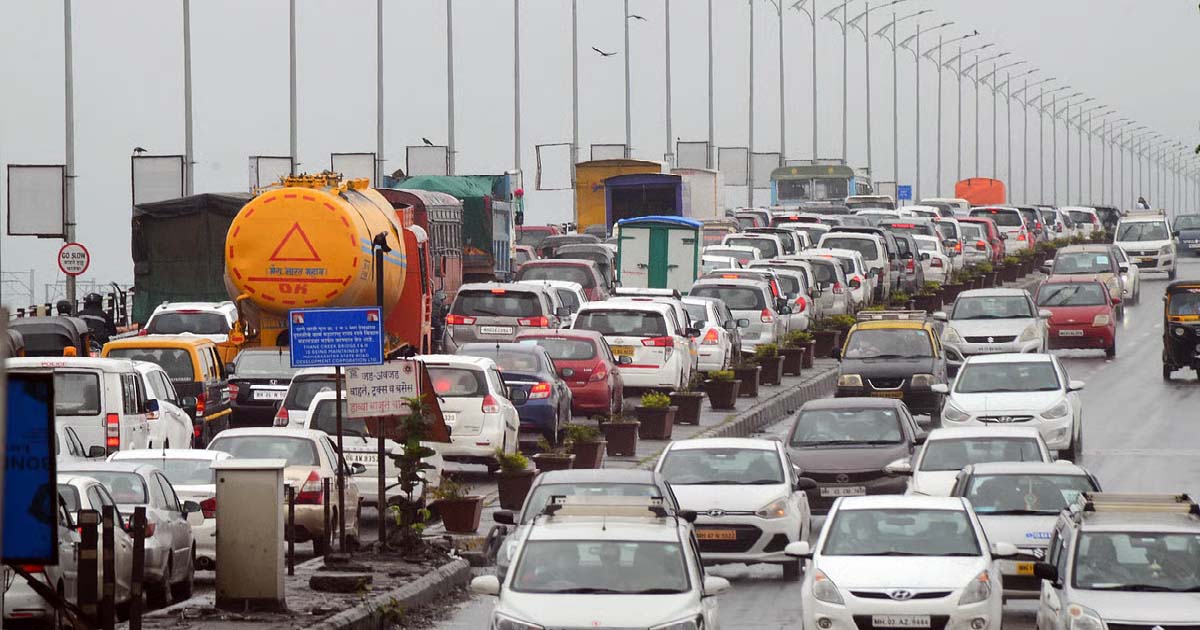
Mumbai: In a bid to tackle worsening traffic congestion and improve road safety, the Mumbai Traffic Police (MTP) have announced a fresh set of restrictions on the movement of heavy vehicles within the city. The new rules will come into effect from February 1, officials confirmed.
Under the order, heavy vehicles will be barred from entering Mumbai during peak traffic hours, from 8 am to 11 am and from 5 pm to 9 pm. Traffic police officials said these time slots witness the highest vehicular movement, and the presence of large, slow-moving vehicles during these hours majorly increases the risk of accidents and traffic bottlenecks.
Authorities cited the sharp rise in the number of vehicles and the ongoing infrastructure projects across Mumbai as key reasons behind frequent gridlocks. Heavy vehicles tend to slow down traffic flow and make commuting difficult for motorists, two-wheeler riders and pedestrians during peak hours, according to officials.
The restrictions are even tighter in South Mumbai. As per the new order, all heavy vehicles, including luxury buses, will be completely banned from entering South Mumbai between 7 am and 12 midnight. Only vehicles transporting essential goods will be allowed during this period.
Heavy vehicles will be permitted in South Mumbai only between 12 midnight and 7 am. Luxury buses carrying passengers, however, will not be allowed to enter South Mumbai even during permitted hours, according to reports. In addition, heavy vehicles remain banned on the Eastern Freeway round the clock, with the sole exception of buses.
Certain categories of vehicles have been exempted from the restrictions. These include vehicles transporting essential commodities such as vegetables, milk, bread, bakery products, drinking water, petrol, diesel and kerosene. Ambulances, school buses and government or semi-government vehicles will also be allowed to operate without restrictions. Luxury buses carrying passengers will be permitted to enter Mumbai, but they will not be allowed in South Mumbai during restricted hours.
Joint Commissioner of Police (Traffic) Amitesh Kumar said the primary objective of the order is to ease pressure on city roads during peak hours. “Heavy vehicles occupy more road space and move slowly, which leads to longer travel times for other road users. These restrictions are aimed at smoother traffic flow.
The traffic police have also tightened parking norms for heavy vehicles. Such vehicles will now be allowed to park only in private or rented parking spaces, or in authorised pay-and-park zones. Parking on public roads has been strictly prohibited. Only two water tankers will be permitted to park near water supply points on nearby roads.
Officials noted that a draft of the order was first issued in September 2017, inviting public suggestions and objections. After reviewing the feedback and assessing the growing pressure on Mumbai’s limited road space, the final order has now been enforced.


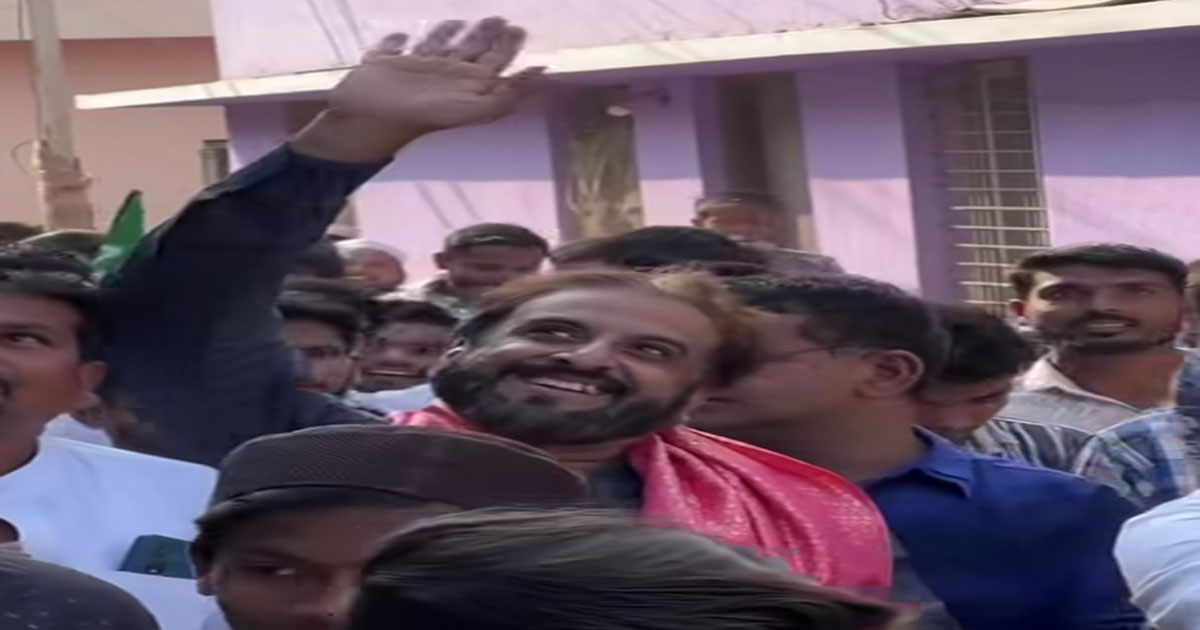
Nashik, May 25: A Special Investigation Team (SIT) of the Nashik Police has issued a summons to Mateen Patel, AIMIM corporator from Chhatrapati Sambhajinagar, in connection with the high-profile harassment case involving the Nashik BPO unit of Tata Consultancy Services (TCS), officials said on Monday.
Mateen Patel has been summoned for questioning under Section 35(3) of the Criminal Procedure Code (BNSS) to investigate certain facts related to the case and regarding his alleged assistance to the accused, Nida Khan.
Further investigation into the case is currently underway, officials stated.
Earlier, on May 22, the Nashik Police filed a 1,500-page chargesheet against the accused in the case. A total of nine FIRs were registered against the accused.
Of these, a chargesheet has currently been filed in only one case.
An official statement issued by the team of Nashik Police Commissioner Sandeep Karnik revealed that the SIT — which is probing the allegations — has uncovered evidence regarding the forced religious conversion of the victim, an act that has caused offence to religious sentiments.
The police have also seized original documents used by the accused to alter the victim’s name and identity.
Furthermore, digital and technical evidence has been retrieved in the form of WhatsApp chat screenshots obtained from the mobile phones of both the victim and the accused.
The chargesheet names Danish Ejaz Shaikh, Tausif Bilal Attar, Nida Ejaz Khan, and AIMIM leader Mateen Patel as the accused.
Consequently, none of them has been granted bail.
The 1,500-page primary chargesheet was filed before the Additional Sessions and Special Court situated at Nashik Road, under Sections 61(2), 64, 68, 69, 46, 75, 319C(8), 299, 238, 249, and 3(5) of the Bharatiya Nyaya Sanhita (BNS), as well as Sections 3(1)(w)(i), 3(1)(w)(ii), 3(2)(v), 3(1)(s), and 3(1)(k) of the Scheduled Castes and Scheduled Tribes (Prevention of Atrocities) Act, 1989.
This marks the first charge sheet to be filed following the investigation into allegations of rape and causing offence to religious sentiments, which were originally registered at the Deolali Police Station in Nashik. Also, there are eight other FIRs registered by TCS employees at the Mumbai Naka Police Station.
The case gained widespread attention after details of alleged systematic harassment at the workplace surfaced, triggering outrage across Maharashtra.
Police officials have assured that the probe is being conducted thoroughly to ensure justice. The filing of the detailed charge sheet is being seen as a crucial milestone that could pave the way for the trial to commence in the near future.
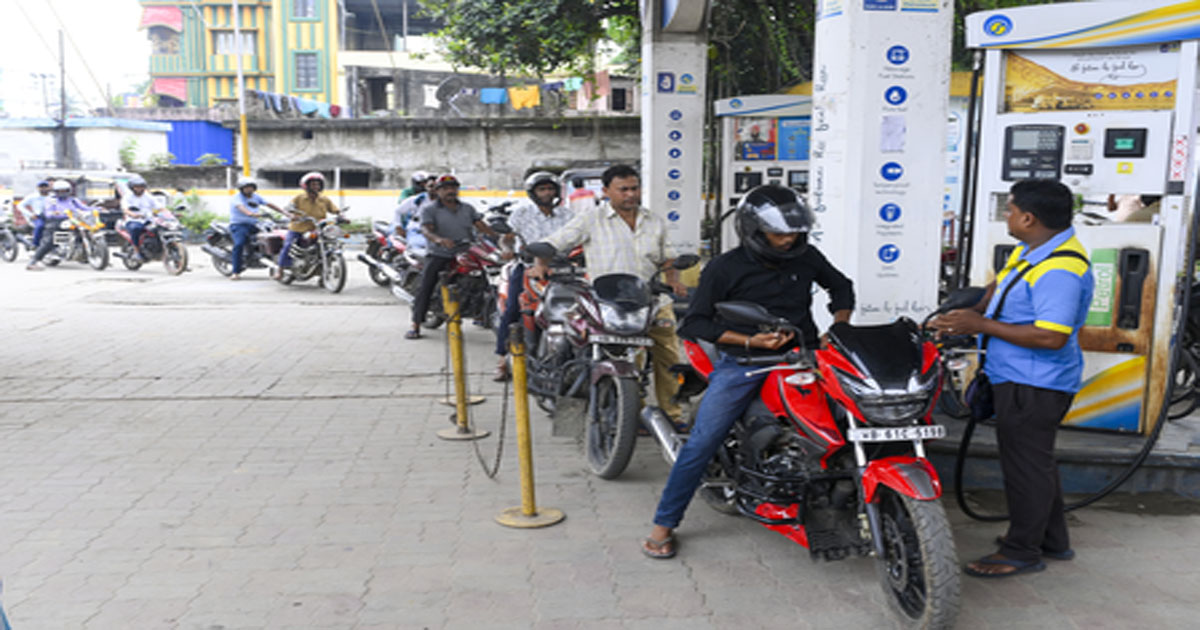
New Delhi, May 21: There is no shortage of petrol, diesel or LPG in the country and petrol pumps that are not giving fuel or giving fuel in reduced quantities are being pulled up, according to senior government officials on Thursday.
The government is receiving feedback about petrol pumps across India and full supply of fuels is being maintained to all retail outlets. There has also been no reduction in oil imports coming from Russia in order to ensure adequate crude supplies to the refineries of oil marketing companies, the officials pointed out.
There has been an increase in sales at some pumps because of the higher demand for diesel due to the harvesting season. There has also been a shift in customers from private oil marketing companies, who have started charging higher prices, to retail filling stations belonging to public sector oil companies.
Besides, institutional or commercial sales, which are priced around Rs 20 higher as per actual international price, have also shifted to petrol pumps, they added.
The officials also pointed out that India’s increase of Rs 3.91 per litre in the prices of petrol and diesel announced this week, works out to 4.4 per cent, which is the smallest hike of any major economy outside the directly subsidising Gulf producers such as Saudi Arabia, according to figures compiled by GlobalPetrolPrices.com.
An IndianOil official pointed out that the Rs 3.91 increase, which restores only part of the rise of cost in crude, has been undertaken after 76 days of complete absorption of costs by the public sector oil companies. In sharp contrast, the rest of the world has been adjusting price for the rise in crude costs through increases ranging from 10 to 90 per cent in the retail prices of the two fuels.
The pass-through has been steepest in liberalised emerging markets directly exposed to West Asian supply and freight, where governments do not absorb volatility. The Pakistani consumer is paying about 55 per cent more for petrol today than three months ago, the Malaysian about 56 per cent more, and the Emirati consumers about 52 per cent higher prices, the figures show.
In the advanced economies, the increases are smaller in percentage terms but still substantial. American petrol prices, which respond quickly to crude because federal and state excise loadings are modest, have risen by close to 45 per cent and diesel by 48 per cent.
In Europe, where excise duties dampen the swing, the United Kingdom is up about 19 per cent on petrol and 34 per cent on diesel, Germany about 14 per cent on petrol and 20 per cent on diesel, France about 21 per cent and 30 per cent, respectively.
In the case of Japan, South Korea and Singapore, the hike in petrol prices has been held below 20 per cent and the price of diesel has risen considerably faster, with Singapore registering a 65 per cent jump in the price of diesel.
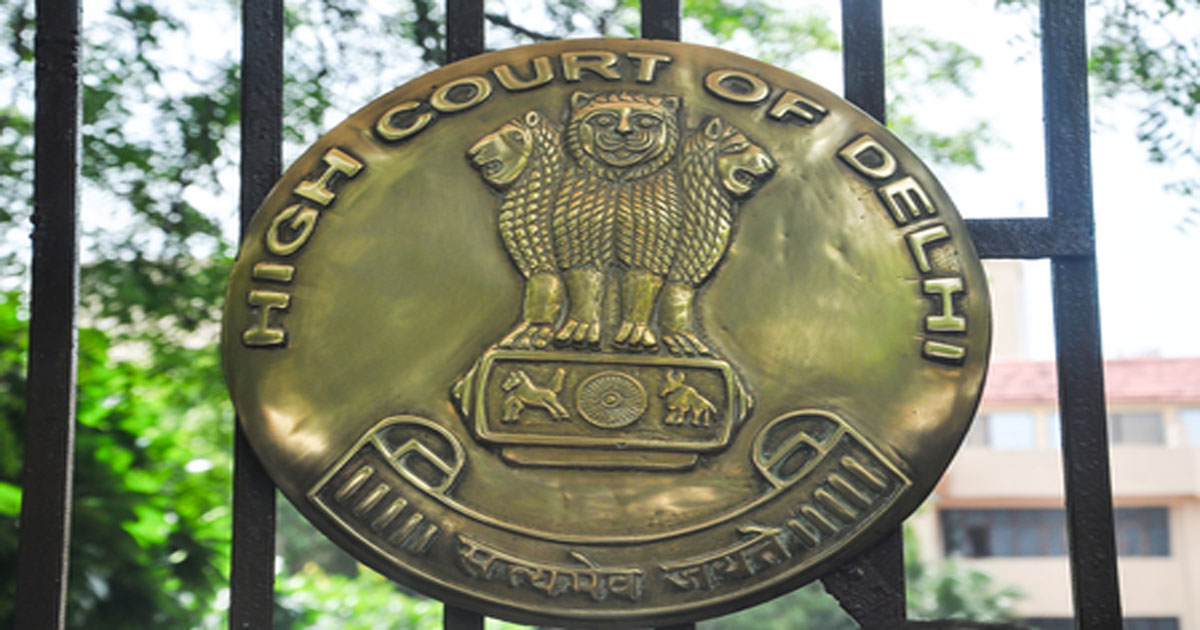
New Delhi, May 19: The Delhi High Court has sentenced YouTuber Gulshan Pahuja, who runs the channel “Fight 4 Judicial Reforms”, to six months’ simple imprisonment in two criminal contempt cases for making derogatory and scandalous remarks against the judiciary and judicial officers.
A division bench of Justices Navin Chawla and Ravinder Dudeja also imposed a fine of Rs 2,000 in each matter while observing that the contemnor had shown no remorse and had, in fact, compounded the contempt through further scandalous submissions made during the hearing.
However, the Delhi High Court suspended the sentence for 60 days to enable Pahuja to challenge its judgment holding him guilty of criminal contempt before the Supreme Court.
The Justice Chawla-led Bench said that despite being given an opportunity to make submissions on punishment, the contemnor questioned the conviction itself and, during oral arguments, made further scandalous remarks against the judicial system.
“He, in fact, compounds his contempt by making further scandalous submissions before this Court and thus, evidently, he is neither repentant nor deserves any mercy,” the order said.
Rejecting his plea to recall the conviction judgment, the Delhi High Court said it could not sit in review of its earlier order and that the contemnor was free to challenge the same in accordance with law.
“As far as his submissions on our judgment dated 21.04.2026 are concerned, we cannot sit in review of the said judgment and the contemnor has full right and had an opportunity to challenge the same in accordance with law,” the bench said.
It further recorded that during oral arguments, Pahuja made remarks such as “adaalaton ki manmarzi badhti jaa rahi hai aur main koi nyay ki umeed nahi kar raha (the wilfulness of the courts is constantly increasing and I am not hopeful of any justice)” and described the functioning of courts as “taanashahi (dictatorship)”.
Advocate Harsh Prabhaka, amicus curiae appointed in the matter, submitted that Pahuja had shown “no course correction or remorse” and continued uploading videos targeting judicial officers despite earlier directions restraining him from doing so.
Considering the nature of the conduct, the Delhi High Court observed that leniency in such circumstances could embolden similar conduct in the future and that the case warranted maximum punishment.
“We also find that by not imposing adequate punishment on him, we may encourage him to repeat these acts in future and to embolden him in doing the same. [W]e are of the opinion that these cases call for the imposition of the maximum punishment,” the bench observed.
Accordingly, the Delhi High Court sentenced Pahuja to six months’ simple imprisonment along with a fine of Rs 2,000 in each case, directing that the sentences would run concurrently.
It further ordered that in case of default in payment of the fine, he would undergo an additional one month’s simple imprisonment.
However, taking note of the contemnor’s submission that he intends to challenge the judgment before the Supreme Court, the bench suspended the sentence for a period of 60 days.
“In case an order suspending the sentence… is not passed by the Supreme Court, the contemnor shall on his own surrender before the Registrar General of this Court forthwith on expiry of the above-mentioned period,” the order said.
The contempt proceedings arose from videos and online content uploaded by Pahuja on his YouTube channel, in which he made sweeping and unverified allegations against judicial officers and the judiciary. In its earlier judgment, the Delhi High Court had held that such remarks were intended to scandalise the institution and lower public confidence in the justice system, and were not protected under the right to free speech.

Case registered against Bajrang Dal workers for bringing pigs to create ruckus in Mira Bhayander, two FIRs registered for disturbing the environment

Fugitive accused arrested in Mumbai Powai murder case, anger over dispute a week ago was the motive for the murder, police investigation after the murder concluded

Mumbai ANC Action Drug trafficker Haroon sent to Yeru Da Jail for one year

Eid marked by grief for families of disappeared Baloch civilians in Pakistan

Mumbai Commissioner Ashwini Bhide Tightens Civic Maintenance Supervision, Pushes In-House Repairs & Flood Preparedness In Suburbs

Mumbai: Strict action directed against prominent Marathi placards in shops and institutions, warning of action in Shiv Sena style: Deputy Mayor Sanjay Ghadi

The Municipal Corporation and the Railway Administration should work together to make Mumbai flood-free, directs Standing Committee Chairman Prabhakar Shinde

Virar Citizens Protest Demolition Drive In Arnala; Police Block Lal Bawta March, Sit-in Held On Road

Global crude prices rise 0.73 pc as US-Iran talks stall

Apple to invest Rs 100 crore in India’s renewable energy infrastructure
-

 Crime4 years ago
Class 10 student jumps to death in Jaipur
-

 Maharashtra2 years ago
Mumbai Local Train Update: Central Railway’s New Timetable Comes Into Effect; Check Full List Of Revised Timings & Stations
-

 Maharashtra2 years ago
Mumbai To Go Toll-Free Tonight! Maharashtra Govt Announces Complete Toll Waiver For Light Motor Vehicles At All 5 Entry Points Of City
-

 Maharashtra2 years ago
False photo of Imtiaz Jaleel’s rally, exposing the fooling conspiracy
-

 National News2 years ago
Ministry of Railways rolls out Special Drive 4.0 with focus on digitisation, cleanliness, inclusiveness and grievance redressal
-

 Maharashtra2 years ago
Maharashtra Elections 2024: Mumbai Metro & BEST Services Extended Till Midnight On Voting Day
-

 National News2 years ago
J&K: 4 Jawans Killed, 28 Injured After Bus Carrying BSF Personnel For Poll Duty Falls Into Gorge In Budgam; Terrifying Visuals Surface
-

 Crime2 years ago
Baba Siddique Murder: Mumbai Police Unable To Get Lawrence Bishnoi Custody Due To Home Ministry Order, Says Report