
National News
Mumbai: SBTC Orders Probe After KEM Hospital Fails To Provide ‘Fresh Whole Blood’ To Newborns

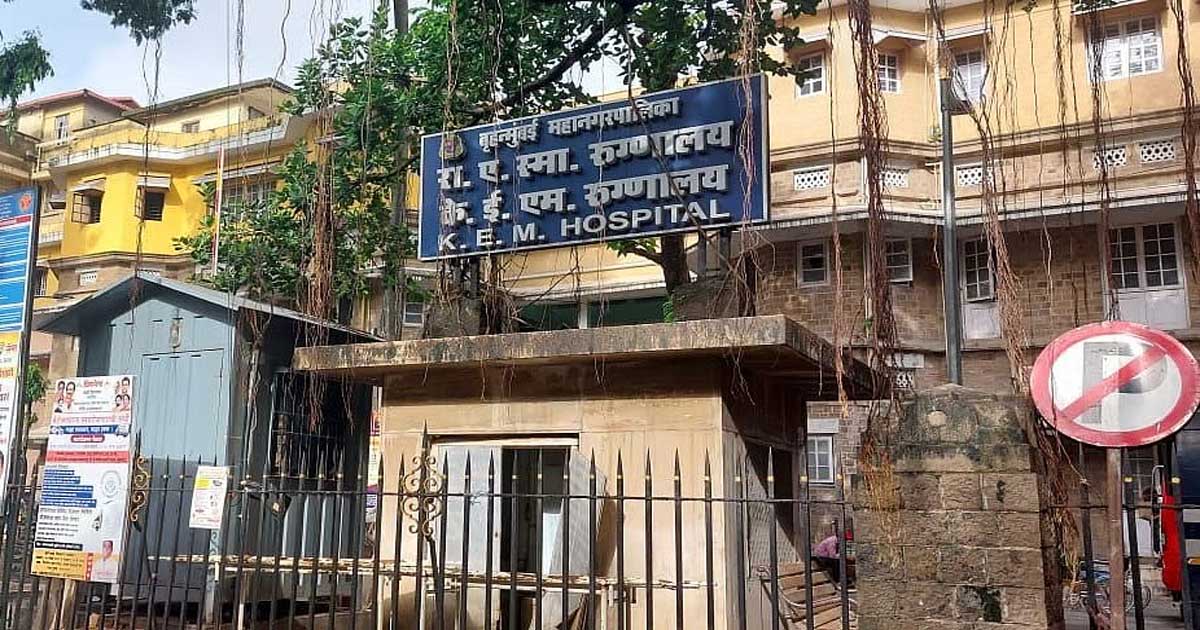
Mumbai: The State Blood Transfusion Council (SBTC) has taken cognizance of a media report on the non-availability of “Fresh Whole Blood” at K.E.M. Hospital, Parel. The council has directed hospital officials to conduct an inquiry and submit a factual statement with proper clarification.
Media had published a report on August 11, 2025, titled ‘No fresh whole blood at KEM hosp, baby’s life at risk’. It highlighted the case of a newborn suffering from Hemolytic Disease of the Newborn (HDN), who received one unit of ‘O’ Positive fresh whole blood only after eight days. The unit was eventually sourced from Shatabdi BDBA Hospital, Kandivali, after KEM’s blood bank failed to arrange it.
Doctors warned that any delay in transfusion could worsen jaundice and anemia in the newborn, and in severe cases lead to life-threatening complications such as hydrops fetalis.
Following the report, RTI activist Chetan Kothari lodged a complaint with SBTC, attaching a copy of the article. He criticized the hospital’s “laziness” in arranging blood and pointed out that in such emergencies, two options are available: preparing fresh whole blood by mixing red cells with plasma, or urgently calling one or two donors of the required group, testing them, and providing the blood within four hours. While this may carry minimal infection risk, experts argue it is far safer than withholding transfusion, which could result in death or permanent harm to the baby.
Activists have long alleged that negligence and administrative lethargy often lead to such lapses, even though newborns are a special case. Unlike adult patients who can receive packed cells, newborns require only fresh whole blood. Repeated instances at a premier government hospital, they argue, raise serious questions of accountability.
Based on Kothari’s complaint, SBTC’s assistant director Dr. Purushottam Puri instructed KEM officials to conduct a probe and submit a factual clarification. The move comes amid widespread media attention, with SBTC stressing the need for an accurate and transparent account of the incident.
Meanwhile, after the report was published, the Brihanmumbai Municipal Corporation (BMC) also issued a clarification to this newspaper. It stated that, as per universal practice, donated whole blood is separated into components—red cells, platelets, and plasma—to maximize use.
However, in specific cases such as newborn transfusions, fresh whole blood is required without separation. The BMC further claimed that KEM’s blood bank has been proactively motivating donors to donate for such cases, and that a recent camp collected 900 units of blood.
Despite this, media has come across at least three separate instances in the same period where newborns at KEM urgently required fresh whole blood, raising concerns about gaps between policy and practice.

Crime
Palghar Crime: Pelhar Police Seize Banned Gutkha Worth ₹6.39 Lakh, Shopkeeper Arrested In Nalasopara

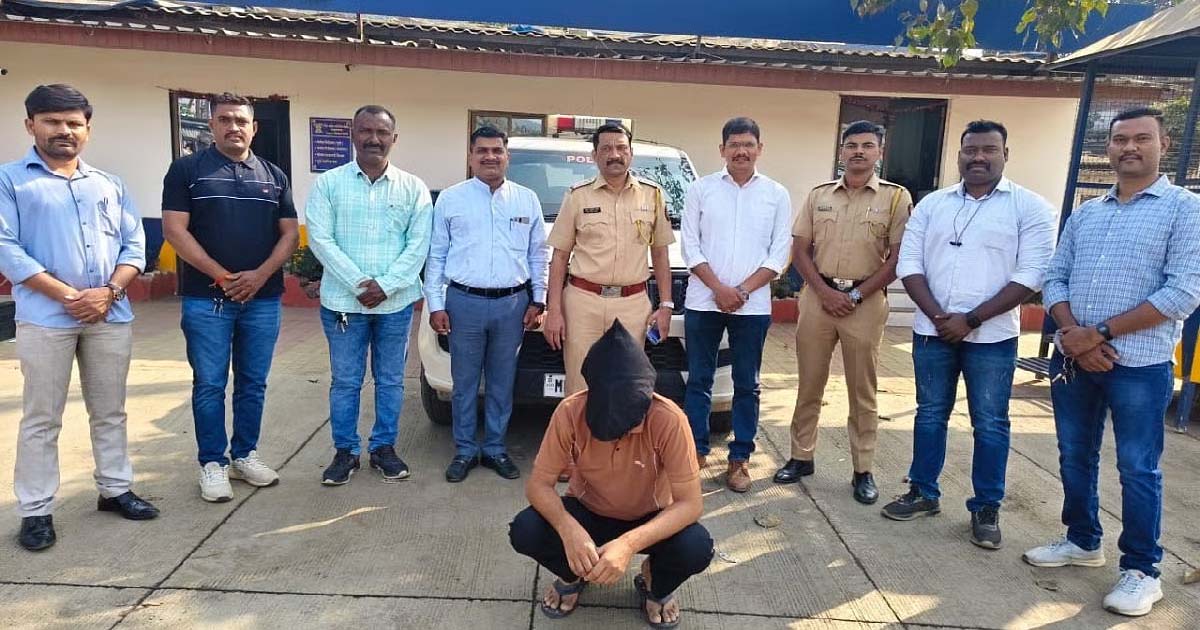
Palghar, Maharashtra, Dec 27: In a significant crackdown on the sale of banned tobacco products, the Pelhar Police arrested a shopkeeper for illegally stocking and selling gutkha, seizing contraband worth ₹6.39 lakh.
According to police, the action was carried out on December 25, 2025, during a routine patrol by Assistant Police Inspector Ramesh Waghchaure along with his team.
Acting on specific and reliable information, the police raided Sana General Stores located at Khan Chowk, Nalasopara Station Road, Nalasopara East, Vasai.
During the raid, the shop owner was found in possession of Maharashtra government-banned tobacco products (gutkha), allegedly kept for sale. The accused has been identified as Javed Ahmed Zaheer Ahmed Ansari (38), a resident of Nalasopara East.
Upon searching the shop premises, police recovered banned gutkha products valued at ₹6,39,493. Following the seizure, Pelhar Police registered a case against the accused, invoking Section 123 of the Bharatiya Nyaya Sanhita along with relevant provisions of the Food Safety and Standards Act, 2006 (Sections 26(2)(i), 26(3), and 26(4)).
Further investigation in the case is being carried out by Waghchaure. Police officials stated that such drives against banned substances will continue to protect public health and ensure strict enforcement of the law.
National News
BMC Elections 2026 | ‘Fight Election, Win Majority’: Sanjay Raut’s Sharp Response To Waris Pathan’s, ‘Why Can’t Khan, Pathan, Shaikh, Qureshi, Syed Become Mumbai Mayor?’ Remark
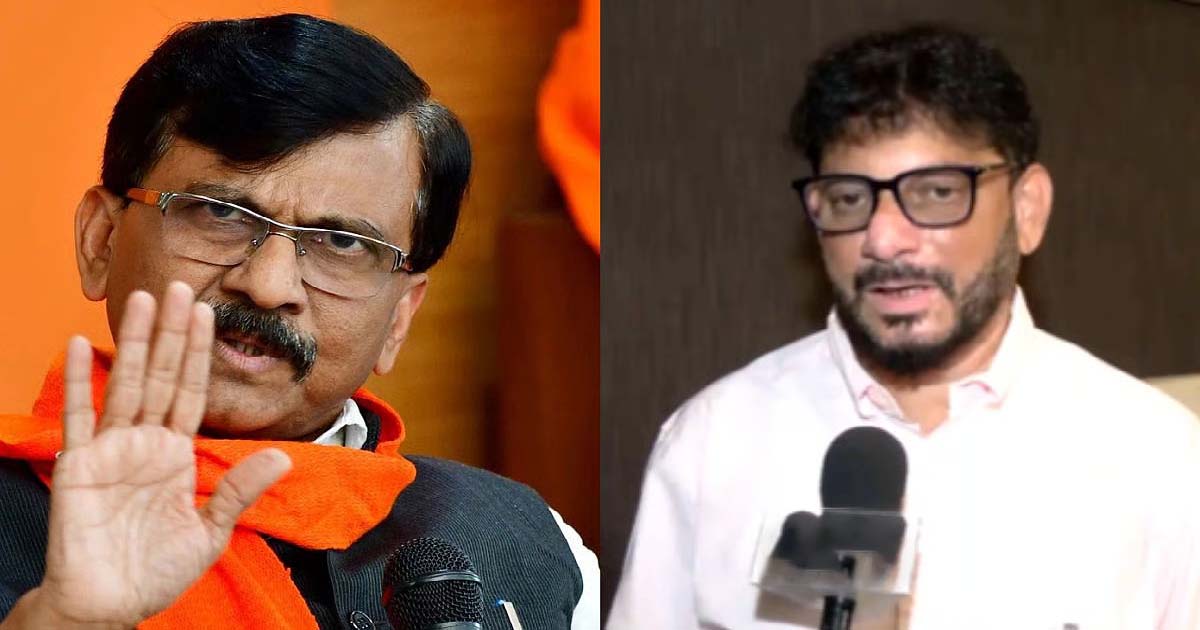
Mumbai: Shiv Sena UBT MP Sanjay Raut on Saturday, December 27, has strongly replied to to remarks made by AIMIM’s national spokesperson Waris Pathan, over who can become the mayor of Mumbai. Pathan had questioned, “Why can’t a Khan, Pathan, Sheikh, Qureshi, Syed become the Mumbai mayor?”
Responding to Pathan’s remarks, Raut said that elections should be fought democratically and decided by numbers. “Fight the election, win a majority and bring in 110 seats,” the Sena UBT MP said. He further added, “We have always maintained that Mumbai’s mayor should be a Marathi-speaking person”, adding that if Waris considers himself a Mumbaikar, he should demonstrate public support through the electoral process.
While speaking to news agency Media, Waris Pathan spoke on the upcoming Municipal Corporation Elections, where he questioned, saying, “Why can’t a Khan, Pathan, Sheikh, Qureshi, Syed become the mayor?”
He claimed that one day a Hijab-wearing woman will also become a mayor. He added, “Muslims have been leaders in the nation already… They (Maharashtra government) have no response to the lack of development and farmers’ suicide… They simply want to spread polarisation…”
NCP leader Zeeshan Siddique said that anyone can be sent to the position of Mayor, while their caste or religion should not matter. He expressed belief that the city needs a person who believes in getting things done.
Further adding, he said, “The mayoral chair should go to someone who has faith in work… If you look around Mumbai, the condition of the city’s roads and infrastructure is poor. Even though BMC receives funds worth thousands of crores, the work does not get done.”
The elections for 227 seats of BMC will be held on January 15, while the counting of votes will be held on January 16. The last polls for the 227 seats were held in February 2017. The BMC elections become crucial as the Mahayuti secured a landslide majority in the 288 municipal councils and nagar panchayats, winning 207 president posts in the local bodies. The Opposition Maha Vikas Aghadi could come up with a collective tally of 44.
In the BMC polls, the total number of registered voters stands at 1,03,44,315 across all wards, of which 55,16,707 are male voters, 48,26,509 are female voters, while 1,077 voters are listed under the ‘other’ category.
Navi Mumbai, Dec 27: In a shocking and disturbing incident from Navi Mumbai, a woman allegedly murdered her six-year-old daughter because the child could not speak Marathi, sending shockwaves across the city.
The police have arrested the mother in connection with the case after attempts were made to pass off the child’s death as a heart attack.
The incident came to light after the police grew suspicious of the circumstances surrounding the child’s death and ordered a post-mortem examination, which revealed that the girl had died due to asphyxiation.
Following intensive questioning, the truth behind the incident was uncovered.
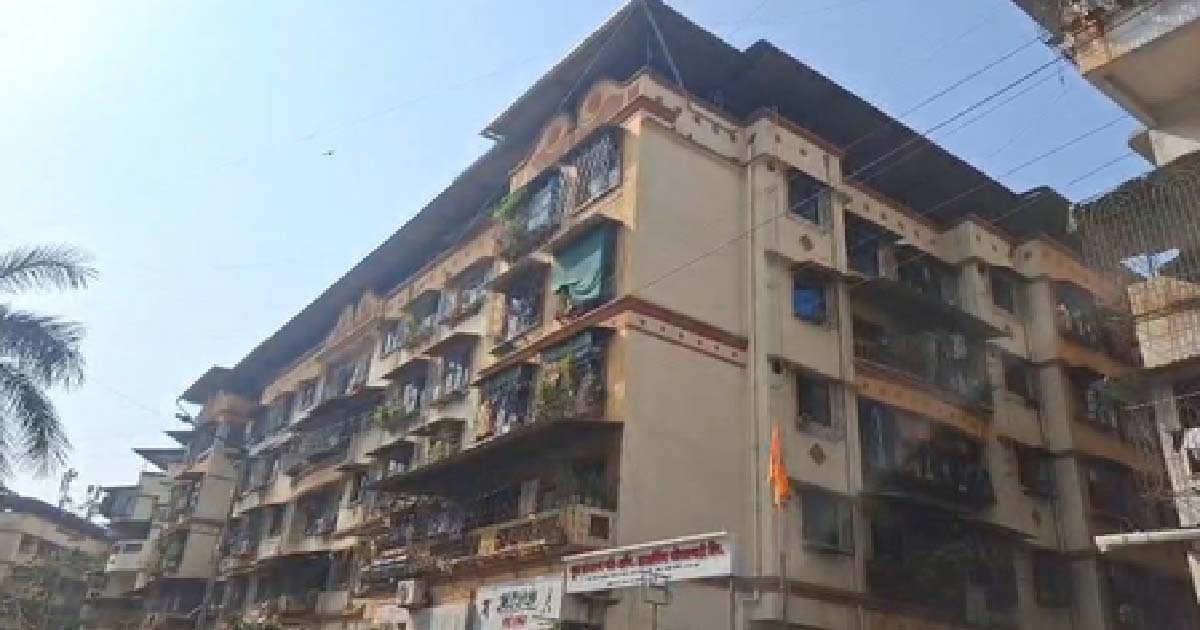
The heart-wrenching crime was reported from the Kalamboli suburb of Navi Mumbai. In Gurusankalp Housing Society in Sector-1, Kalamboli, the 30-year-old woman allegedly strangled her own six-year-old daughter to death.
The Kalamboli police have arrested the woman and initiated further investigation into the matter.
According to information provided by the police, the family consisted of an IT engineer husband and his wife, who holds a B.Sc. degree. The couple got married in 2017 and welcomed their daughter in 2019.
However, from a very young age, the child reportedly had difficulty speaking and mostly communicated in Hindi instead of Marathi.
This reportedly became a recurring source of anger for the mother. During the investigation, it emerged that she often expressed resentment about the child’s speech, repeatedly telling her husband, “I don’t want such a child; she doesn’t speak properly.”
The husband, police said, had tried to reason with her on several occasions.
On the night of December 23, the woman allegedly decided to kill the child. Coincidentally, the grandmother had visited the house that day, but could not meet the girl.
Later, when the husband returned home and found the child unresponsive, the family rushed her to the hospital.
At the hospital, an initial claim was made that the child had suffered a heart attack. However, Senior Police Inspector Rajendra Kote of Kalamboli Police Station found the circumstances surrounding the death suspicious and ordered a post-mortem examination.
The preliminary medical report indicated obstruction of the airway, pointing towards asphyxiation.
Following this revelation, the police subjected the parents to sustained questioning. After nearly six hours of interrogation, the mother allegedly confessed to strangling her daughter.
She has since been arrested in connection with the crime.
It has also come to light during the investigation that the woman was undergoing treatment with a psychiatrist.
The police are continuing their probe to ascertain all aspects related to the case and the mental condition of the accused.

Palghar Crime: Pelhar Police Seize Banned Gutkha Worth ₹6.39 Lakh, Shopkeeper Arrested In Nalasopara

Mumbai BMC Elections Samajwadi Party’s first list released but no decision on ward number 211

BMC Elections 2026 | ‘Fight Election, Win Majority’: Sanjay Raut’s Sharp Response To Waris Pathan’s, ‘Why Can’t Khan, Pathan, Shaikh, Qureshi, Syed Become Mumbai Mayor?’ Remark

Mother strangles 6-year-old to death in Navi Mumbai for not speaking Marathi

CWC meeting underway at AICC headquarters; Siddaramaiah, Shashi Tharoor in attendance

Sensex, Nifty open lower amid weak global cues

Mukesh Ambani, Shiv Sena UBT Chief Uddhav Thackeray & Son Aaditya Share Warm Greetings At Mumbai’s Swadesh Event

Kartik Aaryan, Ananya Panday promote ‘Tu Meri Main Tera, Main Tera Tu Meri’ on Amitabh Bachchan’s KBC

Samantha Ruth Prabhu Shares FIRST Wedding Photos With Raj Nidimoru, Exchanges Rings At Sadhguru’s Isha Foundation In Coimbatore

Lionel Messi’s G.O.A.T India Tour: Football Legend To Arrive On December 14 In Mumbai; CM Devendra Fadnavis Shares Excitement On X
-

 Crime3 years ago
Class 10 student jumps to death in Jaipur
-

 Maharashtra1 year ago
Mumbai Local Train Update: Central Railway’s New Timetable Comes Into Effect; Check Full List Of Revised Timings & Stations
-

 Maharashtra1 year ago
Mumbai To Go Toll-Free Tonight! Maharashtra Govt Announces Complete Toll Waiver For Light Motor Vehicles At All 5 Entry Points Of City
-

 Maharashtra1 year ago
False photo of Imtiaz Jaleel’s rally, exposing the fooling conspiracy
-
 National News1 year ago
Ministry of Railways rolls out Special Drive 4.0 with focus on digitisation, cleanliness, inclusiveness and grievance redressal
-
 Maharashtra1 year ago
Maharashtra Elections 2024: Mumbai Metro & BEST Services Extended Till Midnight On Voting Day
-

 National News1 year ago
J&K: 4 Jawans Killed, 28 Injured After Bus Carrying BSF Personnel For Poll Duty Falls Into Gorge In Budgam; Terrifying Visuals Surface
-
 Crime1 year ago
Baba Siddique Murder: Mumbai Police Unable To Get Lawrence Bishnoi Custody Due To Home Ministry Order, Says Report