
Maharashtra
Mumbai News: Veteran BJP Leader Padmanabha Acharya Passes Away


Mumbai: Veteran BJP leader Padmanabha Balakrishna Acharya (P B Acharya) passed away at his residence in Juhu on Friday. He was 92. Acharya served as the governor of Assam, Manipur, Nagaland, Arunachal Pradesh, and Tripura between 2014 and 2019.
Born in Udupi on the coastal Karnataka in 1931, Acharya breathed his last at his house, as confirmed by his family members.
PB Acharya’s life
Acharya became associated with the Rashtriya Swayamsevak Sangh (RSS) at an early age and served a six-month jail term during the ban on the RSS in 1948. Continuing his education after the jail term, Acharya completed his graduation from the MGM College of Udupi. He then moved to Mumbai to pursue further education in law. Among the founders of the Akhil Bharatiya Vidyarthi Parishad (ABVP), Acharya addressed issues related to North East India since his early days in ABVP. He initiated ‘Student’s Experience in Interstate Living’ (SEIL), a unique program aimed at connecting North Eastern youth with the rest of India in the ’60s.
Between 1995 and 2001, Acharya also served as the BJP’s National Secretary.
He headed the Uapanagr Shikshan Mandal, which runs several educational institutes in Mumbai, for a long time. In his condolence message, Union Minister Nitin Gadkari said Acharya remained committed to the organization’s ideology.Maharashtra Governor Ramesh Bais said, “Padmanabh Acharya lived a purposeful life. A true warrior, he dedicated his life to the unity of the country. Spending many years in the North Eastern States, he understood the problems of the people and worked diligently to bring back people into the mainstream of the country. As the Founding father of the Upanagar Shikshan Mandal in Mumbai, he opened the gates of education for the marginalized sections of society,” in his condolence message.

Crime
Tiger Shroff firing case: Crime Branch probes arrested women visit to Bandra Bandstand, suspects possible reconnaissance

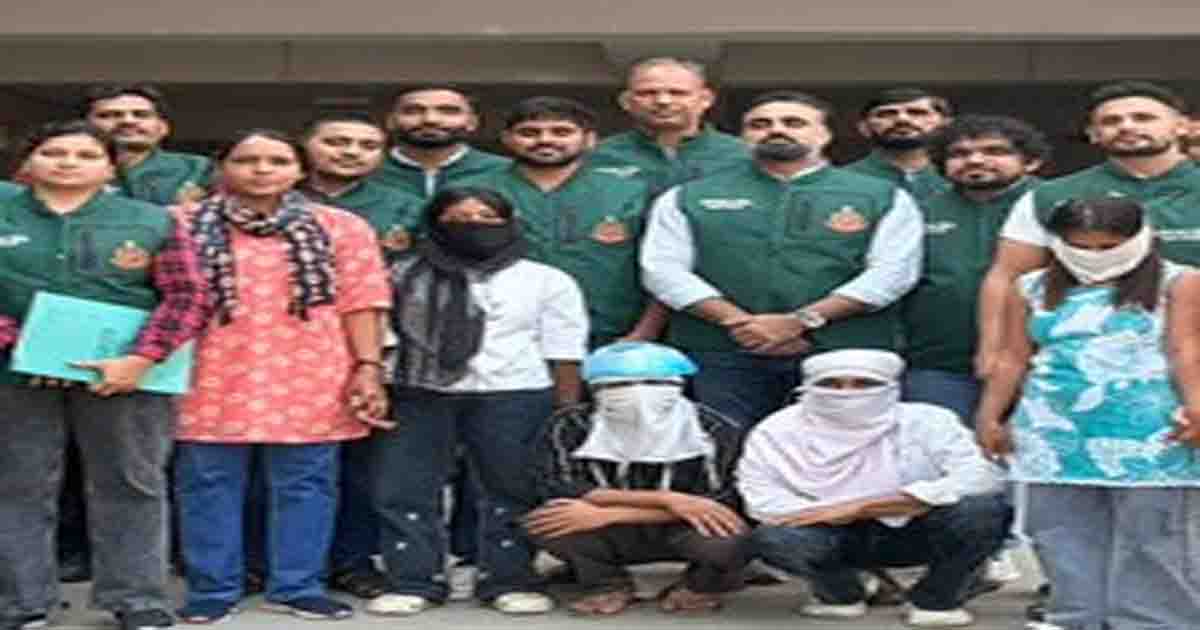
The Mumbai Crime Branch is investigating whether two women, Babita and Radha, arrested in connection with the firing at Bollywood actor Tiger Shroff’s car, conducted reconnaissance in Mumbai’s Bandra Bandstand area, where several prominent film personalities, including actor Salman Khan, reside.
According to a Mumbai Crime Branch official, the investigation revealed that the two women visited the Bandra Bandstand area after arriving in Mumbai. Investigators are now examining the purpose of their visit and whether they conducted reconnaissance of the residences of film personalities in the locality.
The official said the information about the women’s movements emerged from an analysis of their mobile phones and other technical evidence. However, investigators are yet to establish whether the visit was connected to any potential plan targeting film personalities.
The Crime Branch is also examining the alleged links of the arrested women with Anil Pandit, who remains absconding in the case. According to the police, the two women were in contact with Pandit, and their remand was obtained to question them further about the information that has emerged during the investigation.
Police officials said evidence recovered from the mobile phones of the arrested women indicated that they were aware of the purpose of their visit to Mumbai.
The police are also investigating whether the accused, most of whom are suspected to be originally from Haryana, received assistance from a local person in Mumbai. Investigators suspect that a local contact may have helped the alleged gang members execute their plan and are searching for the person.
According to the Crime Branch, eight of the 11 accused arrested in the case were directly in contact with the alleged main accused, Anil Pandit. Investigators are trying to establish the individual roles of the accused and determine how the alleged network operated.
Earlier, the Mumbai Crime Branch, in coordination with Madhya Pradesh Police, detained a suspect in Indore for allegedly providing logistical and financial support to a network linked to the Lawrence Bishnoi gang in connection with the October 18 firing incident.
Indore Deputy Commissioner of Police Rajesh Dandotia confirmed the detention, stating that it was carried out during a joint operation by the Mumbai and Indore Crime Branch teams. The latest detention took the number of accused apprehended in the case to 11, according to reports.
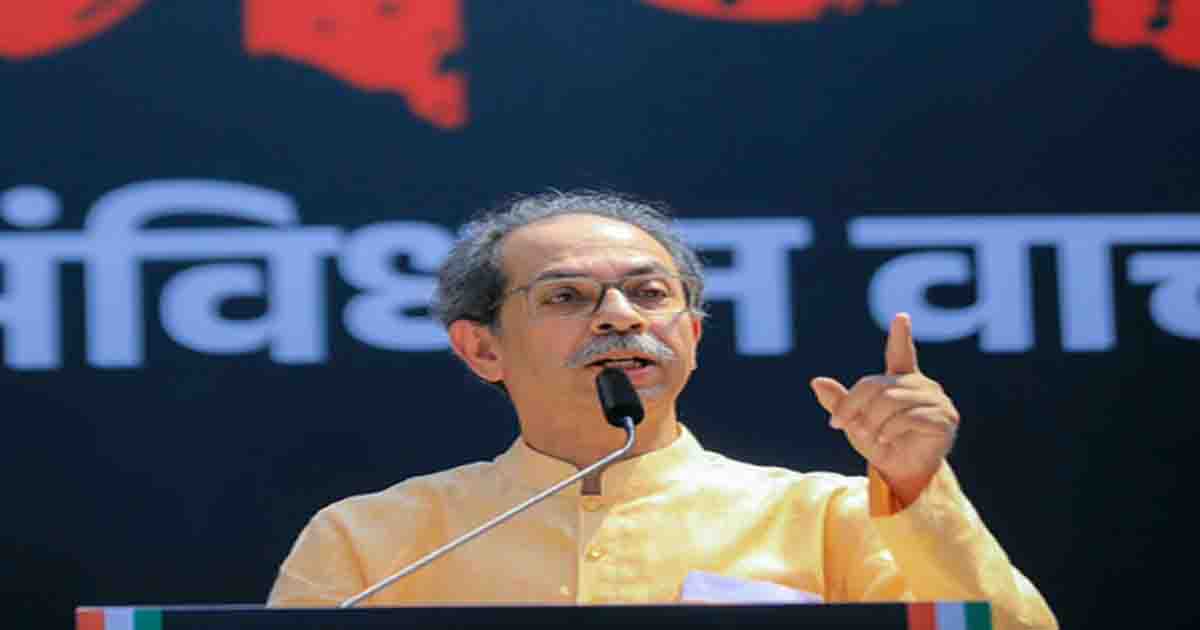
The Shiv Sena Uddhav Balasaheb Thackeray on Tuesday stepped forward to defend youth activists embroiled in a sharp legal and public debate over the enforcement of “peace bonds” during anti-government demonstrations in New Delhi.
The Thackeray camp, in an editorial in the party’s mouthpiece, ‘Saamana’, asserted that executing a peace bond is neither an apology, a surrender to state authorities, nor an admission of guilt.
The controversy stems from recent ‘Tiranga’ demonstrations organised in defiance of strict bans across major protest venues in the national capital, including Jantar Mantar. Following their arrest, police required Cockroach Party youth leaders — identified as Abhijeet Dipke, Saurabh Das, Ashutosh Ranka, and Ajinkya Shinde — to sign peace undertakings to secure their release, said the editorial.
In contrast, activist Neha Bora refused to sign similar undertakings and challenged the practice in court. The Delhi High Court subsequently issued directives stating that authorities cannot demand a peace bond until an ongoing inquiry concludes and a full police report is submitted, noting that no formal bond had been lawfully demanded from Bora in that manner, added the editorial.
According to the editorial, the split approach drew comment from former Supreme Court judge Justice Markandey Katju, who publicly praised Bora for her defiance while sharply criticising the youth leaders who signed the undertaking, framing their compliance as a major strategic risk for democratic movements.
Pushing back against Justice Katju’s criticism, the editorial mounted a detailed legal defence of the young activists, emphasising that peace bonds are strictly preventive measures rather than punitive actions, citing the landmark Supreme Court precedent in the Madhu Limaye case. “Signing a peace bond does not equate to issuing an apology, kneeling before the government, or confessing to a crime. It is merely an undertaking to maintain peace; it does not enforce absolute silence or legally prevent citizens from participating in public demonstrations,” remarked the editorial.
The editorial highlighted the governing statutory framework under the Bharatiya Nagarik Suraksha Sanhita (BNSS). Former Section 107 of the IPC (now Section 126 BNSS) serves as an undertaking to maintain peace without stripping citizens of their fundamental rights under Article 19 of the Constitution to hold peaceful assembly and protest. Under former Section 122 of the IPC (Section 141 BNSS), police officers hold no unilateral authority to declare a bond violated. Any alleged breach must be formally proved before a magistrate. If a breach is established before a magistrate, the legal consequence is strictly limited to simple imprisonment for a maximum of one year for the remainder of the bond duration, along with forfeiture of the specified bond amount.
In the conclusion, the Uddhav Thackeray-led Shiv Sena urged young citizens fighting for democratic freedoms not to be intimidated by procedural mechanisms used by law enforcement. The party also called on senior legal figures, including Justice Katju, to actively guide and encourage emerging youth leaders rather than penalising their tactical decisions in court.
Maharashtra
Maha: State Board approves Wildlife Sanctuary status for two reserves; notifies 14 new conservation reserves
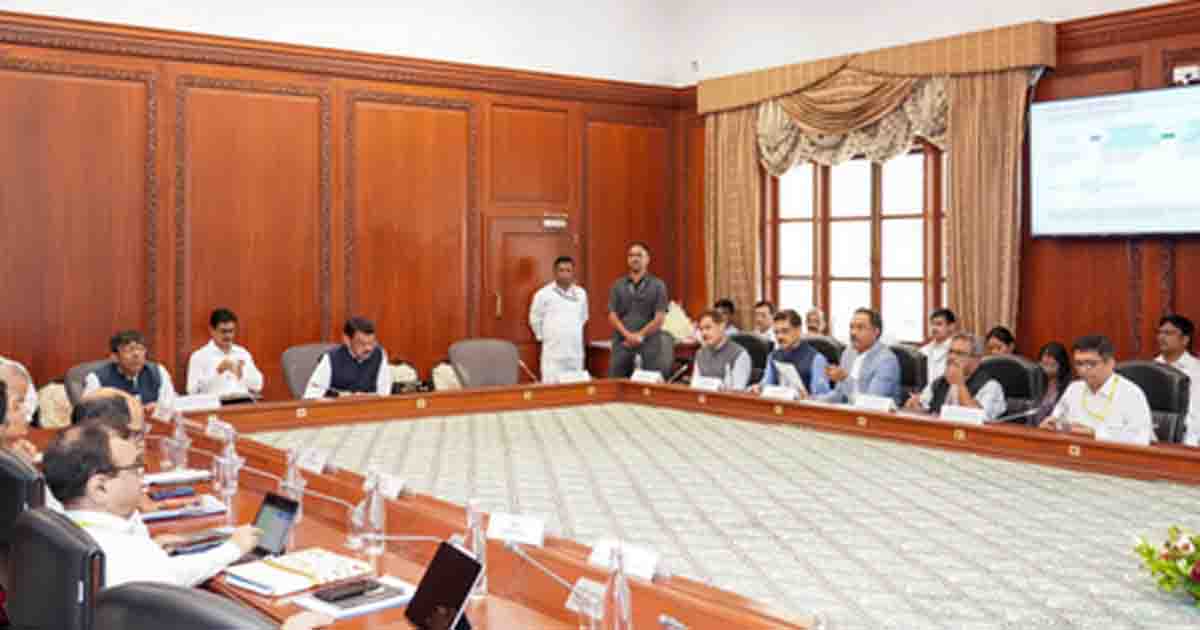
In a major push toward wildlife preservation and habitat protection across Maharashtra, the State Board for Wildlife (SBWL), chaired by Chief Minister Devendra Fadnavis, on Monday approved key environmental proposals during its 26th official meeting.
Among the landmark decisions made, the board granted Wildlife Sanctuary status to two key forest pockets and formally approved proposals for 14 new Conservation Reserves spanning seven districts.
The new Wildlife Sanctuary status has been accorded to Kolamarka Conservation Reserve (Gadchiroli district), which is widely renowned as a vital habitat for endangered Asiatic wild buffaloes (Bubalus arnee).
Kolamarka has officially been upgraded to a Wildlife Sanctuary. Further, approval was granted to expand the existing Tansa Wildlife Sanctuary by incorporating 588.767 hectares of private and revenue land from six villages (Ogda, Khodde, Tirmal, Pachghar, Phansad, and Amle) to make the sanctuary human-settlement-free.
Proposals for 14 new conservation reserves spread across Pune, Raigad, Nashik, Nandurbar, Thane, Palghar, and Chandrapur districts received official board clearance. These reserves include Velhe Mulshi (Pune / Raigad), Bhorgirigad (Pune), Lonavala (Pune / Raigad), Dindori (Nashik), Surgana (Nashik), Taharabad (Nashik), Chinchpada (Nandurbar), Alibaug (Raigad), Ghera Manikgad (Raigad), Gumatara (Thane), Jawhar (Palghar), Asherigad (Palghar), Dhamani (Palghar) and Ekara (Chandrapur).
Further, the State Board for Wildlife declared 100.139 sq. km area in Koka Wildlife Sanctuary as Critical Wildlife Habitat and 255.79 sq. km area in Jaakwadi Bird Sanctuary as Critical Wildlife Habitat.
It was also decided that maintenance, silt removal, and dam repair works inside wildlife sanctuaries must be permanently integrated into the respective Management Plans within 3 months.
Wildlife officials are to be notified in advance instead of seeking fresh administrative approvals for every project.
Clearances were granted for essential civic and infrastructure projects (irrigation, drinking water, roads, bridges, power transmission, medical units, and underground optical fibre cables) across protected zones, eco-sensitive areas, and tiger corridors. Discussions were held on declaring Human-Wildlife Conflict as a Natural Disaster under the Disaster Management Act, establishing quiet zones in tiger reserves (core/buffer/ESZ), and formulating relocation policies for villages in buffer zones.
The CM instructed officials to evaluate staffing requirements, deputations, and vacant positions within one month to shift notified sanctuaries from Regional Forest/Forest Development Corporation Maharashtra control to the dedicated Wildlife Wing.

Wamiqa Gabbi says prosthetics made her ‘forget’ her real appearance while playing Jyoti Nikam in ‘Prahaar’

Ravi Kishan’s devotional drama titled ‘Mera Yaar Bajrangi – Dosti Ho Toh Aisi’, to release on Diwali 2027

SC says notice issued on pregnant journalist’s plea against Rahul Gandhi, hearing on Nov 3

Tiger Shroff firing case: Crime Branch probes arrested women visit to Bandra Bandstand, suspects possible reconnaissance

Shiv Sena(UBT) defends youth activists over peace bonds in ‘Saamana’

Rahul, Cong ecosystem want to force regime change: BJP after Neha Bora praises B’desh Gen-Z protest

Attack on democratic rights: INDIA Bloc leaders on detentions of anti-ECI protestors

BJP pays tribute to ex-President Abdul Kalam, recalls his enduring influence on generations of India’s youth

INDIA bloc begins protest march against ECI

Maha Congress stages agitation against Gyanesh Kumar
-

 Crime4 years ago
Class 10 student jumps to death in Jaipur
-

 Maharashtra2 years ago
Mumbai Local Train Update: Central Railway’s New Timetable Comes Into Effect; Check Full List Of Revised Timings & Stations
-

 Maharashtra2 years ago
Mumbai To Go Toll-Free Tonight! Maharashtra Govt Announces Complete Toll Waiver For Light Motor Vehicles At All 5 Entry Points Of City
-

 Maharashtra2 years ago
False photo of Imtiaz Jaleel’s rally, exposing the fooling conspiracy
-

 National News2 years ago
Ministry of Railways rolls out Special Drive 4.0 with focus on digitisation, cleanliness, inclusiveness and grievance redressal
-

 Maharashtra2 years ago
Maharashtra Elections 2024: Mumbai Metro & BEST Services Extended Till Midnight On Voting Day
-

 National News2 years ago
J&K: 4 Jawans Killed, 28 Injured After Bus Carrying BSF Personnel For Poll Duty Falls Into Gorge In Budgam; Terrifying Visuals Surface
-

 Crime2 years ago
Baba Siddique Murder: Mumbai Police Unable To Get Lawrence Bishnoi Custody Due To Home Ministry Order, Says Report