
National News
Mumbai civic polls: Thackeray cousins’ Marathi pride vs BJP-Shiv Sena’s global city vision

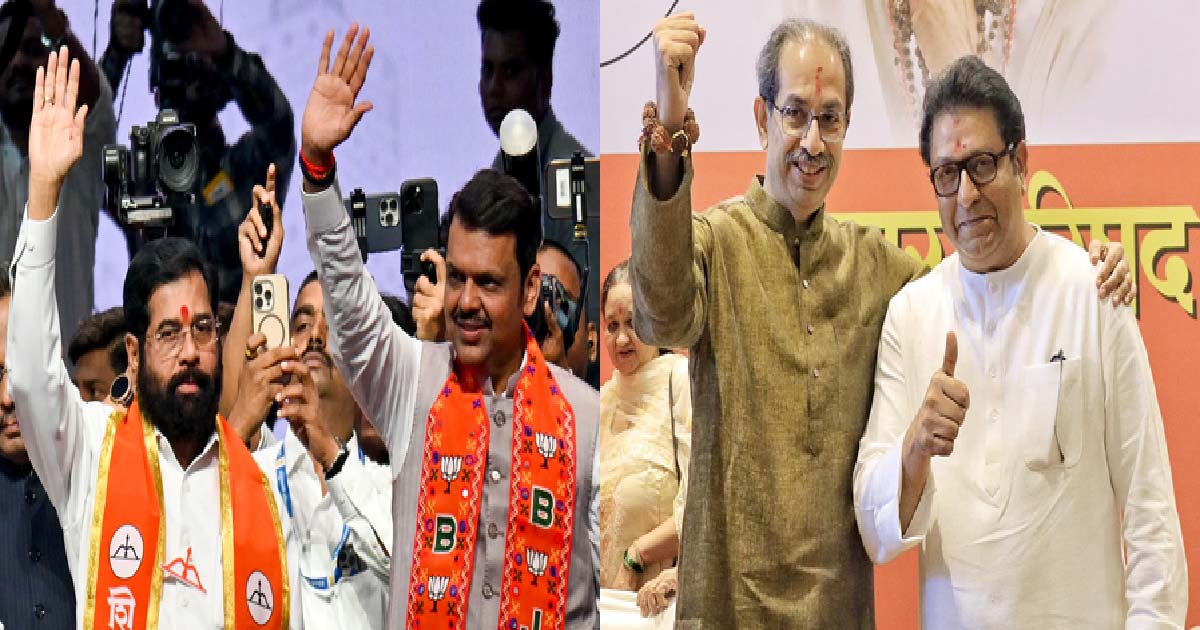
Mumbai, Jan 5: As the Brihanmumbai Municipal Corporation (BMC) elections scheduled for January 15 draw closer, the political contest for Mumbai has sharply intensified.
The Thackeray cousins — Uddhav Thackeray and MNS chief Raj Thackeray — on Sunday released a joint Vachan Nama (manifesto), signalling a rare show of unity. In response, the Bharatiya Janata Party (BJP) unveiled an “Aarop Patra” (charge sheet), alleging large-scale corruption during the Thackeray-led administration’s 25-year control of the BMC.
The Thackeray camp has framed the election around a “Save Democracy” narrative, alleging “vote theft” through unopposed victories and appealing to the idealism of young voters. In contrast, the BJP has launched digital “Aarop” campaigns portraying the existing BMC structure as outdated and corrupt, arguing that it obstructs Mumbai’s transformation into a “Global City” that the youth aspire to.
For the first time in nearly two decades, Shiv Sena (UBT) and the Maharashtra Navnirman Sena (MNS), along with the Nationalist Congress Party (Sharadchandra Pawar), have presented a unified vision for Mumbai under the slogan “Shabd Thackerencha” (word of the Thackerays).
Their manifesto includes a range of welfare promises such as the Swabhiman Nidhi — a monthly allowance of Rs 1,500 for domestic workers and Koli women — construction of one lakh affordable homes within five years, the creation of a dedicated BMC Housing Authority, 100 units of free electricity for residential users through BEST, subsidised meals at Rs 10 for breakfast and lunch, reduction of minimum bus fare to Rs 5, employment allowance and interest-free loans for gig workers, and the establishment of five new medical colleges.
The Vachan Nama also explicitly calls for a “Marathi Mayor” and asserts that Mumbai’s land should primarily be reserved for “Mumbaikars.”
Meanwhile, the BJP’s Aarop Patra alleges a corruption scam amounting to Rs 3 lakh crore over the past 25 years of Thackeray-led governance in the BMC. The party claimed that despite spending Rs 21,000 crore on road construction over a decade, Mumbai continues to suffer from severe pothole issues.
The BJP further alleged irregularities during the COVID-19 pandemic, including the so-called “Body Bag Scam,” where body bags were allegedly procured at Rs 6,721 each despite costing around Rs 1,500, and discrepancies in oxygen plant installations worth Rs 320 crore. It also claimed that approximately 1,700 bar and restaurant owners were subjected to extortion during the Maha Vikas Aghadi tenure.
The BJP accused the Thackeray camp of insincere commitment to the Marathi language, citing a 70 per cent decline in Marathi-medium students and the closure of 114 BMC-run Marathi schools.
While the Thackeray cousins emphasise “Marathi pride,” the BJP maintains that major infrastructure projects such as the Coastal Road and Mumbai Metro were completed only due to the efforts of Chief Minister Devendra Fadnavis and the Centre.
Political observers note that the Thackerays try to build a combined appeal of “social security” and “identity.” By promising a Marathi Mayor and asserting Mumbaikar rights over land, they aim to consolidate the traditional nativist vote that weakened after the Shiv Sena split.
The reunion of Thackerays has also created a strong visual and emotional impact, projecting a “united family” image intended to counter the BJP’s organisational strength. Welfare promises, including free electricity and subsidised meals, are seen as key strategies to attract slum dwellers and chawl residents.
Observers argue that the BJP’s charge sheet strategy is designed to focus on “performance and accountability,” targeting the tax-paying middle class by alleging misuse of public funds under the previous regime. The party is positioning itself as the only force capable of modernising Mumbai, highlighting the rapid execution of infrastructure projects under the current Mahayuti government while contrasting them with what it describes as “25 years of failure.”


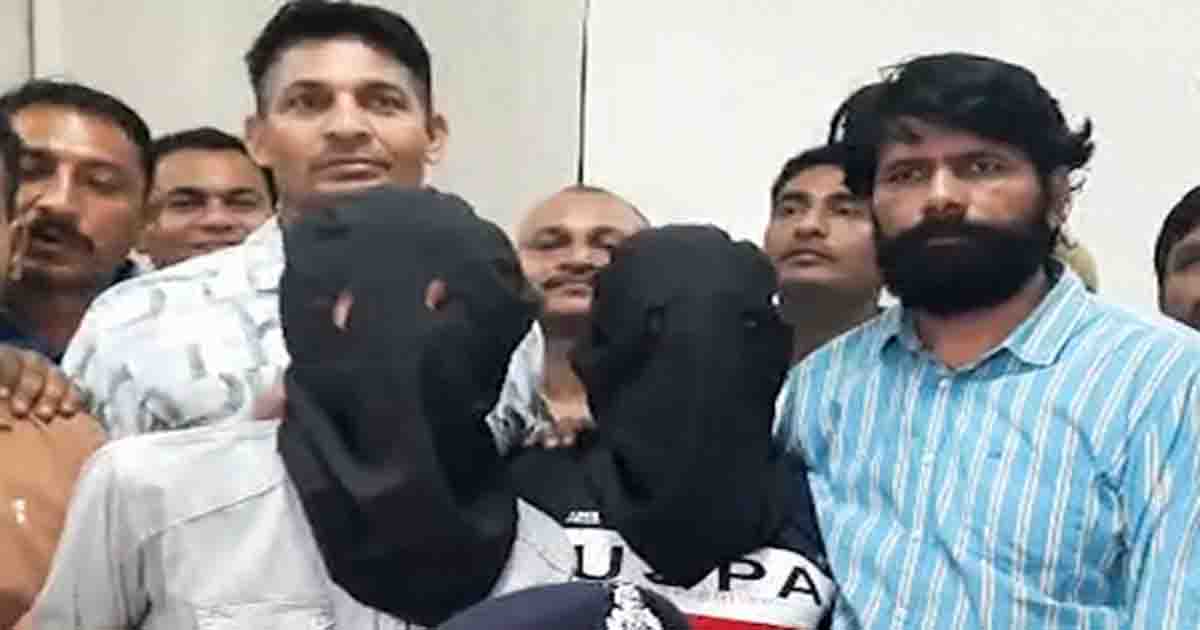
The three suspects held in connection with the firing incident involving Bollywood actor Tiger Shroff in Mumbai will be taken to Mumbai, Maharashtra, by the Mumbai Police on Tuesday. The suspects were kept overnight in the lock-up of the Kota Railway Colony police station in Rajasthan under tight security amid concerns over their possible escape.
As a precautionary measure, commandos and armed personnel were deployed at the police station.
The entire CCTV surveillance network of the police station was connected to a command centre to ensure continuous monitoring of the suspects and strengthen security arrangements.
City Superintendent of Police Tejaswini Gautam also visited the Railway Colony police station late Monday night to review the security arrangements. The Mumbai Police had earlier postponed the transfer of the suspects from Kota due to security concerns.
The three remained in custody throughout the night under heightened surveillance.
According to the police, the three suspects were apprehended by Kota Police at the railway station on Monday in connection with the firing incident involving actor Tiger Shroff’s car in Mumbai. The suspects were travelling on the Pune-Jaipur train (12939) and were found sitting at different locations in a general coach.
Their movements and travel plans allegedly indicated that they were attempting to evade arrest after the incident. Investigators believe the suspects had planned to reach Jaipur by train, travel onward to Delhi by bus and then escape to Nepal. However, Kota Police intercepted them at the railway station before they could proceed with their alleged plan.
Following their apprehension, the suspects were taken to the Railway Colony police station, where security was significantly tightened in view of the sensitivity of the case and the possibility of an escape attempt.
The Mumbai Police are scheduled to leave Kota with the three suspects on Tuesday for further investigation into the firing incident. The transfer is expected to enable investigators to question them further and establish their alleged roles in the case.
The deployment of armed personnel, enhanced CCTV monitoring, and the presence of senior police officials underline the security measures adopted by Kota Police while the suspects remained in custody.
Further details about the investigation and the circumstances surrounding the firing incident are expected to emerge as the Mumbai Police proceed with the case.
National News
Vijayadashmi: Ravan effigy to be burnt at 35 locations across Noida amid tight security

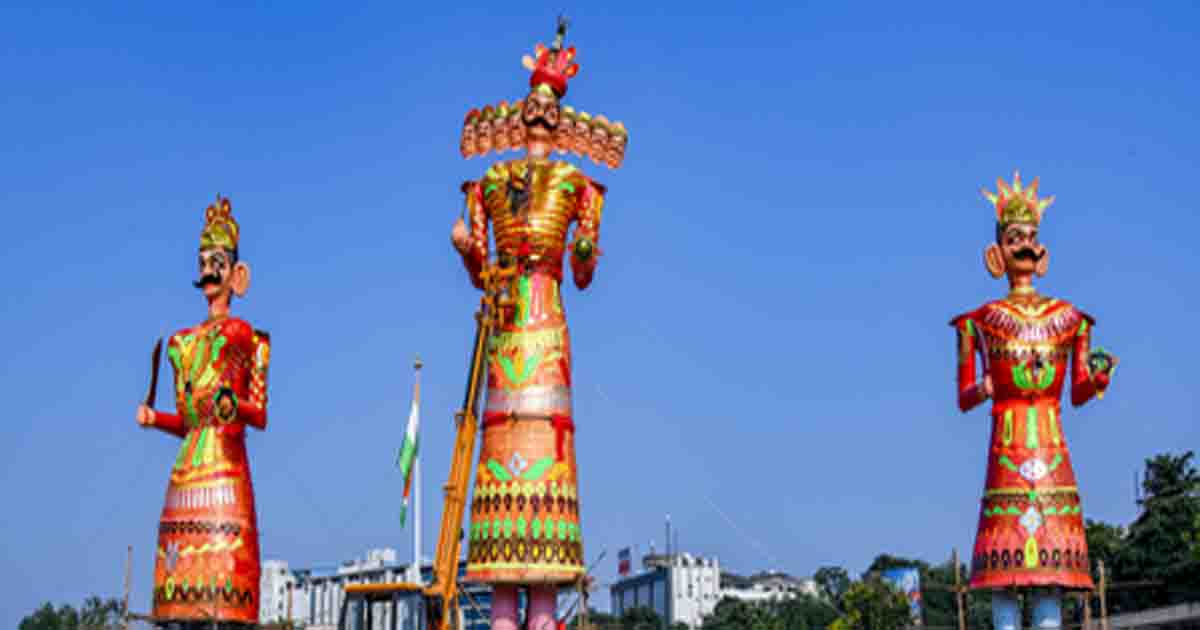
Vijayadashmi will be celebrated with great enthusiasm in Uttar Pradesh’s Noida on Tuesday as people gather to witness the ‘Ravan Dahan’, while some participate in the immersion of Goddess Durga idols.
Vijayadashami, or Dussehra, is a festival symbolising the victory of truth over falsehood.
On this occasion, Ravan effigies will be burnt at 35 locations across the city, while the Goddess Durga idol immersion will take place at approximately 200 sites.
Anticipating large crowds during the festivities, the police and local administration have put comprehensive security arrangements in place.
Approximately 2,200 police personnel, including 300 women officers, will be deployed to maintain law and order and ensure the safety of devotees. Additionally, the fire department has kept 26 fire tenders and around 250 firefighting personnel on standby to handle any emergencies.
In light of the Dussehra celebrations and the immersion of Goddess Durga idols, the Noida Traffic Police has devised a special traffic diversion plan. Traffic arrangements on several city routes will be altered from 2:00 p.m. on Tuesday until late evening.
According to the police, traffic on major routes will be regulated to manage expected crowds and increased volume of vehicles. Motorists are advised to check their intended routes before leaving home and plan their travel accordingly.
Under the traffic diversion plan, the road leading from Rajnigandha towards Sector 12, Sector 22, and Sector 56, also known as Master Plan Road-1, is expected to experience heavy traffic pressure. Vehicle movement on this route is likely to be affected due to the Dussehra celebrations.
Motorists are advised to allow extra travel time when using this route and to opt for alternative paths if necessary.
In view of the events scheduled around Noida Stadium in Sector 21, traffic arrangements on the roads surrounding the stadium will be modified. Additionally, traffic diversions will be implemented in the Sector 62 area as and when required.
According to the police, these arrangements may remain in place until the crowds disperse following the ‘Ravan Dahan’ (effigy burning). The public is therefore urged to avoid taking vehicles unnecessarily into the vicinity of the event venues and to strictly follow the instructions of the traffic police.
DCP (Traffic) Syed Ali Abbas stated that special arrangements have been made by the traffic police for the convenience of the public. A helpline number, 9971009001, has been issued to provide traffic-related information and assistance.
Citizens may contact this number in the event of traffic congestion or any other traffic-related issues. The police have requested motorists to park their vehicles only in designated parking areas and to refrain from stopping or parking on the roads. Haphazard parking on the road obstructs traffic flow and can lead to congestion.
Action may be taken against vehicles found in violation of these rules. The traffic police have also made provisions to remove vehicles parked on the roads using cranes, if necessary.
Furthermore, the Fire Department has been placed on high alert to address any potential fire hazards or other emergencies during the Dussehra celebrations and the immersion of Durga idols.
A total of 26 fire tenders and approximately 250 firefighting personnel will be deployed across the city to ensure an immediate response to any untoward incident.
Special attention will also be given to security arrangements and crowd control at the event venues.
The police and the administration have appealed to the public to celebrate Dussehra peacefully, disregard rumours, adhere to traffic regulations, and cooperate with police personnel.
Officials have stated that all necessary measures have been taken to maintain security and traffic flow, ensuring that the public can celebrate Vijayadashami in a safe and convenient manner.
National News
‘People of India will not tolerate anarchy’: BJP leaders slam Sanjay Raut for supporting Albania protests
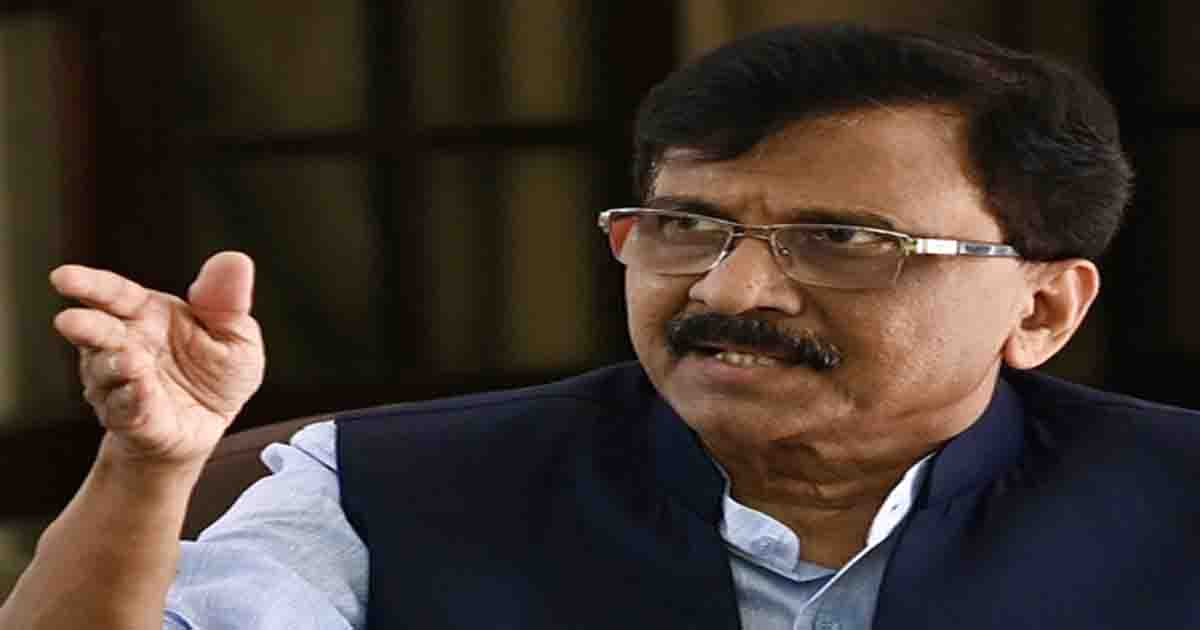
BJP leaders on Tuesday criticised Shiv Sena (UBT) MP, Sanjay Raut, over his social media post referring to the reported burning of Albania’s Supreme Court, with several leaders accusing him of promoting anarchy and demanding an apology.
In his post on X, Raut wrote, “The people of Albania have burned down the Supreme Court. The people were enraged because the Supreme Court was helping corrupt prime ministers. The protesting public has also attacked the parliament and government offices, as well as the ministers’ homes. All countries should learn a lesson from these events. Especially India.”
Reacting to the post, BJP leader Syed Shahnawaz Hussain accused Raut of threatening the government and the Supreme Court.
“He is saying that lessons should be learned from how the Supreme Court in Albania was set on fire. What message is he trying to convey? Is he trying to threaten the Supreme Court? Uddhav Thackeray should apologise to the Supreme Court for the kind of statement Sanjay Raut has made,” he told media.
BJP leader Guru Prakash Paswan also criticised Raut, asking whether he was attempting to present the events in Albania as an example for India. “Do they want to set an example? The Congress in Kerala also tweeted, ‘Remove the CJI’, and we will bring in a new CJI. The country runs according to the Constitution. …There are constitutional procedures. They are trying to create an atmosphere of anarchy.”
BJP leader Kirit Somaiya alleged that Raut was supporting the burning of Albania’s Supreme Court and accused him of repeatedly targeting constitutional institutions.
“They want anarchy. First, they insulted and abused the President, then the Election Commission, and then the Chief Justice of the Supreme Court. Now, they want the Supreme Court to be burned. The people of India will not tolerate anarchy. A contempt petition against Sanjay Raut is currently underway in the Supreme Court, and he will get his answer there,” he said.
Meanwhile, Congress leader Udit Raj expressed support for Raut’s remarks, linking the controversy to questions surrounding bail decisions.
“When bail is granted, no reasons are given, and Umar Khalid is denied bail. Bail is the rule, so why is it being denied? Why was it granted to others? There should be a speaking order,” he told media.
Shiv Sena leader Anand Dubey, responding to the controversy, invoked the occasion of Vijayadashami and said any wish to see India descend into violence and arson was unacceptable.
“Throughout history, righteousness has always triumphed over unrighteousness, justice over injustice, and truth over falsehood. To those who pray or wish for India to burn, for chaos, violence, and arson to spread, or for our nation to descend into conditions like those seen in Albania, France, Pakistan, Sri Lanka, Bangladesh, or Nepal, know that this cannot happen here; this is India,” he said.

Tiger Shroff firing case: Three suspects to be taken to Mumbai from Kota under tight security

Vijayadashmi: Ravan effigy to be burnt at 35 locations across Noida amid tight security

Mumbai Police recover five empty shells, two live cartridges in Tiger Shroff firing case

‘People of India will not tolerate anarchy’: BJP leaders slam Sanjay Raut for supporting Albania protests

Indian stock markets closed on account of Dussehra

Rahul, Cong ecosystem want to force regime change: BJP after Neha Bora praises B’desh Gen-Z protest

BJP pays tribute to ex-President Abdul Kalam, recalls his enduring influence on generations of India’s youth

Attack on democratic rights: INDIA Bloc leaders on detentions of anti-ECI protestors

INDIA bloc begins protest march against ECI

Maha Congress stages agitation against Gyanesh Kumar
-

 Crime4 years ago
Class 10 student jumps to death in Jaipur
-

 Maharashtra2 years ago
Mumbai Local Train Update: Central Railway’s New Timetable Comes Into Effect; Check Full List Of Revised Timings & Stations
-

 Maharashtra2 years ago
Mumbai To Go Toll-Free Tonight! Maharashtra Govt Announces Complete Toll Waiver For Light Motor Vehicles At All 5 Entry Points Of City
-

 Maharashtra2 years ago
False photo of Imtiaz Jaleel’s rally, exposing the fooling conspiracy
-

 National News2 years ago
Ministry of Railways rolls out Special Drive 4.0 with focus on digitisation, cleanliness, inclusiveness and grievance redressal
-

 Maharashtra2 years ago
Maharashtra Elections 2024: Mumbai Metro & BEST Services Extended Till Midnight On Voting Day
-

 National News2 years ago
J&K: 4 Jawans Killed, 28 Injured After Bus Carrying BSF Personnel For Poll Duty Falls Into Gorge In Budgam; Terrifying Visuals Surface
-

 Crime2 years ago
Baba Siddique Murder: Mumbai Police Unable To Get Lawrence Bishnoi Custody Due To Home Ministry Order, Says Report