
National News
MP Elections 2023: ‘Did Modi Send CBI, ED After Narendra Tomar’s Son?’, Rahul Gandhi Attacks BJP Over Viral ‘Cash Dealings’ Videos

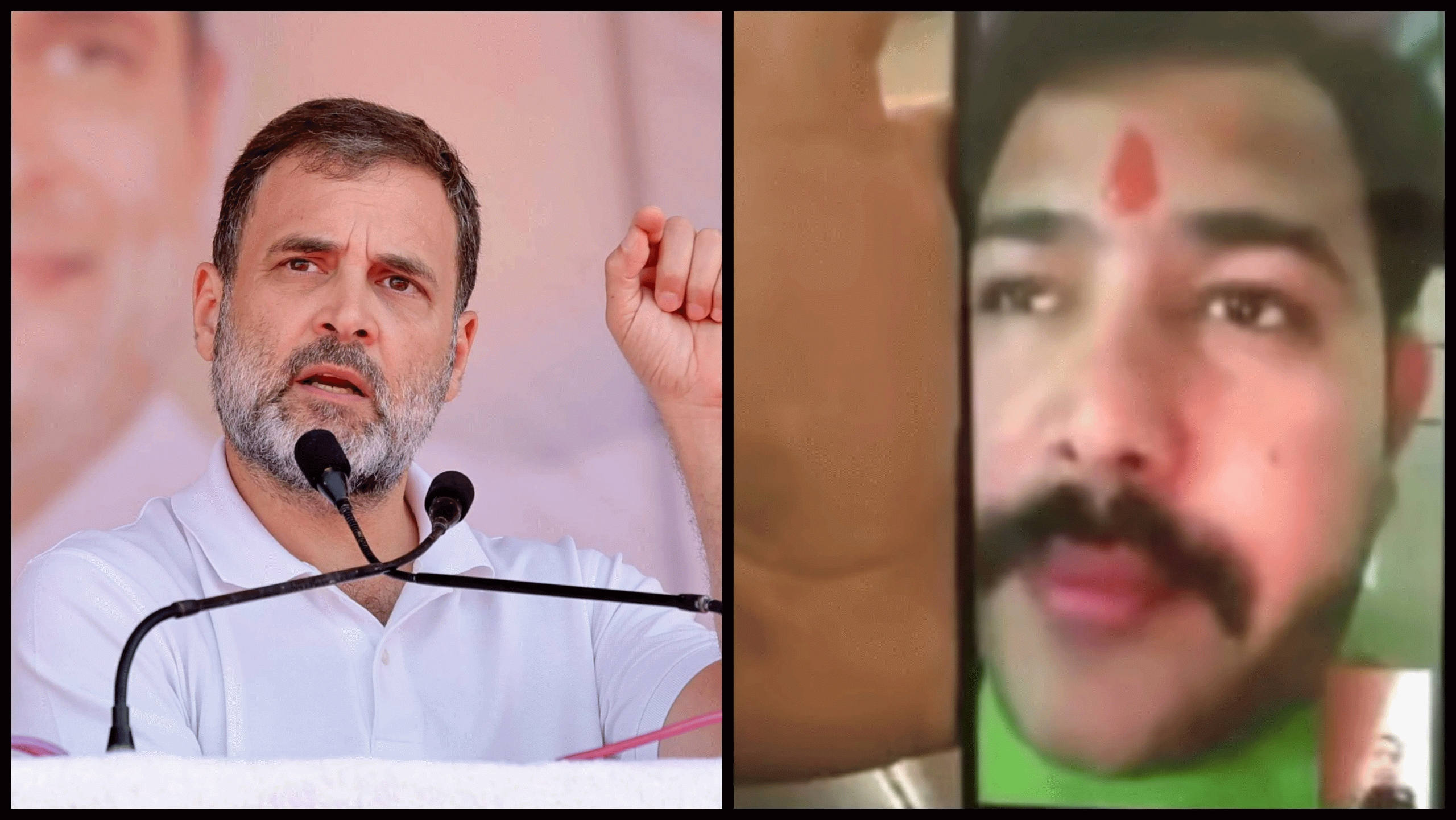
Another video surfaced on Monday, revealing Devendra Pratap, the son of Union Minister Narendra Singh Tomar, discussing transactions worth hundreds of crores, just ahead of the assembly elections. In this video, reminiscent of the one that garnered widespread attention earlier this month, Devendra, also known as Ramu Bhaiya, is seen engaging in a conversation with a broker about transactions from Chandigarh.
Did Modi send ED, CBI after Tomar’s son?: Rahul Gandhi
During his tour of the poll-bound state today, Rahul Gandhi addressed a rally in Harda on Monday, criticising the Prime Minister for not taking action against Devendra Pratap despite the viral video of alleged dealings.
“There has been a BJP government here for 18 years. You have witnessed their corruption and exploitation in governance. Wherever they find an opportunity, they use it to make money out of it,” remarked Gandhi.
“I don’t know know if you have seen the video of their minister’s son. Did you watch the video of Tomar ji’s son?” Gandhi asked, as the crowd cheered in affirmation.
“Without hiding, without any fear, he’s openly stealing money of Madya Pradesh’s farmers, labourers and poor youth on video call,” Gandhi said.
“Brothers and sisters, did Narendra Modi take any action against Tomar ji’s son? Did he send CBI, ED, IT dept after him?” the Gandhi scion asked.
BJP running 50% commission govt in MP: Rahul Gandhi
Making significant allegations, the former Congress president asserted, “This is a 50% commission government. They engaged in corruption in the Mahakal corridor project, ruined the lives of 1 crore youth in the Vyapam scam. Despite 40 deaths, there was no inquiry. No inquiry was conducted in the Patwari exam scandal either. In the sale of MBBS seats, there has been no inquiry. Ministers, their families, or ministers’ sons are consistently involved in corruption, yet no action is taken against them.”
Similar video of Devendra Pratap had gone viral
A few days ago, a video featuring Devendra Pratap Singh Tomar discussing financial transactions worth Rs 100 crore had gone viral, sparking intense criticism from the opposition eying to dislodge the BJP from power.
Though Tomar had called the video fake and an attempt to malign his image, a similar video emerging on Monday has put question mark on his claim, leading to further attacks from the Congress.
At the beginning of the new video, the person talking on the call can be seen telling Devendra Tomar that the CA of some unknown person from Chandigarh will tell them every month whether it is 50 crore, 100 crore or 500 crore. To this, Devendra replies “no problem”. The broker then says that the money has to be taken every month.
Later, Devendra asks, “How much will they give in the first month?”. The man says, “I have asked them for 250 (crore). Their CA will meet my bank manager today. Because it will get converted and then reach you and from you it will go to Monardo.” On this, Devendra said, “You can order it in your account and then send it.
Narendra Tomar fighting a ‘prestige’ election
Union Minister Narendra Singh Tomar is running as a candidate from the Dimani assembly constituency in the Morena Lok Sabha seat, the same constituency he represents in Parliament. The BJP aims to present a prominent figure in the Chambal region for the upcoming state polls.
Tomar’s nomination as an assembly candidate came as a surprise to many. The election has evolved into a matter of prestige for the senior BJP leader, and a loss here would significantly impact his credibility. Amidst this challenging contest, the union minister is undoubtedly displeased with his son’s alleged videos of cash dealings gaining widespread attention.


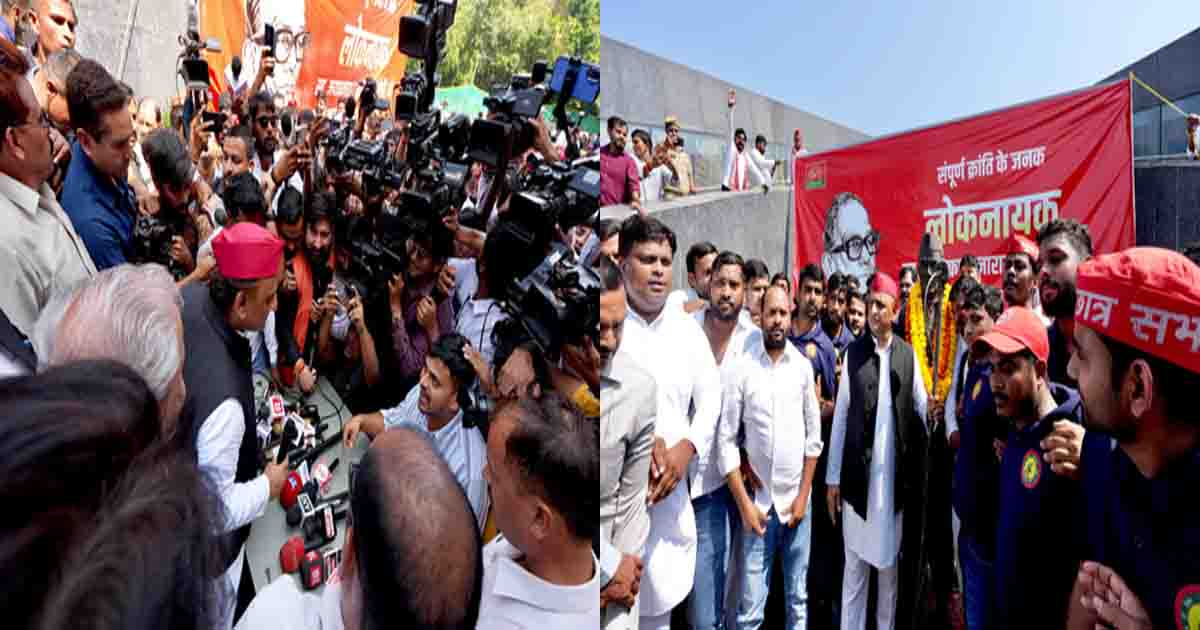
Lucknow, Oct 11: The Samajwadi Party (SP) Chief Akhilesh Yadav on Sunday asserted that a change of power was certain in 2027 Assembly elections and criticized the Election Commission (EC) over alleged police action on the protesters in the national capital.
Speaking to the press, after paying respects to Loknayak Jayaprakash Narayan at the Jayaprakash Narayan International Centre (JPNIC) in Lucknow on latter’s birth anniversary, the SP supremo said that the Bharatiya Janata Party (BJP) will be shown the door by people in 2027 Uttar Pradesh polls and the ‘partisan’ Election Commission won’t be able to save its ‘sinking’ fortunes.
Swearing by the Loknayak Jayaprakash Narayan (JP)’s ‘Total Revolution’ (Sampoorna Kranti) slogans, Akhilesh Yadav said that the movement remains relevant even today for challenging the regime and his party will bring out the ‘desired’ result by walking down that path.
“The process of change has begun. The anguish among the public will accelerate the process of change,” he added, after garlanding the statue of Loknayak Jayaprakash Narayan at the memorial.
The SP supremo also took a swipe over Chief Minister Yogi Adityanath over the Ayodhya seat, days after he challenged the latter to contest the elections from the holy city.
Responding to the Chief Minister’s questions regarding Ayodhya, Akhilesh Yadav said that “arrogant individuals” would not be able to withstand the strength of his ‘PDA’ (Pichhda, Dalit, Alpsankhyak—Backward, Dalit, and Minority) alliance.
The SP Chief said that the public is now familiar with the BJP’s politics and the party will have to give befitting reply to its actions.
He claimed that a change would occur in 2027 and that the process has already begun.
He said that the BJP is rattled by political strength of the PDA and questioned the role of Election Commission.
He said that EC’s duty is to encourage maximum voter participation and ensure a smooth voting process.
Raising the issue of the alleged assault on residents of Uttar Pradesh in Delhi, Akhilesh Yadav questioned the Election Commission’s accountability and demanded its resignation.
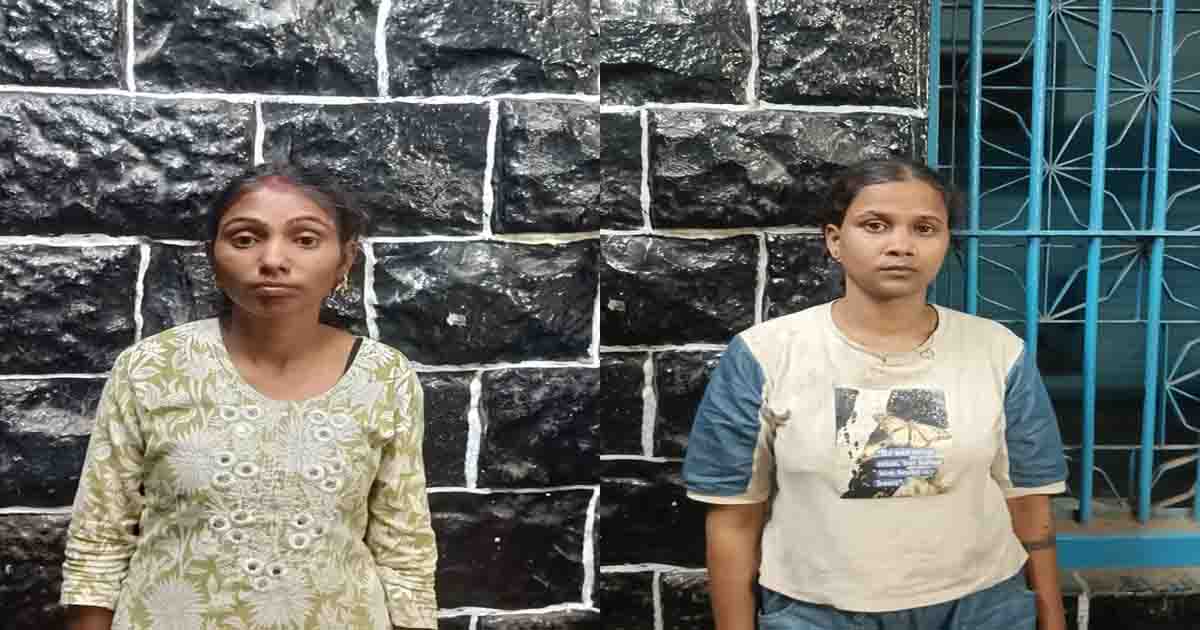
Jalgaon, Oct 11: A shocking incident has come to light in Maharashtra Jalgaon district, where a newlywed woman attempted to kill her husband and three members of his family by mixing rat poison into their food just two days after their wedding, officials said on Sunday.
Police have arrested two women, including the bride, who were allegedly attempting to flee after the incident. The case came to light after the affected family members fell ill, prompting police to launch an investigation into the suspected poisoning and the circumstances surrounding the women’s disappearance.
The incident took place in Velhane village in Parola taluka of Jalgaon district. According to officials, the couple got married on October 7, and the alleged poisoning occurred on October 9, the third day of their wedding celebrations.
Police said the bride allegedly mixed rat poison into the food prepared for her husband and his family members. After the food was consumed, she reportedly left the house with another woman, taking some jewellery and the money received during the wedding with her.
The incident came to light when members of the family began experiencing health problems after consuming the food. The elders of the house were subsequently admitted to a government hospital in Dhule for treatment, officials said.
After receiving information about the suspected poisoning, police reached the spot and initiated an investigation into the incident.
The incident triggered anger among the family members and local residents, who gathered outside the police station and blocked the road. They demanded that the two women be arrested and that appropriate charges be filed against them.
The police intensified their efforts to locate the accused. The two women, who were allegedly trying to escape, were eventually detained near Nimgul village in Dhule district, officials said.
After their arrest, preliminary details emerged about the accused women’s backgrounds. Police found that the bride, identified as Suman Subhash Sahni, was a resident of Jharkhand. The other woman, identified as Aarti Suryaksh Patel, was also reportedly from Jharkhand.
It was also reported that the man had married Suman after paying Rs 2.5 lakh.
Police are investigating the allegations and gathering further details to establish the exact circumstances of the incident.
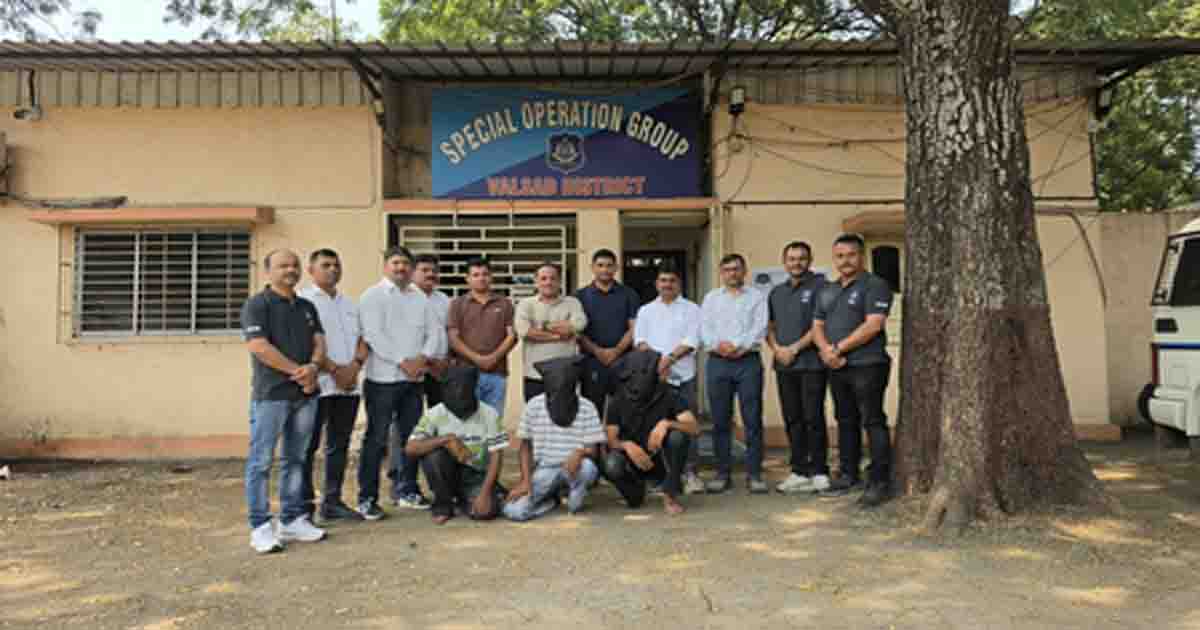
Ahmedabad/Valsad, Oct 11: The Gujarat Anti-Terrorism Squad (ATS) and Valsad Special Operations Group (SOG) have arrested three men wanted in connection with the murder of social media influencer and makeup artist Madhu Sudan Singh alias Mad Sandhu, who was shot dead in Punjab Amritsar earlier this month.
The three accused, identified as Harsimranjit Singh alias Simu Singga, Fateh Singh and Arman Singh, were detained in Vapi in Valsad district following a joint operation by the state police units.
According to the Gujarat ATS, Mad Sandhu was shot dead by two unidentified persons near a car washing centre on Lorahka Road in Amritsar on October 3.
“A case was subsequently registered at Cantonment Police Station in Amritsar City,” officials said.
The ATS received information about the suspects from senior officials of the Crime Investigation Agency (CIA) in Punjab, who shared details of the case with their counterparts in Gujarat.
Following instructions from senior officers, an investigation was initiated under the supervision of Superintendent of Police (SP) K. Siddharth, with Deputy Superintendent of Police (DySP) Harsh Upadhyay and Police Inspector Krupesh Patel leading the investigation.
The inquiry revealed that the three men allegedly involved in the murder were in Vapi.
Harsimranjit Singh, Fateh Singh, and Arman Singh, are all originally from Sange village under Sadar Police Station in Tarn Taran district of Punjab.
Given the possibility that the suspects could leave the area, the ATS shared their profiles, location details and other relevant information with the Valsad SOG.
Police Inspector D.D. Parmar and his team subsequently detained all three men in Vapi.
A Gujarat ATS team comprising Police Inspector J.N. Chavda, Police Sub-Inspector M.L. Solanki, Police Sub-Inspector K.R. Patel, Police Sub-Inspector V.B. Khant and other personnel then brought them to the ATS office for questioning.
“During interrogation, investigators gathered details about the alleged roles of the three accused in the murder, the reconnaissance conducted before the shooting and other aspects of the case,” the ATS said.
The Punjab Police was subsequently informed of their detention.
On October 10, a Punjab Police team arrived at the Gujarat ATS office, took custody of the three accused and transported them to Punjab for further legal proceedings.
The investigation into the murder is being pursued by the Punjab Police.
Earlier, the Ahmedabad Crime Branch arrested Parminder Prasad alias Parminder Kaka, the alleged main shooter in the murder, in the Vadaj area of Ahmedabad on October 8, following an input from the Amritsar Police.
According to Crime Branch officials, Parminder allegedly opened fire on Mad Sandhu and arranged the motorcycle used in the attack.
Punjab Police subsequently took him to Amritsar for further investigation, while investigators were also probing the suspected links of the killing with the network of foreign-based gangster Goldy Dhillon.

Regime change certain in 2027: Akhilesh lashes out at BJP, Election Commission

Newlywed poisons husband, 3 family members in Maharashtra Jalgaon

Nana Patekar death: Final post-mortem report out, rules out foul play

Gujarat Police nab three more accused in Punjab’s Mad Sandhu murder case

FairPoint: Rahul-Priyanka aggressive street shows in Oppn power game

Gift to President Putin part of PM Modi bid to globally display India’s heritage

PM Modi’s warm camaraderie with Putin, Xi on full display at BRICS Summit

INDIA bloc begins protest march against ECI

Complaint against Netflix & Mukesh Chhabra for inappropriate language on ‘India’s Got Latent 2’

School bus driver shot at in MP’s Dabra; 50 terrified children on board witness crime
-

 Crime4 years ago
Class 10 student jumps to death in Jaipur
-

 Maharashtra2 years ago
Mumbai Local Train Update: Central Railway’s New Timetable Comes Into Effect; Check Full List Of Revised Timings & Stations
-

 Maharashtra2 years ago
Mumbai To Go Toll-Free Tonight! Maharashtra Govt Announces Complete Toll Waiver For Light Motor Vehicles At All 5 Entry Points Of City
-

 Maharashtra2 years ago
False photo of Imtiaz Jaleel’s rally, exposing the fooling conspiracy
-

 National News2 years ago
Ministry of Railways rolls out Special Drive 4.0 with focus on digitisation, cleanliness, inclusiveness and grievance redressal
-

 Maharashtra2 years ago
Maharashtra Elections 2024: Mumbai Metro & BEST Services Extended Till Midnight On Voting Day
-

 National News2 years ago
J&K: 4 Jawans Killed, 28 Injured After Bus Carrying BSF Personnel For Poll Duty Falls Into Gorge In Budgam; Terrifying Visuals Surface
-

 Crime2 years ago
Baba Siddique Murder: Mumbai Police Unable To Get Lawrence Bishnoi Custody Due To Home Ministry Order, Says Report