
National News
Modi to hold Covid review meeting on Thursday

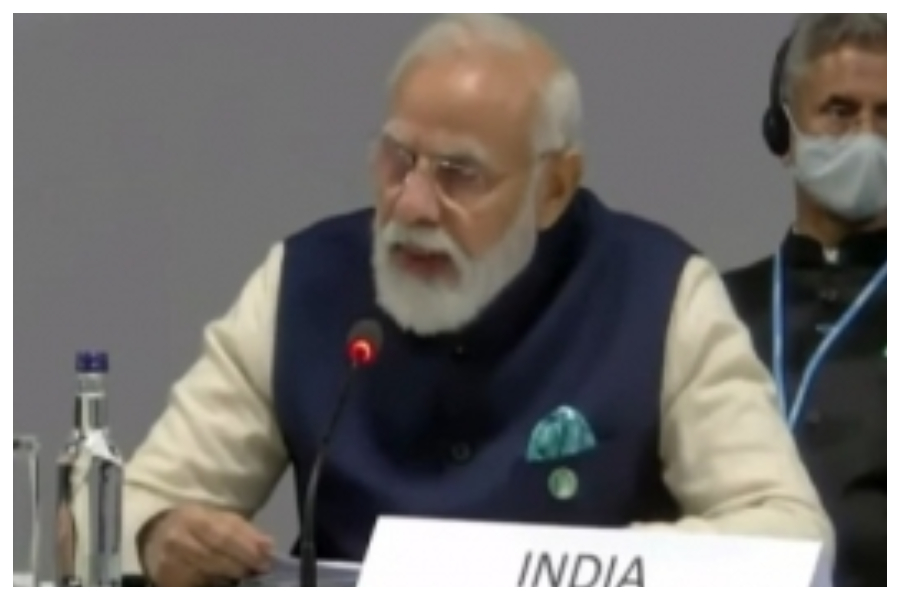
Amid the growing Omicron cases, Prime Minister Narendra Modi will on Thursday hold a review meeting on the Covid related situation in the country.
The Omicron tally in the country has reached 213 as per the health ministry report.
In a statement, the Union health ministry said on Wednesday morning that the Omicron infection tally has reached 213 across the nation. However, out of the total Omicron positive cases, 90 have been discharged. So far 15 states have reported Omicron cases, said the ministry. At 57, Delhi has the highest cases of Omicron infection followed by Maharashtra with 54 cases, said the ministry report.
Meanwhile, the Centre has said that the new Covid variant Omicron is three times more transmissible than the Delta variant.
The Centre has asked the states to review the emerging data of Covid-19 affected population, geographical spread, hospital infrastructure and its utilisation, manpower, notifying Containment Zones and the enforcement of perimeter of containment zones at the district levels. The Centre has also asked the states to formulate a strategy that can ensure infection is contained at the local level itself before it spreads to other parts.
Amid the Omicron threat, the states have been asked to ‘activate war rooms and keep analysing all trends and surges, no matter how small and keep taking proactive measures at the district or local level’.

International News
West Asia conflict Trump’s ‘personal war’, says Iran Supreme Leader’s representative

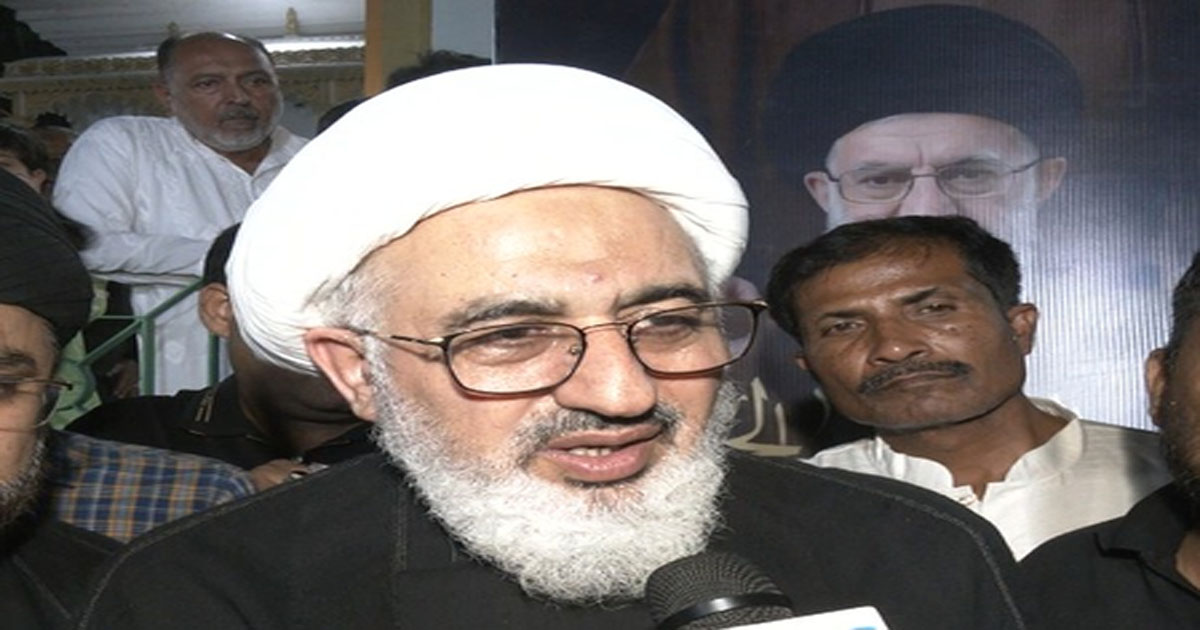
Patna, April 6: Abdulmajid Hakim Elahi, Representative of Iran’s Supreme Leader to India, has said that the Strait of Hormuz has historically remained under Iranian control for thousands of years and that disruptions began only after the recent conflict involving the United States and Israel, which he described as a personal war driven by President Donald Trump against Iran.
The US and Israel carried out joint strikes on February 28, resulting in the death of Ayatollah Ali Khamenei. In response, Iran launched retaliatory strikes targeting Israel, as well as US bases in neighbouring Gulf countries, leading to a broader regional escalation that has led to the Strait of Hormuz crisis and disrupted significant oil and energy supplies.
Speaking to media, Abdulmajid Hakim Elahi said, “This war is President Trump against Iran. Everyone knows that, because this war is not in the interest of Americans. This was his personal war, and now Americans are handling it. And they want out, but they don’t know how they can get out of it.”
On the question of reopening the Strait of Hormuz, he emphasised Iran’s longstanding control over the strategic waterway and blamed the ongoing crisis on the conflict.
“The Strait of Hormuz has been there for thousands of years; it’s under control and dominated by Iran. Iran will continue to do the same now. There wasn’t any crisis or problem before this war. But now they (the US and Israel) have created this war, and they have created a lot of crises and problems through the Strait of Hormuz. We hope that it will finish very soon,” he said.
Elahi also underlined the historical ties between Iran and India, describing the relationship as deeply rooted and longstanding.
“We have a very tight relationship and friendship with India, which dates back over 5000 years,” he said.
Recalling the global response following Khamenei’s death, he said the Iranian leader was respected across communities and faiths.
“Ayatollah Ali Khamenei was a spiritual leader not only for Muslims but also a religious figure and a voice for the voiceless. He is not just for Shia people but also those from other communities, including many Hindus and Christians, who also respected and admired him. When the news of his martyrdom spread, everyone came out in respect and paid their respects and shed their tears, mourning his death,” he added.
Srinagar: The Jammu & Kashmir Students Association (JKSA) on Sunday wrote to External Affairs Minister (EAM) S. Jaishankar, seeking his intervention for the urgent repatriation of the mortal remains of a Kashmiri youth, Bilal Manzoor Ganie, who passed away in Saudi Arabia.
In a statement, JKSA National Convenor Nasir Khuehami expressed profound grief over the untimely demise of Bilal Manzoor Ganie, a resident of Sogam’ Chountiwari, Lolab, in north Kashmir’s Kupwara district.
The JKSA stated that Bilal had been working in Saudi Arabia for the past one and a half years as a nursing assistant at Aaba International Hospital, where he was pursuing a career in the healthcare sector.
On Saturday (April 4), he tragically suffered a sudden cardiac arrest and was rushed to the same hospital, where doctors declared him ‘brought dead’.
Bilal’s sudden and untimely demise has sent shockwaves across his native village.
“He was widely regarded as a dedicated, hardworking, and compassionate young individual, and his passing has left his family and the entire community devastated and in deep mourning,” the JKSA national convenor said.
The JKSA said it has formally taken up the matter with the External Affairs Minister and sought his intervention to direct the concerned authorities, including the Indian Embassy in Saudi Arabia and relevant local authorities, to facilitate the repatriation of the remains of Bilal to India to perform the last rites according to the family’s cultural and religious traditions.
The Association acknowledged that such cases involve procedural requirements, legal formalities, documentation, and coordination with authorities in Saudi Arabia, and assured complete cooperation in the process.
The JKSA further stated that it stands “ready to extend every possible assistance, including coordination with the family, hospital authorities, local contacts, and the concerned diplomatic missions, to ensure that the process is carried out smoothly, swiftly, and with due dignity”.
The Association expressed hope for a swift response from the Ministry of External Affairs, while appreciating its continued efforts in assisting Indian citizens abroad during distressing situations.
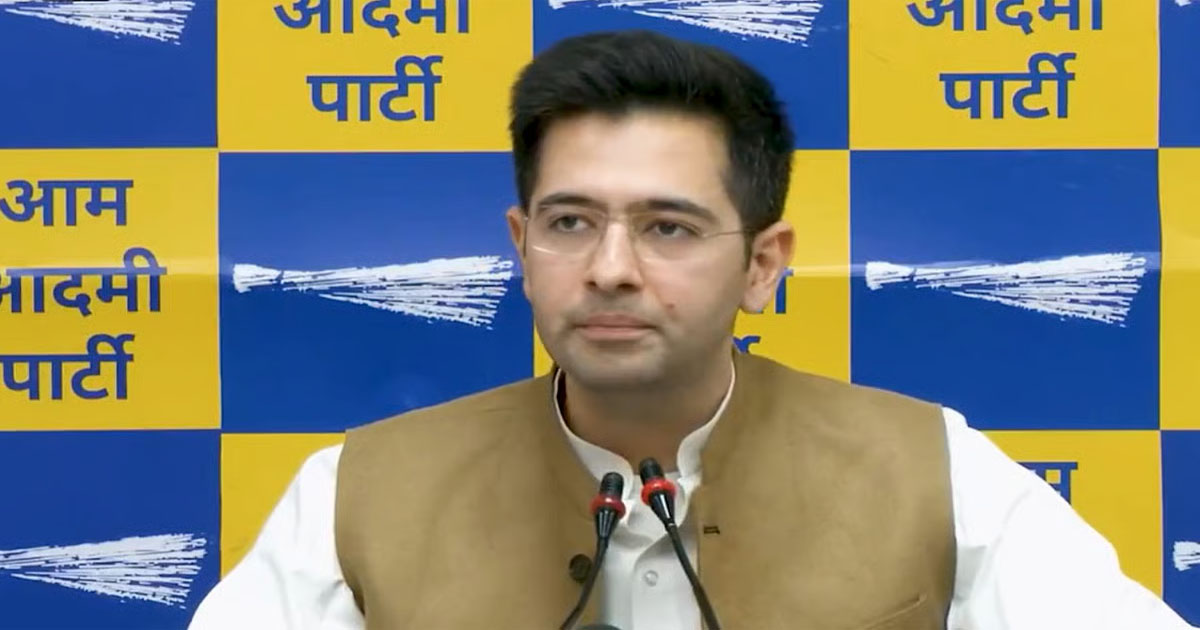
New Delhi: AAP Rajya Sabha MP Raghav Chadha on Sunday defended his record of raising Punjab-related issues while responding to recent criticisms from within his party.
Chadha shared a video clip on X from the Rajya Sabha in which he is seen addressing issues related to Punjab, emphasising his commitment to the state.
Raghav Chadha’s Tweet
In his post, he wrote, “To my colleagues in AAP who were forced to issue videos saying that ‘Raghav Chadha failed to raise Punjab’s issues in Parliament’, here is a small trailer…Picture Abhi Baaki Hai. Punjab isn’t a talking point for me. It is my home, my duty, my soil, my soul.”
Earlier on Saturday, Chadha directly addressed the party’s accusations: “I didn’t want to speak up, but if I stayed silent, even the repeatedly repeated lie would start to seem like the truth. Three Allegations. Zero Truth.”
In earlier posts, Chadha responded to three major allegations against him following his removal as AAP’s deputy leader in the Rajya Sabha. He posted on X, “I didn’t want to speak up, but if I stayed silent, even the repeatedly repeated lie would start to seem like the truth. Three Allegations. Zero Truth.”
In a video message, Chadha also alleged a “scripted campaign” against him, saying, “The same questions and the same allegations against me. This is no coincidence but a coordinated attack.” He further challenged the claim that he had not supported the opposition during walkouts, stating, “This is a white lie. There are CCTVs all around the Parliament. Anyone can check them to get their answer.”
The dispute highlights rising tensions within AAP, as Chadha seeks to defend his record while the party accuses him of neglecting parliamentary responsibilities. The MP reiterated that his focus remains on Punjab and its people, asserting that he has consistently raised state concerns in the Rajya Sabha and intends to continue doing so.

Israel says Iran’s intelligence chief killed in Tehran air strike

‘He Kicked Her, Inquired About Her Name & Then Committed Obscene Act’: Navi Mumbai Police Arrest 35-Year-Old Man For Molesting Minor Girl In Rabale

Abu Asim Azmi demands to start new bus service from Mankhurd to Kalina Vidyapeeth

Mumbai: Two arrested for involvement in online terrorist group ‘Soldiers of Khilafat’

‘One Can Consider It…’: Maharashtra Congress Sets ‘Ajit Pawar-Linked’ Condition For Baramati Bypoll Exit

Married Mumbai Woman Mocked In Andheri Society Over ‘Lift Kissing’ CCTV Video, Files Police Complaint

LPG Crisis In Maharashtra: Cyber Crime On Rise Amid Shortage, 2 Women Lose ₹4 Lakh In ‘Gas Update’ Online Scam In Kalyan-Dombivli

Mahayoti’s big gift to the people of Mumbai… Now there is no tax for houses up to 500 square feet, the Municipal Corporation has increased this limit to 700 square feet.

Dhurandhar 2 Box Office Collection Day 1: Ranveer Singh Starrer Takes An Exceptional Opening; Crosses ₹100 Crore Mark

‘Crores Of Indians Await Victory’: Eknath Shinde Wishes Team India Ahead Of T20 Cricket World Cup Final In Ahmedabad Against NZ
-

 Crime4 years ago
Class 10 student jumps to death in Jaipur
-

 Maharashtra2 years ago
Mumbai Local Train Update: Central Railway’s New Timetable Comes Into Effect; Check Full List Of Revised Timings & Stations
-

 Maharashtra1 year ago
Mumbai To Go Toll-Free Tonight! Maharashtra Govt Announces Complete Toll Waiver For Light Motor Vehicles At All 5 Entry Points Of City
-

 Maharashtra2 years ago
False photo of Imtiaz Jaleel’s rally, exposing the fooling conspiracy
-

 National News1 year ago
Ministry of Railways rolls out Special Drive 4.0 with focus on digitisation, cleanliness, inclusiveness and grievance redressal
-

 Maharashtra1 year ago
Maharashtra Elections 2024: Mumbai Metro & BEST Services Extended Till Midnight On Voting Day
-

 National News2 years ago
J&K: 4 Jawans Killed, 28 Injured After Bus Carrying BSF Personnel For Poll Duty Falls Into Gorge In Budgam; Terrifying Visuals Surface
-

 Crime1 year ago
Baba Siddique Murder: Mumbai Police Unable To Get Lawrence Bishnoi Custody Due To Home Ministry Order, Says Report