
National News
‘Matter will have far-reaching ramifications, sensitive in nature’, Centre to SC on identifying minorities

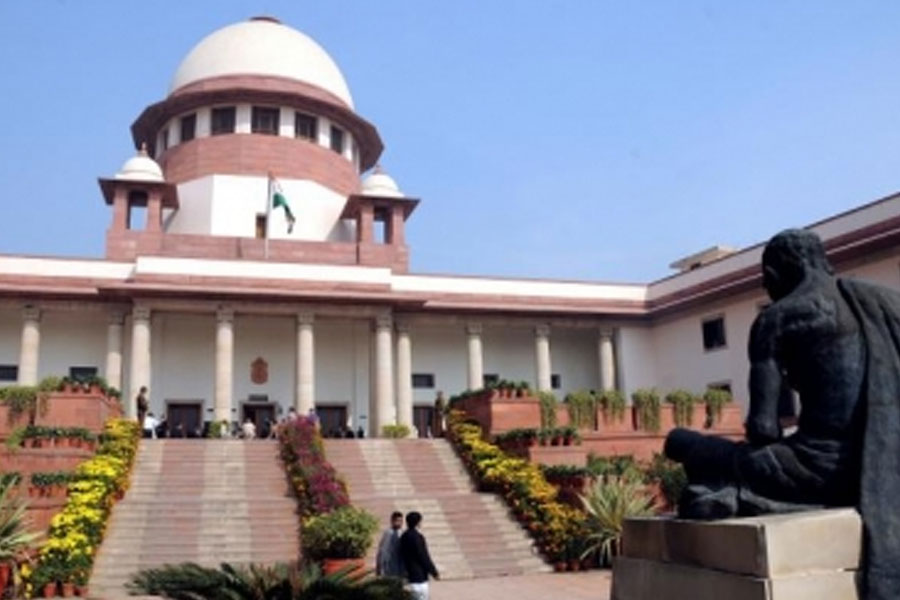
The central government has sought more time from the Supreme Court to hold consultations with the state governments on petitions seeking to identify minorities, including Hindus, at the state level.
In a status report, the Ministry of Minority Affairs said that the 14 state governments, namely Punjab, Mizoram, Meghalaya, Manipur, Odisha, Uttarakhand, Nagaland, Himachal Pradesh, Gujarat, Goa, West Bengal, Tripura, Uttar Pradesh, Tamil Nadu, and three union territories (UTs) namely Ladakh, Dadra & Nagar Haveli and Daman & Diu, and Chandigarh have furnished their comments/views.
It added that since the comments/views of the remaining 19 state governments/UTS in the matter have not been received as on date, a reminder was sent to these states requesting them to furnish their views at the earliest so that the considered comments/views can be placed before the apex court.
“That in view of the position stated above, it is humbly submitted that since the matter is sensitive in nature and will have far-reaching ramifications, this court may kindly consider allowing more time to enable the state governments/union territories and stakeholders with whom the consultative meetings have already been held, to finalise their considered views in the matter,” said the report, which was filed in response to a PIL filed by advocate Ashwini Kumar Upadhyay.
The ministry said the Centre has held consultative meetings with all the state governments/UTs and also with the other stakeholders viz Ministry of Home Affairs, D/o Legal Affairs Ministry of Law & Justice, D/o Higher Education- Ministry of Education, National Commission for Minorities (NCM), and National Commission for Minority Educational Institutions (NCMEI).
“Some of the state governments/union territories have requested for additional time to have wider consultations with all the stakeholders before they form their considered opinion on the matter,” it added.
The ministry said the state governments were requested that in view of the urgency of the matter, they should expeditiously undertake the exercise with stakeholders to ensure that views of the state government are finalised and conveyed to the Ministry of Minority Affairs at the earliest.
The central government, in August too, had sought more time from the apex court to hold wider consultation with states and UTs regarding identification of religious minorities, including Hindus, at the state level.
In May, the top court said that the Centre is uncertain and has not taken a clear stand on a plea seeking a direction to it to lay down guidelines for identification of minorities at the state level, including Hindus.
The top court said that if the Centre wants to hold consultation with the state governments in connection with granting minority status to Hindus, where they are outnumbered by other communities then it should do so.
In a previous affidavit, the ministry had said: “State governments can also declare a religious or linguistic community as a minority community within the said state. For instance, the government of Maharashtra has notified Jews as a minority community within the state of Maharashtra.”

Crime
Tiger Shroff firing case: 3 suspects held in Rajasthan’s Kota planned to flee to Nepal, say police

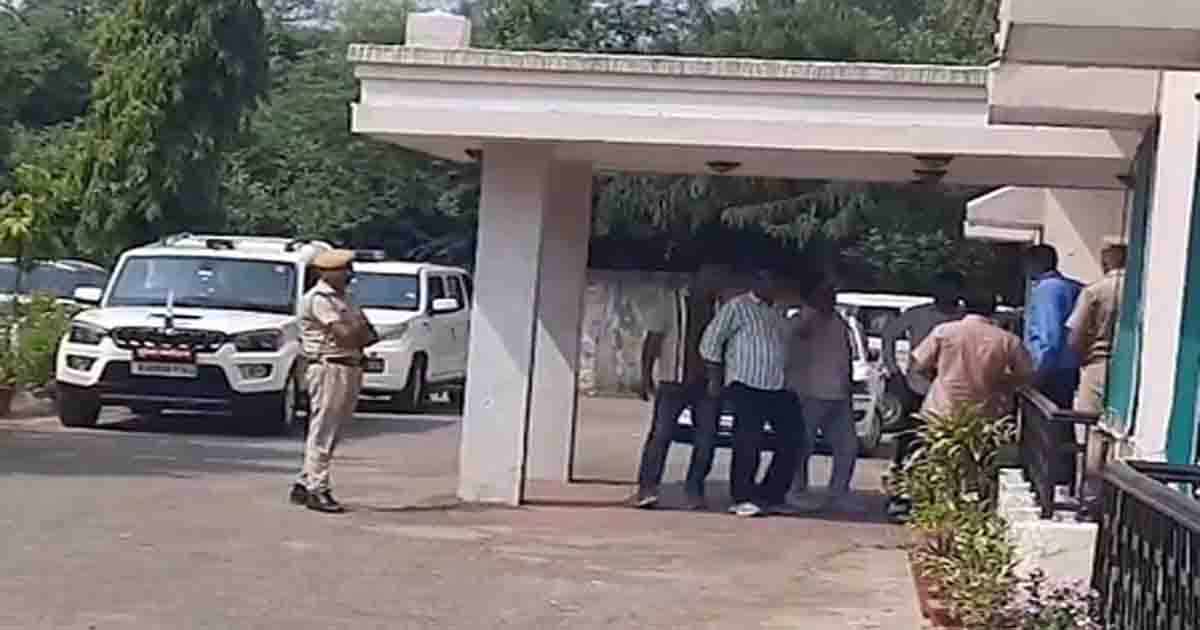
The Kota City Police in Rajasthan have made a major breakthrough in the firing incident involving Bollywood actor Tiger Shroff in Mumbai by apprehending three suspects, including a minor, at Kota railway station. According to Kota Superintendent of Police (SP) Tejaswani Gautam, preliminary questioning has revealed that the suspects planned to travel to Delhi before fleeing to Nepal.
Acting on intelligence that the suspects were travelling to Kota aboard the Pune-Jaipur Express, a police team surrounded and searched the train. The operation was completed in approximately 15 minutes, following which all three suspects were taken into custody.
The arrested suspects have been identified as Rehan alias Sukka, a resident of Sonipat in Haryana; Hrithik Kurmi alias Roshan, a resident of Begusarai in Bihar; and a minor.
According to the SP, Hrithik had been living in Mumbai for the past few years.
SP Gautam said preliminary questioning indicated that Rehan alias Sukka was in contact with Anil Pandit, who is reportedly linked to the Lawrence Bishnoi gang. Police are investigating whether this connection had any role in the firing incident.
The weapon allegedly used in the shooting has not yet been recovered. Investigators will question the suspects further to establish where the weapon was taken after the incident and identify others who may have been involved.
A team from the Mumbai Police has reached Kota, and the process of handing over the suspects to the Mumbai Police is underway.
The incident took place on Sunday at around 7 p.m., when Tiger Shroff was returning by car from a football ground in Mumbai’s Juhu area.
According to the police, the assailants fired at the vehicle with a pistol, injuring the driver. Another person present at the scene was also hit by a bullet.
A Mumbai Police official said Tiger Shroff managed to lean forward when the shots were fired, helping him avoid a direct hit. However, he sustained an injury from a fragment of shattered glass. The investigation is continuing to establish the motive behind the attack, trace the weapon used in the shooting and determine the possible involvement of other individuals.

A powerful explosion in a pickup truck loaded with explosives in Aguncha village of Rajasthan Bhilwara district killed the driver on the spot on Monday.
The blast, which occurred around 11:30 a.m. within the jurisdiction of Gulabpura police station, completely destroyed the vehicle and reduced a nearby enclosure wall to rubble.
The explosion was so intense that the pickup truck’s parts were blown apart, with debris scattered over a wide area. The driver’s body was found beneath the rubble of the collapsed wall.
According to police, the deceased has been identified as 35-year-old Ram Avtar, a resident of Bundi.
The explosion was heard from a considerable distance, triggering panic among residents, many of whom rushed out of their homes to assess the situation.
The impact shattered glass in the doors and windows of nearby houses, while cracks reportedly appeared in some walls.
The enclosure where the pickup was parked was extensively damaged, with its wall collapsing completely. The vehicle’s engine was reportedly thrown around 10 feet away by the force of the blast.
Villagers gathered at the site soon after the explosion and attempted to extinguish the fire. The discovery of the driver’s body beneath the debris added to the gravity of the incident.
Gulabpura Station House Officer Sanjay Gurjar said the explosion occurred inside an enclosure belonging to Ramdev, son of Hiralal Khatik, a local resident. A pickup truck loaded with explosives was parked inside the premises when it suddenly exploded.
After receiving information, police personnel from the Aguncha police outpost and Gulabpura police station reached the spot and secured the area.
A forensic team has been called to examine the site, identify the explosive materials and determine the exact cause of the explosion.
Police have launched an investigation into the incident.
Further details are awaited as investigators examine the circumstances surrounding the blast and why these were in the truck.
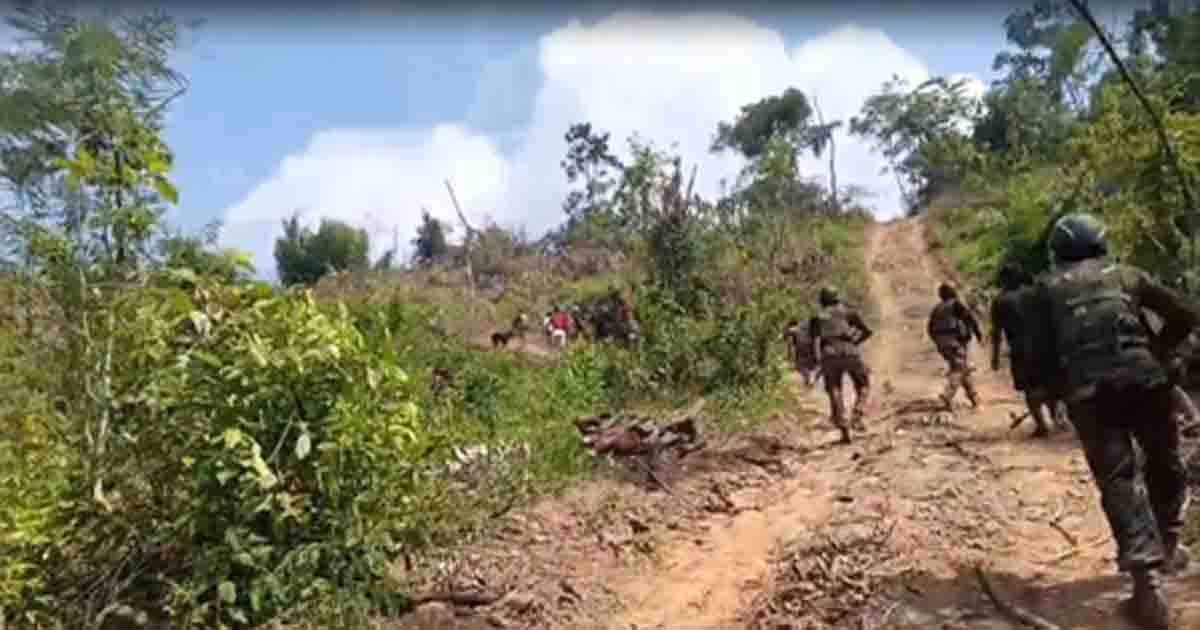
One person was killed and several others injured in clashes between members of two communities in Manipur Thoubal district, prompting the authorities to impose prohibitory orders in two affected areas, police said on Monday.
A police official in Imphal said that the violence erupted at Khangabok village, under Thoubal police station and around 25 km south of the state capital Imphal, on Sunday night when a group of people allegedly pelted stones at a ground where a music concert was being held, police said.
The incident escalated into stone-pelting between members of the two communities in Khangabok and neighbouring Sangaiyumpham. A few houses and vehicles were also set on fire during the clashes.
Amid the violence, unidentified miscreants opened fire, hitting a person in the head. The injured man, identified as Laishram Rakesh, was rushed to a nearby hospital, where he later succumbed to his injuries, police said.
Several other people sustained minor cut injuries after being hit by stones and were admitted to a hospital for treatment.
Additional state and central security forces were deployed in the affected villages to prevent further escalation.
The situation was under control on Monday morning, police said.
Following the violence, the Thoubal district magistrate issued prohibitory orders on Sunday night, directing residents of Khangabok and Sangaiyumpham not to leave their homes from 11 p.m.
The order, issued under Section 163 of the Bharatiya Nagarik Suraksha Sanhita (BNSS), cited the likelihood of a breach of peace, disturbance of public tranquillity and an imminent threat to human life and property due to the alleged unlawful activities of anti-social elements.
The order did not specify when the restrictions would be lifted.
Meanwhile, more than 25 houses were set ablaze in separate incidents in Manipur’s Kamjong district during the past 24 hours, with suspected militants targeting both Naga and Kuki inhabitant areas, forcing civilians to flee their homes and take shelter in forests and a nearby security camp.
Around 14 abandoned houses belonging to the Naga community were set on fire by unidentified miscreants at Pilong and Skipe villages along the India-Myanmar border on Sunday.
Additional security forces were deployed after these incidents, a police official said. The houses had been abandoned after earlier attacks on the Naga-inhabited villages.

Tiger Shroff firing case: 3 suspects held in Rajasthan’s Kota planned to flee to Nepal, say police

Pickup truck loaded with explosives blows up in Rajasthan Bhilwara, driver killed

One killed, several injured in clashes between two communities in Manipur

Govt asks Meta to review Facebook and Instagram recommendation systems

Tiger Shroff attack: Ashoke Pandit stands by Jackie Shroff after attack, calls for stricter action

Rahul, Cong ecosystem want to force regime change: BJP after Neha Bora praises B’desh Gen-Z protest

BJP pays tribute to ex-President Abdul Kalam, recalls his enduring influence on generations of India’s youth

Attack on democratic rights: INDIA Bloc leaders on detentions of anti-ECI protestors

INDIA bloc begins protest march against ECI

Maha Congress stages agitation against Gyanesh Kumar
-

 Crime4 years ago
Class 10 student jumps to death in Jaipur
-

 Maharashtra2 years ago
Mumbai Local Train Update: Central Railway’s New Timetable Comes Into Effect; Check Full List Of Revised Timings & Stations
-

 Maharashtra2 years ago
Mumbai To Go Toll-Free Tonight! Maharashtra Govt Announces Complete Toll Waiver For Light Motor Vehicles At All 5 Entry Points Of City
-

 Maharashtra2 years ago
False photo of Imtiaz Jaleel’s rally, exposing the fooling conspiracy
-

 National News2 years ago
Ministry of Railways rolls out Special Drive 4.0 with focus on digitisation, cleanliness, inclusiveness and grievance redressal
-

 Maharashtra2 years ago
Maharashtra Elections 2024: Mumbai Metro & BEST Services Extended Till Midnight On Voting Day
-

 National News2 years ago
J&K: 4 Jawans Killed, 28 Injured After Bus Carrying BSF Personnel For Poll Duty Falls Into Gorge In Budgam; Terrifying Visuals Surface
-

 Crime2 years ago
Baba Siddique Murder: Mumbai Police Unable To Get Lawrence Bishnoi Custody Due To Home Ministry Order, Says Report