
Business
Market tad lower amid choppy trade, banking stocks fall


The key Indian equity indices traded on a subdued note on Thursday morning amid a largely choppy trade.
Selling pressure was witnessed in banking stocks. Fall in the index-heavyweights HDFC Bank and Infosys weighed on the indices.
Around 10.15 a.m., Sensex was trading at 58,185.40, lower by 64.86 points or 0.11 per cent from its previous close of 58,250.26 points.
It opened at 58,172.98 and has touched an intraday high of 58,270.49 and a low of 58,112.20 points.
Nifty50 on the National Stock Exchange was trading at 17,331.05, lower by 22.45 points or 0.13 per cent from its previous close.
The top gainers on the Sensex were Nestle India, Larsen & Toubro and HDFC, while the major losers were Axis Bank, UltraTech Cement and Tech Mahindra.


Business
Thane-Borivali Twin Tunnel Work Launched; Here’s How TBM Nayak Will Transform Travel For Mumbaikars

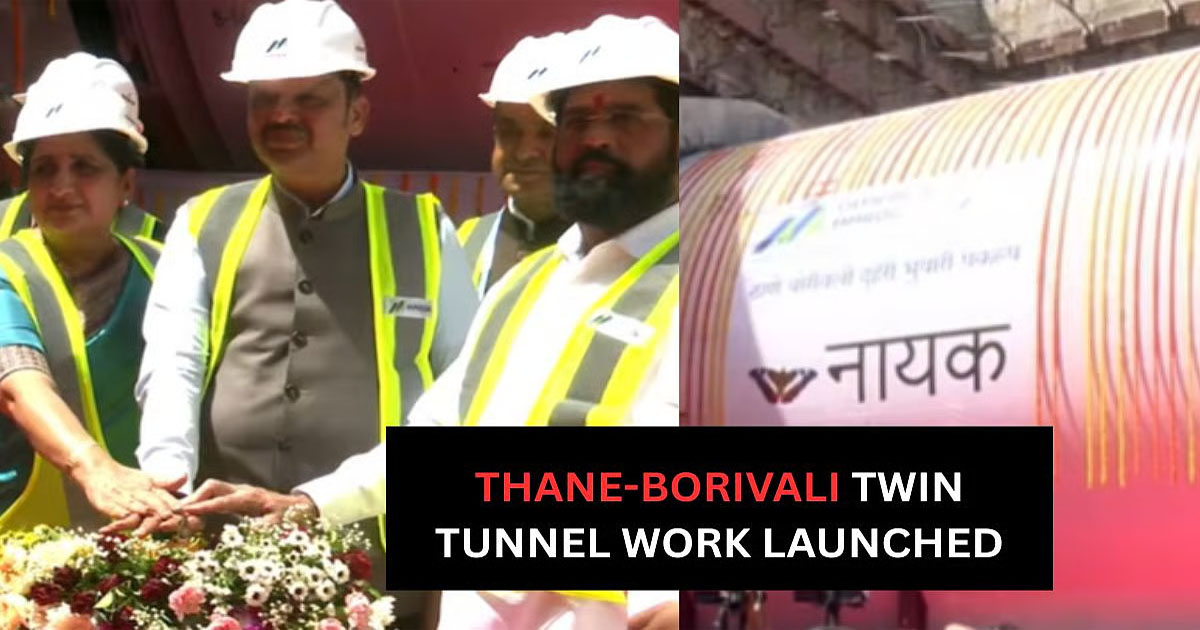
Mumbai: The first Tunnel Boring Machine (TBM), named Nayak, has been launched to begin excavation for the Thane–Borivali Twin Tunnel project today. The inauguration was officially done by Chief Minister Devendra Fadnavis along with Deputy Chief Ministers Eknath Shinde and Sunetra Pawar. Transport Minister Pratap Sarnaik was also present at the event, which took place at the TBM launch site in Manpada, Thane.
At present, the 23-kilometre journey between Thane and Borivali takes anywhere between 60 and 90 minutes, largely due to heavy congestion on Ghodbunder Road. Once completed, the new tunnel route will bring this travel time down to just 15 minutes, offering a faster and more reliable commute. The project, which began on May 19, 2023, is expected to be completed by May 2028.
Implemented by MMRDA, the project also includes connecting roads linking the Western Express Highway in Borivali and Ghodbunder Road in Thane.
A machine built for Mumbai’s toughest terrain, a 13.34-metre diameter single-shield TBM—among the largest deployed in urban tunnelling. Weighing nearly 2,500 tonnes and assembled from over a thousand components, the machine represents cutting-edge engineering tailored for challenging geological conditions.
Meanwhile, prior to this, Phase 1 of the long-awaited Metro Line 9 rail service between Dahisar East and Mira Bhayandar was inaugurated. CM Devendra Fadnavis, along with Deputy CM Eknath Shinde, Transport Minister Pratap Sarnaik, and Mumbai Mayor Ritu Tawde, were present at the inauguration ceremony of phase 1 connecting Dahisar East to Kashigaon.
The 4.97 km line connecting Dahisar and Kashigaon, with stations at Pandurang Wadi and Miragaon, is expected to provide relief to commuters in the Mira-Bhayander region, which currently depends heavily on road transport, leading to frequent traffic congestion.
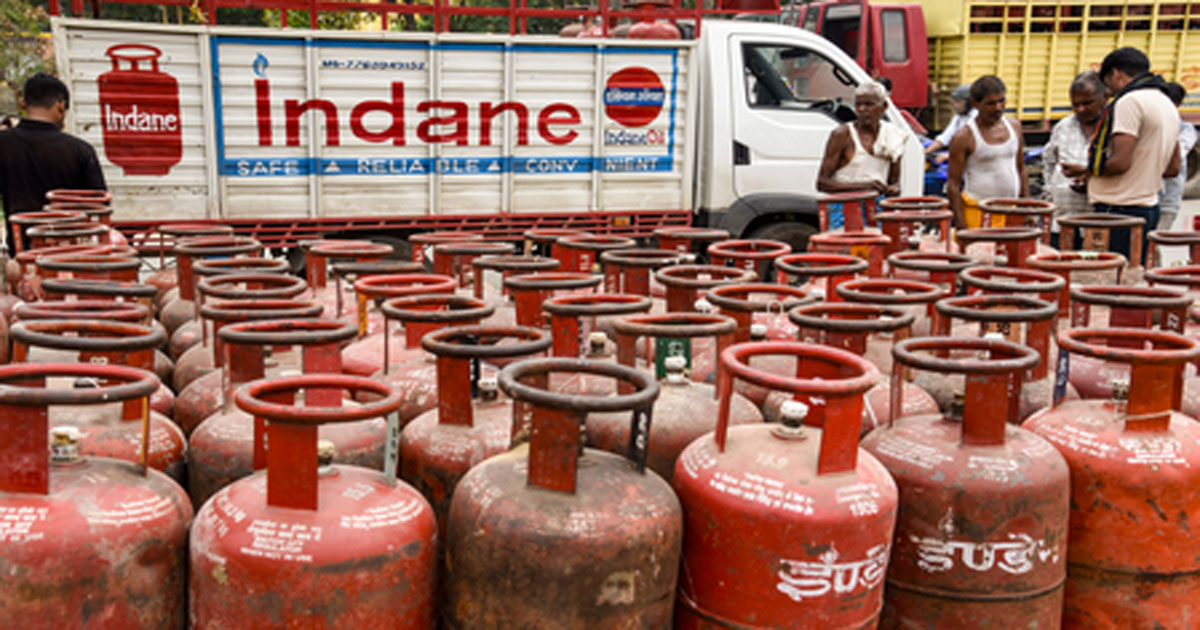
New Delhi, April 7: The Centre has decided to double the daily allocation of 5-kg free trade LPG (FTL) cylinders available for distribution to migrant labourers across states, according to an official communication.
The Petroleum Ministry said in a notification the enhanced allocation will be based on the average daily supply of cylinders provided to migrant workers.
The revised allocation goes beyond the earlier cap of 20 per cent specified in March announcement.
The government also said that the additional 5-kg FTL cylinders will be placed at the disposal of state governments and their Food and Civil Supplies Departments for distribution exclusively to migrant labourers with the assistance of oil marketing companies (OMCs).
Earlier, the government had said it was making all efforts to ensure adequate availability of petrol, diesel and LPG amid the prevailing geopolitical situation, while advising citizens to avoid panic buying and rely only on official sources for information.
Consumers were also encouraged to use digital modes for LPG bookings and minimise visits to distributors unless necessary.
The government has prioritised domestic LPG and PNG supplies, along with critical sectors such as hospitals and educational institutions.
It has also implemented several demand and supply-side measures, including enhancing refinery output and increasing LPG booking intervals to 25 days in urban areas and up to 45 days in rural areas.
To ease pressure on LPG demand, alternate fuels such as kerosene and coal have been made available, while states have been advised to expand PNG connections.
The government also said there has been no disruption in LPG supply affecting migrant workers.
According to official data, around 51 lakh domestic LPG cylinders were delivered recently, with online bookings rising to 95 per cent and delivery authentication-based distribution increasing significantly to curb diversion.
New Delhi, April 4: Pakistani consumers are bearing almost half of petrol’s retail cost in the form of government levies and industry profit margins, an internal government document has revealed, coming just a day after a massive increase in the prices of both petrol and diesel was announced, a report said.
Petroleum Minister Ali Pervaiz Malik, speaking alongside Finance Minister Muhammad Aurangzeb at a press briefing, announced a Rs 137.23-per-litre rise in petrol prices, pushing the retail rate to Rs 458.41 per litre.
Moreover, high-speed diesel climbed even more steeply, up Rs 184.49 per litre to a new benchmark of Rs 520.35.
Both hikes were attributed to disruptions in the global oil supply chain stemming from the ongoing conflict in the Middle East.
The Ministry of Energy’s pricing document lays bare a cost structure that places the ex-refinery price of petrol at Rs 247.15 per litre — less than the Rs 211.26 per litre piled on through taxes and margins.
Of that non-product portion, a petroleum levy alone accounts for Rs 160.61 per litre, followed by Rs 24.12 in customs duty and Rs 2.50 under the climate support levy.
The inland freight margin adds another Rs 7.52, while oil marketing companies (OMCs) collect Rs 7.87 in profit and pump dealers retain an Rs 8.64 commission per litre.
The picture is markedly different for diesel consumers. The ex-refinery price of high-speed diesel stands at Rs 461.23 per litre, and, unlike petrol, diesel currently attracts no petroleum levy.
In addition, combined taxes and margins on diesel total Rs 59.12 per litre — 11.36 per cent of the retail price — comprising Rs 35.74 in customs duty, Rs 4.37 for inland freight, Rs 7.87 in OMC profit, Rs 8.64 for dealers, and the Rs 2.50 climate levy.
The disclosures have drawn fresh scrutiny to the government’s fiscal strategy, with petrol’s tax-and-margin share more than four times that of diesel, even as pump prices for both fuels reach record highs.

10 arrested in communal violence at Dandoshi, FIR registered after drugs recovered from accused’s house

Maha Cabinet approves new dept for electronics, IT, AI and listing of Mahavitaran

Thane-Borivali Twin Tunnel Work Launched; Here’s How TBM Nayak Will Transform Travel For Mumbaikars

Govt doubles daily 5-kg LPG cylinder quota for migrant labourers across states

Mumbai Crime: Session Court Denies Bail To 3 Accused In ₹63 Lakh Chawl Fraud Case

Married Mumbai Woman Mocked In Andheri Society Over ‘Lift Kissing’ CCTV Video, Files Police Complaint

LPG Crisis In Maharashtra: Cyber Crime On Rise Amid Shortage, 2 Women Lose ₹4 Lakh In ‘Gas Update’ Online Scam In Kalyan-Dombivli

Dhurandhar 2 Box Office Collection Day 1: Ranveer Singh Starrer Takes An Exceptional Opening; Crosses ₹100 Crore Mark

Thane Horror: Man Slashed With Chopper In Naupada For Refusing ‘Vargani’, Caught On Camera

Mumbai Police Busts Fake Apple Accessories Racket In Ghatkopar, ₹16.33 Lakh Goods Seized; Six Booked
-

 Crime4 years ago
Class 10 student jumps to death in Jaipur
-

 Maharashtra2 years ago
Mumbai Local Train Update: Central Railway’s New Timetable Comes Into Effect; Check Full List Of Revised Timings & Stations
-

 Maharashtra1 year ago
Mumbai To Go Toll-Free Tonight! Maharashtra Govt Announces Complete Toll Waiver For Light Motor Vehicles At All 5 Entry Points Of City
-

 Maharashtra2 years ago
False photo of Imtiaz Jaleel’s rally, exposing the fooling conspiracy
-

 National News1 year ago
Ministry of Railways rolls out Special Drive 4.0 with focus on digitisation, cleanliness, inclusiveness and grievance redressal
-

 Maharashtra1 year ago
Maharashtra Elections 2024: Mumbai Metro & BEST Services Extended Till Midnight On Voting Day
-

 National News2 years ago
J&K: 4 Jawans Killed, 28 Injured After Bus Carrying BSF Personnel For Poll Duty Falls Into Gorge In Budgam; Terrifying Visuals Surface
-

 Crime1 year ago
Baba Siddique Murder: Mumbai Police Unable To Get Lawrence Bishnoi Custody Due To Home Ministry Order, Says Report