
Maharashtra
Maharashtra awaits SC nod for bullock cart race

The Maharashtra government is awaiting a nod from the Supreme Court for an almost 400-year-old tradition of bullock cart race that was banned by the Bombay High Court.
Called ‘Shankarpaat’, the bullock cart race is a traditional attraction at the fairs in villages across Maharashtra.
It starts soon after the Ganesh festival and continues right through the remaining Kharif, the entire rabi season and ends around April, ahead of summer.
It is not just popular because of the crowds it attracts, but it gives a push to the local economy wherever the events are held coinciding with fairs. This is a popular sport among the farming community.
Similar bullock cart races are held in Karnataka too, especially the areas that are adjoining Maharashtra.
There have been obvious comparisons with Jallikattu, another traditional sport from Tamil Nadu related to bullocks.
The Nagaraja case had resulted in the Supreme Court banning all such bull-related sports. While in Jallikattu, the men are directly in contact with the bullock, pouncing on the running bull, holding it by the hump and using other means to tame it, in Shankarpaat or the bullock cart race, a pair of bulls or a single bull will race along with the cart with the farmer holding the reins and goading the animal.
In April 2017, the state government passed an act that regularised the sport of Shankarpaat.
A PIL was filed in the Bombay High Court, which put a ban on the bullock cart races.
After the ban, the Maharashtra government approached the Supreme Court, which referred the matter to a five-judge bench.
This year, possibly as an antidote to the lockdown induced lull, there have been multiple attempts in Maharashtra where local farmers have resorted to organising such bullock cart races.
On Sunday, Maharashtra Animal Husbandry Minister Sunil Kedar accompanied by the state’s Animal Husbandry Commissioner Shailesh Kende met Senior Advocate Mukul Rohatgi and the Maharashtra government’s counsels on the issue.
Patil told IANS: “We are hoping that the Supreme Court will be hearing our case on Tuesday.”
Kedar was supposed to attend the hearing, which was originally expected on Monday, but rushed back to Mumbai for a meeting.
“This is a topic very close to the hearts of hundreds and thousands of farmers in Maharashtra. It also impacts the rural economy,” Kedar said before leaving for Maharashtra.
Bharatiya Bailgada Sanghatana representative Ramkrishna Takalkar, who also accompanied the government delegation, said: “We farmers look after our bullocks just like our family members. There is no torture or cruelty involved with the animal during the bullock cart races, it is a misinformation campaign by animal lovers. The bullocks are fed regularly. What would we get by torturing the animal?”
Takalkar focussed on the economic aspects of the bullock cart races in Maharashtra.
“If there are no race events at the local village fairs, the farmers have valid question to ask: why should we continue to have these bulls?”
He had an even more pertinent question: “On the one hand, you allow horse races and on the other, you ban bullock cart races? Why the partiality?”


Maharashtra
Action under the ‘Pedestrian First’ initiative by the ‘G-North’ ward of the Mumbai Municipal Corporation

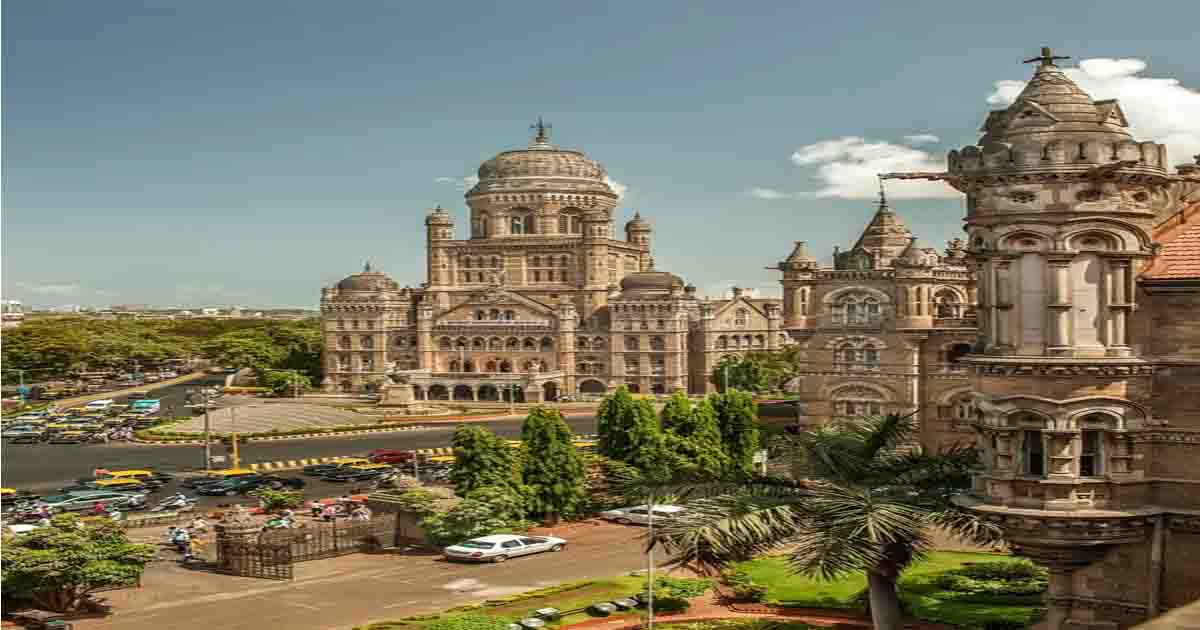
To ensure the unobstructed movement of pedestrians on footpaths, the Brihanmumbai Municipal Corporation (BMC) is implementing an initiative called ‘Pedestrian First’. In this regard, an enforcement drive was carried out today (October 23, 2026) in Dadar, near the ‘Late Maa Saheb Meenatai Thackeray Flower Market’ and along ‘Senapati Bapat Marg’. During this operation, 12 unauthorized structures—including temporary tarpaulin sheds and illegal platforms—were removed, and 60 hawkers obstructing the footpaths were cleared from the area. This operation was conducted by the BMC’s ‘G-North’ Ward.
Under the guidance of Municipal Commissioner Ashwini Bhide, the BMC is effectively implementing the ‘Pedestrian First’ initiative. The objective of this initiative is to clear footpaths of unauthorized hawkers and encroachments, ensuring they remain free from any obstructions.
In this context, the aforementioned action was carried out under the guidance of Deputy Municipal Commissioner (Zone-2) Prashant Sapkale and the leadership of Assistant Commissioner (G-North Ward) Yogesh Desai. Under this initiative, 12 unauthorized structures—including temporary sheds and illegal platforms—were removed in Dadar, near the ‘Late Maa Saheb Meena Tai Thackeray Flower Market’ and along ‘Senapati Bapat Marg’. Additionally, 60 street vendors who were obstructing the footpaths were cleared from the area. Adequate police personnel were deployed on-site during the operation.
Meanwhile, the Municipal Corporation is taking measures to ensure that footpaths remain open and accessible to pedestrians. Consequently, the Municipal Corporation administration has issued directives prohibiting any unauthorized construction on footpaths, as well as the placement of any items that might obstruct the path for pedestrians. Strict action will be taken against any such violations.
In a matter related to fugitive don Dawood Ibrahim’s brother, the Enforcement Directorate (ED) lodged an FIR seeking action against miscreants who trespassed a Thane flat that was attached earlier in connection with an extortion case registered against Iqbal Ibrahim Kaskar, an officials said on Friday.
The flat was attached by the ED in 2022 during money laundering investigation in a case relating to extortion by accused Iqbal Kaskar, younger brother of underworld don Dawood, who is suspected to be in Pakistan, the official said in a statement.
The FIR was filed as a deterrent action against miscreants for trespassing the “confirmed attached properties” in the possession of the ED’s Mumbai Zonal Office-I, it said.
“The FIR was lodged on October 15 after restoring the possession of a flat in Thane (West) under the provisions of the Prevention of Money Laundering Act (PMLA), 2002,” the ED said.
“In respect of the alleged unauthorised entry and interference with the attached property, an FIR dated October 15 has been registered at Kasarvadavali Police Station in Thane under Sections 329(4) and 223 of the Bharatiya Nyaya Sanhita, 2023, so that the matter is investigated and trespassers are punished,” the ED added.
The property was provisionally attached vide provisional attachment order dated April 8, 2022, during money laundering investigation in the extortion case against Iqbal Kaskar and others, it said.
The provisional attachment was subsequently confirmed by the Adjudicating Authority under Section 8(3) of the PMLA vide order dated September 29, 2022, and possession of the flat was also taken by the ED on December 17, 2024, under Section 8(4) of the PMLA, the statement said.
The ED investigation was initiated on the basis of FIR registered at Kasarvadavali Police Station in Thane, concerning allegations of extortion against, inter alia, Iqbal Kaskar, Mumtaz Azaz Sheikh alias Raju, Israr Ali Jamil Saiyad and others.
During investigation, it was revealed that pursuant to threats and extortion, flats were demanded to be registered in favour of or at the instance of the accused persons, the ED said.
In this context, Flat No. 405 was registered in the name of Mumtaz Azaz Sheikh on May 29, the ED said.
It came to notice that some people had entered the property, broken the lock and removed the ED’s possession notice, the statement said.
The ED conducted inspections and took necessary steps to safeguard the attached property.
The matter was also placed before the Special PMLA Court, which also directed the ED to restore the possession with police assistance, if required.
In compliance and also to safeguard the property, the lock of said flat was changed in presence of police personnel and witnesses and the possession of the said flat was restored, the ED said.
A fresh notice was also affixed on the premises clearly mentioning that any aggrieved person may either approach the office of the ED or the court where the trial of the case is being conducted, it added.
The Enforcement Directorate (ED) has provisionally attached an immovable property spread over approximately 14.51 acres in Kolkata valued at Rs 85.20 crore, in connection with a bank fraud and money laundering case involving M/s Unity Infraprojects Ltd. (UIL) and others, the agency said on Friday.
According to the ED, the attached land, located at Mouza Chakgaria in Kolkata, is held in the name of M/s Suburban Agriculture Dairy & Fisheries Pvt. Ltd. (SADAFPL). The attachment was made under the provisions of the Prevention of Money Laundering Act (PMLA), 2002.
The money laundering investigation stems from an FIR registered by the CBI’s Bank Securities & Fraud Branch in Mumbai on a complaint lodged by the State Bank of India.
The FIR alleges that UIL, in connivance with its promoters, directors and associated entities, defrauded a consortium of 23 banks by availing credit facilities of around Rs 3,200 crore. The total outstanding dues, including interest, are estimated at approximately Rs 3,800 crore.
According to investigators, the fraud involved fictitious transactions, round-tripping of funds, manipulation of financial records, and diversion of funds through shell entities.
The ED said its probe revealed that funds from UIL were routed through its wholly owned subsidiary, Unity Realty & Developers Ltd. (URDL), and subsequently used to acquire and hold assets through associated companies. SADAFPL was identified as a step-down subsidiary of UIL through URDL.
Further investigations established a trail linking the Chakgaria land parcel to funds originating from UIL and its group entities, indicating diversion and layering of proceeds generated from the scheduled offences. The property was attached under Section 5(1) of the PMLA to prevent its transfer or disposal pending confiscation proceedings.
The agency noted that in July 2025 it had conducted searches at residential and commercial premises, as well as bank lockers, linked to UIL, its former directors and their family members. During those operations, movable assets worth Rs 31.21 crore were seized or frozen.
The ED had also attached land parcels and flats valued at about Rs 1,493 crore through three separate provisional attachment orders, all of which were later confirmed by the Adjudicating Authority under the PMLA.
With the latest attachment, the total value of movable and immovable assets attached or frozen in the case has risen to about Rs 1,609 crore, the agency said.
The ED further informed that it filed a prosecution complaint before the Designated Special Court, City Civil and Sessions Court, Greater Bombay, Mumbai, on March 27, 2026.
Further investigation is underway.

Action under the ‘Pedestrian First’ initiative by the ‘G-North’ ward of the Mumbai Municipal Corporation

ED files FIR, foils bid to trespass flat attached in extortion case against Dawood’s brother

ED attaches Rs 85.2 crore Kolkata land linked to Unity Infraprojects bank fraud case

Left parties, student groups march towards EC HQ, demand Gyanesh Kumar resignation

Maha: Raj Thackeray demands impartial probe in Rs 500 crore audio clip row

Rahul, Cong ecosystem want to force regime change: BJP after Neha Bora praises B’desh Gen-Z protest

BJP pays tribute to ex-President Abdul Kalam, recalls his enduring influence on generations of India’s youth

Attack on democratic rights: INDIA Bloc leaders on detentions of anti-ECI protestors

INDIA bloc begins protest march against ECI

Maha Congress stages agitation against Gyanesh Kumar
-

 Crime4 years ago
Class 10 student jumps to death in Jaipur
-

 Maharashtra2 years ago
Mumbai Local Train Update: Central Railway’s New Timetable Comes Into Effect; Check Full List Of Revised Timings & Stations
-

 Maharashtra2 years ago
Mumbai To Go Toll-Free Tonight! Maharashtra Govt Announces Complete Toll Waiver For Light Motor Vehicles At All 5 Entry Points Of City
-

 Maharashtra2 years ago
False photo of Imtiaz Jaleel’s rally, exposing the fooling conspiracy
-

 National News2 years ago
Ministry of Railways rolls out Special Drive 4.0 with focus on digitisation, cleanliness, inclusiveness and grievance redressal
-

 Maharashtra2 years ago
Maharashtra Elections 2024: Mumbai Metro & BEST Services Extended Till Midnight On Voting Day
-

 National News2 years ago
J&K: 4 Jawans Killed, 28 Injured After Bus Carrying BSF Personnel For Poll Duty Falls Into Gorge In Budgam; Terrifying Visuals Surface
-

 Crime2 years ago
Baba Siddique Murder: Mumbai Police Unable To Get Lawrence Bishnoi Custody Due To Home Ministry Order, Says Report