
Crime
Mahadev Betting App Case: ED Reveals Names Of 5 More Accused

Mumbai: The Enforcement Directorate (ED) filed a supplementary charge-sheet in the Mahadev App case in a special court in Raipur, Chhattisgarh, on Monday.
The 1,800-page document includes the names of five new accused: Suspended constable Bhim Singh Yadav, cash courier Aseem Das, Shubham Soni, who claims to be the promoter of Mahadev App, Anil Aggarwal, and Rohit Gulati.
Charge-sheet reveals scam amounting to ₹6,000 crore
Last year the ED had summoned Soni to appear before it on October 26. However, Soni did not physically appear; instead, he submitted his statements via email on November 2. In his submission, Soni claimed that ₹508 crore had been paid by Mahadev App promoters to Bhupesh Baghel, former chief minister of Chhattisgarh.
He shared documents stating that he was the official director of Mahadev App, registered under the name M/s Mahadev Book Markets Limited in Saint Vincent and the Grenadines. Soni also claimed to be part of the management of Mahadev Online Book.
Another accused in the supplementary charge-sheet, Das was arrested after a tip-off by Soni. Soni told the ED that Das would come to Chhattisgarh before the assembly election on November 17 with a significant amount of cash for the Congress’ electioneering purposes.
ED conducted raid
Based on this information, the ED raided Triton Hotel in Raipur and arrested Das with a sum of ₹5.39 crore. According to the ED, during the interrogation, Das revealed that he was in Raipur on the instructions of Mahadev App promoters.
He said he was tasked with delivering ₹5.39 crore to a politician named “Baghel”. Later, he filed a complaint against ED officials and Soni, alleging that they conspired against him and framed him.
The charge-sheet said constable Yadav had travelled to Dubai without permission and met Mahadev App promoters Ravi Uppal and Sourabh Chandrakar there.
His travel expenses were borne by Rapid Travels of Ahuja Brothers, a money laundering and ticketing company associated with Mahadev APP. Yadav was the conduit to receive bribe money from Mahadev App promoters for the benefit of senior officers andpoliticians of Chhattisgarh.


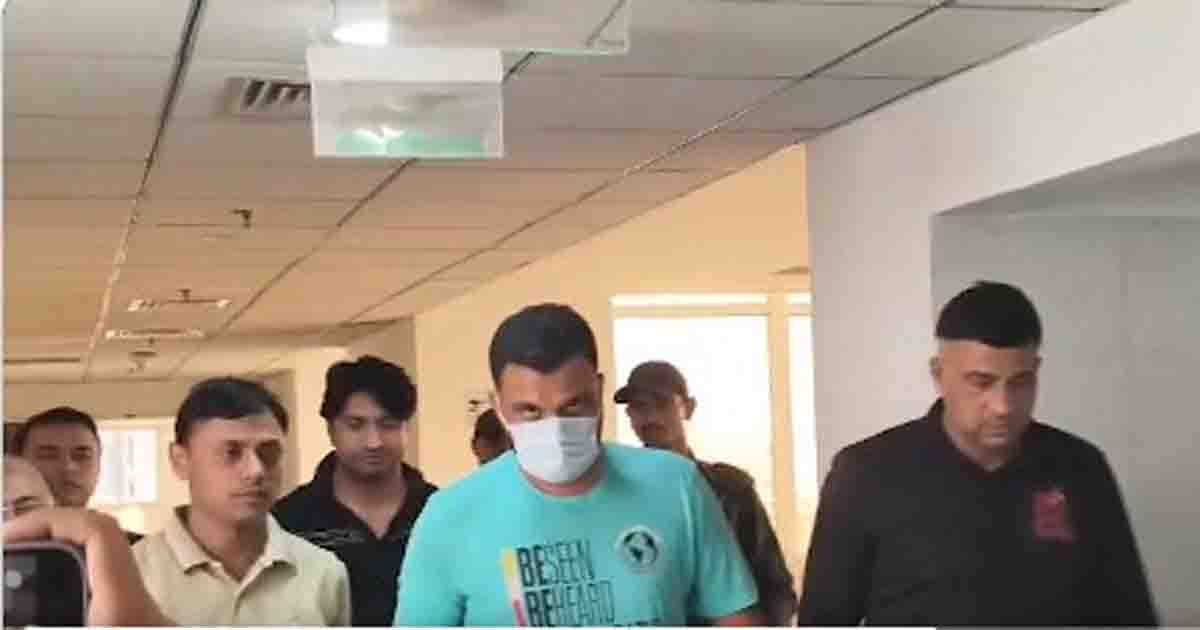
New Delhi, Oct 3: A Delhi court on Saturday remanded alleged international narcotics trafficking accused Navpreet Singh to 10 days of police custody after he was deported from Turkey and brought back to India in connection with a major drug trafficking case.
Singh was produced before the Rouse Avenue Court in New Delhi following his deportation from Turkey, where he was allegedly living under the identity of Navab Virk.
Seeking his custodial remand, the police said that his questioning was required as part of the ongoing investigation into the alleged international narcotics trafficking network and to ascertain the role of other accused and the wider network.
However, the defence opposed the police remand plea, saying that there was no need for further custodial interrogation.
Advocate Asgar Khan, appearing for Singh, told the court that the police had already recorded his statement while he was in custody and that further investigation could proceed on the basis of the statement.
“We presented our arguments against the police remand before the court, but the court granted it,” Khan told media.
Navpreet Singh has been accused by investigating agencies of being linked to an international drug trafficking network allegedly operating between Afghanistan, India and Turkey.
According to the investigation, Singh was allegedly operating as a key handler of the network from Turkey and was accused of facilitating the trafficking of heroin and methamphetamine from Afghanistan to India.
His name had also surfaced in connection with a major narcotics case that came to light in Delhi in 2021, in which investigators recorded the recovery of around 355.5 kg of heroin from the accused persons.
Investigating agencies have claimed that Singh used the identity “Navab Virk” and obtained Turkish citizenship under the assumed identity while continuing to operate the alleged narcotics network.
Union Home Minister Amit Shah on Saturday described Singh’s deportation from Turkey as a “historic milestone” for the Narendra Modi-led Union government.
In a post on social media platform X, Home Minister Shah said that Singh had obtained Turkish citizenship under the alleged fake identity of Navab Virk and continued to smuggle heroin and methamphetamine to India from Afghanistan.
“Our agencies tracked him down, ripping apart veil after veil to unmask his true identity, and secured his deportation. Today he has been brought back to India and put behind bars in connection with cases involving drug trafficking and other crimes he is accused of. Congratulations to all the agencies for this success,” the Union Minister added.
Union Minister Shah also said that the Central government was committed to destroying every narco-cartel before December 2029.
The Ministry of Home Affairs said Singh’s deportation was part of the Centre’s efforts to bring back fugitives involved in serious criminal cases.
The development comes months after suspected drug trafficker Mohammad Salim Dola was brought back to India from Turkey.
Earlier, fugitive Prabhdeep Singh was also brought back from Azerbaijan in connection with a major narcotics case involving the recovery of a large quantity of heroin.
The investigation against Navpreet Singh and other accused is underway.
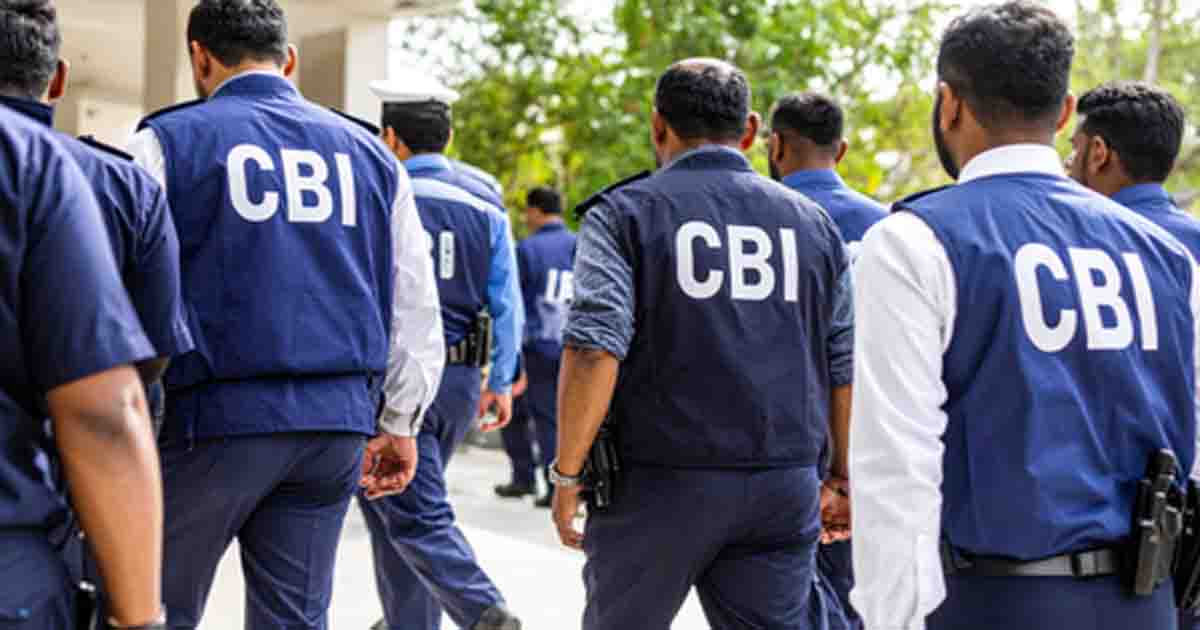
Mumbai, Oct 3: The Central Bureau of Investigation (CBI) conducted searches at multiple premises in Mumbai and registered a Rs 93.44 crore bank fraud case against officials of Hanjer Biotech Energies on the complaint of Punjab National Bank, an official said on Saturday.
The CBI conducted searches on Friday at multiple premises linked to the directors of Hanjer Biotech Energies in Mumbai, the CBI said in a statement.
The CBI registered the instant case on September 30, 2026, on the complaint of Punjab National Bank, SAM Branch, Mumbai, against Hanjer Biotech Energies, its directors and guarantors, unknown public servants and unknown private persons.
The accused were booked for offences of criminal conspiracy for cheating and offences under the Prevention of Corruption Act, resulting in alleged wrongful loss of approximately Rs 93.44 Crore to the bank.
It was alleged that the accused entered into a criminal conspiracy, obtained term loan of Rs 135 crore on the invoices of its related party and diverted/siphoned off the funds for other purposes for which it was not sanctioned, causing loss to the bank, the CBI said.
During the searches on Friday, incriminating bank documents and property documents relevant to the investigation were recovered and seized.
Investigation is continuing to ascertain the full extent of the conspiracy, identify the role of all involved persons, including public servants and private individuals, and trace the end-use of the loan funds, the CBI said.
In a separate case on Friday, the CBI arrested an Executive Engineer of the Central Public Works Department (CPWD), Mumbai, his relative and three officials of a Mumbai-based real estate group, in a Rs 50 lakh bribery case related to the issuance of a No-Objection Certificate (NOC) for a land parcel.
Vikrant Verma, Executive Engineer, CPWD Mumbai; Saurav Gupta, Verma’s relative based in Pune; and Arvind Semwal, Vice President, Baya Company, were among those named in the FIR by the Central Bureau of Investigation (CBI) on Thursday, an official said.
The arrested accused were produced before the Special CBI Judge in Mumbai on Friday, the official said in a statement.

New Delhi, Oct 3: The Rs 3,000-crore drug bust off the Lakshadweep Islands early this week has dealt a major blow to the Haji Salim network, but the bigger challenge for the alleged Inter Services Intelligence-backed syndicate is the shrinking availability of viable maritime routes into India.
Intensified coastal surveillance and heightened security have made traditional landing points increasingly difficult to use, forcing the network to shift routes, take greater risks, and search for new entry points for moving large consignments of narcotics.
Five Pakistani nationals operating the vessel were arrested, and 400 kg of methamphetamine and 126 kg of high-grade drugs worth over Rs 3,000 crore were seized during the operation by the Indian Coast Guard (ICG) and Gujarat Anti-Terrorism Squad.
An official said that the investigations show that the consignment was intended to land in Tamil Nadu, following which it was to be smuggled into international markets.
“Haji Salim, a Dawood Ibrahim aide, is in charge of narcotic smuggling into the southern states. From there it is taken to Sri Lanka and to countries such as Thailand,” the official said.
For the Haji Salim, the seizure of such a massive consignment is no doubt a setback, but the bigger worry for the syndicate is that it is running out of routes.
“Earlier, Gujarat was the most preferred route for the Haji Salim network. However, in recent times there have been multiple busts on this route, and the network has incurred massive losses following heightened security,” the official said.
The surveillance has increased manifold along the Gujarat route, and smuggling has become extremely difficult for the gang. This has forced the Haji Salim network to send the consignment of drugs using alternate routes.
Since the network shifted south, the Iranian dhow that was carrying the consignment had to be tracked and intercepted 160 nautical miles northwest of Lakshadweep.
Another official said the Haji Salim network now faces a fresh challenge as the new route has also come under the radar of coastal agencies.
“The network may have spent months planning the alternate route to bypass Gujarat. However, following the latest joint operation by the Indian Coast Guard (ICG) and Gujarat ATS, the Salim gang is likely to start looking for another route,” the official said.
The officials say that very soon, the ISI-backed Salim syndicate will run out of routes.
Earlier, the most preferred route prior to Gujarat was Vizhinjam near Thiruvananthapuram in Kerala. However, there were multiple successive actions carried out by the agencies, which led to several consignments being busted.
“Currently the surveillance at this seaport is at an all-time high and smuggling narcotics is next to impossible here,” the official said.
An Intelligence Bureau official said that Haji Salim managed to find new landing points at Kasargod and Malappuram, in north Kerala
“These locations have relatively low levels of coastal surveillance, making them ideal landing points for the network. However, it is only a matter of time before surveillance is stepped up in these areas,” the official said.
The officials say that although the Indian agencies have shut down several routes and conducted successive operations, they cannot become complacent. There is a lot at stake here, and both the ISI and the Haji Salim network are in need of funds. With so many of their contingents being busted in recent times, the losses that they have incurred is huge.
Further, Haji Salim is also under immense pressure from his international buyers to deliver narcotics in huge quantities.
If busts such as these continue to take place, then the international buyers would start looking for other avenues and this would cause a major dent for the Haji Salim network, officials say.
For the ISI too, such busts represent a major setback.
Officials said that under arrangements allegedly struck by the ISI with narcotics operators such as Dawood Ibrahim and Haji Salim, the drug cartels are required to hand over 40 percent of their proceeds from the narcotics trade. In return, the ISI is alleged to provide protection to the networks.
Officials said the money is largely used to finance terror activities in India.
The fact is that the Haji Salim network is running out of routes in India to move its consignments. While Salim plans newer routes, he also has to deal with the pressure from international buyers who are likely to pursue other avenues if this network does not get its act together, another official said.

Deported narco-trafficking kingpin Navpreet Singh sent to 10-day police custody

Kasturba Marg Police recover 100 stolen mobile phones, return them to their original owners

Iran to pursue US seizure of commercial ship during truce in international courts: official

SP changes 2 MLC candidates in UP; fields Akash Agrawal, Sanjay Tripathi

Capt Smit Machchhar under excellent medical care, recovering well: Indian Embassy in UAE

Gift to President Putin part of PM Modi bid to globally display India’s heritage

PM Modi’s warm camaraderie with Putin, Xi on full display at BRICS Summit

Corporators of all parties in trouble! Corporators of all major parties including Shiv Sena (UBT), BJP and Congress are facing legal challenges.

Complaint against Netflix & Mukesh Chhabra for inappropriate language on ‘India’s Got Latent 2’

Maha Congress stages agitation against Gyanesh Kumar
-

 Crime4 years ago
Class 10 student jumps to death in Jaipur
-

 Maharashtra2 years ago
Mumbai Local Train Update: Central Railway’s New Timetable Comes Into Effect; Check Full List Of Revised Timings & Stations
-

 Maharashtra2 years ago
Mumbai To Go Toll-Free Tonight! Maharashtra Govt Announces Complete Toll Waiver For Light Motor Vehicles At All 5 Entry Points Of City
-

 Maharashtra2 years ago
False photo of Imtiaz Jaleel’s rally, exposing the fooling conspiracy
-

 National News2 years ago
Ministry of Railways rolls out Special Drive 4.0 with focus on digitisation, cleanliness, inclusiveness and grievance redressal
-

 Maharashtra2 years ago
Maharashtra Elections 2024: Mumbai Metro & BEST Services Extended Till Midnight On Voting Day
-

 National News2 years ago
J&K: 4 Jawans Killed, 28 Injured After Bus Carrying BSF Personnel For Poll Duty Falls Into Gorge In Budgam; Terrifying Visuals Surface
-

 Crime2 years ago
Baba Siddique Murder: Mumbai Police Unable To Get Lawrence Bishnoi Custody Due To Home Ministry Order, Says Report