
Politics
Madhya Pradesh government lifts prohibitory orders in riot-hit Khargone

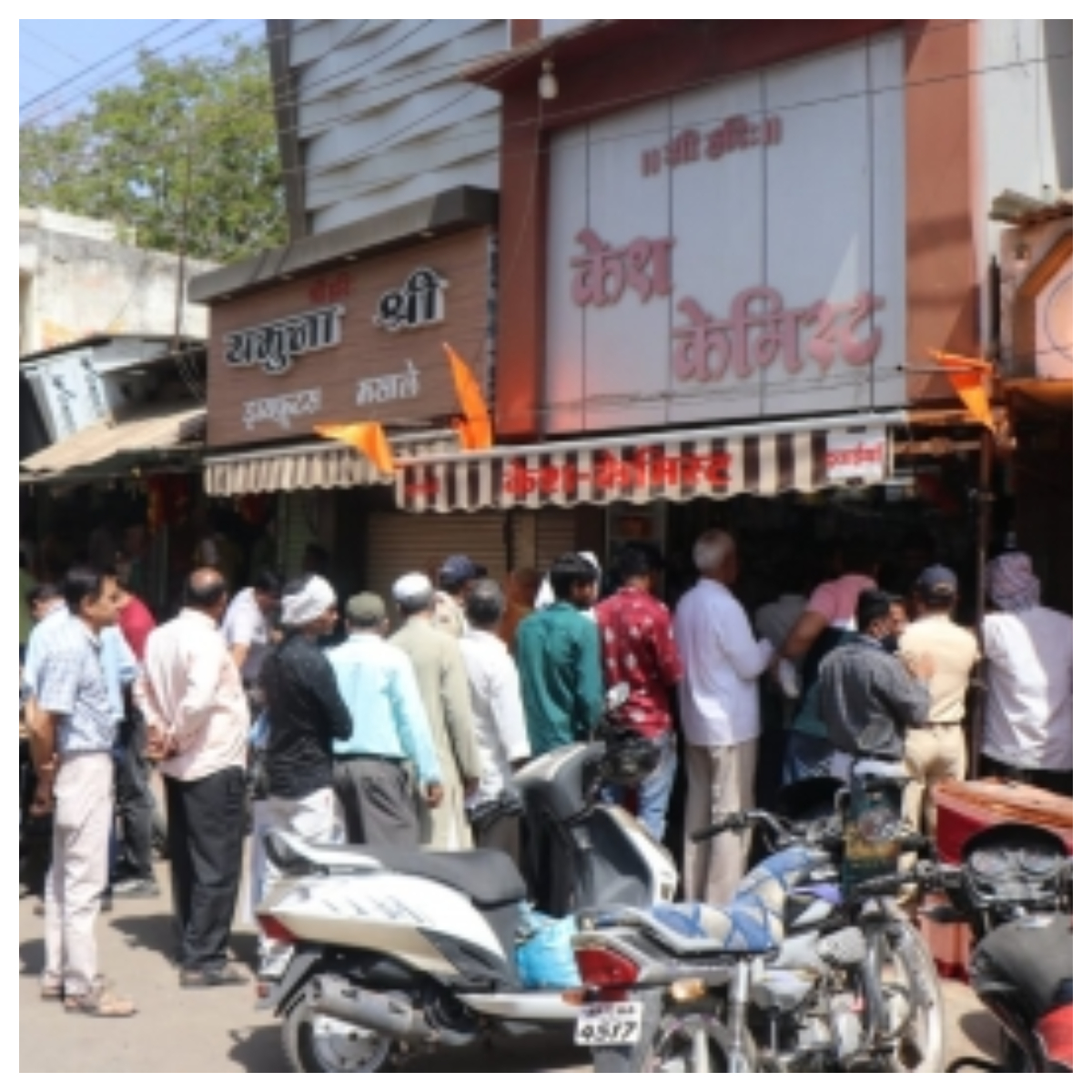
Twenty four days after violence hit Khargone city in Madhya Pradesh, the state administration has decided to lift all restrictions that were imposed under section 144 after it claimed that the situation in the city has returned to normalcy.
This statement was made by the Khargone district administration on Wednesday, hours after the Eid-ul-Fitr and Akshaya Tritiya celebrations were over.
The decision to lift the prohibitory orders was taken on the basis of reports during a meeting attended by officials of the district administration and the peace committee (comprising members of all the communities).
“The administration on Wednesday convened a peace committee meeting, which was attended by the representatives of all the communities. It was decided with the consent of all that the prohibitory orders issued on April 10 should be withdrawn immediately,” Sub-Divisional Magistrate Milind Dhoke told the press after the meeting.
“The prohibitory orders under CrPC 144 have ended from today itself. All the restrictions and curfew have been withdrawn. The situation that prevailed before April 10 has been restored,” he said.
Earlier on Thursday, the administration had announced relaxation in the curfew for 11 hours — from 6 a.m. to 5 p.m.
On Tuesday, the curfew was in place for 24 hours and citizens were asked to celebrate Eid-ul-Fitr and Akshaya Tritiya at their homes.
Curfew was clamped in Khargone after the violence on April 10 during which shops and houses were damaged, vehicles torched and stones hurled.
Since April 14, the local administration has been relaxing the curfew for some hours.
In the violence on the occasion of the Ram Navami procession, several people, including a District Superintendent of Police, were injured when a group of people pelted stones at each other and torched public and private property.
The incident had prompted the administration to put restrictions on the movement of people in the violence-hit area with multilayer security by the state and central forces.
The incident had fuelled a war of words between the BJP-led state government and the Congress, with former Madhya Pradesh Chief Minister Digvijaya Singh being targeted by the BJP.
The issue fuelled political controversy for over four weeks on demolition drives carried out in various parts of the state, during which a house constructed under the Pradhan Mantri Awas Yojana was demolished by the Khargone district administration on the basis of a report from the revenue department in the district.


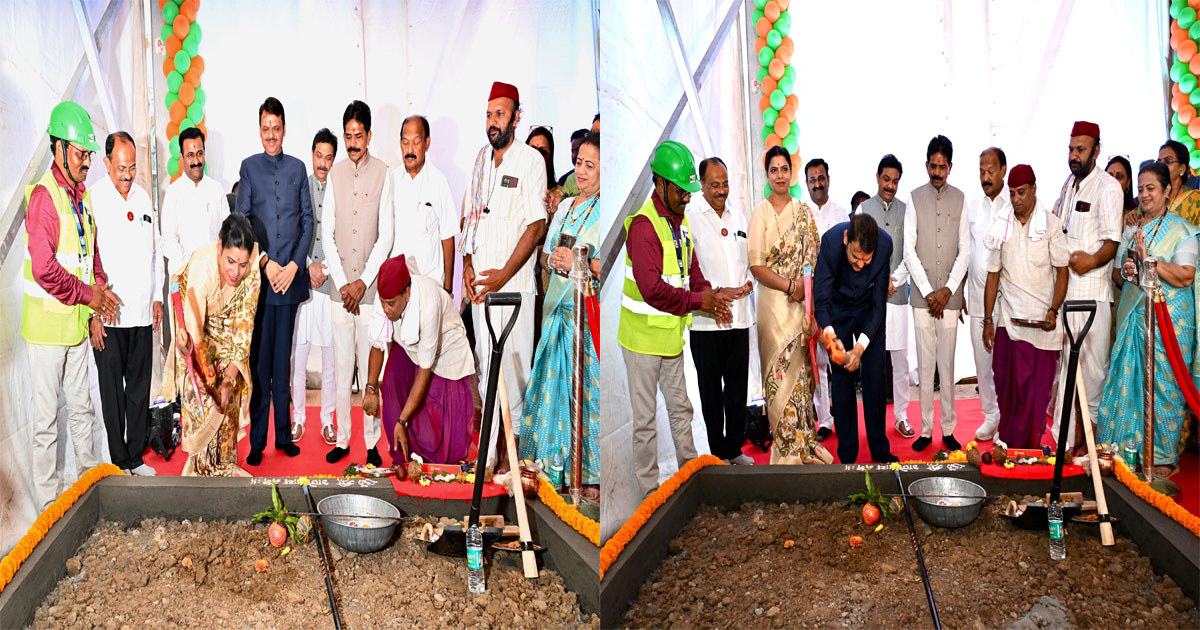
Mumbai: The Mumbai Municipal Corporation and the state government are committed to working together to ensure that every citizen of Mumbai has access to quality healthcare facilities in the coming times. The Chief Minister stressed that joint efforts are being made through the health system to create a free and quality healthcare system. He was addressing a program organized on the occasion of laying the foundation stone of the building under the redevelopment phase-2 of the Lokmanya Tilak Municipal Corporation General Hospital of Mumbai Municipal Corporation in Sain. The hospital will have a main building, cancer, emergency services and outpatient departments. It will cost Rs 2500 crore and the construction will be completed by November 2030. Chief Minister Devendra Fadnavis said that he is committed to providing free and quality healthcare to every citizen of Mumbai through the state government and the Mumbai Municipal Corporation. On this occasion, MLA Kalidas Kolambkar, Captain R. Tamil Selvan, Sunil Shinde, Prasad Lad, Mayor Ritu Tawde, Deputy Mayor Sanjay Gadi, Leader of the House Ganesh Khankar, Leader of the Opposition Kishori Pednekar, Chairperson of the Education Committee Rajeshree Shravadkar, Chairperson of the BEST Committee Trishna Vishwasrao, Chairperson of the Construction Committee (Suburbs) Sangeeta Sharma, Chairperson of the Women and Child Welfare Committee Smt. Manal Tarde, Health Committee Chairperson Harish Bhanderge, All Party Corporators, Municipal Corporation Commissioner Bhushan Gagrani, Additional Municipal Corporation Commissioner (Western Suburbs) Vipin Sharma, Deputy Commissioner (Public Health) Sharad Uday, Director (Medical Education and Major Hospitals) Dr. Shailesh Bawra, Dr. Shailesh Bhakre, Dr. Shailesh Bhakre and others were also present. Trauma Care Hospital Dr. Dev Shetty and other dignitaries were also present.
Chief Minister Mr. Fadnavis said that Mumbai is the financial capital of the country. The new Shiv Hospital will help reduce the pressure on the health system due to patients coming from different parts of Mumbai as well as from every corner of the country and abroad. The government intends to provide health facilities free of cost and through a quality system. The modern and newly expanded building will double the capacity of the hospital. A total of 3286 beds will be available under various health facilities in the four buildings of the hospital. The construction of such a hospital equipped with various facilities including the latest equipment will be done in two phases. In view of the increasing incidence of cancer, the cancer treatment building being built in the hospital will help reduce the pressure on Tata Cancer Hospital. We intend to provide the benefits of various health schemes of the state and central governments to the common patients. The state government is also trying to ensure that medical treatment facilities are provided up to at least Rs. 5 lakh is available to every person, Mr. Fadnavis said.
Mayor Smt. Ritu Tawde said that by standing on the historic ground of Shiv Hospital, we are not just inaugurating the reconstruction of a building, but we are also presenting a resolution to take Mumbai’s health system into a new era. Through the concept of ‘One City, One Health System’, we will all try to ensure that every patient of Mumbai gets easy, convenient and integrated services in any municipal hospital. The patient does not need to undergo repeated examinations, the patient should get timely service here, should get clear information, and should be treated with respect, this is also a measure of quality and hence special emphasis will be laid on sensitivity and communication in the health service of the Municipal Corporation here, said Mayor Mrs. Ritu Tawde on this occasion.
The new hospital will provide more facilities to patients coming from Shiv as well as Dharavi, Chembur, Wadala, Mumbai and different parts of the country. Local MLA Captain R. Tamil Selvan expressed his belief that the increase in the capacity of the new building will be beneficial in reducing the current pressure on the hospital system for treatment.
Chief Minister Devendra Fadnavis also inaugurated the ‘e-ambulance’ at the Lokmanya Tilak Municipal Corporation General Hospital on this occasion.
The program was introduced by Dr. Pramod Angale, Dean, Lokmanya Tilak Municipal Corporation General Hospital. The program was directed by Smt.
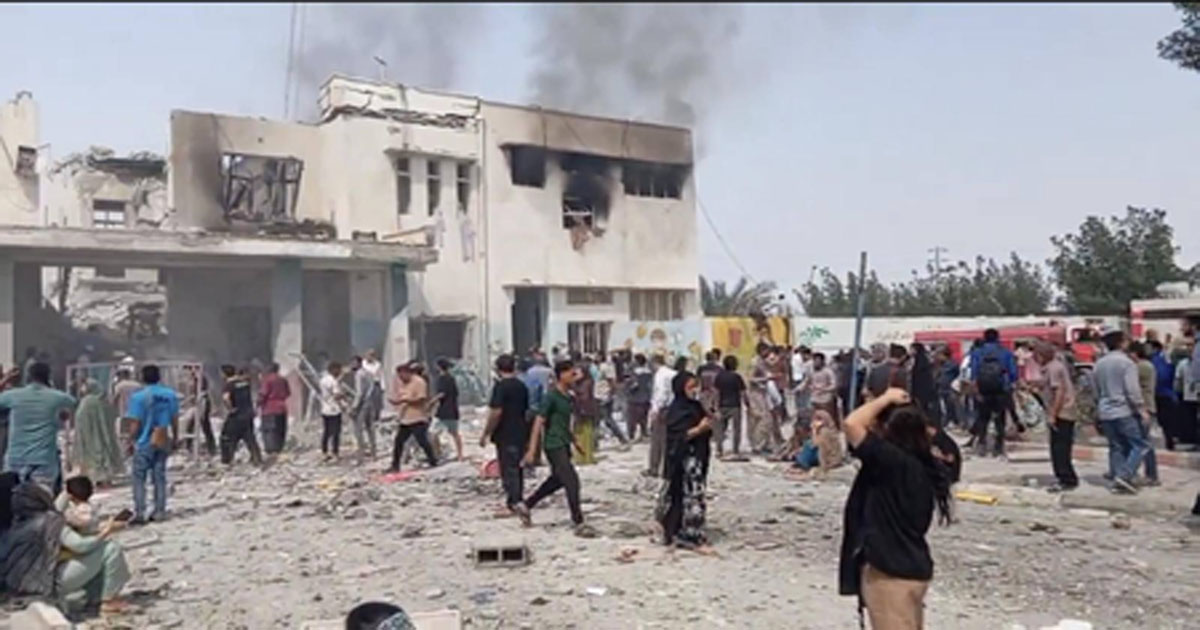
Tehran, March 27: The brutal attack on Shajareh Tayyebeh Girl’s School in Iran’s Minab cannot be justified, covered up, and must not be met with silence and indifference, Iran’s Foreign Minister Seyyed Abbas Araghchi told the United Nations Human Rights Council (UNHRC) during an urgent debate held on Friday afternoon.
In his speech at the emergency session, the Iranian Foreign Minister stated that his country is in the midst of an “illegal war” right now which has been imposed on it by “two bullying” nuclear-armed regimes, the United States and Israel.
“This war of aggression is clearly unjustified and extremely brutal. They launched this aggression on February 28 while Iran and the United States were engaged in a diplomatic process to resolve alleged US concerns about Iran’s nuclear programme. For the second time in nine months, they have betrayed diplomacy by disrupting and destroying the negotiating table,” said Araghchi.
Among the most horrific manifestations of this aggression, he said, was the “calculated and staged attack” on the Shajareh Tayyebeh elementary school in the city of Minab in southern Iran, where more than 175 students and teachers were “massacred in a completely deliberate and brutal manner”.
“This brutal attack is merely the visible tip of a much larger iceberg; one that hides beneath its surface far worse atrocities, including the normalisation of the most egregious violations of human rights and humanitarian law, and the audacity to commit heinous crimes in a climate of complete impunity. At a time when the American and Israeli aggressors, as they claim, have the most advanced technologies and the most precise military and data systems, no one can believe that the attack on this school was anything other than a deliberate and premeditated act,” he stated.
Addressing the session virtually, Araghchi mentioned that the targetting of the Iranian school is a “war crime” and a “crime against humanity” that requires unequivocal and unconditional condemnation by all.
“This tragedy cannot be justified, cannot be covered up, and must not be met with silence and indifference. The attack on the Shajareh Tayyebeh school in Minab was neither a mere accident nor a miscalculation. The contradictory statements made by the United States to justify this crime cannot absolve them of their responsibility. Condemning such a brutal attack on an inherently civilian place, where the most innocent people are present and seeking knowledge, is not simply a legal obligation within the framework of human rights systems; it is a moral and human imperative. Our conscience will judge us far more profoundly than any court of law,” the Iranian Foreign Minister added.
He went on to add that the elementary school has not been the “only victim of the heinous crimes committed by the US and Israel” during the past 27 days of the war.
“Human rights and international humanitarian law have been widely and systematically violated by the aggressors in an unprecedented and extremely brutal manner. They have targetted civilians and civilian infrastructure with complete disregard for the laws of war and the fundamental principles of humanity and civility. More than 600 schools across Iran have been destroyed or damaged, resulting in the deaths or injuries of more than a 1000 students and teachers. The aggressors, who arrogantly shout ‘there is no mercy or respite’ and threaten Iran with attacks on vital infrastructure, have targetted hospitals, ambulances, medical workers, Red Crescent aid workers, refineries, water sources, and residential areas.”
He urged the United Nations to unequivocally condemn the “aggressors” highlighting that Iran has never sought war.
“Iranians are a peaceful and noble nation, heirs to one of the richest civilizations in the world. However, they have shown complete and unwavering determination to defend themselves against ruthless aggressors who know no bounds in committing all kinds of crimes; a defense that will continue for as long as necessary,” Araghchi concluded.
The urgent debate has been convened following an official request submitted by Iran, China and Cuba. According to the UNHRC, the Minab school strike of February 28 will be discussed in the context of the “protection of children and educational institutions in international armed conflicts”, as outlined in the request. The programme of work for the ongoing 61st regular session of the Human Rights Council has been adjusted to include this urgent debate.
Mumbai, March 27: The Enforcement Directorate (ED), Mumbai Zonal Office, has provisionally attached an immovable property worth Rs 19.12 crore under the Prevention of Money Laundering Act (PMLA), 2002, in connection with the National Spot Exchange Limited (NSEL) case, officials said on Friday.
Sources said the attached property is linked to the LOIL Group, one of the key defaulters in the NSEL case.
The money laundering probe stems from an FIR registered at MRA Marg police station, which is being investigated by the Economic Offences Wing (EOW) of the Mumbai Police under various sections of the IPC against NSEL, its directors, key officials and 25 defaulters.
According to the ED, its probe has revealed that NSEL and its defaulting members were involved in criminal conspiracy, cheating and forgery by allowing trading in commodities without actual underlying stocks, allegedly defrauding around 13,000 investors of nearly Rs 5,600 crore.
The investigation further revealed that three defaulting members—LOIL Overseas Foods Ltd, LOIL Continental Foods Ltd and LOIL Health Foods Ltd (collectively referred to as the LOIL Group)—fraudulently raised funds through fictitious sale transactions of paddy on the NSEL platform.
The agency said the total liability of the LOIL Group towards NSEL stands at Rs 720.30 crore. Scrutiny of bank records revealed that around Rs 569.04 crore was siphoned off from NSEL settlement accounts of the group entities.
A substantial portion of the diverted funds was allegedly layered through various group entities, including Lakshmi Energy & Foods Limited, and used for repayment of bank loans, business operations, working capital requirements and acquisition of immovable properties.
With this latest action, the ED has now issued 34 provisional attachment orders in the NSEL case, bringing the total value of seized assets to approximately Rs 3,452.16 crore. To date, seven prosecution complaints have been filed against 148 accused persons before the Special PMLA Court, which has already taken cognizance of the charges.

Government committed to creating a quality healthcare system: Devendra Fadnavis

Targetting of Iranian school crime against humanity: Iran’s FM at UNHRC session

Mumbai News: ED Attaches ₹19.12 Crore Asset Linked To LOIL Group In NSEL Scam Probe

Maharashtra Minister Nitesh Rane Announces AI Project For Mango, Cashew Farming In Sindhudurg With 400 Farmers In Pilot Phase

Lockdown will not be implemented… Oil prices will not increase either, criminal cases will be registered against those spreading rumors: Devendra Fadnavis

Married Mumbai Woman Mocked In Andheri Society Over ‘Lift Kissing’ CCTV Video, Files Police Complaint

Mumbai: JBCN International School In Borivali Gets Bomb Threat, Search Reveals Hoax, Students Safe

Mahayoti’s big gift to the people of Mumbai… Now there is no tax for houses up to 500 square feet, the Municipal Corporation has increased this limit to 700 square feet.

LPG Crisis In Maharashtra: Cyber Crime On Rise Amid Shortage, 2 Women Lose ₹4 Lakh In ‘Gas Update’ Online Scam In Kalyan-Dombivli

Rashmika Mandanna-Vijay Deverakonda Wedding: Virosh Turn Modern Day Prince & Princess For Their Dreamy Sangeet Ceremony
-

 Crime4 years ago
Class 10 student jumps to death in Jaipur
-

 Maharashtra1 year ago
Mumbai Local Train Update: Central Railway’s New Timetable Comes Into Effect; Check Full List Of Revised Timings & Stations
-

 Maharashtra1 year ago
Mumbai To Go Toll-Free Tonight! Maharashtra Govt Announces Complete Toll Waiver For Light Motor Vehicles At All 5 Entry Points Of City
-

 Maharashtra2 years ago
False photo of Imtiaz Jaleel’s rally, exposing the fooling conspiracy
-

 National News1 year ago
Ministry of Railways rolls out Special Drive 4.0 with focus on digitisation, cleanliness, inclusiveness and grievance redressal
-

 Maharashtra1 year ago
Maharashtra Elections 2024: Mumbai Metro & BEST Services Extended Till Midnight On Voting Day
-

 National News2 years ago
J&K: 4 Jawans Killed, 28 Injured After Bus Carrying BSF Personnel For Poll Duty Falls Into Gorge In Budgam; Terrifying Visuals Surface
-

 Crime1 year ago
Baba Siddique Murder: Mumbai Police Unable To Get Lawrence Bishnoi Custody Due To Home Ministry Order, Says Report