
National News
Look at the kind of authority you wield in terms of dominance: SC to Google

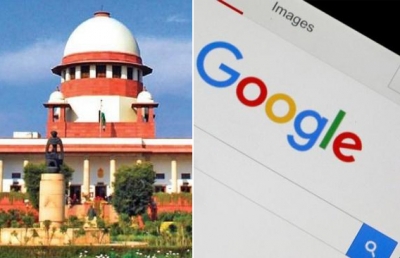
The Supreme Court on Thursday orally told Google’s counsel to look at the kind of authority it wields in terms of dominance, while hearing the tech giant’s plea on seeking a stay on a Competition Commission of India (CCI) order imposing a Rs 1,337 crore penalty on it.
A bench headed by Chief Justice D.Y. Chandrachud told senior advocate A.M. Singhvi, representing Google, said: “Dr Singhvi, all that you gave us in terms of data in fact militates against your argument.”
“Look at the kind of authority which you wield in terms of dominance data indicates 15,000 Android models, 500 million compatible devices 1500 OEMs. When you have that kind of market penetration, then by insisting you necessarily have my bouquet you directly affecting… What the OEM does, impact upon the ultimate consumer,” the Chief Justice said.
Singhvi submitted: “I am one of the players in this ecosystem, and people choose Google Play Store due to its excellence and not because of dominance.”
He queried that had there been no Android, “would this revolution in telephony had taken place?”
Singhvi further argued that in Korea, there is a different user and pressed that Google is there due to excellence and not due to dominance.
“Where it is voluntary, non-imposed. It is free, non exclusive, what more you can do?”.
The bench, also comprising Justices P.S. Narasimha and J.B. Pardiwala, will continue to hear arguments in the matter in the afternoon.
On January 11, the Supreme Court had agreed to examine an appeal by Google against a decision by the National Company Law Appellate Tribunal (NCLAT), declining to stay a Rs 1,337.76 crore penalty imposed on it by the CCI for alleged anti-competitive practices.
Google moved the apex court after the setback at NCLAT, which did not stay the CCI order on abuse of dominant position in multiple markets in the Android mobile device ecosystem case.
Earlier this month, the NCLAT did not find any urgency to pass an interim order, after noting that Google filed the appeal in December last year, though the CCI passed the order in October.
It directed Google to deposit 10 per cent of the fine amount.
The tribunal had said that there was no urgency shown in the filing of the appeal, therefore Google could not be allowed to press for interim relief.
In October last year, the CCI had imposed a penalty of Rs 1,337.76 crore on the company for abusing its dominant position in multiple markets in relation to Android mobile devices.
The CCI also imposed a penalty of Rs 936.44 crore on the company for abusing its dominant position with respect to its Play Store policies.



The son of a police Sub-Inspector was shot dead, while another son sustained critical injuries in a shooting incident in Bihar’s Gaya district, police said on Tuesday. Two suspects have been detained for questioning.
The incident took place near Siddharthpuri Colony, close to Nauranga Aahar, under the Mufassil police station area in Manpur.
The victims were identified as Ranu Singh, 30, who died of his injuries, and his elder brother, Monu Singh, 32, who is undergoing treatment at Magadh Medical Hospital and is reported to be in critical condition.
Their father, Sudhanshu Shekhar alias Pintu Singh, is a police Sub-Inspector currently posted in Motihari.
According to family members, the brothers had a dispute with someone in the neighbourhood and were subsequently called to a location over the phone.
When they arrived, armed assailants allegedly opened fire on them, leaving both brothers seriously injured. Ranu later succumbed to his injuries.
Police personnel rushed to the scene after receiving information and recovered three spent cartridge casings during an inspection.
Two suspects have been taken into custody and are being questioned to establish their alleged involvement and identify others connected with the attack.
A dispute over gambling is suspected to have triggered the shooting, although police have not officially confirmed the motive.
Local residents have claimed that the area is associated with gambling and the sale of illicit liquor.
The brothers originally belonged to Jethian village under the Atri police station area of Gaya district.
The family had been residing at their house in Siddharthpuri Colony, Road No. 1, under the Mufassil police station limits.
The shooting has caused concern among residents and members of the police department, given that the victims are the sons of a serving police officer.
Police said the investigation was underway to establish the sequence of events, ascertain the motive and identify all those involved in the attack.

Mexican drug cartels are increasingly exploring local production of narcotics in India, using rented houses as clandestine manufacturing units as tighter border security makes trafficking large consignments riskier, officials said.
Officials said the trend has emerged where the cartel bosses have instructed their India operatives to find small houses and turn them into narco production units. This is the modus operandi being increasingly followed by the Mexican cartel Cártel de Jalisco Nueva Generación. This makes the job of the law enforcement agencies harder, as this is one of the most powerful, influential, and violent transnational criminal syndicates, the official added.
This cartel has realised that India is a major market. It does not want to risk sending big consignments as several of them have been apprehended. The major busts recently by the Indian agencies have shaken up the cartels. Moreover, the cartels understand that there is a huge demand for narcotics in the Indian market and hence, it would be safer to cater to the same by producing locally and at unassuming locations, the official said.
The funds to set up these units are directly pumped in from Mexico. It first transfers funds to Dubai using cryptocurrency, following which it makes its way into India through hawala channels. The modus operandi indicates the operations are deliberately kept low-key.
Officials said the syndicate’s operatives prefer houses in densely populated neighbourhoods, where unusual activity may attract less attention. This helps evade suspicion. Another official said the cartels have taken up multiple houses for rent and have turned them into units to produce narcotics. These units not only pose a threat to national security but also cause environmental hazards. There is a lot of untreated chemical waste these units generate. This has led to contamination of drainages, water bodies, and the local soil.
The Narcotics Control Bureau (NCB) recently appealed to homeowners and property dealers to remain vigilant while giving houses on rent. “Citizens are encouraged to report suspicious indicators such as unusual chemical odors, unexplained storage of drums, or heavy lab equipment to the National Narcotics Helpline MANAS at 1933, reinforcing the nation’s collective stride toward a Nasha Mukt Bharat,” an NCB advisory read.
The Mexican cartels are relatively new players in India. Initially, China was the primary source for synthetic drugs produced by the Mexican cartel. However, after regulations on fentanyl and methamphetamine were tightened, operations moved to India.
Officials say that operations are currently on a smaller scale. This cartel is still testing the waters and, over a period of time, would look to set up many more home production units in India.
The focus is also more on areas around New Delhi and Greater Noida. However, these cartels have links in Mumbai as well and would eventually look to spread their operations to more parts of the country, officials say.
In the most recent operation, the NCB seized 380 kg of methamphetamine worth Rs 50 crore from units in Greater Noida. The facility was equipped with glass reaction vessels, filtration machinery, large-capacity heating mantles and laboratory apparatus. This signals that the unit was set up in a manner to produce huge quantities of narcotics.
An Intelligence Bureau official said the recruitment pattern of the cartels is interesting. If a unit has to be set up in Delhi or Noida, it would never hire locals for the job as their faces are familiar. The preference is for Nigerian nationals or youth from the northeast. Those hired pose as students and then take up the accommodation.
In the case of students, the suspicion of the landlords or property dealers is comparatively less. Moreover, these persons do not bargain hard when it comes to the rent, and this is another reason why landlords give their homes on rent.
For the NCB and other law enforcement agencies, this adds another dimension in the battle against drugs. It is harder to track such units as they are in unassuming locations, and this is exactly what the cartel has in mind as it plans to expand operations to more parts of the country, an official said.
National News
Violence is wrong, weakens democracy: Shiv Sena (UBT) leader on Sanjay Raut Albania protest remarks


Shiv Sena (UBT) leader, Priyanka Chaturvedi, on Tuesday criticised her party MP Sanjay Raut’s remarks referring to the burning of Albania’s Supreme Court, saying that suggesting India should learn a lesson from such incidents was inappropriate and undermined the country’s democracy and Constitution.
Chaturvedi stressed that violence could not achieve anything and was against the interests of the country. She urged people to express their grievances through peaceful protests rather than taking the law into their own hands.
Raut, in a post on X, had said, “The people of Albania have burned down the Supreme Court. The people were enraged because the Supreme Court was helping corrupt prime ministers. The protesting public has also attacked the parliament and government offices, as well as the ministers’ homes. All countries should learn a lesson from these events. Especially India.”
Reacting to his remarks while speaking to media, Chaturvedi said the lesson to be drawn from such incidents was the importance of respecting the judicial system and maintaining law and order, rather than encouraging violent demonstrations.
“The only lesson we should learn is that we must not take the justice system and law and order into our own hands and should avoid such violent protests. Violence achieves nothing and goes against the interests of the country. Whether in Bangladesh, Nepal, Albania or France, these incidents begin with student protests, after which bad-faith actors get involved, leading to such incidents,” she said.
Chaturvedi also cited the protests undertaken by her party over political and electoral issues, arguing that constitutional and democratic concerns should be pursued through peaceful and lawful means.
“This fight is for our country’s Constitution and democracy. The way we removed Dharmendra Pradhan from the post through a peaceful protest. Now, our fight to ensure that the Election Commission is not undermined and to seek the resignation of Gyanesh Kumar is being pursued in the Supreme Court,” she said.
The Shiv Sena (UBT) leader maintained that political disagreements and demands for accountability should not be used to justify or encourage violence.
“Despite this, suggesting that we should learn from such incidents and that violence could happen is wrong, and it weakens our democracy and Constitution,” Chaturvedi added.
Her remarks came amid a debate over Raut’s comments on the unrest in Albania and his suggestion that India should take lessons from the protests there.
BJP leaders criticised Raut, accusing him of promoting anarchy and demanding an apology.

Police Sub-Inspector son shot dead, elder offspring critical in Gaya; two suspects detained

Mexican cartels eye India expansion, turn rented homes into local drug production units

Violence is wrong, weakens democracy: Shiv Sena (UBT) leader on Sanjay Raut Albania protest remarks

Father-son duo arrested in Delhi Harsh Vihar for attempt to murder

Kareena Kapoor, Hema Malini and Anil Kapoor celebrate triumph of good over evil on Dussehra

Rahul, Cong ecosystem want to force regime change: BJP after Neha Bora praises B’desh Gen-Z protest

BJP pays tribute to ex-President Abdul Kalam, recalls his enduring influence on generations of India’s youth

Attack on democratic rights: INDIA Bloc leaders on detentions of anti-ECI protestors

INDIA bloc begins protest march against ECI

Maha Congress stages agitation against Gyanesh Kumar
-

 Crime4 years ago
Class 10 student jumps to death in Jaipur
-

 Maharashtra2 years ago
Mumbai Local Train Update: Central Railway’s New Timetable Comes Into Effect; Check Full List Of Revised Timings & Stations
-

 Maharashtra2 years ago
Mumbai To Go Toll-Free Tonight! Maharashtra Govt Announces Complete Toll Waiver For Light Motor Vehicles At All 5 Entry Points Of City
-

 Maharashtra2 years ago
False photo of Imtiaz Jaleel’s rally, exposing the fooling conspiracy
-

 National News2 years ago
Ministry of Railways rolls out Special Drive 4.0 with focus on digitisation, cleanliness, inclusiveness and grievance redressal
-

 Maharashtra2 years ago
Maharashtra Elections 2024: Mumbai Metro & BEST Services Extended Till Midnight On Voting Day
-

 National News2 years ago
J&K: 4 Jawans Killed, 28 Injured After Bus Carrying BSF Personnel For Poll Duty Falls Into Gorge In Budgam; Terrifying Visuals Surface
-

 Crime2 years ago
Baba Siddique Murder: Mumbai Police Unable To Get Lawrence Bishnoi Custody Due To Home Ministry Order, Says Report