
National News
Let government take decision, Supreme Court on plea seeking reopening of schools


The Supreme Court on Monday declined to entertain a plea by a Class 12 student from Delhi seeking directions to Centre and States to take a time-bound decision in connection with the physical re-opening of schools and conduct of offline teaching.
A bench headed by Justice D.Y. Chandrachud said it cannot direct states to reopen schools for physical teaching. The bench noted, “We just got out of the second wave (Covid). We don’t know where the spike is?”.
Justice Chandrachud emphasized that children need to go back to school but, it has to be decided by the states.
The bench noted it does not have scientific data nor complete information on Covid spike in the country and added that governments are wary of exposing children to possible infection. The bench also comprising justice B.V. Nagarathna said that court cannot take over governance and decide these issues. “Let governments take decision”, added the bench.
Advocate representing the petitioner contended that malls and restaurants have been opened, and emphasized on the mental and psychological fallout of the closure of schools on the students.
The bench noted that children should not be involved in these matters and emphasized that these issues are fraught with grave complexity. “We don’t think, we should enter here by judicial mandates”, noted the bench, asking the advocate to withdraw the petition.
Petitioner Amar Prem Prakash said he is echoing the sentiments and feelings of a large body of the student community and fraternity of the country, particularly underprivileged and voiceless children. The petitioner said he is aggrieved by the indecision and vacillation on the part of the Centre and states/union territories (UTs), in the matter of re-opening of schools and resumption of physical classes with adequate safeguards.
“Raising this very vital issue regarding the deprivation and ill-effects, both psychological and actual, of school children being kept away from attending their schools physically”, said the plea filed through advocate Ravi Prakash Mehrotra.


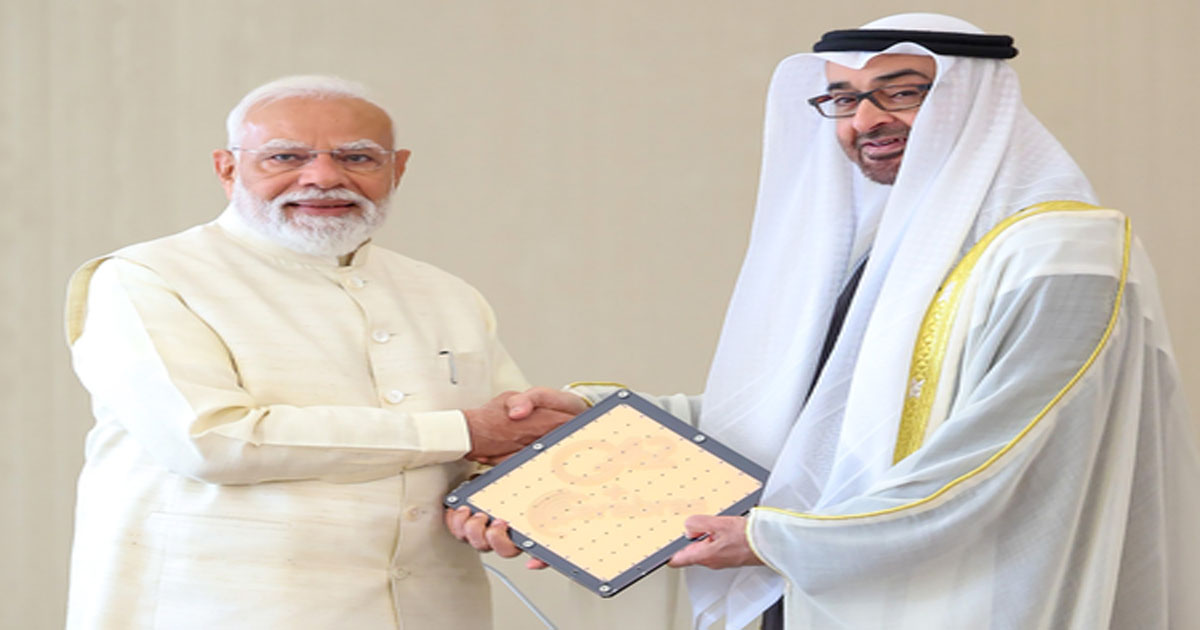
New Delhi, May 15: India and the United Arab Emirates signed key agreements, during the visit of Prime Minister Narendra Modi on Friday, on a framework for the bilateral strategic defence partnership, the supply of LPG and strategic petroleum reserves, and an investment to the tune of $5 billion US dollars in Indian Infrastructure and RBL Bank and Samman Capital.
An agreement was also signed for setting up a ship repair cluster at Vadinar.
Speaking during delegation-level talks in Abu Dhabi, Prime Minister Narendra Modi said, “India stands shoulder-to-shoulder with the UAE in every situation, and it will continue to do so. For the restoration of peace and stability, India will extend all possible cooperation.”
He said it was important that the Strait of Hormuz remains “free and open” and added that international laws must be respected.
The Prime Minister thanked UAE President Mohamed bin Zayed Al Nahyan for strengthening the India-UAE comprehensive strategic partnership and said bilateral cooperation had gained greater importance in the current global situation.
PM Modi said both sides had agreed during the UAE President’s January visit to India to qualitatively upgrade relations and had already made significant progress in a short span.
“I extend heartfelt gratitude to you for taking our comprehensive strategic partnership to new heights. During your visit to India in January, we agreed to qualitatively upgrade our relations. Even in such a small duration, we have made significant progress in all matters. In the kind of situation we have at hand today, the importance of India-UAE strategic cooperation has vastly increased. In the time to come, we will go ahead together in every area,” he observed.
PM Modi said the impact of the conflict in West Asia was being felt globally and stressed that dialogue and diplomacy remain the best way to resolve issues.
The Prime Minister arrived in the UAE earlier in the day and received a ceremonial welcome. Later, he held bilateral talks with UAE President Mohamed bin Zayed Al Nahyan, popularly known as MBZ.
Prime Minister Narendra Modi began his five-nation tour from May 15 to 20, covering the UAE, the Netherlands, Sweden, Norway and Italy. The visit aims to deepen India’s strategic and economic partnerships across key sectors, including energy, defence, technology, green transition and trade.
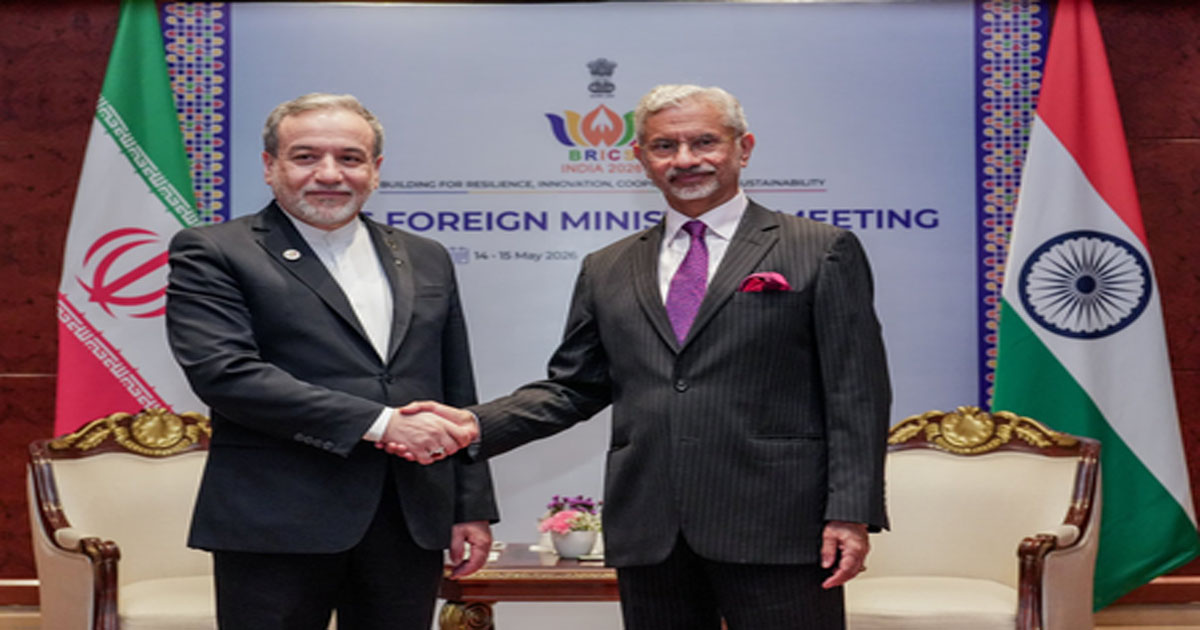
New Delhi, May 15: External Affairs Minister (EAM) S Jaishankar on Friday met his Iranian counterpart Seyed Abbas Araghchi in New Delhi, where the two leaders exchanged views on the evolving situation in West Asia and its wider implications, along with bilateral matters of mutual interest.
EAM Jaishankar also welcomed Araghchi’s participation in the BRICS Foreign Ministers’ Meeting being hosted in New Delhi under India’s 2026 chairship.
Following the meeting, EAM posted on X : “Had a detailed conversation with FM Abbas Araghchi of Iran this morning in Delhi. Discussed the situation in West Asia and its implications. Also exchanged views on bilateral issues of mutual interest. Appreciate his participation in BRICS India 2026.”
Earlier on Thursday, Prime Minister Narendra Modi also met Iranian Foreign Minister on the sidelines of the BRICS Foreign Ministers’ Meeting in New Delhi.
The meeting marked the first high-level diplomatic engagement involving India since the Iran war began.
Meanwhile, EAM Jaishankar on Thursday highlighted the fragile security environment in West Asia, stating that the persistent tensions in the region, along with threats to shipping routes and energy infrastructure, remain a matter of global concern.
Delivering the national statement at the BRICS Foreign Ministers’ Meeting in New Delhi under India’s 2026 chairship, the EAM said, “The conflict in West Asia merits particular attention. Continuing tensions, risks to maritime traffic, and disruptions to energy infrastructure highlight the fragility of the situation. Safe and unimpeded maritime flows through international waterways, including the Strait of Hormuz and the Red Sea, remain vital for global economic well-being.”
He also reaffirmed India’s “strong commitment” to the purposes and principles of the United Nations Charter.
“Respect for sovereignty and territorial integrity must remain the foundation of international relations. Dialogue and diplomacy are the only sustainable means of resolving conflicts,” the EAM said.
In his address at the BRICS Foreign Ministers’ Meeting on Thursday, Araghchi urged the global community to condemn “violations of international law” by the United States and Israel and take action against “warmongering”, thereby bringing an end to the impunity of those who violate the UN Charter.
He stated that Iran has been subjected to “brutal and unlawful aggression” by the US and Israel.
“The attacks on my people have been justified with false claims that run counter to the informed assessments of the International Atomic Energy Agency and even America’s own intelligence community. The truth is that Iran — like many other independent nations — is the victim of illegal expansionism and warmongering. These are ugly things which have no place in today’s world,” the Iranian Foreign Minister stated.
Marking Tehran’s first high-level diplomatic outreach since the conflict in West Asia began, Araghchi arrived in New Delhi on Wednesday for a three-day official visit.
The escalating tensions in West Asia have also rattled global energy markets, with oil and gas prices surging after Iran effectively blocked the Strait of Hormuz — the strategic shipping corridor between the Persian Gulf and the Gulf of Oman that carries nearly 20 per cent of the world’s oil and LNG (liquefied natural gas) supplies.
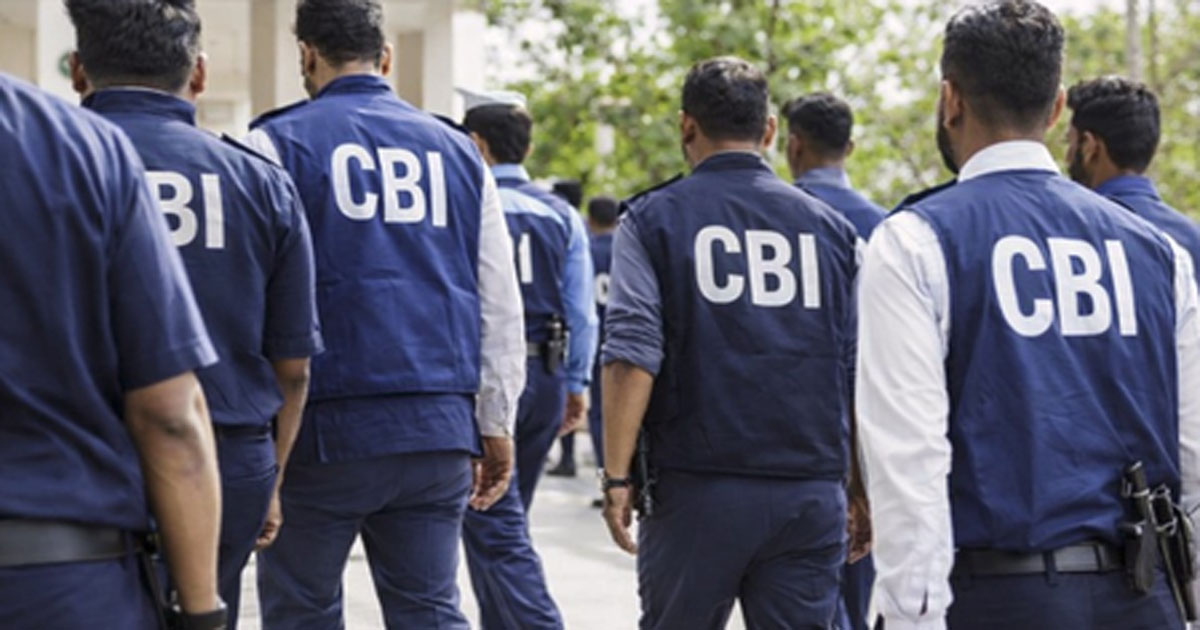
Jaipur, May 15: The NEET paper leak scandal in Rajasthan is beginning to resemble a full-blown crime thriller, with every new revelation exposing another layer of an alleged education mafia that may have penetrated deep into the country’s medical admission system.
Now, the investigation has reached the corridors of Pandit Nawal Kishore Sharma Government Medical College in Dausa and at the centre of the latest twist is a young MBBS student who has suddenly vanished from campus. Pragati Biwal, a first-year MBBS student and daughter of arrested NEET paper leak accused Mangilal Biwal, has reportedly gone “missing” from the college soon after the CBI intensified its crackdown on the family.
According to sources, Pragati quietly submitted a leave application and left the campus immediately after the arrests of her father and uncle, Dinesh Biwal, both considered key figures in the growing paper leak scandal. For the past two days, Pragati has not attended classes, and her sudden disappearance has sparked intense speculation within academic circles and among investigators.
While family members insist she secured admission through merit and hard work, the timing of her exit has raised uncomfortable questions. What has particularly caught the attention of investigators is the extraordinary number of medical admissions within the same family.
The CBI is now reportedly scrutinising the academic records and admission history of multiple members of the Biwal family to determine whether the alleged NEET paper leak network was used to secure seats in prestigious medical colleges.
The list is striking: Pragati Biwal is studying MBBS in Dausa. Her brother Vikas is enrolled at Sawai Madhopur Medical College. Her cousin Saniya studies at SMS Medical College, Jaipur. Another cousin, Palak, is pursuing medical education in Mumbai. Gunjan, another family member, is studying medicine in Banaras.
Investigators are now trying to determine whether this concentration of medical admissions in one family is merely exceptional academic success or evidence of something far more sinister.
Meanwhile, the CBI has intensified searches at the family’s properties in Jamwaramgarh, Jaipur.
On Thursday, teams conducted raids at the residence of the accused brothers, Mangilal and Dinesh Biwal, in Khatik Mohalla. Sources say no male family members were present during the operation, prompting investigators to question the women of the household, including the accused’s mother and wives, for several hours.
The agency also searched a nearby farmhouse, examined luxury vehicles parked at the premises, and seized several important documents believed to be linked to the racket.
The investigation has now spread beyond Rajasthan, with arrests already made in Maharashtra.
So far, seven people have been arrested in connection with the NEET paper leak case, while five accused, including Dinesh Biwal, Mangilal Biwal, and Vikas, have been sent to seven-day CBI custody.
The CBI is also searching for Dinesh Biwal’s son, Rishi, a NEET aspirant this year, who is reportedly absconding.
As the probe widens, investigators suspect the scandal may be much larger than initially believed, potentially involving a well-organised network manipulating one of India’s most competitive entrance examinations.
With an MBBS student mysteriously ‘disappearing’ from her college campus just as the investigation closes in on her family, the NEET paper leak case has taken yet another dramatic turn, one that could expose what may become Rajasthan’s biggest education scam in recent memory.

Senior IPS Officers Transferred in Maharashtra; Key Changes in Mumbai Police Leadership

Palghar Horror: 21-Year-Old Woman Brutally Attacked With Knife Near Vasai Fort; Attempted Murder Case Filed

Mumbai: Fire Breaks Out At Borivali Annex Mall, Sparks Panic Among Shoppers Near Western Express Highway

Maha Vikas Aghadi should form a task force to revise voter lists in Maharashtra on the model of Bengal: Raees Sheikh

Mumbai: Dindoshi Sessions Court Rejects Anticipatory Bail Plea Of Grandfather Accused Of Sexually Assaulting 3-Year-Old Granddaughter

‘Son Falsely Implicated, We Are Well-Educated’: Father Of Accused Tausif Attar Defends Son After Skullcap, Namaz Coercion Allegations Rock TCS Nashik

Mumbai: 15th arrest in Rohit Shetty shooting case, shooter identified, arrested, more arrests possible

Maharashtra Shock: 22-Year-Old Arrested For Exploiting & Blackmailing Multiple Women In Kolhapur; Love Jihad Angle Suspected

27 Years After Gangster Sadiq Kalia’s Encounter By Daya Nayak, His Nephew Arrested For Alleged Revenge Killing In Mumbai

Google to invest up to $40 billion in Anthropic amid global AI race
-

 Crime4 years ago
Class 10 student jumps to death in Jaipur
-

 Maharashtra2 years ago
Mumbai Local Train Update: Central Railway’s New Timetable Comes Into Effect; Check Full List Of Revised Timings & Stations
-

 Maharashtra2 years ago
Mumbai To Go Toll-Free Tonight! Maharashtra Govt Announces Complete Toll Waiver For Light Motor Vehicles At All 5 Entry Points Of City
-

 Maharashtra2 years ago
False photo of Imtiaz Jaleel’s rally, exposing the fooling conspiracy
-

 National News2 years ago
Ministry of Railways rolls out Special Drive 4.0 with focus on digitisation, cleanliness, inclusiveness and grievance redressal
-

 Maharashtra1 year ago
Maharashtra Elections 2024: Mumbai Metro & BEST Services Extended Till Midnight On Voting Day
-

 National News2 years ago
J&K: 4 Jawans Killed, 28 Injured After Bus Carrying BSF Personnel For Poll Duty Falls Into Gorge In Budgam; Terrifying Visuals Surface
-

 Crime2 years ago
Baba Siddique Murder: Mumbai Police Unable To Get Lawrence Bishnoi Custody Due To Home Ministry Order, Says Report