
Crime
Khabari: The Unsung Heroes Of Mumbai Police Intelligence

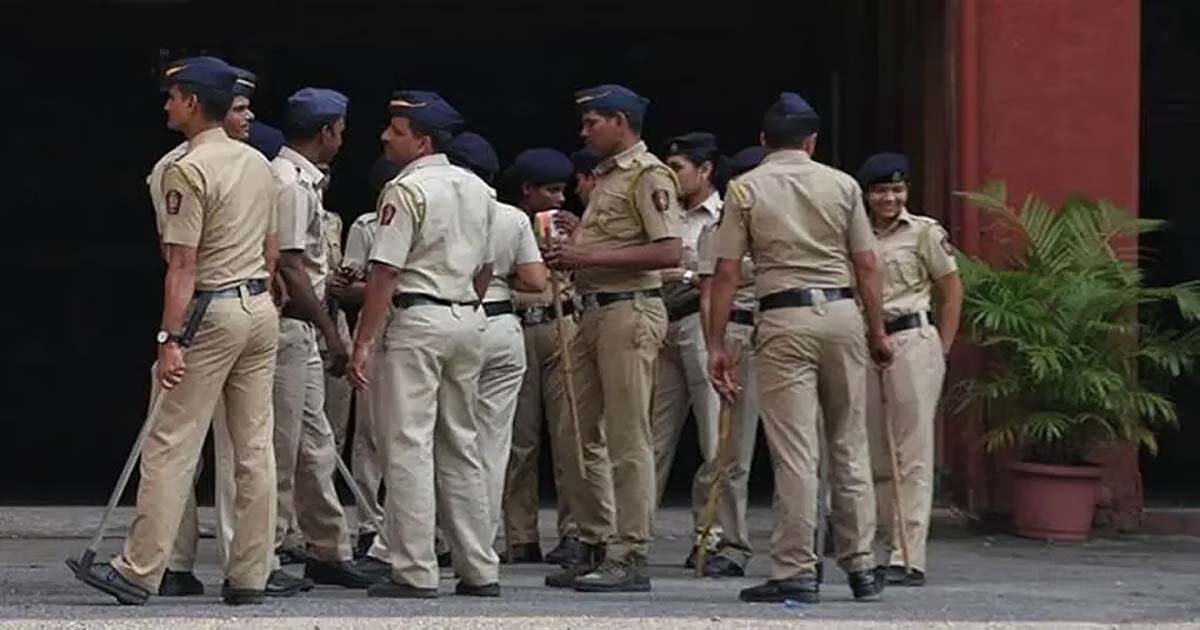
The term “Khabari” means informer, an indispensable part of every police force. While technology has transformed policing in today’s digital age, the importance of khabaris remains as strong as ever.
Some may question whether informers still hold the same relevance when advanced surveillance systems, digital forensics, and artificial intelligence are helping the police solve crimes faster. However, despite these technological breakthroughs, the role of human intelligence can never be replaced.
A khabari serves as the police’s eyes and ears on the ground. They provide crucial information about criminal activities, gangs, and suspicious movements, insights that no digital system can fully capture. Their tips often lead to major breakthroughs in investigations, especially in complex or sensitive cases where trust and human connections matter more than data. The khabaris as the backbone of crime control and investigation. From tracking drug networks to preventing gang wars, these informers quietly contribute to maintaining law and order.
There is a common phrase often seen in police press notes, “acting on a tip-off from a secret informer.” These “secret informers” are none other than khabaris. Within the Mumbai Police, there exists an entire world of informers, mysterious yet essential. The general public often forms its image of an informer from Bollywood films — a shady figure calling the police from a dark alley. In reality, the truth is far more complex and grounded.
Many khabaris come from ordinary walks of life, street vendors, rickshaw pullers, small businessmen, or paan stall owners. They share information about suspicious or criminal activity in their areas. They may not receive direct financial benefits, but being known to the police gives them credibility and a sense of security. Sometimes, it ensures that the police do not unnecessarily trouble their businesses. Some people even share information as a form of social service, though they are not considered professional informers.
However, those who provide information from within the criminal world are the true police informers. These individuals may have once been part of gangs, may have fallen out with their former associates, or may be ex-convicts trying to rebuild their lives. Some are even active criminals who maintain links with the police. In prisons, so-called ‘raw prisoners’ also serve as informants, passing on valuable details about criminal networks or planned activities. Sometimes, in certain matters, the informer is connected to politicians, businessmen, and the criminal world as well.
The identity of an informer is always kept strictly confidential for their safety. The police never reveal their names, even in successful operations or encounter reports.
Sudhakar Suradkar, a former IPS officer, stated, “Technology or machines can never replace human intelligence. In the digital era, these tools are only helpful, but ultimately, human intelligence remains the most important. For instance, the atomic tests conducted by India in 1998, during the tenure of Prime Minister Atal Bihari Vajpayee, were not detected by American intelligence agencies despite their advanced technology. Another key point is that an informer must be a credible individual. Some people accept money and provide information, but the police must identify their vested interests. Human beings can lie, which is why I never trusted petty informers; I always relied on credible ones. In the police force, the importance of informers will always remain, despite the growth of digital innovations.”
The history of informers in the Mumbai Police goes back decades. Smuggling was rampant in the 1960s, and rival operators would secretly tip off the police to catch competitors’ boats. That marked the beginning of the informer system. Over the years, informants have become an integral part of policing. During the 1980s and 1990s, when gang wars gripped Mumbai, khabaris played a crucial role. Their tips helped the police conduct encounters and dismantle underworld networks. Many of these informers risked their lives to assist the police during those violent times.
If informers provide information, what do they get in return? The answer lies in the economics of intelligence. Many informers are professionals; they earn their living by supplying credible information. The bigger and more valuable the information, the greater the reward. Some informers are even said to be on the police’s ‘payroll.’
In addition to monetary rewards, police departments often extend quiet support to informers and their families. If an informer is imprisoned or injured, officers may help their family financially. Such payments are made through a ‘secret fund’, an officially sanctioned fund used specifically to compensate informers for their services.
While technology has made policing faster and more scientific, the khabari continues to bridge the gap between street-level reality and official intelligence. Behind every major breakthrough lies a whisper from an unseen source, a khabari who risks everything to keep the city safe.
Street / Criminal Circle → Khabari → Police Officer → Action / Raid / Arrest
Former gang members
Street vendors / small business owners
Ex-convicts or prison contacts
Active criminals turned informants
Others (auto drivers, bar employees, etc.)
Police maintain a “secret fund” to pay informers.
The amount depends on the value of the information.
Payments are kept confidential to protect identities.
1960s: Start of informer culture during smuggling era
1980s–1990s: Rise of gang wars — informers vital in encounters
2000s: Informers track drug trade and organised crime
2020s: Digital policing + human intelligence = stronger results



The Cyber Police Station of Delhi Police’s Central District has arrested a 26-year-old man for cheating a woman Constable of approximately Rs 24 lakh in an investment scam, officials said on Saturday.
The accused, identified as Vikrant Kumar alias Vicky Tomar, a resident of Vazidpur village in Uttar Pradesh’s Baghpat district, was arrested in connection with FIR No. 271/2026, registered on September 8 under Sections 318(4), 316(2) and 74 of the Bharatiya Nyaya Sanhita (BNS).
According to the police, the case was registered following a complaint by Constable Shiwani of Delhi Police, who alleged that the accused approached her on Instagram under the pretext of seeking guidance regarding recruitment to the Delhi Police through the sports quota.
The conversation subsequently shifted to WhatsApp, where the accused allegedly established a rapport with the woman and portrayed himself as a prominent figure in cricket.
Investigators said he later persuaded her to invest money by promising high returns. Trusting his assurances, the complainant allegedly transferred her savings from her Axis Bank account, took a personal loan of Rs 12 lakh and borrowed additional money from acquaintances.
The woman was cheated of approximately Rs 24 lakh in total, the police said.
Of the total amount, around Rs 8 lakh was transferred to bank accounts linked to the online betting platform 1x.com, allegedly at the accused’s direction.
The police are investigating the financial transactions to establish the complete money trail and determine whether other individuals or accounts were involved in the alleged fraud.
The complaint also includes allegations of sexual misconduct. According to the police, during an in-person meeting, the accused allegedly touched the complainant’s waist inappropriately with the intention of outraging her modesty.
The allegation forms part of the case registered against him under the relevant provisions of the BNS.
The Cyber Police Station’s Central District team is continuing its investigation to determine whether the accused allegedly defrauded other people using a similar modus operandi.
Officials said efforts were underway to identify potential victims and establish whether additional financial transactions were linked to the case.
The police have not ruled out the possibility of further developments as the investigation progresses.

The Directorate of Enforcement (ED), Hyderabad Zonal Office, on Friday conducted search operations at seven premises across Hyderabad, Secunderabad and Medchal-Malkajgiri in Telangana under the Prevention of Money Laundering Act (PMLA), an official statement said on Saturday.
The raids targeted the registered office of M/s Kanakadhara Ventures Pvt. Ltd. (KVPL), the residences of its directors, and premises linked to entities and individuals alleged to have acted as conduits for the diversion of bank funds.
The searches form part of an ongoing investigation into the alleged “misutilisation” and diversion of credit facilities sanctioned to KVPL and its directors, the ED statement said.
The ED case stems from an FIR dated December 8, 2022, registered by the Central Bureau of Investigation, Bank Securities and Fraud Branch (BS&FB), Bangalore, on a complaint from Punjab National Bank.
The FIR alleges offences under Sections 120-B, 420, 468 and 471 of the Indian Penal Code, and provisions of the Prevention of Corruption Act, 1988.
According to the agency, a consortium of banks led by Punjab National Bank — comprising IDBI Bank, Union Bank of India, Andhra Bank (now UBI) and Bank of Baroda — suffered a loss of Rs 326.49 crore.
ED investigations revealed that Bank Guarantee and Letter of Credit facilities granted to KVPL were misused. Funds were allegedly diverted through related and conduit entities on the strength of fabricated steel purchase invoices and transport documents.
The company is also accused of operating bank accounts outside the consortium arrangement without the knowledge of the lending banks, the statement said.
During the searches, officials seized incriminating documents, digital devices and other records related to the diversion and layering of funds. Unaccounted cash amounting to Rs 15 lakh was also recovered.
Multiple immovable properties and investments linked to the case have been identified.
ED said further investigation is underway.
The coordinated action underscores the agency’s continued focus on tracing the proceeds of bank frauds and cracking down on complex money-laundering networks involving corporate entities.

The Directorate of Enforcement (ED) arrested Baneet Singh Talwar, son of late Harminder Singh, on Friday, under the Prevention of Money Laundering Act (PMLA) in a major case linked to large-scale narcotics smuggling, an official statement said on Saturday.
Talwar was produced before the Special Judge (PMLA), Tis Hazari Courts (West District), on Friday and remanded to five days of ED custody, the ED press note said.
The ED probe was initiated on the basis of an FIR registered by the National Investigation Agency (NIA) under the Unlawful Activities (Prevention) Act, 1967, the Narcotic Drugs and Psychotropic Substances Act, 1985, and the Indian Penal Code against Harpreet Singh Talwar and others.
The NIA has already filed six charge sheets, alleging a conspiracy with an international drug-smuggling syndicate operating from Afghanistan, Pakistan and Dubai under the mastermind Vitaysh Koser alias Raju Dubai, a wanted accused, along with Pakistani ISI agents and Afghan nationals, the statement said.
Investigations have revealed that proceeds amounting to Rs 76 crore generated from the illegal sale of narcotics were transferred via hawala to Afghanistan and used for funding terrorist activities.
Financial probes by the ED have so far identified proceeds of crime totalling Rs 89 crore arising from contraband smuggling, drug sale proceeds siphoned to Afghanistan through hawala channels, and goods received in kind.
Baneet Singh Talwar is brother of Harpreet Singh Talwar. Probe findings show that he continued to manage and operate business entities under the beneficial control of his brother even after the latter’s arrest by the NIA, it said.
He is alleged to have provided more than Rs 55 lakh to M/s Magent India, an entity controlled by Harpreet Singh Talwar and involved in narcotics smuggling.
Financial analysis has uncovered multiple instances of round-tripping of funds, with matching and mirror entries across different entities indicating a structured flow of proceeds of crime.
Baneet Singh is also accused of using cash deposits to finance the purchase of vehicles in the names of benami entities, which have already been seized by the ED, and of parking proceeds to acquire immovable properties whose benefits continue to be enjoyed by Harpreet Singh Talwar and his family.
The ED described the arrest as part of a whole-of-government approach to dismantle the drug-smuggling racket and the nexus involving narcotics trafficking, money laundering and hawala transactions. Further investigation is in progress.

Janhvi Kapoor admits she gained weight after Karan Johar stopped talking to her

MBVV Police Bust Interstate MD Drug Syndicate; Destroy Chemical Factory in Telangana

Most infiltrators in UP are from U’khand, says Akhilesh Yadav; CM Dhami hits back with Rampur Tiraha episode mention

Gold, silver decline sharply on weekly basis as crude prices rise

Man arrested for cheating Delhi Police Constable of Rs 24 Lakh in investment scam

Rahul, Cong ecosystem want to force regime change: BJP after Neha Bora praises B’desh Gen-Z protest

BJP pays tribute to ex-President Abdul Kalam, recalls his enduring influence on generations of India’s youth

Attack on democratic rights: INDIA Bloc leaders on detentions of anti-ECI protestors

INDIA bloc begins protest march against ECI

Maha Congress stages agitation against Gyanesh Kumar
-

 Crime4 years ago
Class 10 student jumps to death in Jaipur
-

 Maharashtra2 years ago
Mumbai Local Train Update: Central Railway’s New Timetable Comes Into Effect; Check Full List Of Revised Timings & Stations
-

 Maharashtra2 years ago
Mumbai To Go Toll-Free Tonight! Maharashtra Govt Announces Complete Toll Waiver For Light Motor Vehicles At All 5 Entry Points Of City
-

 Maharashtra2 years ago
False photo of Imtiaz Jaleel’s rally, exposing the fooling conspiracy
-

 National News2 years ago
Ministry of Railways rolls out Special Drive 4.0 with focus on digitisation, cleanliness, inclusiveness and grievance redressal
-

 Maharashtra2 years ago
Maharashtra Elections 2024: Mumbai Metro & BEST Services Extended Till Midnight On Voting Day
-

 National News2 years ago
J&K: 4 Jawans Killed, 28 Injured After Bus Carrying BSF Personnel For Poll Duty Falls Into Gorge In Budgam; Terrifying Visuals Surface
-

 Crime2 years ago
Baba Siddique Murder: Mumbai Police Unable To Get Lawrence Bishnoi Custody Due To Home Ministry Order, Says Report