
International News
Jordan, Arab League voice opposition to displacement of Palestinians

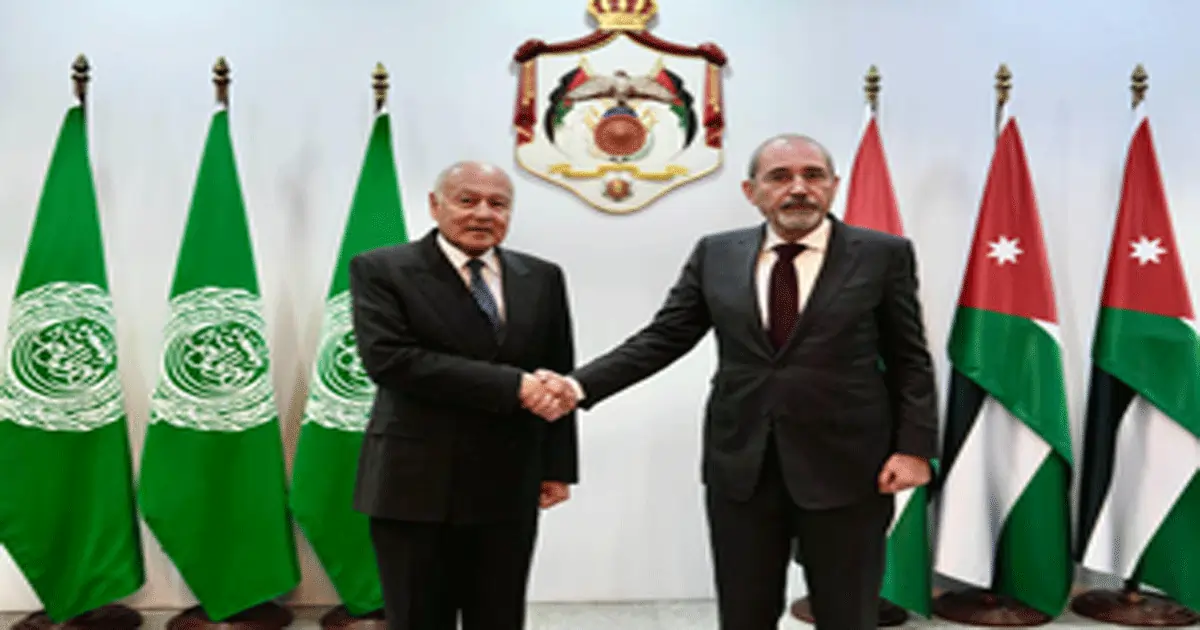
Amman, Feb 24: Jordan and the Arab League reaffirmed their firm stance against the displacement of Palestinians from their land or within it.
During a meeting on Sunday in Amman between Jordan’s Minister of Foreign Affairs Ayman Safadi and Arab League Secretary-General Ahmed Aboul Gheit, the two sides stressed that Gaza can be rebuilt without displacing its residents, according to a statement by the Jordanian Foreign Ministry.
They also highlighted Egypt’s role in developing a plan to achieve this with Arab support.
Safadi and Aboul Gheit also discussed ways to enhance joint Arab action, reviewed the latest regional developments, and talked about preparations for the emergency Arab summit scheduled for early next month.
They emphasised the importance of strengthening joint Arab efforts, deepening cooperation and coordination to address shared challenges, and serving Arab interests and causes.
The two officials stressed the need to consolidate the ceasefire in Gaza and ensure the adequate and sustainable delivery of humanitarian aid to the Strip.
Safadi and Aboul Gheit underscored the necessity of preventing further deterioration in the occupied West Bank and called for an end to Israel’s illegal measures that risk escalating tensions.
They reiterated that the establishment of an independent, sovereign Palestinian state along the 1967 borders, with East Jerusalem as its capital, based on the two-state solution, is the only path to achieving security, stability, and a just and comprehensive peace in the region.
They also discussed the latest developments in Syria, affirming the need to support the Syrian people in rebuilding their country on a foundation that ensures unity, security, and stability, eliminates terrorism, and safeguards the rights of all its components.


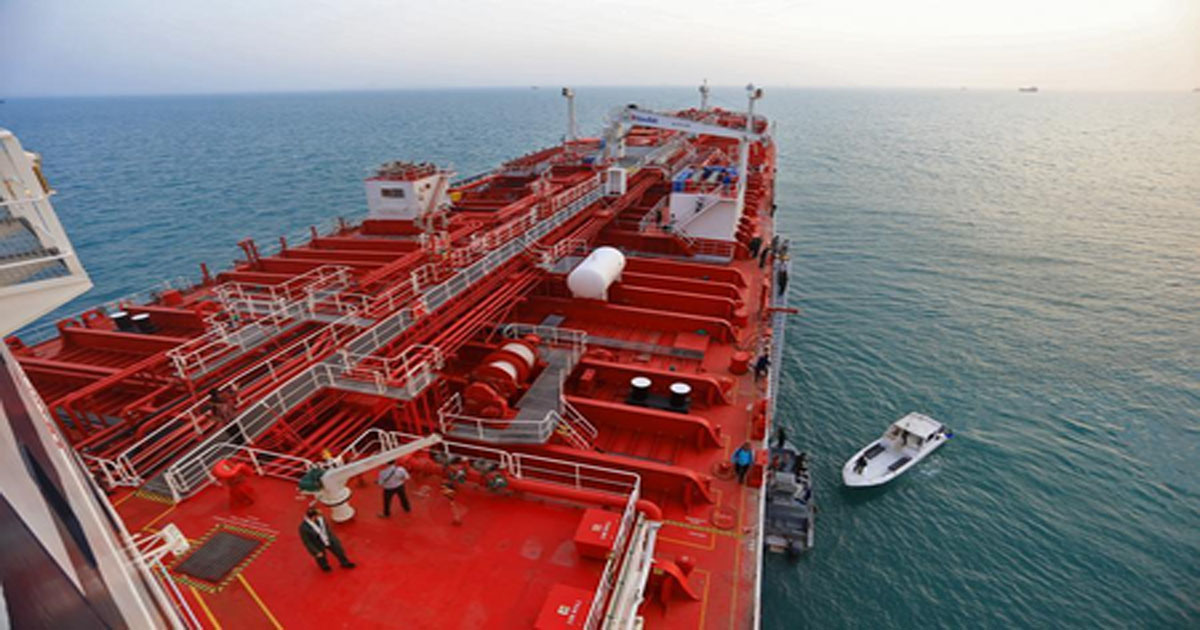
Tehran, May 5: Five civilians were killed in US attacks on cargo boats, Iran’s semi-official Tasnim news agency reported on Tuesday.
Following the claim by the US military that it had targeted six Iranian speedboats, and given that none of Iran’s combat vessels was hit, local sources were consulted to verify the nature of the incident, according to Xinhua, which quoted the report.
It was determined that US forces had attacked two small civilian cargo boats, which were travelling from Khasab along the Omani coast toward Iran, killing five civilian passengers onboard, it said.
Brad Cooper, chief of US Central Command, said on Monday that the US military had sunk six Iranian small boats in the Strait of Hormuz.
The Iranian boats were struck by US Apache and MH-60 Seahawk helicopters, Cooper told a news conference.
Meanwhile, two US Navy destroyers have passed through the Strait of Hormuz and entered the Gulf after navigating an Iranian barrage, US media outlet CBS News reported.
The USS Truxtun and USS Mason, supported by Apache helicopters and other aircraft, faced a series of coordinated threats during the passage, said the report, citing Pentagon officials, who spoke under condition of anonymity, on Monday night (local time).
No US warship was struck, though Iran launched small boats, missiles and drones against them as a sustained barrage, the officials were quoted as saying.
None of the projectiles launched by Iran reached the US vessels, they said, adding that the US military’s assisting efforts, bolstered by air support, successfully intercepted or deterred each incoming threat, reports Xinhua news agency.
US President Donald Trump told Fox News on Monday that the Iranians are “more malleable” than they were before.
In a phone interview with Fox News, the president threatened that if Iran targets US ships in the Strait of Hormuz as the Pentagon begins operations to restore commercial shipping transit through the strait, they would be “blown off the face of the Earth.”
However, in another phone interview with ABC News on Monday, Trump stopped short of saying Iran’s Monday attacks had violated the US-Iran ceasefire.
“[It was] not heavy firing,” Trump said, downplaying the attacks.
Brad Cooper, chief of the US Central Command, told reporters earlier on Monday that Iranian forces had launched “multiple cruise missiles, drones, and small boats at ships we are protecting.”
US forces have sunk six Iranian small boats targeting civilian vessels in the Strait of Hormuz and intercepted several Iranian missiles and drones, said Cooper.
Iran later rejected the US claims, saying that “no commercial vessels or oil tankers” have transited the Strait of Hormuz, the semi-official Tasnim News Agency reported.
On February 28, the United States and Israel launched joint strikes on Tehran and other Iranian cities, killing then-Supreme Leader Ali Khamenei, senior military commanders and civilians. Iran responded with waves of missile and drone attacks on Israel and US targets across the region and restricted passage through the Strait of Hormuz for vessels linked to Israel and the United States.
A ceasefire took effect on April 8, followed by talks between Iranian and US delegations in Islamabad that ended without a deal.
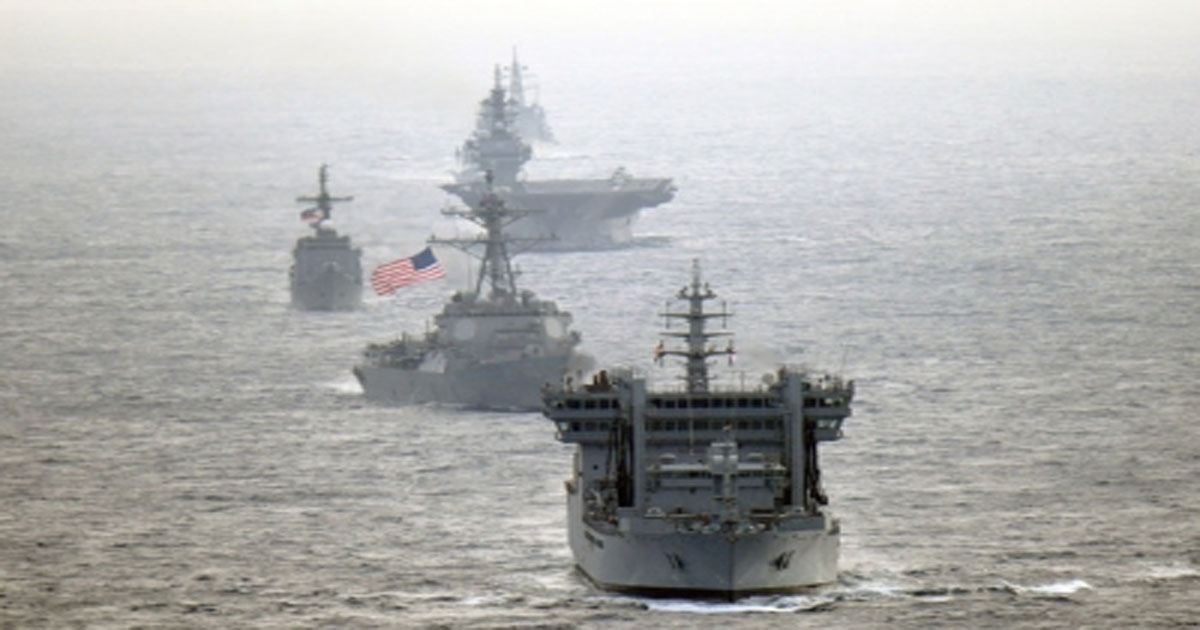
Tehran, May 4: The Navy of Iran’s Islamic Revolution Guard Corps (IRGC) on Monday claimed that it hit a US Navy frigate with two missiles that sought to pass through the Strait of Hormuz, the semi-official Fars news agency reported.
The US frigate, which had set sail near Iran’s southern port city of Jask to cross the Strait of Hormuz “in violation of the traffic and shipping security,” was hit after ignoring the Iranian naval forces’ warning, Fars cited local sources as saying.
It added that after being struck, the frigate was forced to retreat and flee from the region.
However, according to a subsequent report by Axios, a senior US official denied that a US ship was hit by Iranian missiles, Xinhua news agency reported.
Iran has repeatedly announced that no movement is possible through the Strait of Hormuz without its official permission, and ignoring this warning will be met with a decisive response from the Iranian armed forces, according to Fars.
US President Donald Trump said Sunday the United States will guide ships stranded in the Strait of Hormuz safely out of the restricted waterway on Monday.
In response to Trump’s claim, Iran’s main military command, Khatam al-Anbiya Central Headquarters, warned on Monday that “any foreign armed forces, especially the aggressive US army, will be attacked if they intend to approach and enter the Strait of Hormuz,” according to the official news agency IRNA.
Iran tightened its grip on the Strait of Hormuz beginning February 28, when it barred safe passage to vessels belonging to or affiliated with Israel and the United States following joint strikes on Iranian territory.
The United States imposed its anti-Iran blockade on the Strait of Hormuz after post-ceasefire negotiations with Tehran on April 11 and 12 failed to lead to an agreement.
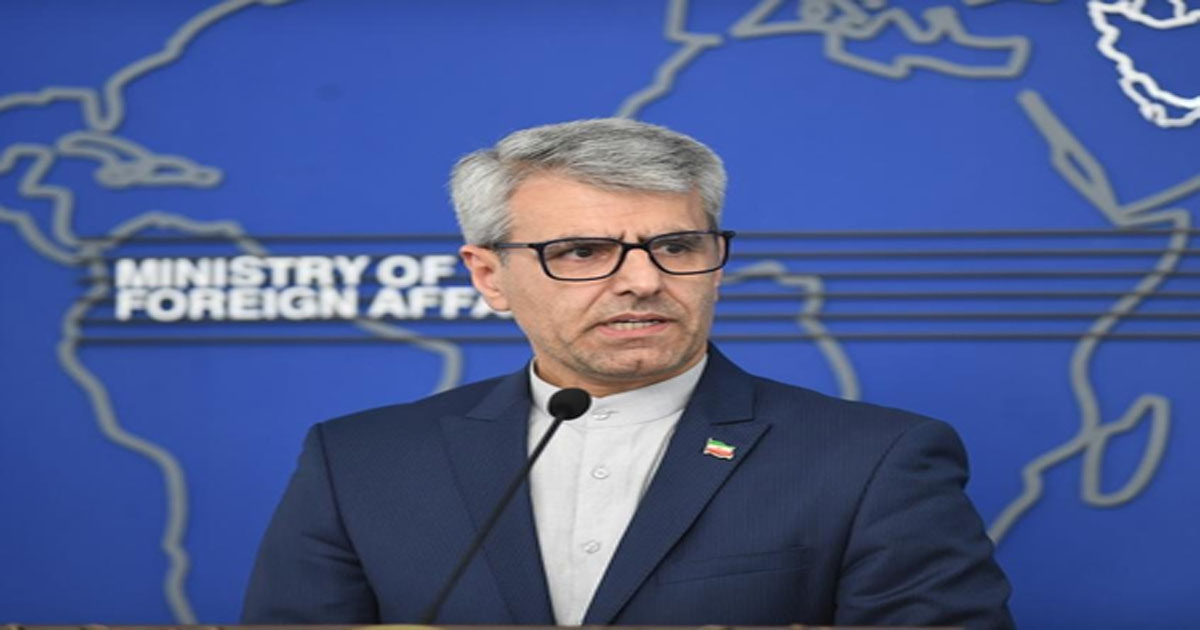
Tehran, May 3: Iran’s Foreign Ministry spokesman Esmaeil Baghaei condemned US President Donald Trump’s remarks that called the US seizure of Iranian vessels “piracy.”
“The president of the United States has openly described the unlawful seizure of Iranian vessels as ‘piracy,’ brazenly boasting that ‘we act like pirates,'” Baghaei said in an X post.
“This was no verbal slip. It was a direct and damning admission of the criminal nature of their actions against international maritime navigation,” Baghaei added.
Trump on Friday bragged that the US Navy acted “like pirates” in its blockade of Iranian ports. “We took over the ship, we took over the cargo, we took over the oil. It’s a very profitable business,” Trump said at an event in Florida, Xinhua news agency reported.
Baghaei called on the international community, UN member states, and the UN secretary-general to firmly reject any normalization of such “blatant violations” of international law.
The United States imposed its anti-Iran blockade on the Strait of Hormuz after post-ceasefire negotiations with Tehran in Pakistan’s capital Islamabad on April 11-12 failed to yield an agreement.
The ceasefire between Iran, the United States and Israel took effect on April 8 following 40 days of fighting. On February 28, the United States and Israel launched joint attacks on Tehran and other Iranian cities, killing Iran’s then-Supreme Leader Ali Khamenei, senior commanders and civilians.
Iran responded with waves of missile and drone strikes targeting Israel and US bases and assets in the Middle East, while tightening its grip on the Strait of Hormuz and denying safe passage to vessels linked to Israel and the United States.

Abu Asim demands ban on obstruction and seizure of animals during Eid-ul-Adha transportation

For The First Time In Mumbai Local History, New Safety Focused Trains Are Undergoing Trials In Uttar Pradesh Before Hitting City Tracks; Here Is Why

The speed of removing sludge from drains should be accelerated and the work should be completed within the stipulated time, the Additional Municipal Commissioner has directed.

No appointment of head of State Women’s Commission, DGPI denies news rumours about Meera Borwankar

Mumbai: Mumbai Police decides to check birth certificates on fake documents in the city after the alleged Bangladeshi campaign of Kirit Somaiya

‘Son Falsely Implicated, We Are Well-Educated’: Father Of Accused Tausif Attar Defends Son After Skullcap, Namaz Coercion Allegations Rock TCS Nashik

Asha Bhosle’s son says last respects to be paid at residence in Lower Parel, followed by last rites at Shivaji Park

Mumbai: 15th arrest in Rohit Shetty shooting case, shooter identified, arrested, more arrests possible

Crude oil prices tank up to 20 pc over Iran ceasefire announcement

‘Scary & Traumatic’: Commuter Alleges Mobbing By Auto Drivers Over Uber Bike Booking In Navi Mumbai
-

 Crime4 years ago
Class 10 student jumps to death in Jaipur
-

 Maharashtra2 years ago
Mumbai Local Train Update: Central Railway’s New Timetable Comes Into Effect; Check Full List Of Revised Timings & Stations
-

 Maharashtra2 years ago
Mumbai To Go Toll-Free Tonight! Maharashtra Govt Announces Complete Toll Waiver For Light Motor Vehicles At All 5 Entry Points Of City
-

 Maharashtra2 years ago
False photo of Imtiaz Jaleel’s rally, exposing the fooling conspiracy
-

 National News2 years ago
Ministry of Railways rolls out Special Drive 4.0 with focus on digitisation, cleanliness, inclusiveness and grievance redressal
-

 Maharashtra1 year ago
Maharashtra Elections 2024: Mumbai Metro & BEST Services Extended Till Midnight On Voting Day
-

 National News2 years ago
J&K: 4 Jawans Killed, 28 Injured After Bus Carrying BSF Personnel For Poll Duty Falls Into Gorge In Budgam; Terrifying Visuals Surface
-

 Crime2 years ago
Baba Siddique Murder: Mumbai Police Unable To Get Lawrence Bishnoi Custody Due To Home Ministry Order, Says Report