
International News
Iran rejects nuclear talks ‘under pressure’ during Russian FM’s visit to Tehran

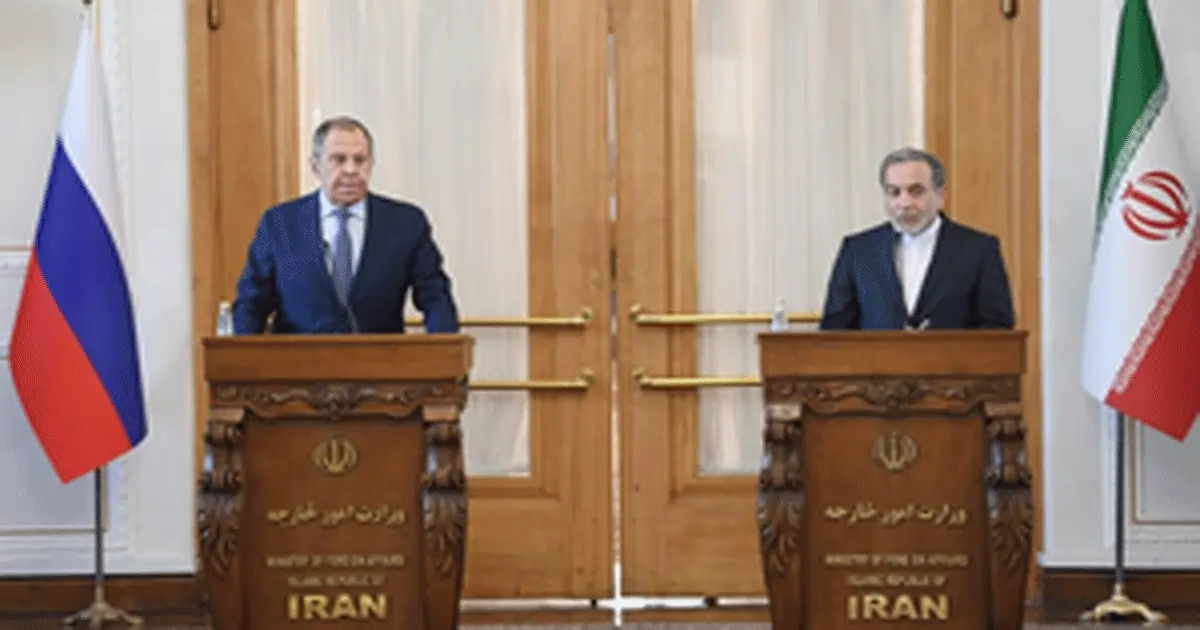
Tehran, Feb 26: Iran will not negotiate over its nuclear program while facing external pressure or sanctions, Iranian Foreign Minister Seyed Abbas Araghchi declared during a joint press conference with his visiting Russian counterpart, Sergei Lavrov, in Tehran.
Araghchi on Tuesday reiterated Iran’s refusal to hold direct talks with the US unless Washington ends its “maximum pressure” sanctions campaign.
The US reimposed sanctions after abandoning the 2015 nuclear deal, known as the Joint Comprehensive Plan of Action (JCPOA), in 2018, prompting Tehran to scale back its nuclear commitments under the accord.
“Negotiations under pressure, threats, and sanctions are meaningless,” Araghchi said, emphasising that Iran had engaged in “close consultations” with Moscow on reviving the JCPOA. Efforts to restore the pact commenced in 2021 but resulted in no substantial progress.
For his part, Lavrov reaffirmed Russia’s backing for diplomatic measures to salvage the agreement, stating, “We believe the diplomatic capacity still exists to revive the deal without threats or coercion.”
He pledged Moscow’s support for solutions and asserted that “the crisis had not been created by Iran.”
The ministers also addressed regional conflicts, including in Gaza and Syria, with Iran voicing support for Syria’s territorial integrity.
Lavrov described talks with Araghchi as “comprehensive, fruitful, and constructive,” noting progress in cooperation between the two countries by highlighting a 13-per cent surge in bilateral trade in 2024.
He also criticised unilateral sanctions on Tehran as “unacceptable,” according to Russian state media. Both sides agreed to expand cooperation to counter the sanctions’ effects.
Lavrov visited Tehran earlier Tuesday for talks spanning energy, trade, and regional security. He then headed to Qatar to continue his working visit in the Middle East.

International News
Riyadh airport attack: Embassy officials visit hospital, provide support to injured Indians

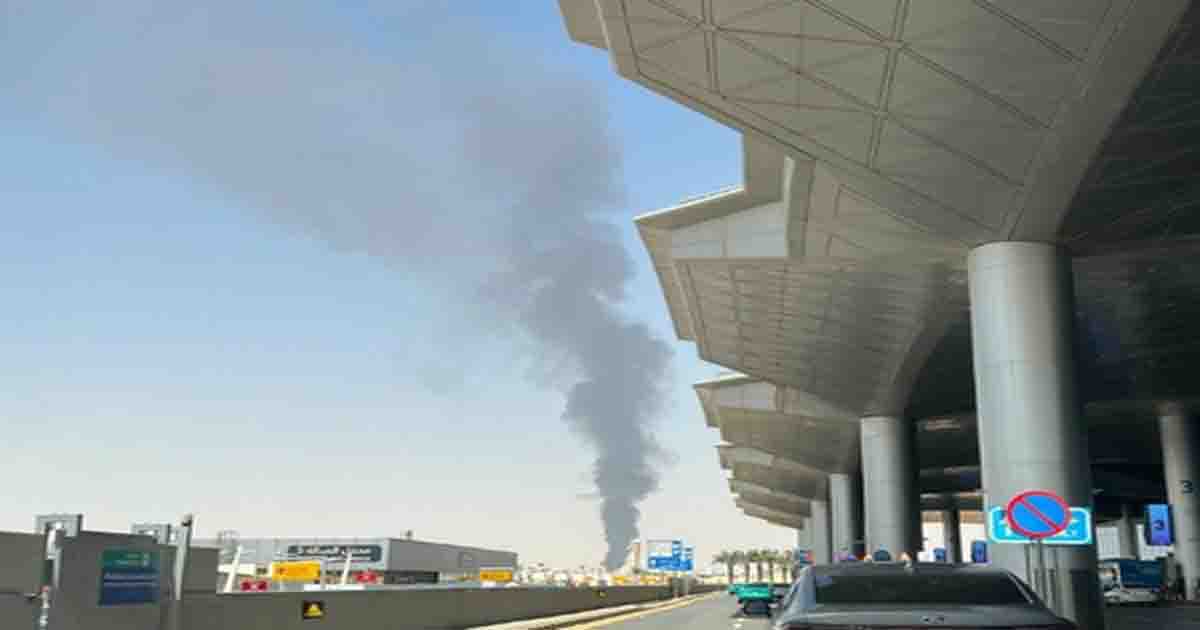
Riyadh, Oct 12: The Indian Embassy in Saudi Arabia said on Monday that it has been providing assistance to the family of the deceased Indian national, Mohammed Yousuf Ali, who died in the recent attack on Riyadh airport.
The Embassy said its officials visited the hospitals where injured people have been receiving treatment. As many as five people are in the ICU and two remain in the normal ward while the rest have been discharged from the hospital.
Sharing an update regarding the Riyadh airport attack on X, the Indian Embassy in Saudi Arabia stated, “The family of late Mr. Mohammed Yousuf Ali, who passed away in the attack on Riyadh airport, has decided to conduct the funeral in Riyadh itself. Mission is providing all assistance to the bereaved family, including completion of all formalities for the funeral.”
“Mission officials have visited the hospitals where injured nationals are undergoing treatment. Three persons continue to be in ICU, and two more have been admitted in the ICU, two remain in the normal ward, and rest have been discharged. The Embassy remains in constant touch with their family members and providing all possible support,” it added.
On Sunday, the Indian Embassy in Saudi Arabia confirmed the death of an Indian national injured in the Riyadh airport attack and offered condolences to the family of the deceased.
“It is learnt that one Indian national injured in the Riyadh attack has unfortunately lost his life today. We convey our heartfelt condolences to the family of the deceased. We are in touch with the family and will provide all support for ensuring the early repatriation of mortal remains,” the Embassy posted on X.
The deceased, Mohammed Yusuf Ali, hailed from Hyderabad. His two sons and an aunt were also injured in the attack.
On October 11, India condemned the attack on Saudi Arabia’s King Khalid International Airport, saying that attacks on civilians and civilian infrastructure were “unacceptable” and calling for an immediate cessation of hostilities.
In a statement, the Ministry of External Affairs (MEA) said, “We strongly condemn the repeated attacks on Riyadh’s King Khalid International Airport over the past few days, including the dastardly attack on October 10, which have led to loss of lives, injuries and damage to property. We express our condolences to the families of the deceased and wish speedy recovery to the injured persons.”
“The repeated attacks on civilians and civilian infrastructure are completely unacceptable and must cease immediately,” the statement read.
“We stand in solidarity with the people and the government of the Kingdom of Saudi Arabia in defence of their sovereignty, and hope that peace and normalcy returns to the region at the earliest,” it added.
On October 10, Saudi Arabia’s General Authority of Civil Aviation said that the attack targeting King Khalid International Airport on Saturday afternoon killed 12 people and injured 309 others.
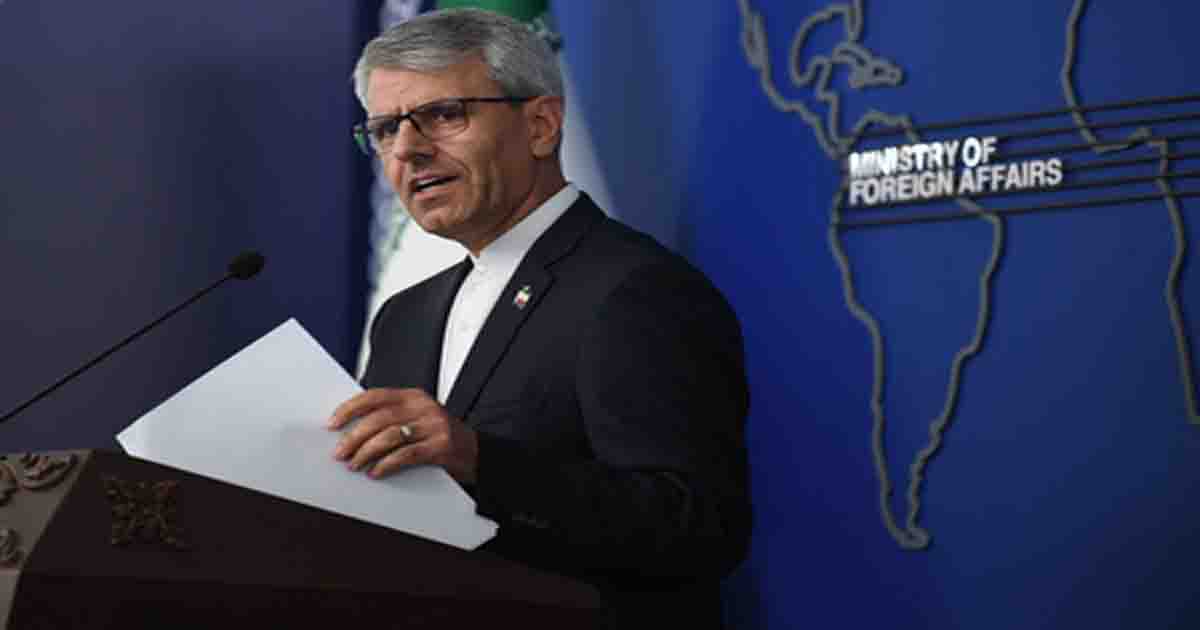
Tehran, Oct 12: Dismissing US claims that Iran has lost its leverage in the Strait of Hormuz, Tehran on Monday said that the strategic waterway will not be secure as long as Washington continues the conflict.
Addressing a weekly press conference, Foreign Ministry spokesperson Esmaeil Baghaei refuted US President Donald Trump’s claims about the Strait of Hormuz, saying American assertions do not match realities on the ground.
“The Americans can keep saying that Iran has lost its leverage, but we will continue doing our work,” Baghaei was quoted as saying by Iran’s semi-official Tasnim news agency.
He added that markets follow their own rules and are not swayed by such claims. The spokesperson emphasised that the situation has resulted from the “actions and aggression” of the US and Israel, and that Iran had taken measures in accordance with international law.
“As long as the US continues the war, security will not return to this waterway,” said Baghaei, adding that Iran was not pleased with the situation but it is the US which has created problems for the region and the world.
On the ongoing exchange with Washington, Baghaei said messages were continuing to be passed through mediators, and that the seven points discussed included the lifting of the blockade, a halt to the war on all fronts and the release of Iran’s frozen assets.
“Whatever was included in the Islamabad memorandum of understanding remains in place,” he said, adding that the US had imposed new sanctions in the meantime that must also be lifted, Tasnim reported.
He acknowledged that the points put forward so far were insufficient and said Tehran was reviewing the issues raised by the US and would convey its response to the mediators once the review was complete.
Separately, Iran’s Acting Defence Minister Brigadier General Majid Ibn al-Reza warned that those deliberately promoting civilisational confrontation must bear responsibility for its dangerous consequences, IRNA news agency reported.
Referring to recent remarks by US officials about Iran and its civilisation, he said turning historical and cultural differences into grounds for political and military confrontation was a dangerous miscalculation.
“He also stressed that promoting civilisational confrontation is like playing with fire, warning that those who ignite it cannot control its spread or shield themselves from its consequences,” IRNA reported.
Ibn al-Reza, who made the remarks during a meeting with heads of industrial organisations affiliated with the Ministry of Defence and Armed Forces Logistics, said Iran would not allow threats or humiliation to undermine its national identity or independence.
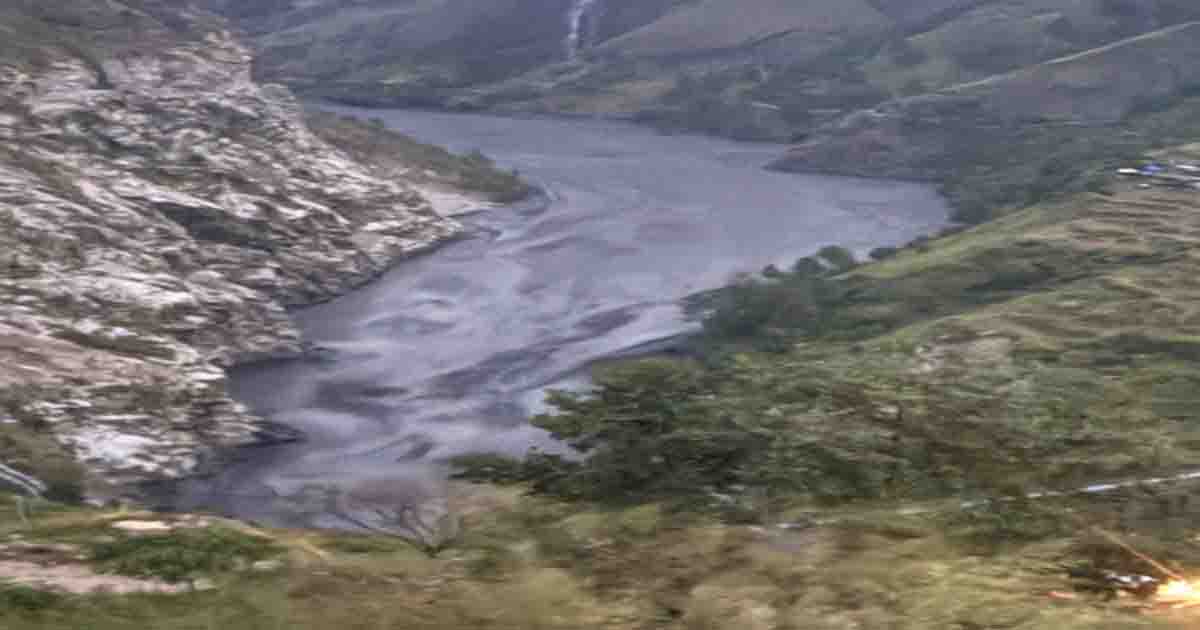
Kathmandu, Oct 11: At least four hydropower projects in the Budhi Gandaki River basin in western Gorkha district have been affected by massive floods that struck early Sunday morning, the Independent Power Producers’ Association, Nepal (IPPAN) said.
The latest floods, reminiscent of the devastating floods in the Bhote Koshi and Trishuli rivers on August 26, swept away parts of several settlements and damaged bridges, roads and infrastructure at hydropower project sites in the Budhi Gandaki River basin and its tributaries.
In a statement, IPPAN, an association of private-sector power developers in Nepal, said four hydropower projects along the Budhi Gandaki River and its tributary streams, with a combined installed capacity of 412.09 MW, had been affected.
According to IPPAN, the main camp area of the 341-MW Budhi Gandaki Hydropower Project was swept away by the floodwaters. Some construction equipment at the project, which is under construction, was also washed away.
Some houses in the camp area of the 24.5-MW Dobhan Khola Hydropower Project were damaged, while a Bailey bridge near the project site was swept away, IPPAN said.
The floods also damaged a Bailey bridge supporting construction work at the 30.59-MW Yaru Khola Hydropower Project, while construction materials and equipment were washed away.
An access road and the bridge connecting the project site of the 16-MW Machha Khola Hydropower Project were also damaged, according to IPPAN.
At a time when Nepal aspires to become a major hydropower exporter in South Asia, the latest disaster highlights the vulnerability of the country’s clean energy infrastructure to sudden floods, landslides and other climate-related hazards.
The devastating floods in the Bhote Koshi and Trishuli rivers on August 26 caused extensive damage to hydropower projects, solar energy facilities, electricity transmission infrastructure and transport networks. The energy sector, particularly hydropower projects, was among the hardest hit.
The August 2026 floods affected 12 hydropower projects and one solar power project, including 281.1 MW of operational capacity and 395.02 MW under construction, according to the World Bank’s Global Rapid Post-Disaster Damage Estimation (GRADE).
Damage to transmission lines and substations also disrupted the transmission of 149.6 MW of electricity to the national grid, bringing the total affected capacity to approximately 430.7 MW, or 10.6 per cent of Nepal’s total installed hydropower and solar capacity at the end of fiscal year 2025-26, which ended in mid-July, according to the report.
The August disaster claimed 1,455 lives, while 5,285 people remained missing, according to the National Disaster Risk Reduction and Management Authority.

MP Congress leaders join Rahul Gandhi Delhi protest

Riyadh airport attack: Embassy officials visit hospital, provide support to injured Indians

Protests not similar to ordering food from delivery apps: Shiv Sena blasts Rahul Gandhi

Security won’t return to Strait of Hormuz as long as US continues war: Iran

Maha CM accuses Rahul Gandhi, INDIA bloc of trying to weaken judiciary through protests

INDIA bloc begins protest march against ECI

Maha Congress stages agitation against Gyanesh Kumar

Complaint against Netflix & Mukesh Chhabra for inappropriate language on ‘India’s Got Latent 2’

Delhi court grants three-week interim bail to influencer Swatantra Bhardwaj

Bombay HC warns Vijay Mallya against posting court documents on social media
-

 Crime4 years ago
Class 10 student jumps to death in Jaipur
-

 Maharashtra2 years ago
Mumbai Local Train Update: Central Railway’s New Timetable Comes Into Effect; Check Full List Of Revised Timings & Stations
-

 Maharashtra2 years ago
Mumbai To Go Toll-Free Tonight! Maharashtra Govt Announces Complete Toll Waiver For Light Motor Vehicles At All 5 Entry Points Of City
-

 Maharashtra2 years ago
False photo of Imtiaz Jaleel’s rally, exposing the fooling conspiracy
-

 National News2 years ago
Ministry of Railways rolls out Special Drive 4.0 with focus on digitisation, cleanliness, inclusiveness and grievance redressal
-

 Maharashtra2 years ago
Maharashtra Elections 2024: Mumbai Metro & BEST Services Extended Till Midnight On Voting Day
-

 National News2 years ago
J&K: 4 Jawans Killed, 28 Injured After Bus Carrying BSF Personnel For Poll Duty Falls Into Gorge In Budgam; Terrifying Visuals Surface
-

 Crime2 years ago
Baba Siddique Murder: Mumbai Police Unable To Get Lawrence Bishnoi Custody Due To Home Ministry Order, Says Report