
Business
‘India needs to safeguard developers, consumers from app stores’ practices’

The Competition Commission of India (CCI) is currently investigating both Apple and Google for their app store policies, particularly their payments policies, and the decision will play a key role in determining how Indian policymakers look at the issue in the future, a new report said on Wednesday.
Google-owned Android currently dominates the India market with 95.1 per cent market share while Apple iOS has 3.93 per cent share.
Both Google and Apple charge either 15 or 30 per cent commission on purchase of paid apps and in-app purchases (IAPs) in the country.
Starting October this year, Google — which has a mobile OS market share of over 95 per cent in India — will effectively bar developers from using any other method to accept payments from customers, thus forcing the payment of its commission.
According to the report by The Alliance of Digital India Foundation (ADIF) and The Quantum Hub, several Indian developers have objected to the quantum of the commissions, and the lack of choice in picking a payments system, terming the proposed policy unreasonable.
“Google’s new rules could significantly dent developers’ profit margins, affecting both business viability and innovation,” said the report.
The ADIF said that it welcomes the steps taken by the Parliamentary Standing Committee on Finance to hold a meeting with Big Tech companies with the aim of deliberating issues related to their competitive practices.
“The dominant position enjoyed by the gatekeepers of the app ecosystem can severely hurt competition and innovation in the market, while also adversely affecting the ecosystem in many ways,” said Sijo Kuruvilla George, the Executive Director of ADIF.
With the CCI currently investigating both App Store and Google Play’s store policies, particularly their payments policies, the need of the hour is a balanced approach, and the CCI’s decision will likely play a key role in determining how policymakers look at the issue in the future, the report stressed.
Apple is currently under investigation from regulators in the US, Europe, Japan, Australia and India, while Google is also facing proceedings in the US, Europe and India, among other countries.
In December 2021, the Netherlands competition regulator (ACM) found Apple’s App Store in violation of its competition laws.
It has since levied a series of (weekly) penalties against Apple for what it asserts is continued non-compliance with its order and these fines totalled over $55 million with the regulator threatening another round of fines “with possible higher penalties”.
In March, France also joined the fray with the Paris Commercial Court levying a fine of 2 million euros on Google and asking it to rewrite clauses in its developer agreements that were deemed unbalanced within three months.
In August 2021, South Korea passed a law barring app stores from forcing developers to use the app stores’ proprietary billing system, becoming the first such major legislation worldwide.
Another legislation — The Digital Markets Act — is currently under consideration in the EU.
“It’s, thus, commendable that legislators are taking notice of such issues and actively taking steps to address the anti-competition practices of big players,” said George, adding that there is an urgent need to ensure fair competition and improve choices for both developers and consumers.


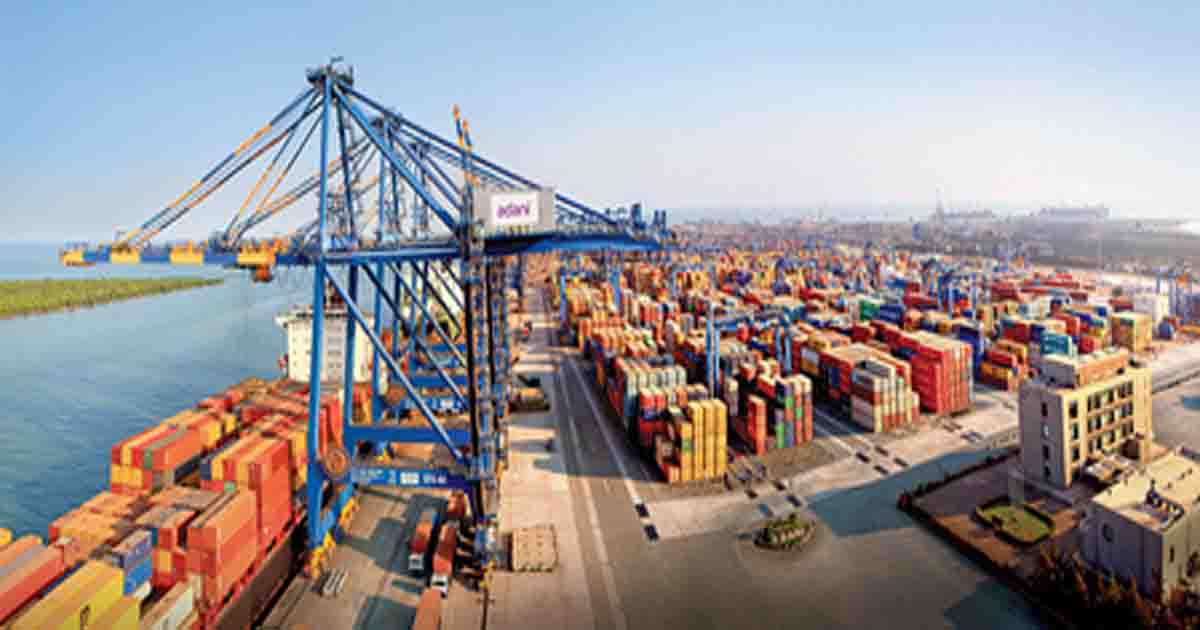
Adani Ports and Special Economic Zone Limited (APSEZ) on Thursday announced the acquisition of Netherlands-based Evos B.V., Europe’s second-largest independent liquid storage operator, in an all-cash transaction valued at an enterprise value of 2.56 billion euros.
Under the agreement, APSEZ will acquire a 100 per cent stake in Evos from Igneo Infrastructure Partners.
The deal values Evos at an equity value of 1.18 billion euros and implies an acquisition multiple of 11.7 times CY25 EV/EBITDA.
The transaction will be funded through debt and remains subject to regulatory approvals and works council consultation.
“APSEZ, India’s largest and one of the world’s fastest growing Integrated Transport Operator, agrees to acquire 100 per cent stake in Netherlands-headquartered Evos B.V. (Evos) from Igneo Infrastructure Partners. The proposed transaction is an all-cash deal at an enterprise value of 2.56 bn euros,” the official statement said.
For calendar year 2025, Evos reported revenue of 392 million euros and EBITDA of 219 million euros, translating into a robust EBITDA margin of 56 per cent.
Following the acquisition, the combined entity’s pro forma net debt-to-EBITDA ratio is expected to stand at 2.76 times and decline to around 2.5 times by FY27.
Commenting on the deal, Karan Adani, Managing Director of APSEZ, said the acquisition marks a significant milestone in the company’s journey toward handling one billion tonnes of cargo and building a truly global integrated transport platform.
“Evos marks an important milestone in APSEZ’s trajectory towards handling 1 billion tons of cargo and building a truly global, integrated transport platform. We are delighted to welcome Evos into our portfolio, giving us significant presence across key global liquid storage and energy hubs,” Karan Adani noted.
“We look forward to partnering with Europe, supporting its sustainable energy transition and creating enduring value while maintaining the financial prudence that underpins our growth,” he added.
Headquartered in the Netherlands, Evos operates 6.3 million cubic metres of storage capacity across eight strategically located port-based terminals in the Netherlands, Germany, Spain, Belgium and Malta.
The company has a presence in major energy and industrial hubs, including the Amsterdam-Rotterdam-Antwerp region, Hamburg and the Mediterranean.

Indian equity markets opened higher on Thursday with benchmarks jumping about 2 per cent each tracking strong global cues after the outcome of the US midterm elections and a sharp decline in crude oil prices.
Sensex opened at 78,910.94, an increase of 1,609.54 points or 2.08 per cent. Similarly, Nifty began the trading session at 24,378.05, up 417.45 points or 1.74 per cent.
In early trade, financial stocks led gains with Nifty Private Bank surging more than 2 per cent. Meanwhile, Nifty Realty gained 1.86 per cent. However, all sectoral indices were trading in the positive territory.
Other sectoral performers, Nifty Cement, Nifty Auto, Nifty IT, Nifty Oil & Gas and Nifty PSU Banks climbed up to 1.82 per cent.
FMCG, consumer durables, metal, media and chemicals also traded in positive territory, rising between 1 per cent and 1.5 per cent.
Market experts said the Nifty continued to maintain its position above the 200-day exponential moving average (EMA) near 23,904, reinforcing a positive technical setup.
“The RSI has climbed to 68.55, indicating strong momentum, although the possibility of near-term profit booking cannot be ruled out,” analysts said. Immediate support is seen in the 24,000-24,200 zone, while resistance is placed between 24,500 and 24,700.
The experts also noted that after the initial reaction to the US election results weakens, there will be concerns surrounding prolonged political conflict in the US, since US President Donald Trump being what he is, is likely to turn Mr Veto rather than lame duck president.
On Wednesday, foreign institutional investors (FIIs) extending their buying streak for a fourth straight session. FIIs were net buyers of equities worth Rs 7,284 crore. Domestic institutional investors (DIIs), however, continued to pare holdings, recording net sales of Rs 3,712 crore for the fourth consecutive day.
Global markets provided additional tailwinds after US equities registered sharp gains overnight. The Dow Jones Industrial Average jumped more than 3 per cent, marking its strongest post-midterm election performance in over four decades. The S&P 500 and Nasdaq Composite also rose more than 1.4 per cent each as election uncertainty faded following a clear Democratic sweep of both chambers of Congress.
Meanwhile, energy markets witnessed heavy selling pressure as Brent crude tumbled nearly 10 per cent to settle below the $100-per-barrel mark.
US Treasury yields also eased, with the benchmark 10-year yield retreating to around 4.89 per cent, further supporting risk assets globally.
Market mood was further supported by easing geopolitical concerns surrounding Iran and a weaker US dollar which boosted appetite for risk assets across global markets.
A weaker-than-expected performance by the Republican Party in the US midterm elections could reignite debate over the future direction of American trade policy and influence ongoing trade negotiations with India, experts said on Wednesday.
According to Tanay Dalal, Senior Vice President (Business & Economic Research) at Axis Bank, changes in the composition of the US Congress are unlikely to significantly alter the institutional framework governing current trade negotiations. He noted that any attempt to restore Congress’s authority over trade policy would require a veto-proof majority, a scenario that remains unlikely.
Dalal added that the scope for aggressive trade actions could gradually diminish amid a divided government in the United States and growing political constraints on the administration.
However, uncertainty is expected to persist due to ongoing legal challenges to existing tariff measures.
For India, the situation remains complex, he said. Geopolitical developments, particularly the war in Ukraine and tensions in the Middle East, are likely to continue shaping US trade policy.
As a result, even if Washington adopts a less aggressive stance on tariffs, India may not necessarily benefit.
The country could still face targeted US trade restrictions in areas where strategic and geopolitical interests diverge.
Meanwhile, commodity markets witnessed significant volatility following the Democrats’ victories in both the House and Senate.
Crude oil prices declined, with benchmark Brent crude falling 1.19 per cent to $102.39 per barrel and WTI crude slipping 0.78 per cent to $95.31 per barrel at the time of writing.
In contrast, precious metals gained. On COMEX, gold rose 2.72 per cent to $4,047 per ounce, while silver advanced 4.22 per cent to $51.85 per ounce.
Meanwhile, in other development, Indian officials reacted cautiously to the US midterm election results, saying the outcome could ease some pressure arising from trade tensions but also introduces fresh uncertainty into an already delicate bilateral relationship.
The Democratic Party secured sweeping victories in both chambers of the US Congress, delivering a significant setback to President Donald Trump.
His administration’s tariff policies and confrontation with Iran have had significant implications for countries such as India, which relies on the US as its largest export market and sources a substantial portion of its crude oil requirements from the Middle East.

Goa records most marine mammal strandings, CMFRI maps 161 cases

2021 Antilia bomb-scare: Bombay HC cancels Mumbai ex-cop Sachin Vaze bail

Fake PM Wi-Fi scheme busted in Kolkata, six arrested for cheating people of crores

Write letter to PM Modi, will convene special session for SIR discussion: HM Shah on Rahul’s debate dare

Two killed as speeding trailer hits bike in Ajmer

Rahul, Cong ecosystem want to force regime change: BJP after Neha Bora praises B’desh Gen-Z protest

Attack on democratic rights: INDIA Bloc leaders on detentions of anti-ECI protestors

BJP pays tribute to ex-President Abdul Kalam, recalls his enduring influence on generations of India’s youth

Congress trying to protect 3 crore Bangladeshi infiltrators in voter list: HM Shah

Online betting: ED conducts searches at 20 premises in Mumbai, Pune, Hyderabad
-

 Crime4 years ago
Class 10 student jumps to death in Jaipur
-

 Maharashtra2 years ago
Mumbai Local Train Update: Central Railway’s New Timetable Comes Into Effect; Check Full List Of Revised Timings & Stations
-

 Maharashtra2 years ago
Mumbai To Go Toll-Free Tonight! Maharashtra Govt Announces Complete Toll Waiver For Light Motor Vehicles At All 5 Entry Points Of City
-

 Maharashtra2 years ago
False photo of Imtiaz Jaleel’s rally, exposing the fooling conspiracy
-

 National News2 years ago
Ministry of Railways rolls out Special Drive 4.0 with focus on digitisation, cleanliness, inclusiveness and grievance redressal
-

 Maharashtra2 years ago
Maharashtra Elections 2024: Mumbai Metro & BEST Services Extended Till Midnight On Voting Day
-

 National News2 years ago
J&K: 4 Jawans Killed, 28 Injured After Bus Carrying BSF Personnel For Poll Duty Falls Into Gorge In Budgam; Terrifying Visuals Surface
-

 Crime2 years ago
Baba Siddique Murder: Mumbai Police Unable To Get Lawrence Bishnoi Custody Due To Home Ministry Order, Says Report