
National News
India moving fast to reduce carbon emissions, carbon footprint per head is 1.5 tonne: PM Modi

Prime Minister Narendra Modi on Thursday said India’s carbon footprint is 1.5 tonne per head, compared to the world’s four tonne per head as the country is moving fast to reduce carbon emissions by installing renewable energy systems and other options.
Prime Minister Modi and United Nations Secretary General Antonio Guterres launched Mission LiFE (Lifestyle for Environment) at the Statue of Unity in Gujarat.
Giving brief idea about the Mission LiFE, the Prime Minister said it is mass movement towards protecting and preserving environment by bringing changes in daily life style.
Citing an example, he said a person drives car for five km to reach gym, by doing so, he is adding to the carbon emission, instead if he runs up to the gym, it will help in protecting the climate.”
“If we will protect nature, nature will protect us,” the Prime Minister said.
“Few years ago, the country decided to switch over to LED bulbs and installed 160 crore bulbs in year leading to reduction in carbon emission by 10 million tonne. This benefit is going to last for years to come,” he said.
Addressing the gathering, Guterres said, “G-20 has resources and power to end the war against nature. It can lead the world towards sustainable living.”
He also said that the G-20 countries account for 80 per cent of global greenhouses that emit gas, but at the same time it also contributes to world’s 80 per cent GDP.


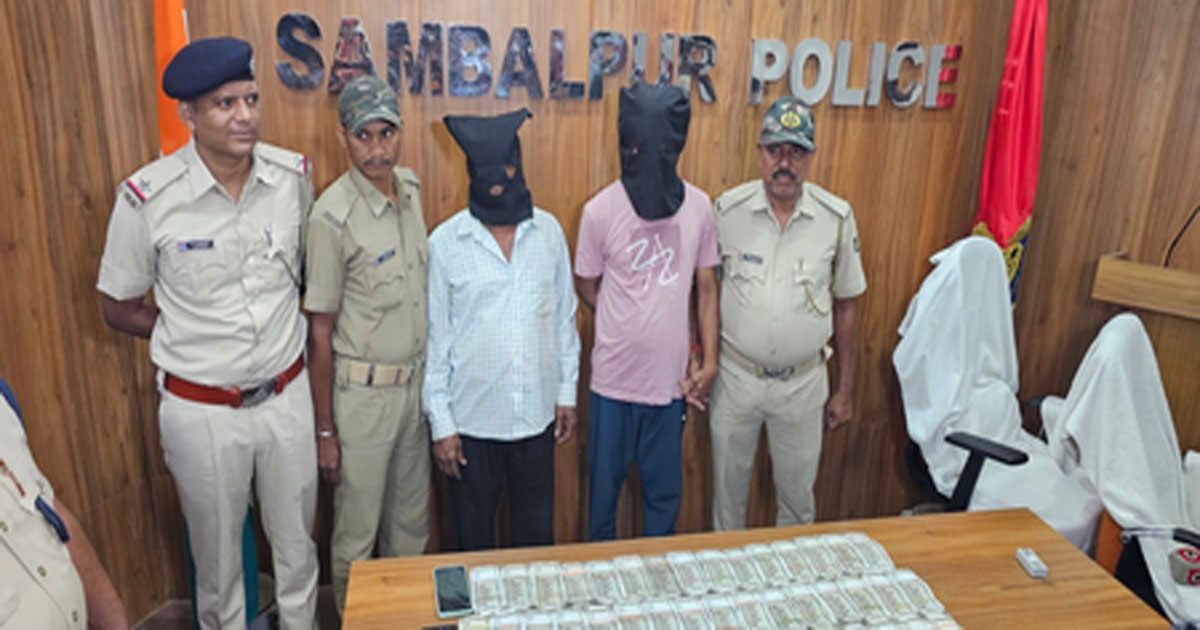
Bhubaneswar, April 3: The Sambalpur police in Odisha have arrested two employees of the Excise Department, including a retired Excise Assistant Sub-Inspector (ASI), in connection with a case involving large-scale embezzlement of government funds worth over Rs 3.67 crore between 2022 and 2025, said Mukesh Kumar Bhamoo, Superintendent of Police, Sambalpur district, on Friday.
The accused persons arrested in the fraud case have been identified as Sandeep Kumar Pattnaik, a junior assistant (currently under suspension), and Sarat Chandra Behera, a retired Excise ASI.
Meanwhile, the police sources also revealed that another accused in the case, retired Excise ASI Achyuta Dehury, is still on the run. Serious financial irregularities came to light during an audit of the Excise Department’s financial records by authorities, including the Principal Accountant General (A&E), Odisha.
Subsequently, based on a written report submitted by Ashok Kumar Seth, I/C Deputy Commissioner of Excise (Northern Division), Sambalpur, the Ainthapali police registered a case (73/26) on March 9 and launched an investigation into the massive fraud.
The cops, during investigation, found that multiple unauthorised sanction orders were generated through the IFMS portal in favour of the retired Excise ASI Achyuta Dehury, leading to excess withdrawal of pension and salary arrears between November 2022 and October 2025. The official records, such as bill registers and cash books, were also found to be manipulated and not properly maintained.
“During investigation, bank account analysis showed suspicious high-value transactions, including large cash withdrawals and transfers to associates, indicating misappropriation and diversion of Government funds,” the police also added.
The accused Pattnaik, who was dealing with establishment matters, was arrested by the cops on March 28 for his involvement in the misappropriation of government funds to the tune of Rs 3.67 crore.
The police also managed to arrest another accused, Behera, Retd. ASI, on March 31. The accused persons, by abusing their official position, allegedly manipulated financial records, generated fraudulent sanctions, and siphoned off Government money, causing wrongful loss to the State exchequer and corresponding gain to themselves.
The police have so far seized Rs 23,46,500 from the possession of accused Pattnaik, while another Rs 44 lakh from the total defrauded amount transferred to various accounts has been frozen by the police.
National News
SP Chief Akhilesh Yadav Slams BJP, Says Capable Officers Sidelined While Corrupt Officials Favoured

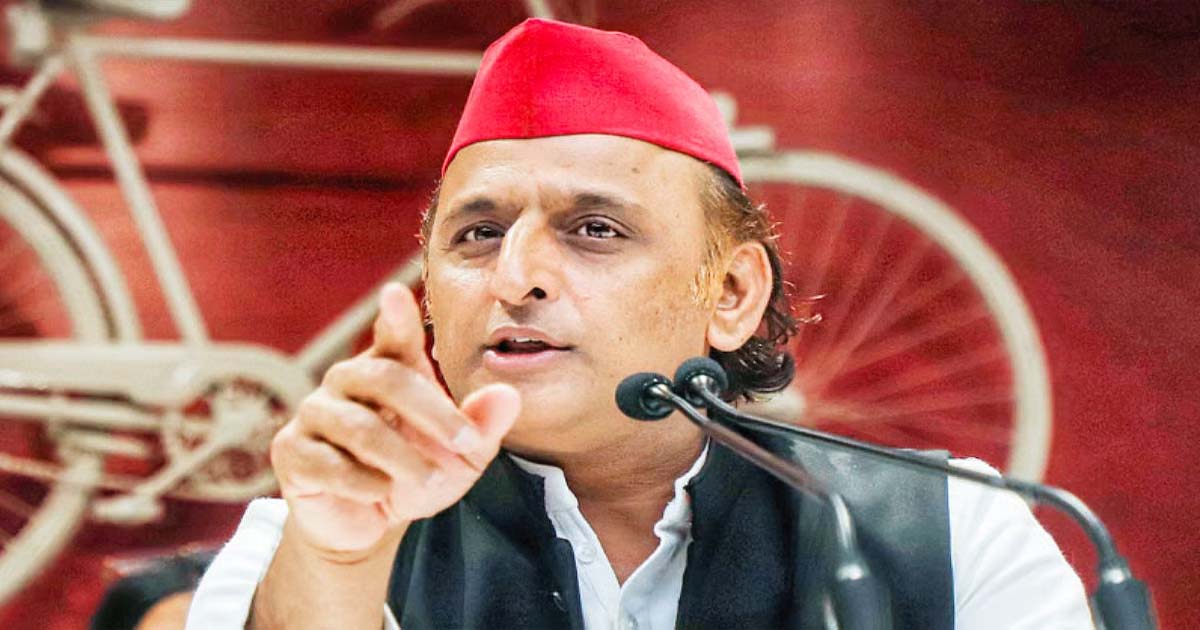
Lucknow: Samajwadi Party chief Akhilesh Yadav launched a sharp attack on the BJP government, alleging that capable and honest officers have no value in the current system. Speaking in Lucknow, he claimed that those involved in corruption and irregularities are being favored, while efficient officers are sidelined.
Yadav urged officials not to take decisions in emotional distress, asserting that “better days are coming.” He said a future PDA (Pichhda, Dalit, Alpsankhyak) government would ensure dignity, proper roles, and respect for deserving officers. According to him, quality governance depends on skilled administrators who can deliver work within timelines.
He emphasized that the Samajwadi Party has always valued competent officers and will continue to do so. Yadav also claimed that both officers and employees who feel neglected are now aligning with the PDA vision to bring political change in the state.
Highlighting his slogan, he said, “Pain is increasing, that’s why PDA is growing,” adding that those who feel oppressed are naturally joining the movement.
He concluded by expressing confidence that the current regime’s “bad days” are nearing an end.
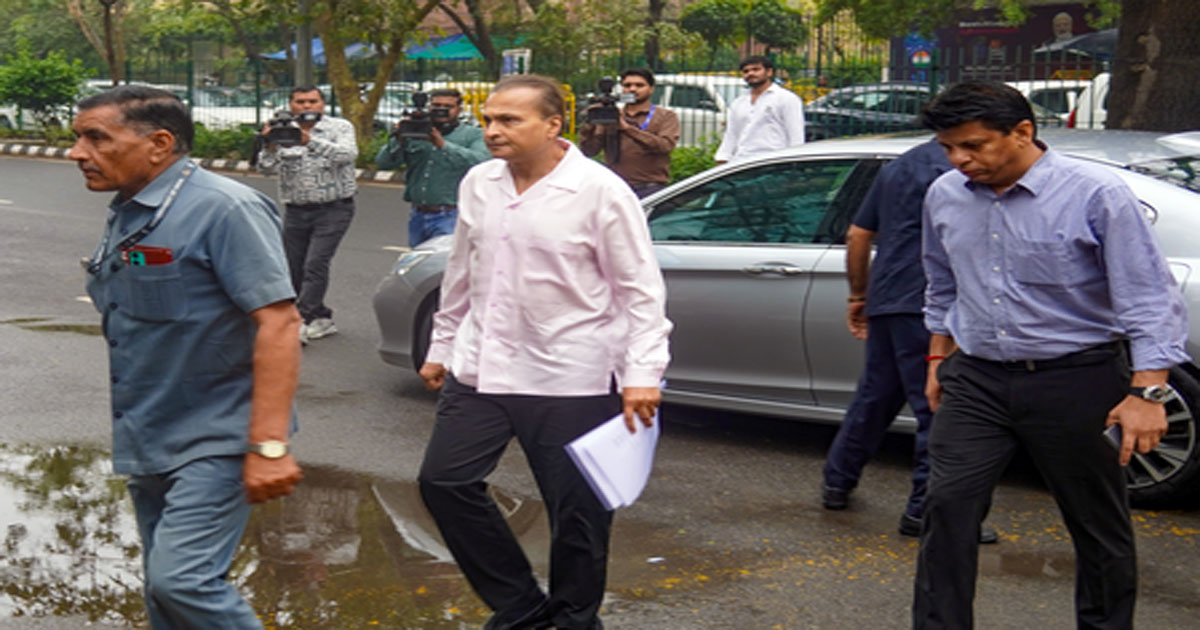
New Delhi, April 1: The Central Bureau of Investigation on Wednesday registered a case against Reliance Communications Ltd (RCom), Anil Ambani, unknown public servants, and unknown others on allegations of causing wrongful loss of Rs 3,750 crore to Life Insurance Corporation (LIC) of India.
The case has been registered on the basis of a complaint received from Life Insurance Corporation of India Ltd. for offences of conspiracy, cheating, misappropriation, and offences under the Prevention of Corruption Act, according to an official statement.
It is alleged that LIC was fraudulently induced to subscribe to Non Convertible Debentures (NCDs) worth Rs 4,500 crore on the basis of false representations made by Reliance Communications Ltd. and its management regarding the financial health of the company, and security and asset cover offered to LIC while subscribing to the NCDs.
The LIC has made this complaint on basis of a forensic audit report dated October 15, 2020 conducted by BDO India LLP, which reported that RCom and its management had resorted to misutilisation of funds raised from banks and financial institutions, routing of funds through subsidiaries, misuse of sale invoice financing, discounting of fictitious bills, systematic siphoning of funds through inter-company deposits and shell related entities, creating and write-off of fictitious debtors and receivables and gross overstatement of security. There was a mismatch between the charges and the assets.
Investigation of the case is in progress, the statement added.
The CBI had earlier registered three cases against RCom Ltd, Anil Ambani, and others on allegations of defrauding a number of banks.
Anil Ambani was also interrogated by the CBI at its head office in Delhi for two days in a row in connection with the alleged Rs 2,929.05 crore SBI fraud case.
The CBI had registered an FIR on August 21, 2025, following a complaint filed by the SBI, in which Reliance Communications Limited, Anil D. Ambani and others, including unknown public servants, are accused.
The State Bank of India (SBI) is the lead bank in the consortium of 11 banks — Bank of India, Central Bank of India, UCO Bank, Union Bank of India, e-Corporation Bank, Canara Bank, e-Syndicate Bank, Indian Overseas Bank, IDBI Bank Limited, and e-Oriental Bank of Commerce that had extended loans to the Anil Ambani group.
The complaint is based on a forensic audit report that alleges large-scale diversion and misutilisation of loan funds through interlinked and circuitous transactions among group entities during the period 2013-17, resulting in wrongful loss of Rs 2929.05 crore to the SBI out of total exposure of Rs 19, 694.33 crores involving 17 public sector banks, according to an official statement.
Subsequent to the registration of the case, separate complaints were received from the Punjab National Bank, the Bank of India, the Union Bank of India, the UCO Bank, the Central Bank of India, the IDBI Bank, and the Bank of Maharashtra. Further, another case has been registered against Reliance Communications Limited, Anil Ambani and others unknown, including unknown public servants, on February 25 on the basis of a complaint dated February 24, received from the Bank of Baroda, which includes exposure of e-Dena Bank and e-Vijaya Bank.

Mayor’s instructions to maintain water supply in Mumbai, focus on water management, alternative sources and solutions

Taxes, margins eat half of Pakistan’s petrol price, consumers cry: Report

Mumbai: Stolen goods worth over Rs 84 lakh handed over to original owners, stolen goods are distributed within four months on the initiative of the DCP

Inspection of ongoing cleaning works in Methi River and eastern suburbs, planning of work in accordance with the drain in all three parts of the river: Additional Municipal Commissioner

Mumbai LPG Crisis: Chaotic Rush Seen Outside Chembur Bharatgas Agency As 200-300 People Queue Since 5 AM For Gas Cylinders

Married Mumbai Woman Mocked In Andheri Society Over ‘Lift Kissing’ CCTV Video, Files Police Complaint

LPG Crisis In Maharashtra: Cyber Crime On Rise Amid Shortage, 2 Women Lose ₹4 Lakh In ‘Gas Update’ Online Scam In Kalyan-Dombivli

Mahayoti’s big gift to the people of Mumbai… Now there is no tax for houses up to 500 square feet, the Municipal Corporation has increased this limit to 700 square feet.

Dhurandhar 2 Box Office Collection Day 1: Ranveer Singh Starrer Takes An Exceptional Opening; Crosses ₹100 Crore Mark

T20 WC: ‘You just have to control your emotions and express yourself,’ says Piyush Chawla on handling pressure in final
-

 Crime4 years ago
Class 10 student jumps to death in Jaipur
-

 Maharashtra1 year ago
Mumbai Local Train Update: Central Railway’s New Timetable Comes Into Effect; Check Full List Of Revised Timings & Stations
-

 Maharashtra1 year ago
Mumbai To Go Toll-Free Tonight! Maharashtra Govt Announces Complete Toll Waiver For Light Motor Vehicles At All 5 Entry Points Of City
-

 Maharashtra2 years ago
False photo of Imtiaz Jaleel’s rally, exposing the fooling conspiracy
-

 National News1 year ago
Ministry of Railways rolls out Special Drive 4.0 with focus on digitisation, cleanliness, inclusiveness and grievance redressal
-

 Maharashtra1 year ago
Maharashtra Elections 2024: Mumbai Metro & BEST Services Extended Till Midnight On Voting Day
-

 National News2 years ago
J&K: 4 Jawans Killed, 28 Injured After Bus Carrying BSF Personnel For Poll Duty Falls Into Gorge In Budgam; Terrifying Visuals Surface
-

 Crime1 year ago
Baba Siddique Murder: Mumbai Police Unable To Get Lawrence Bishnoi Custody Due To Home Ministry Order, Says Report