
Business
India Inc revenue likely grew 18-20% on-year in 2nd quarter

Higher commodity prices and continued revival in demand for consumer discretionary products likely lifted corporate revenue 18-20 per cent on-year to Rs 8.2 lakh crore in the second quarter of this fiscal, indicates a CRISIL Research study of 300 companies (excluding from the financial services and oil sectors) that account for 55-60 per cent of the market capitalisation of the National Stock Exchange.
Revenue from consumer discretionary products such as automobiles likely spurted 19-21 per cent on-year, aided by higher realisations and volume.
Construction-linked sectors are estimated to have grown 22-25 per cent on-year, benefiting from the low-base effect of last fiscal.
Overall revenue growth would be primarily supported by price hikes driven by costlier commodities. On-year volume growth would be mostly in single digit across key segments except commercial vehicles. To be sure, growth momentum would have slowed compared with the 47 per cent on-year increase seen in the first quarter.
On a sequential basis, overall revenue is likely to have grown 8-10 per cent.
Revenue from consumer discretionary products is expected to have risen 23-25 per cent sequentially after demand was hit by the second wave of the Covid-19 pandemic in the first quarter.
Construction-linked sectors are estimated to have grown a moderate 3-5 per cent as seasonal weakness slowed down execution and volume growth.
Revenue in the automobiles sector is estimated to have grown 27-30 per cent sequentially, led by an increase in realisations. That, in turn, is expected to steer growth for ancillary segments such as auto components and tyres, which have likely grown a robust 12-14 per cent and 6-10 per cent on-quarter, respectively.
Overall revenue of the sample set is expected to have risen to Rs 15.8 lakh crore in the first half of this fiscal, up 30- 32 per cent on-year.
Says Hetal Gandhi, Director, CRISIL Research, “Elevated commodity prices and healthy realisations would lead to better revenue performance across sectors in the second quarter. As many as 24 of the 40 sectors represented by these 300 companies have likely grown over 20 per cent on-year. But overall revenue growth would be a notch lower at 15-17 per cent excluding commodity sectors such as steel and aluminium. On a sequential basis, it could be even lower at 8-10 per cent, with export-linked sectors such as IT services and pharmaceuticals proving to be drags, even though growing at a stable 4-6 per cent.”
The moderation in revenue growth is expected to have trickled down to earnings before interest, tax, depreciation, and amortisation (Ebitda), which is estimated to be up an average 5-7 per cent sequentially. From an on-year perspective, that would be 24-27 per cent higher because of the low-base effect.
Consequently, operating profitability, as represented by the Ebitda margin, would have narrowed by 40-80 bps on- quarter as a complete pass-through of the sharp increase in raw material cost would not have been possible.
Nearly half of the 40 sectors are expected to log a sequential drop in Ebitda margin amid rising input prices. While overall margins may have continued to improve on-year to 100-120 bps, excluding companies in the aluminium and steel products segments, it would have contracted 30-70 bps.
“The ability of companies to pass on the surge in commodity prices is limited, which caps the rise in margins. Crude oil prices are up 71 per cent in the second quarter on-year, and steel 47 per cent. Power and fuel expenses have risen because of 2x higher coal prices and over 4x higher spot gas prices. These would add to the woes, leading to margin contraction in the power and cement sectors,” adds Hetal Gandhi.
For the first half of this fiscal, overall Ebitda margin (for 300 companies) is estimated at 22-24 per cent, marking an expansion of 200-250 bps on-year, and driven by a 380 bps expansion in the first quarter.


The Ministry of Electronics and Information Technology (MeitY) has asked technology giant firm Meta to review the content recommendation and ranking systems that power Facebook and Instagram, stepping up regulatory scrutiny of how social media algorithms amplify information in India, according to multiple reports.
In an advisory issued to the company, the ministry had asked Meta to ensure that its recommendation systems do not lead to the disproportionate exposure of users to a single or limited set of narratives and instead provide greater access to diverse, relevant and credible information, according to them.
The ministry also directed Meta to strengthen mechanisms for rapidly identifying, reviewing and escalating content that gains significant reach through recommendation systems when such material has the potential to contribute to public confusion, violence or disruption of public order.
Apart from that, the US-based company has been asked to implement the measures immediately and inform the government of the action taken.
The advisory specifically highlights photographs, videos and graphics related to ongoing public events where the authenticity, timing, location or surrounding circumstances may be unclear.
It calls for additional context where old or unrelated visuals are presented as current, where footage has been selectively edited or where unverified claims are made regarding emergencies, police action or other official measures.
Additionally, this marks the latest escalation in the government’s scrutiny of Meta’s moderation and recommendation systems.
Earlier in August, government officials questioned Meta executives over content recommendation algorithms, deepfakes, synthetic media and safeguards against unlawful content.
Meta has separately tightened content and advertising safeguards following concerns related to child sexual exploitation material.
The company said earlier this month it deployed new AI-driven advertising review systems and removed 5.3 million pieces of child sexual exploitation content in India during January-June 2026, with more than 98% detected proactively.
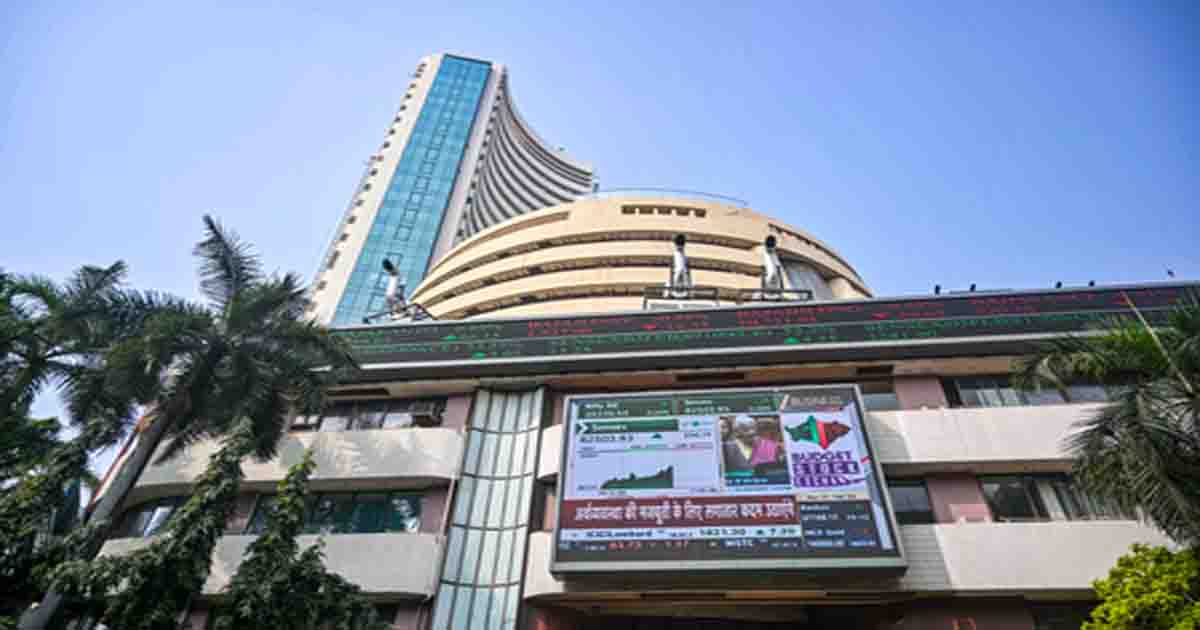
Domestic equity benchmarks opened on a flat note on Monday tracking mixed global cues and momentum from last week’s gains.
Sensex opened at 74,849.30, up 120.03 points or 0.16 per cent, while Nifty began trading at 23,150.85, up 4.70 points or 0.02 per cent.
Sectorally, Nifty PSU Bank led gains and rose over 1 per cent, followed by Nifty Oil & Gas which surged 0.6 per cent.
In contrast, Nifty Private Bank, Nifty IT and Nifty Chemicals dropped up to 1 per cent.
Market experts said momentum from Nifty’s 2.8 per cent surge last week and good results from banking majors after better-than-expected IT earnings could keep the market resilient.
“However, escalation of tensions in Hormuz and consequent surge in Brent crude to $109 will act as a strong headwind,” according to them.
They further said that attractive large-cap valuations and rupee appreciation turned FII stance slightly positive, though unlikely to sustain at high crude prices. Large-caps outperforming mid and small-caps is likely to continue, with stock-specific action on Q2 results.
For Nifty, immediate support is placed at 22,950–23,000, while resistance is seen at 23,250–23,300, the experts said and added that RSI strengthened to 52.81 above its average of 34.70, while PCR stood at 1.08.
In the previous session on October 16, FIIs turned net buyers after 15 straight sessions of selling, buying equities worth about Rs 1,166 crore, while DIIs ended their 45-session buying streak with net sales of around Rs 3,661 crore.
On commodities, Brent crude traded nearly 2 per cent lower at around $107.76 per barrel, while US WTI declined about 1 per cent to $100.43.
In Asia, markets were mixed. Japan’s Nikkei traded 0.84 per cent lower, while Hong Kong’s Hang Seng and South Korea’s KOSPI rose up to 0.83 per cent. Indonesia’s Jakarta Composite fell over 5 per cent.

India’s strong economic growth trajectory and the implementation of the India-EFTA Trade and Economic Partnership Agreement (TEPA) are creating significant opportunities for Norwegian investors, particularly in manufacturing, renewable energy, infrastructure, financial services and the digital economy, according to industry insights.
With GDP growth projected to remain around 6.5 per cent annually through 2030, India is widely expected to become the world’s third-largest economy by the end of the decade, according to EY India report.
Analysts attribute this outlook to strong domestic consumption, rising investments, ongoing infrastructure development and reforms aimed at improving the ease of doing business.
The India-EFTA TEPA, which came into effect in October 2025, is being viewed as a major milestone in India-Norway economic relations.
The agreement seeks to promote trade liberalisation, facilitate investment flows and deepen cooperation in areas such as innovation, sustainability and advanced technologies.
The pact includes investment commitments of $100 billion over 15 years and is expected to support the creation of one million direct jobs in India, aligning with the country’s broader goals of expanding manufacturing capacity and strengthening its position in global value chains.
Industry experts believe the agreement creates a strong framework for Norwegian companies to expand their presence in India by combining Norway’s expertise in technology, sustainability and capital-intensive industries with India’s large market and growth ambitions.
Several sectors have been identified as priority areas for collaboration, including manufacturing, renewable energy, oil and gas, maritime services, seafood processing, information and communication technology (ICT), fintech and financial services. These industries are expected to benefit from increasing bilateral cooperation under the TEPA framework.
The rapid expansion of India’s digital economy and digital payments ecosystem is also creating opportunities for Norwegian companies seeking exposure to one of the world’s largest and fastest-growing consumer markets.
At the same time, India’s policy measures aimed at attracting foreign investment are expected to provide a supportive environment for long-term investors, as per the report.

Tiger Shroff firing case: 3 suspects held in Rajasthan’s Kota planned to flee to Nepal, say police

Pickup truck loaded with explosives blows up in Rajasthan Bhilwara, driver killed

One killed, several injured in clashes between two communities in Manipur

Govt asks Meta to review Facebook and Instagram recommendation systems

Tiger Shroff attack: Ashoke Pandit stands by Jackie Shroff after attack, calls for stricter action

Rahul, Cong ecosystem want to force regime change: BJP after Neha Bora praises B’desh Gen-Z protest

BJP pays tribute to ex-President Abdul Kalam, recalls his enduring influence on generations of India’s youth

Attack on democratic rights: INDIA Bloc leaders on detentions of anti-ECI protestors

INDIA bloc begins protest march against ECI

Maha Congress stages agitation against Gyanesh Kumar
-

 Crime4 years ago
Class 10 student jumps to death in Jaipur
-

 Maharashtra2 years ago
Mumbai Local Train Update: Central Railway’s New Timetable Comes Into Effect; Check Full List Of Revised Timings & Stations
-

 Maharashtra2 years ago
Mumbai To Go Toll-Free Tonight! Maharashtra Govt Announces Complete Toll Waiver For Light Motor Vehicles At All 5 Entry Points Of City
-

 Maharashtra2 years ago
False photo of Imtiaz Jaleel’s rally, exposing the fooling conspiracy
-

 National News2 years ago
Ministry of Railways rolls out Special Drive 4.0 with focus on digitisation, cleanliness, inclusiveness and grievance redressal
-

 Maharashtra2 years ago
Maharashtra Elections 2024: Mumbai Metro & BEST Services Extended Till Midnight On Voting Day
-

 National News2 years ago
J&K: 4 Jawans Killed, 28 Injured After Bus Carrying BSF Personnel For Poll Duty Falls Into Gorge In Budgam; Terrifying Visuals Surface
-

 Crime2 years ago
Baba Siddique Murder: Mumbai Police Unable To Get Lawrence Bishnoi Custody Due To Home Ministry Order, Says Report