
Maharashtra
‘I Apologise…’: Maharashtra DCM Fadnavis Expresses Regret Over Jalna Lathicharge On Maratha Reservation Protesters

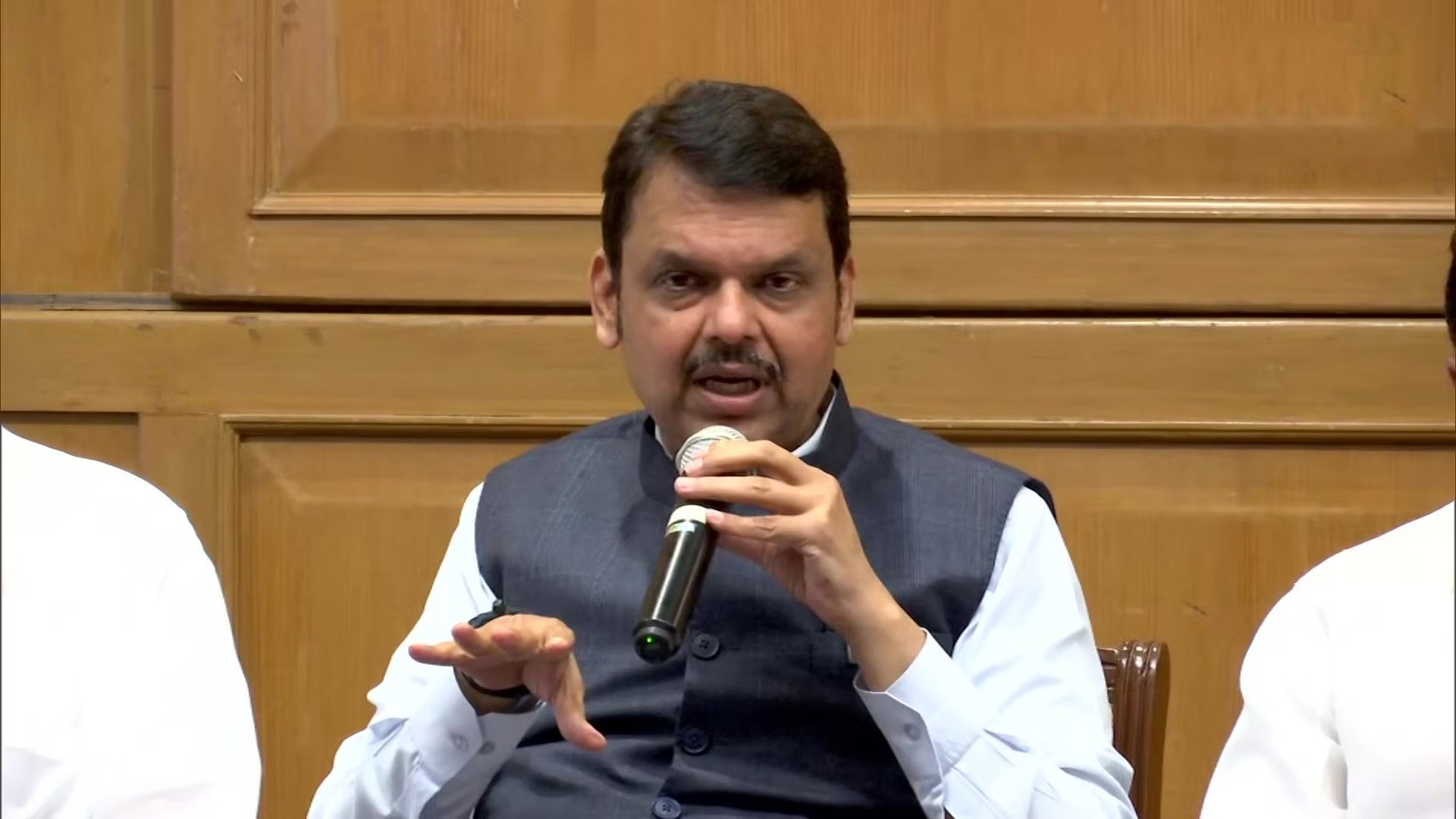
Maharashtra Deputy Chief Minister Devendra Fadnavis on Monday expressed regret over the police lathicharge against protesters demanding Maratha reservation in Jalna’s Antarwali Sarathi. Speaking to reporters after his meeting with the Chief Minister, Fadnavis said, “Lathicharge by police was not right… I am apologising on behalf of the government. The CM has said the action will be taken against those who are responsible for it.”
Furthermore, he clarified that no senior official issued a lathi-charge directive to the Jalna Police last week. Fadnavis, who also looks after the home portfolio, said, “Such decisions (use of police force, etc.) are taken at the local level.”
“The Maharashtra government expresses regret for the use of force by police in Jalna district a few days back,” Fadnavis said.
On his meeting with CM Shinde, he added, “Today, we held a high-level meeting on the Maratha reservation. I have already spoken to protesters and we will resolve this issue systematically. Our government is serious about resolving the issues related to Maratha reservation.”
Opposition aggressive over the issue
Earlier today, Shiv Sena (UBT) leader Sanjay Raut, asserted that the instruction for the lathi-charge originated from a telephone conversation emanating from the offices of the Chief Minister and the State Home Minister.
Additionally, senior NCP leader Anil Deshmukh alleged that the police carried out a lathi-charge on protesters in Jalna district following a phone call originating from the Maharashtra home ministry.
The former State Home Minister also insisted on an investigation conducted by a retired judge to ascertain the identity of the individual who contacted the Jalna district superintendent of police and instructed them to carry out the lathi-charge on the protesters.
Jalna lathicharge sparked controversy
On Friday in Antarwali Sarathi village, Jalna district, law enforcement employed baton charges and deployed tear gas canisters to disperse a tumultuous crowd. This action was taken after demonstrators reportedly obstructed authorities from transferring a hunger-striking individual advocating for Maratha quota to a hospital.
During the unrest, numerous individuals sustained injuries, including 40 police officers, and over 15 state transport buses were set on fire.

Maharashtra
Mumbai: BMC’s helpline ‘My BMC Marg System’ launched ahead of monsoon, special focus on filling potholes

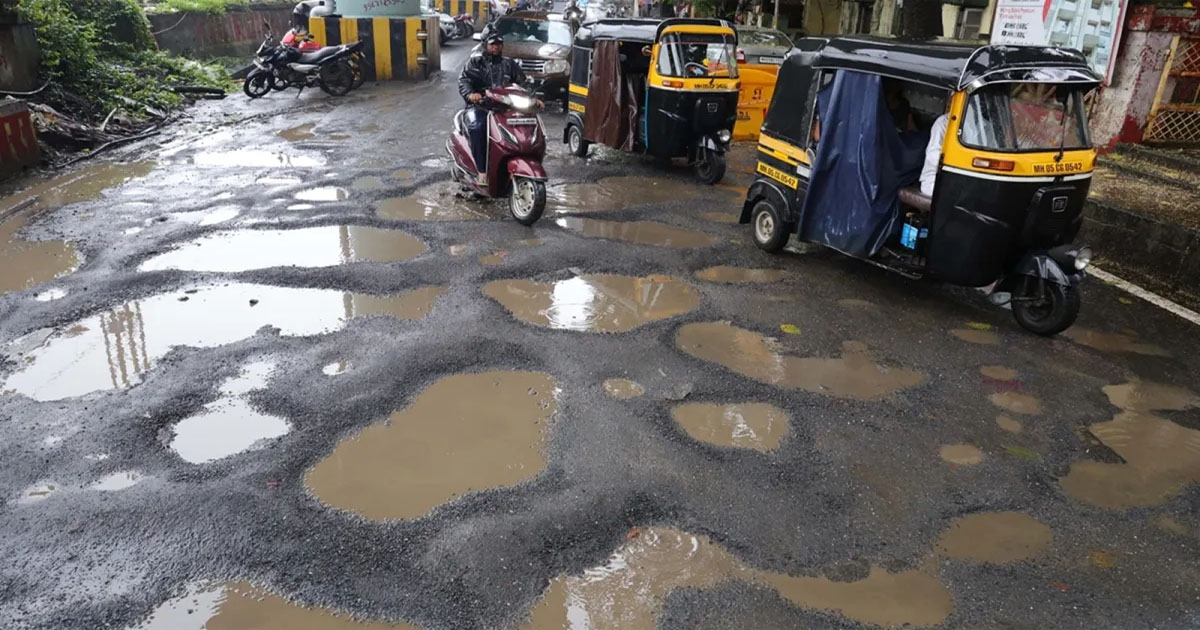
Mumbai: BMC launches special helpline to fill potholes in Mumbai With an aim to address citizens’ complaints promptly and effectively, the Mumbai Municipal Corporation has implemented an integrated complaint management system ‘MyBMC MARG’ (Complaint Management and Redressal System) this year. Through this system, citizens will be able to register 114 different types of complaints related to the Municipal Corporation through a single application and they will also be able to follow up on them. Under this, the facility of registering complaints of potholes on roads on the ‘MyBMC MARG’ system has been provided to the citizens.
Potholes sometimes form on the roads during the monsoon season. In this context, the Municipal Corporation is constantly striving to take immediate notice of the complaints received from the citizens and take necessary corrective action. Digital media is being used to make the process of registering pothole complaints easy and efficient for the citizens. Last year, the Brihanmumbai Municipal Corporation had launched a separate mobile application ‘Pothole QuickFix’ for lodging complaints about potholes on roads. Through this application, citizens can lodge complaints with information, photos and location of potholes on roads. The initiative received a good response from the citizens. During this time, citizens had to use different systems for lodging complaints related to different departments of the municipal corporation. Keeping this in mind, the Brihanmumbai Municipal Corporation has launched a comprehensive system ‘MyBMC MARG’ from this year to provide more comprehensive and convenient services to the citizens. The mobile application ‘Pothole QuickFix’ has been integrated into this system. Accordingly, the facility to lodge a total of 114 types of complaints related to various departments of the municipal corporation including potholes, solid waste management, sewage issues, water supply, road maintenance, parks, public health, pest control, encroachments, lighting is available on ‘MyBMC MARG’.
The feature of the ‘MyBMC MARG’ system is that it is possible for citizens to register complaints from one platform, upload relevant images, check the current status of the complaint, track the action taken by the concerned department and get information about it after the complaint is resolved. Hence, the entire process from complaint registration to redressal has become more transparent and citizen-centric. This initiative by the Burhan Mumbai Municipal Corporation has made the complaint registration process easy, transparent and efficient and has provided a single comprehensive digital platform for citizens to follow up on their grievances. Especially when citizens register complaints of potholes on the roads, it becomes easier for the concerned department to take immediate action. This helps in expediting the pothole repair process. Android users can download the MyBMC MARG application on their smartphones using MyBMC MARG – Apps on Google Play and iPhone users can download the MyBMC MARG app – App Store. The people of Mumbai are appealing to the Municipal Corporation to register all complaints regarding potholes on the roads on the ‘MyBMC MARG’ system.
Maharashtra
Mumbai: Two accused arrested for staging a drama of jewellery theft worth over Rs 60 lakh in Andheri
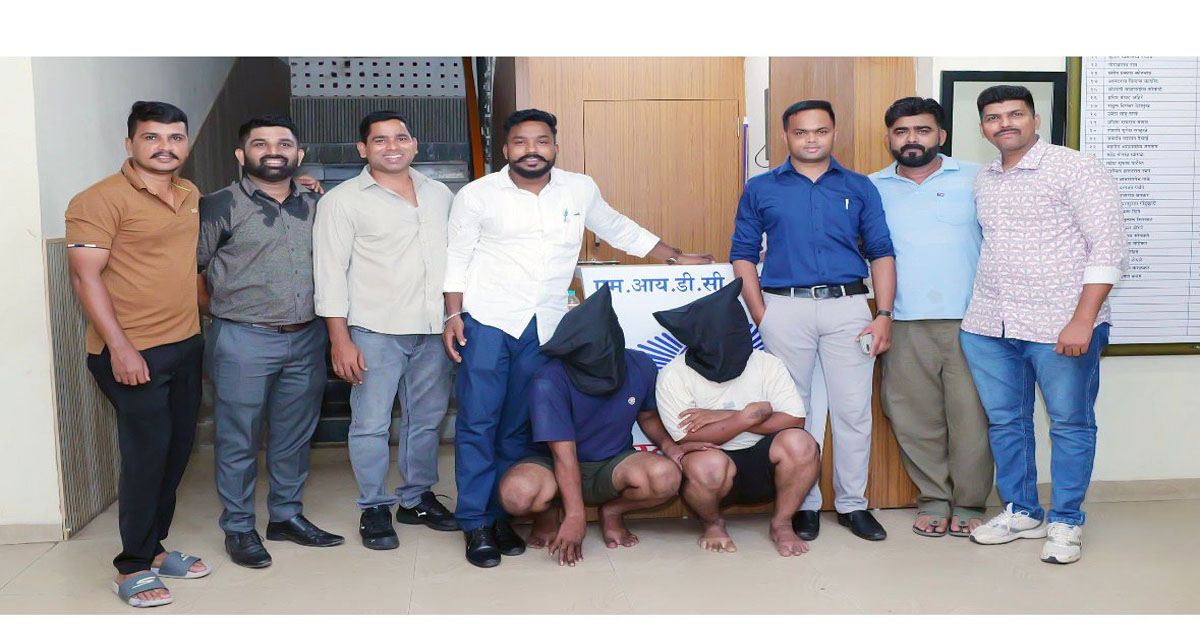
Mumbai: Police have succeeded in arresting two such clever accused who had fabricated a story of theft and road accident and staged a drama of jewellery worth Rs 60 lakhs being stolen. However, during the police investigation, it was revealed that the person delivering the gold jewellery was the thief and he had committed the theft along with his friend. MIDC police had registered a case of theft on the complaint of Kanchan Pawar of Gold Star Company. According to the details, the complainant had sent his employee Avinash Gangadhar Kadam (26) to deliver the gold jewellery. At the same time, he told that his motorcycle Activa had met with an accident and during this time the gold jewellery and bag were also stolen. He pretended to be admitted to the hospital without any injury or wound. During this, the police examined several CCTV footage and it was revealed that the suspect, whose name is Manoj Hemant Jogdand (41), was patrolling here in a suspicious manner before the accident. During the investigation, the police came to know that It turned out that both of them had faked the theft and planned the robbery by describing the incident as an accident. After that, the police also took Avinash into custody. In this case, the police arrested both the accused and solved the mystery. This operation was carried out by DCP Dutta Nalawade on the instructions of Mumbai Police Commissioner Devin Bharti.
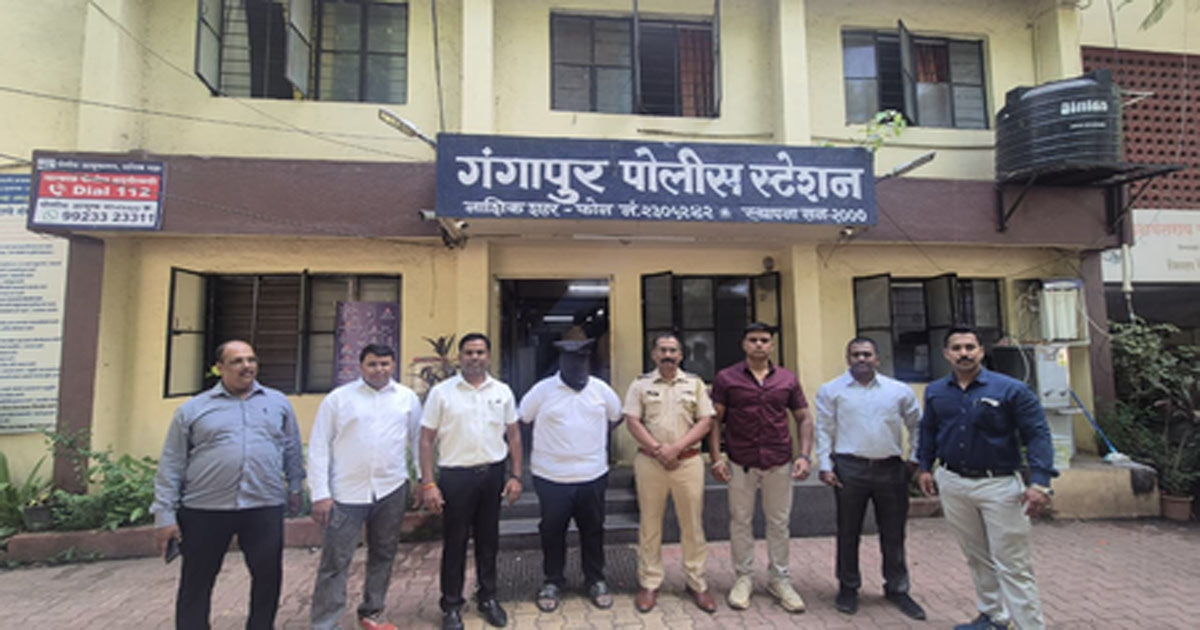
Nashik (Maharashtra), June 16: An absconding accused in a Rs 2 crore embezzlement case registered in Pune was arrested in Maharashtra’s Nashik on Tuesday, police said.
According to a complaint filed by Kiran Dadasaheb Shinde, 38, with Pune police, the responsibility for flat sales and related activities across four buildings (A, B, C, and D) of the ‘Ganga Fernhill’ project had been entrusted to Senior Sales Manager Simon Ronnie Peter, 42, but he allegedly, instead of depositing the proceeds from flat sales into the company’s account, transferred the funds to a fraudulent private bank account belonging to his associate, B. Chandrashekhar, thereby embezzling approximately Rs 2 crore collected from 32 customers.
Based on the complaint, a case was registered at Pune’s Kalepadal Police Station on June 9 (Crime No. 257/2026), under various sections of the Bharatiya Nyaya Sanhita (BNS), 2023.
However, following the registration of the case, Peter went absconding and even switched off his mobile phone to evade arrest.
During the course of the investigation, Pune police received information that the accused was hiding in Nashik city and officials from Kalepadal Police Station contacted Senior Police Inspector Ashok Sharmale of the Gangapur Police Station and sought assistance in tracing and apprehending Peter.
Acting on credible intelligence, Sharmale learned that the accused Peter had arrived in Nashik in a car and was staying in Room No. 301 of Hotel Treebo Sapphire in Kalenagar on Gangapur Road.
Upon receiving the information, Crime Investigation Team officer Ghanshyam Bhoye and his team were immediately dispatched to the location. Acting swiftly, the police team detained the accused and subsequently handed him over to the Pune police for further legal proceedings.
The operation was successfully carried out under the leadership of Senior Police Inspector Sharmale of the Gangapur Police Station, and his team, including Assistant Sub-Inspector Tushar Deore and Police Head Constables Ravindra Mohite, Girish Mahale, Bhagwat Thavil, Ghanshyam Bhoye, Pravin Kedare, Gorakh Salunke, Sujit Jadhav, and Tulshidas Chaudhary.

Madhya Pradesh gears up for NEET-UG 2026; CM directs officials to ensure ‘zero-error’ conduct of exam

FIFA WC: When and where to watch Portugal vs DR Congo; know all details

Mumbai: BMC’s helpline ‘My BMC Marg System’ launched ahead of monsoon, special focus on filling potholes

Mumbai: Two accused arrested for staging a drama of jewellery theft worth over Rs 60 lakh in Andheri

Accused in Rs 2 crore Pune embezzlement case arrested in Nashik

Trump, Netanyahu hold phone talks after Iranian missile fire: Israeli state media

The Municipal Corporation and the Railway Administration should work together to make Mumbai flood-free, directs Standing Committee Chairman Prabhakar Shinde

Virar Citizens Protest Demolition Drive In Arnala; Police Block Lal Bawta March, Sit-in Held On Road

Indian equity markets trade higher as Iran-Israel tensions ease

Dangerous Love Triangle In Mira-Bhayandar: Youth Kidnapped, Brutally Beaten, & Burned With Cigarettes Over Affair With Same Girl
-

 Crime4 years ago
Class 10 student jumps to death in Jaipur
-

 Maharashtra2 years ago
Mumbai Local Train Update: Central Railway’s New Timetable Comes Into Effect; Check Full List Of Revised Timings & Stations
-

 Maharashtra2 years ago
Mumbai To Go Toll-Free Tonight! Maharashtra Govt Announces Complete Toll Waiver For Light Motor Vehicles At All 5 Entry Points Of City
-

 Maharashtra2 years ago
False photo of Imtiaz Jaleel’s rally, exposing the fooling conspiracy
-

 National News2 years ago
Ministry of Railways rolls out Special Drive 4.0 with focus on digitisation, cleanliness, inclusiveness and grievance redressal
-

 Maharashtra2 years ago
Maharashtra Elections 2024: Mumbai Metro & BEST Services Extended Till Midnight On Voting Day
-

 National News2 years ago
J&K: 4 Jawans Killed, 28 Injured After Bus Carrying BSF Personnel For Poll Duty Falls Into Gorge In Budgam; Terrifying Visuals Surface
-

 Crime2 years ago
Baba Siddique Murder: Mumbai Police Unable To Get Lawrence Bishnoi Custody Due To Home Ministry Order, Says Report