
Politics
Gyanvapi dispute: Petitioner says plea based on ‘British map’

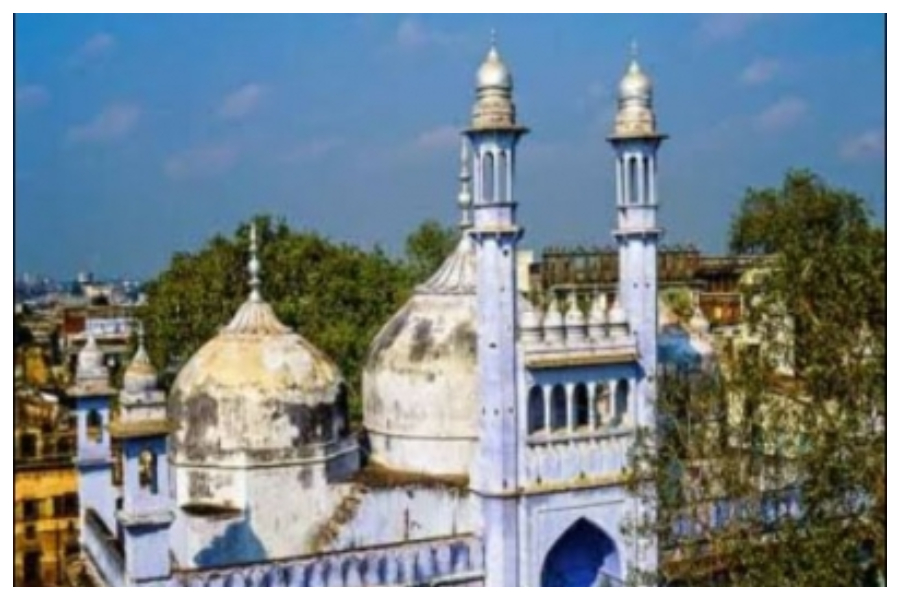
Jitendra Singh Vishen, head of the Vishwa Vaidik Sanatan Sangh (VVSS), which is among the petitioners in the Kashi Vishwanath-Gyanvapi complex case, has said their petition is based on a “British-era map”, which also formed the basis of a court case filed in 1936 by three Muslims who had demanded that the land be handed over to the community.
Visen told reporters, “If you inspect the premises today, you can find that 90 per cent of the structures are according to the map. Moreover, in the ‘shastras’, Lord Ganesha is on the northern side of the Adi Vishweshwar Temple, while Shringar Gauri is on the western side and the southern side has Kartikeya. Many parts in the books may be correct but some questions may remain,” he added.
Advocate Anupam Dwivedi, one of the lawyers representing the petitioners, however, said the purpose of the court-ordered survey was to find out the exact location of the deities and admitted that only an examination could determine the correct location.
Earlier, Acharya Ashok Dwivedi, who was chairman of the Kashi Vishwanath Temple Trust between 2013 and 2019, had claimed that two books about the history of Varanasi say the idols are located elsewhere.
The two books, he said, were ‘Varanasi Vaibhav’, written by scholar Kubernath Sukul, and ‘Kashi Gaurav’ by Shivananda Saraswati, a disciple of ‘Dharm Samrat’ Karpatri, a renowned spiritual leader.
“In the book by Sukul, on page 221, the presence of Maa Shringar Gauri has been mentioned (as located) on the ishan side (north-eastern) of the Kashi Vishwanath Temple, and inside the Annapurna Temple (within the Kashi Vishwanath Temple Corridor). In another book by Shivananda Sarasvati, the presence of the deity has been mentioned as plot 3/58 in Mohalla Bansphatak (at a distance of over 100 metres from the Kashi Vishwanath Temple),” Dwivedi stated.
He alleged that, “People are trying to gain cheap publicity by filing such petitions.”
He further said, adding that a commission should be set up to locate the Maa Shringar Gauri idol.
Maa Shringar Gauri is believed to be a manifestation of Hindu God Shiva’s wife Parvati. A carving of the deity, according to the petitioners’ plea, is located along a platform to the back of the Gyanvapi Mosque, outside the barricading that surrounds it. The public is not allowed to offer prayers here except twice a year during Navratri.
It is the location of this ‘sthal’ that is being contested by Dwivedi, who claims that worship at the site mentioned in the petition began only after campaigns by Hindutva organisations.
“We and our families have been staying here for the past 800 years but have never heard that there was a Shringar Gauri Sthal at the place where it is being talked about. We only got to know about it when outfits like Shiv Sena and VHP started to offer water to the carvings there in 2004-2005,” Dwivedi said.
He also claimed that the Gyanvapi Mosque was previously known as ‘Alamgiri Masjid’, adding that this was acknowledged by historian James Princep in his book ‘Benares Illustrated’ (1833).

International News
All rhetoric, no action: Saudi Arabia realises Pakistan not dependable security partner

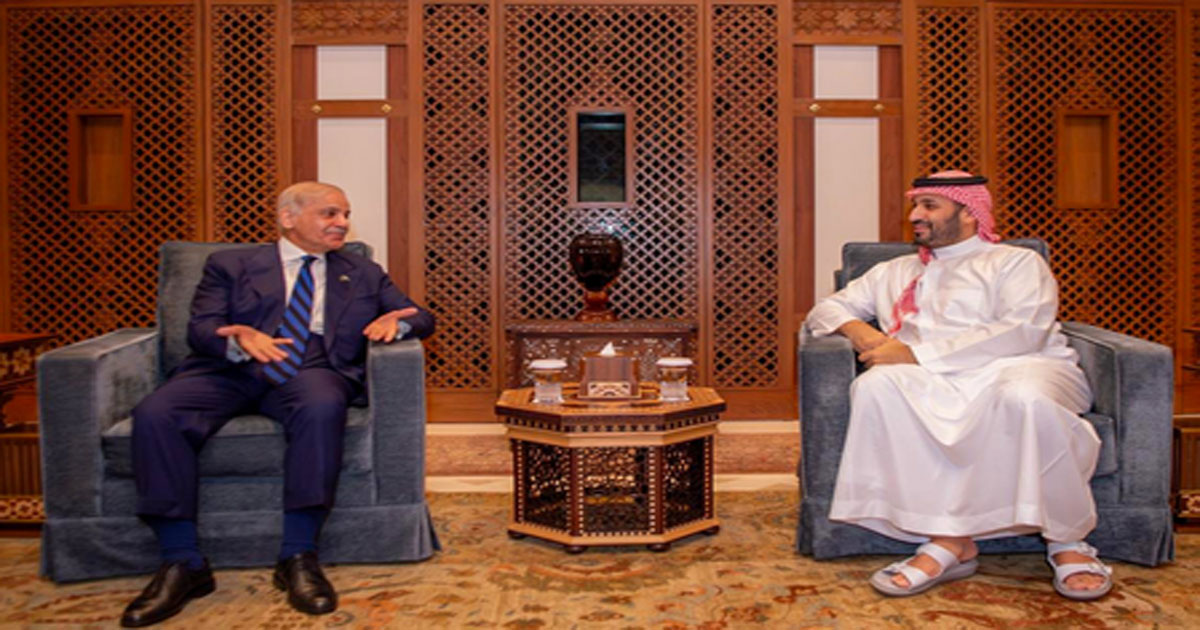
Islamabad, March 19: Pakistan’s response to the ongoing conflict in West Asia has sparked concerns about the strength and credibility of the Saudi–Pakistan Strategic Military Defence Agreement. Recent events involving Iran, Saudi Arabia and Pakistan have revealed cracks in ties long projected as strategic and reliable.
“The agreement, first signed with much fanfare, was framed as a partnership in which both nations would support each other in the event of external threats. Analysts at the time likened it to a NATO-style alliance, with the principle that aggression against one would be considered aggression against both. The pact was presented as a symbol of brotherhood and strategic alignment between a wealthy Gulf state and its South Asian partner, with Islamabad positioning itself as a reliable provider of security support,” a report in South Africa’s ‘The Star’ stated.
“Fast forward to 28 February 2026, when coordinated strikes attributed to United States and Israel targeted Iranian military and political infrastructure. Tehran responded with retaliatory strikes targetting Gulf states, including Saudi Arabia. In theory, this should have been a moment when Pakistan’s commitment under the defence pact was tested. Yet, Pakistan has not made any visible military contribution, prompting observers to question its role as a dependable partner,” it added.
Pakistan, instead of projecting force in support of Saudi Arabia, has remained focused on its conflict with Afghanistan. The recent escalation of tensions has allowed Pakistan to effectively sidestep the more immediate obligations that the agreement with Saudi Arabia might suggest. Analysts have contended that Pakistan’s calculated restraint demonstrates domestic constraints and a broader reassessment of what it is willing to commit in international military partnerships.
The current situation showcases a difference between rhetoric and action. For years, Pakistan has projected itself as a strategic anchor for Saudi Arabia’s security, however, at the time of demand, the alliance seems less robust than previously suggested. For Saudi Arabia, this gap between expectation and action is likely disconcerting, the report highlighted.
“The kingdom invested significant diplomatic and strategic capital in framing the SMDA as a serious and binding commitment. For years, Saudi officials have cited the pact as evidence of Islamabad’s reliability and as a hedge against regional threats. The present crisis, however, suggests that when tested under real conditions, Pakistan’s support may be more symbolic than operational. The implications of Pakistan’s cautious posture are complex.
“Firstly, it could affect Saudi Arabia’s calculations in the West Asia, particularly regarding defence partnerships and dependence on regional allies. Saudi Arabia may now consider alternative arrangements or to deepen cooperation with other partners, including Western states, to compensate for gaps observed in Pakistan’s commitment. Secondly, credibility of Pakistan in regional diplomacy could be tested. Other nations observing the agreement’s implementation may question on whether they should trust Pakistan for future crisis, impacting its strategic leverage and its standing as a regional actor,” The Star report stated.
Maharashtra
Mumbai Accident: Elderly Woman Hit By Garbage Truck Near Shitladevi Metro Station In Mahim; Suffers Heavy Blood Loss

Mumbai: An elderly woman was seriously injured after being hit by a garbage dumper truck in Mahim on a busy stretch. Disturbing visuals showed the woman in glaring pain. The incident took place near the Mumbai Metro 3’s Shitladevi Mandir Metro Station in Mahim.
The victim was attempting to cross the road when the garbage dumper truck hit her. The dumper, reportedly moving at speed, struck her, leaving her with severe injuries and heavy blood loss. Visuals also showed locals rushing to help and taking her to the nearest hospital.
Currently, there is no update on her condition. Though visuals showed police and traffic police on the scene, it is yeh not known if any case was registered against the garbage dumper truck.
Meanwhile, in another recent accident case, three students of the Indian Institute of Technology Bombay were killed after their car met with an accident on the Mumbai–Pune Expressway near Lonavala on Thursday morning while returning from Khandala, where they had gone to watch the sunrise.
The deceased, identified as Omkumar Borse (23), a resident of Nashik; Lay (20), from Nagpur; and Shreyansh Sharma (22), from Jaipur, were travelling in a Volkswagen Polo when the accident occurred. Police officials said that the exact cause of the accident is yet to be determined, as there were no eyewitnesses at the scene.
New Delhi, March 19: India’s thermal power plants have adequate coal stocks of around 53.41 million tonnes which are adequate for nearly 23 days at the present rate of consumption, and further stocks are also being built up at the pitheads of coal mining companies as a proactive measure to meet any exigency amid the disruption in oil and gas supplies due to the Iran war, the Ministry of Coal said on Thursday.
The pithead coal stock at the mines of Coal India Limited (CIL), which was 106.78 million tonnes (MT) as on April 1, 2025, has grown to about 125.54 MT as on March, 18, 2026. Further, there is around 5.75 MT of coal at the mines of Singareni Collieries Company Limited (SCCL) and another 15.75 MT coal at the mines of captive/commercial mines and about 12 MT in transit and about 5.49 MT in ports and good-shed sidings, according to a statement issued by the ministry.
Coal is continuing to ensure reliable baseload power to support core industries such as steel and cement that underpin the economic growth of the country. The coal production in the country continues at a pace matching the prevailing demands of the consumer and building adequate stocks at the mine-end for maintaining adequate supplies to the consumers as per their requirements, with the continued support of Railways, the statement said.
Coal India Limited is taking adequate measures to ensure the supply of coal to all consumers, including small, medium, and other consumers. As a proactive step, CIL has planned 29 e-auctions in the month of March, offering about 23.56 MT of coal. Out of these 29 auctions, 5 auctions have already been conducted since March 12, wherein 73.1 lakh ton of coal was offered, and 31.96 lakh ton of coal has been booked, indicating adequacy of coal offered in the e-auctions, the statement said.
In addition to this, CIL has also taken necessary action to ensure coal availability to the small, medium and other consumers through the State Nominated Agencies (SNAs) route and requested the state governments to provide the additional coal requirement, which can be met in full to avoid any energy shortages. The coal offtake of the states through the SNAs is being constantly monitored by CIL to ensure that uninterrupted supplies are ensured, the statement said.
The Ministry of Coal is ensuring a performance-driven ecosystem through sustained policy facilitation, robust monitoring mechanisms, and proactive stakeholder engagement. These concerted efforts are aimed at providing reliable coal availability, enabling uninterrupted operations across critical sectors, and effectively meeting the nation’s growing energy demands, the statement added.

All rhetoric, no action: Saudi Arabia realises Pakistan not dependable security partner

Mumbai Accident: Elderly Woman Hit By Garbage Truck Near Shitladevi Metro Station In Mahim; Suffers Heavy Blood Loss

India’s power plants well stocked with coal as PSUs step up production

India’s Rs 5 trillion gold hoard fuels boom in fast-growing gold loan market, draws global investors

Mumbai Local: 395 Without Tickets Fined At Ghatkopar During Evening Peak Hours, Central Railways Collects Over ₹1 Lakh Fine

Married Mumbai Woman Mocked In Andheri Society Over ‘Lift Kissing’ CCTV Video, Files Police Complaint

Mumbai: JBCN International School In Borivali Gets Bomb Threat, Search Reveals Hoax, Students Safe

Former Arsenal Star Mesut Ozil’s Convoy Gets Involved In Road Accident During Bangladesh Visit

Gold and silver surge on safe haven demand, margin cut

Mumbai Crime Branch Issues LOC Against Lawrence Bishnoi Aide Harry Boxer For Threatening Actor Ranveer Singh
-

 Crime4 years ago
Class 10 student jumps to death in Jaipur
-

 Maharashtra1 year ago
Mumbai Local Train Update: Central Railway’s New Timetable Comes Into Effect; Check Full List Of Revised Timings & Stations
-

 Maharashtra1 year ago
Mumbai To Go Toll-Free Tonight! Maharashtra Govt Announces Complete Toll Waiver For Light Motor Vehicles At All 5 Entry Points Of City
-

 Maharashtra1 year ago
False photo of Imtiaz Jaleel’s rally, exposing the fooling conspiracy
-

 National News1 year ago
Ministry of Railways rolls out Special Drive 4.0 with focus on digitisation, cleanliness, inclusiveness and grievance redressal
-

 Maharashtra1 year ago
Maharashtra Elections 2024: Mumbai Metro & BEST Services Extended Till Midnight On Voting Day
-

 National News1 year ago
J&K: 4 Jawans Killed, 28 Injured After Bus Carrying BSF Personnel For Poll Duty Falls Into Gorge In Budgam; Terrifying Visuals Surface
-

 Crime1 year ago
Baba Siddique Murder: Mumbai Police Unable To Get Lawrence Bishnoi Custody Due To Home Ministry Order, Says Report