
Business
‘Govt should appoint Chairman for IRDAI who shall consider LIC IPO’

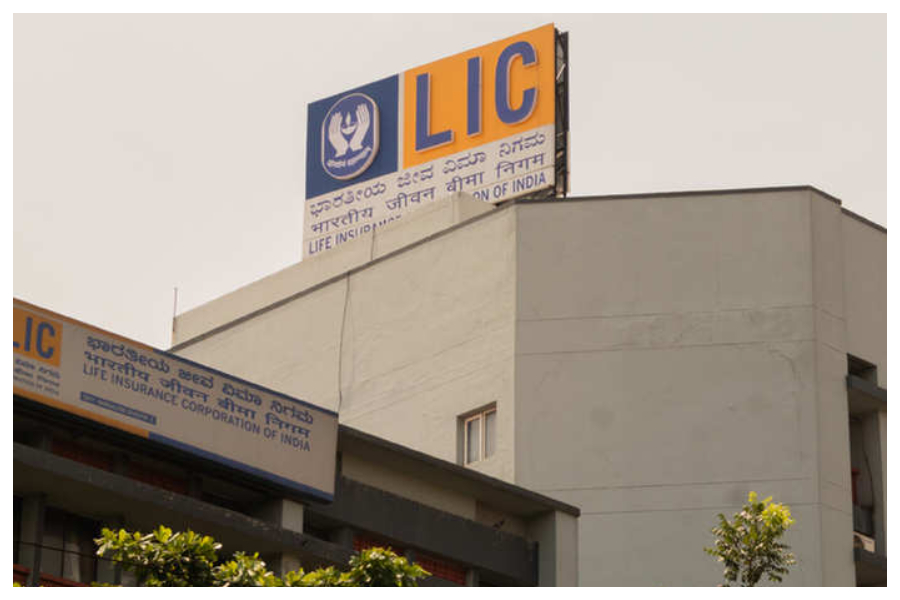
The Peoples’ Commission on Public Sector and Public Services has urged the Union Cabinet Secretary Rajiv Gauba to advise the Cabinet not to proceed further on government divesting some part of its stakes in Life Insurance Corporation of India (LIC).
The Peoples’ Commission, a discussion forum comprising several noted personalities from varied fields, told Gauba that the government should first appoint a Chairman for the Insurance Regulatory and Development Authority of India (IRDAI).
Citing that IRDAI remains headless for the last eight months the Peoples’ Commission said: “This leads one to the inevitable inference that the government has chosen to weaken regulatory oversight over the proposal to disinvest the LIC, so as to facilitate its being rushed through.”
The discussion forum said that a headless IRDAI considering the draft initial public offer (IPO) proposal for disinvestment of the LIC erodes the credibility of the exercise.
Had there been an IRDAI fully constituted as envisaged in Section 4 of the IRDA Act, it would have, in all likelihood, turned down the draft IPO proposal that deprives the policy holders of what is legitimately due to them and which violates the principles of natural justice from their point of view, Peoples’ Commission said.
Continuing further the Peoples’ Commission urged Gauba to place their letter before the Union Cabinet, if necessary, and advise the Union Cabinet that no further action should be pursued on LIC disinvestment till such time the Ministry of Finance positions a competent person of integrity to head the IRDAI, with adequate time at his/her disposal to examine the complexities of the proposed IPO.
The Peoples’ Commission comprises people like Former Finance Minister of Kerala Thomas Issac, Former Secretary, Ministry of Power and Economic Affairs E.A.S. Sarma, T.S. Prasad Rao, Former Chairman and Managing Director, Indian Petrochemicals Corporation Ltd and others.
The LIC on Sunday filed the Draft Red Herring Prospectus (DHRP) with the Securities and Exchange Board of India (SEBI).


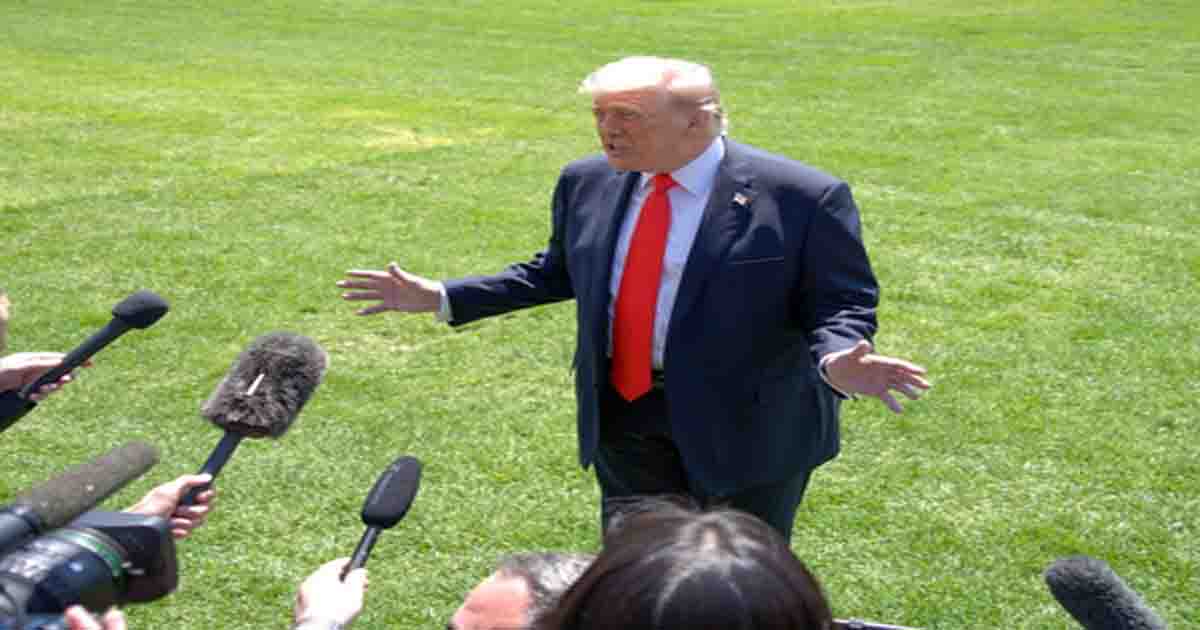
A weaker-than-expected performance by the Republican Party in the US midterm elections could reignite debate over the future direction of American trade policy and influence ongoing trade negotiations with India, experts said on Wednesday.
According to Tanay Dalal, Senior Vice President (Business & Economic Research) at Axis Bank, changes in the composition of the US Congress are unlikely to significantly alter the institutional framework governing current trade negotiations. He noted that any attempt to restore Congress’s authority over trade policy would require a veto-proof majority, a scenario that remains unlikely.
Dalal added that the scope for aggressive trade actions could gradually diminish amid a divided government in the United States and growing political constraints on the administration.
However, uncertainty is expected to persist due to ongoing legal challenges to existing tariff measures.
For India, the situation remains complex, he said. Geopolitical developments, particularly the war in Ukraine and tensions in the Middle East, are likely to continue shaping US trade policy.
As a result, even if Washington adopts a less aggressive stance on tariffs, India may not necessarily benefit.
The country could still face targeted US trade restrictions in areas where strategic and geopolitical interests diverge.
Meanwhile, commodity markets witnessed significant volatility following the Democrats’ victories in both the House and Senate.
Crude oil prices declined, with benchmark Brent crude falling 1.19 per cent to $102.39 per barrel and WTI crude slipping 0.78 per cent to $95.31 per barrel at the time of writing.
In contrast, precious metals gained. On COMEX, gold rose 2.72 per cent to $4,047 per ounce, while silver advanced 4.22 per cent to $51.85 per ounce.
Meanwhile, in other development, Indian officials reacted cautiously to the US midterm election results, saying the outcome could ease some pressure arising from trade tensions but also introduces fresh uncertainty into an already delicate bilateral relationship.
The Democratic Party secured sweeping victories in both chambers of the US Congress, delivering a significant setback to President Donald Trump.
His administration’s tariff policies and confrontation with Iran have had significant implications for countries such as India, which relies on the US as its largest export market and sources a substantial portion of its crude oil requirements from the Middle East.
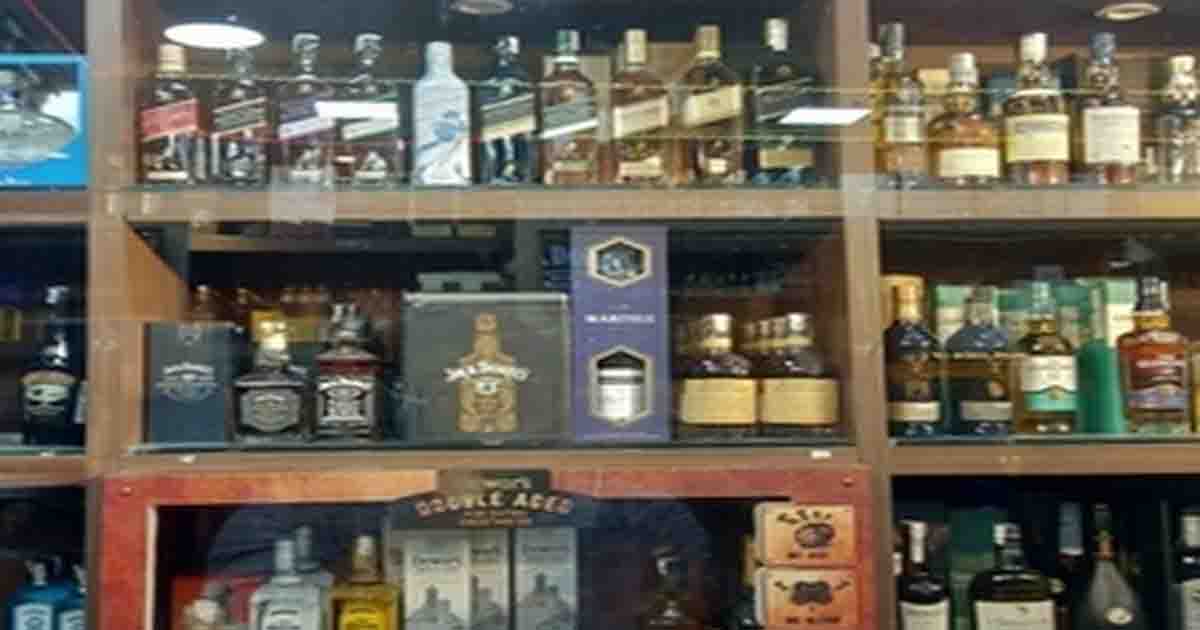
The Directorate of Enforcement (ED) has conducted search and seizure operations at 10 locations across Delhi-NCR, Haryana, and Punjab in connection with a money laundering investigation linked to the alleged illegal procurement and sale of imported foreign liquor through Gurugram-based liquor vend chain ‘The Theka’.
The searches, carried out by the ED’s Gurugram Zonal Office on Tuesday and Wednesday under the PMLA, covered offices and residences of individuals associated with ‘The Theka’, foreign liquor suppliers, transporters, and others allegedly involved in the liquor syndicate.
According to the ED, the investigation stems from FIRs and charge sheets filed by Haryana Police over allegations of illegal sale of imported foreign liquor and misuse of the bond-to-bond transfer mechanism to evade customs duties and state excise taxes.
The case originated from a complaint by Excise Department officials, who seized 3,921 cases and 176 loose bottles of imported foreign liquor allegedly lacking mandatory holograms and Track & Trace strips from ‘The Theka’ on December 9, 2025. Another FIR was also registered against members of the syndicate for alleged involvement in the sale of spurious liquor.
The ED said its probe revealed that the syndicate exploited the bond-to-bond transfer system, which permits movement of imported liquor between states without immediate payment of customs and excise duties. To facilitate the operation, separate companies were established in Haryana and Goa/Maharashtra and requisite customs licences obtained.
While the liquor was officially meant to be transported to bonded warehouses in Goa or Maharashtra, investigators found that consignments were diverted in connivance with transporters and supplied directly to liquor vends in Gurugram. The liquor was then sold as legitimate imported stock, enabling the syndicate to evade customs duties, VAT, cesses, and other taxes.
The agency alleged that after securing a liquor licence for the 2025-27 period, the syndicate procured and sold imported liquor without holograms and Track & Trace strips to increase profits. More than one lakh bottles of imported liquor were procured and illegally sold between June and November 2025.
According to the ED, the operation yielded profits of 20-25 per cent on illegal sales and generated proceeds of crime exceeding Rs 10 crore.
During the searches, officials recovered and seized incriminating documents, digital records relating to the procurement and movement of imported liquor under customs bond arrangements, and cash amounting to Rs 11 lakh.
Further investigation is underway.

India-focused private credit assets under management (AUM) projected to increase to $56-65 billion by 2030 from $21.8 billion in CY2025, representing nearly threefold increase and a compound annual growth rate of about 21-24 per cent, a report said on Wednesday.
The report from CareEdge Ratings said India’s private credit market remains at an early stage of development, with penetration of only 0.6 per cent of GDP, compared with 4.4 per cent in the United States and 8.4 per cent in the United Kingdom, indicating substantial room for long-term growth.
India’s credit-to-GDP ratio, which typically ranges between 90 per cent and 102 per cent, rose from 93.8 per cent in 2023 to 95.3 per cent in 2024 and 102.3 per cent in 2025, after declining to 88.3 per cent in 2022.
By comparison, developed economies such as the United States, the United Kingdom and Australia maintain credit-to-GDP ratios of between 140 per cent and 200 per cent.
Private credit is addressing the funding gap for mid-market, growth-stage and asset-light businesses underserved by traditional lenders, with growth being driven by tighter bank lending norms, increasing demand for bespoke financing solutions, a large refinancing opportunity, and strengthening insolvency and recovery framework.
“India’s Private Credit market is expected to reach $56-65 billion by 2030, supported by growing corporate demand for flexible capital beyond standardised lending products. Direct lending, venture debt, special situations and real-estate credit are expected to drive this expansion,” says Tanvi Shah, Senior Director, CareEdge Advisory.
Shah said disciplined underwriting, risk-adjusted pricing and strong covenant protection will be critical to converting market growth into sustainable returns
“Private credit is poised to coexist with, rather than replace, traditional lending channels, strengthening the financing ecosystem through flexible, customised solutions for underserved borrowers,” said Kalpesh Mantri, Assistant Director, CareEdge Advisory.
Direct lending, venture debt and real estate debt are expected to be the fastest-growing strategies in private credit in near future, the report noted.

NCP’s Umesh Patil flags concerns over fielding of candidates, choice of office bearers in case of merger with NCP-SP

The Uniform Civil Code (UCC) is not actually a ‘Uniform Civil Code’, but a ‘Control Code’ by the government: Abu Asim Azmi

‘An Abdul will now become a leader in UP’, says Owaisi after victory of Democratic candidate Abdul El-Sayed in US

3 arrested for fraud in the name of investment in Mumbai share trading

Encroachment removal drive completed in Borivali East, 27 commercial units demolished.

Rahul, Cong ecosystem want to force regime change: BJP after Neha Bora praises B’desh Gen-Z protest

Attack on democratic rights: INDIA Bloc leaders on detentions of anti-ECI protestors

BJP pays tribute to ex-President Abdul Kalam, recalls his enduring influence on generations of India’s youth

INDIA bloc begins protest march against ECI

Congress trying to protect 3 crore Bangladeshi infiltrators in voter list: HM Shah
-

 Crime4 years ago
Class 10 student jumps to death in Jaipur
-

 Maharashtra2 years ago
Mumbai Local Train Update: Central Railway’s New Timetable Comes Into Effect; Check Full List Of Revised Timings & Stations
-

 Maharashtra2 years ago
Mumbai To Go Toll-Free Tonight! Maharashtra Govt Announces Complete Toll Waiver For Light Motor Vehicles At All 5 Entry Points Of City
-

 Maharashtra2 years ago
False photo of Imtiaz Jaleel’s rally, exposing the fooling conspiracy
-

 National News2 years ago
Ministry of Railways rolls out Special Drive 4.0 with focus on digitisation, cleanliness, inclusiveness and grievance redressal
-

 Maharashtra2 years ago
Maharashtra Elections 2024: Mumbai Metro & BEST Services Extended Till Midnight On Voting Day
-

 National News2 years ago
J&K: 4 Jawans Killed, 28 Injured After Bus Carrying BSF Personnel For Poll Duty Falls Into Gorge In Budgam; Terrifying Visuals Surface
-

 Crime2 years ago
Baba Siddique Murder: Mumbai Police Unable To Get Lawrence Bishnoi Custody Due To Home Ministry Order, Says Report