
National News
Govt-Oppn showdown in RS over ‘deletion’ of dissent notes in Waqf JPC report

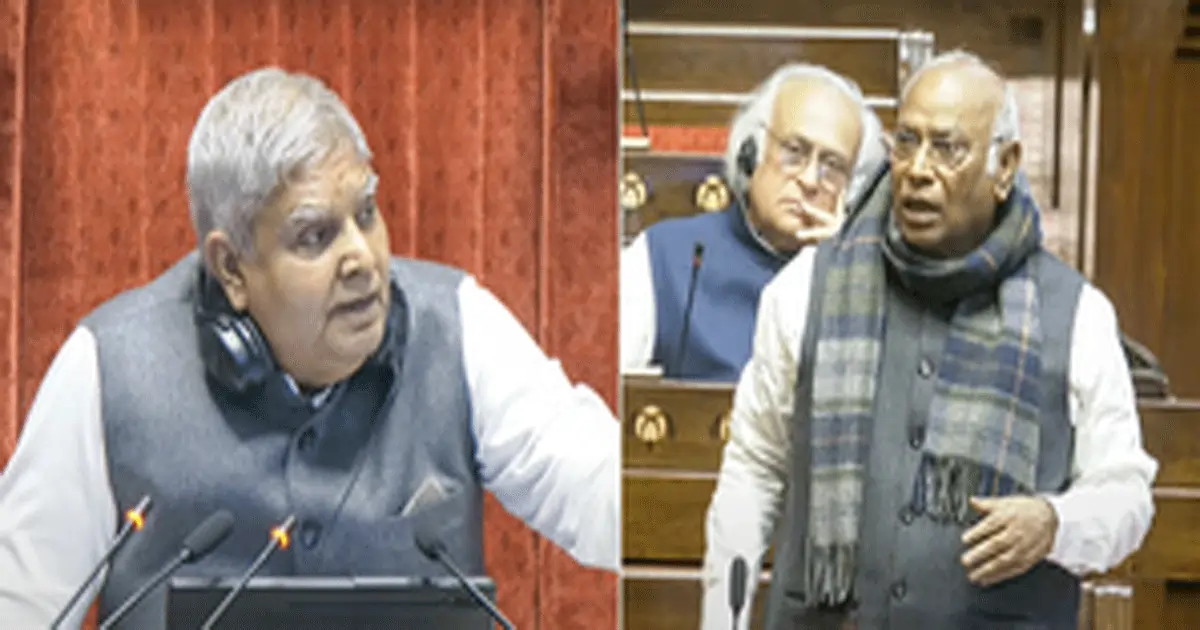
New Delhi, Feb 13: The Joint Parliamentary Committee’s (JPC) report on the Waqf (Amendment) Bill formed the basis for a fresh flashpoint between the Treasury and Opposition benches in the Rajya Sabha on Thursday, the last day of the first half of the Budget Session.
Chaos broke out in Rajya Sabha, the moment the JPC Waqf report was tabled in the House.
Opposition members created an uproar and engaged in sloganeering against the “high-handedness” of the government, claiming that their dissent notes on the Bill were deleted from the report.
The vociferous protests by the Opposition members also invited the ire of House Chairman Jagdeep Dhankhar, who initially urged them to maintain decorum and then issued a stern warning for creating chaos while he read out the President’s message.
The JPC report was tabled by BJP member Medha Vishram Kulkarni, a member of the panel.
Notably, the committee submitted its report and observations on the proposed amendments on the Waqf Bill to Lok Sabha Speaker Om Birla on January 30.
Many protesting lawmakers from the Opposition said that the dissent notes by JPC members, apparently the Opposition MPs, were erased and accused the government of “crushing” their views and dissent in an arbitrary fashion.
Mallikarjun Kharge, Leader of Opposition in Rajya Sabha, demanded that the JPC report be taken back unless it includes dissent notes by the Opposition MPs.
He termed the JPC report “anti-constitutional and anti-democratic” and demanded that the dissenting views be included in the JPC report.
“Many members gave their dissent notes. It’s not right to remove these notes and bulldoze our views. This is an anti-democratic move. I condemn this report,” the Congress MP said in the House.
“You have the power to refuse the report,” Kharge also said, making an appeal to the Vice-President.
Kharge’s direct charges, however, were rejected by the Parliamentary Affairs Minister Kiren Rijiju who claimed that there was no truth in the allegations as the dissent notes were attached in the report’s appendix.
“These are false allegations. There is no truth in it. There has been no violation of rule,” Rijiju said, while also asking the Opposition MPs not to mislead the House.
Rijiju’s defence, however, failed to convince the Opposition as they continued shouting slogans while raising concerns about the integrity of the report and also its ability to undermine the Waqf Boards.
Finance Minister Nirmala Sitharaman also weighed in on the controversy and accused the Opposition of misleading the House. She rebuked the Opposition MPs for creating constant din and derailing the proceedings of the House by creating confusion.
Earlier in the day, BJP MP and JPC Chairman Jagdambika Pal told the newsmen that the committee submitted its report after six months of pan-India deliberations with various stakeholders and experts on the subject.
The JPC Chairman had submitted the report to LS Speaker Om Birla himself on January 31. The committee had adopted the draft legislation by 15-11 majority vote.
Even during wide-ranging deliberations of JPC meets, the ruling and Opposition MPs had crossed swords.
BJP members supported amendments, claiming that the impending reforms will bring transparency and accountability in management of Waqf Boards while the Opposition fulminated over the move.
They termed the Bill an attack on the rights of minorities and an unwarranted interference in the functioning of Waqf Boards.

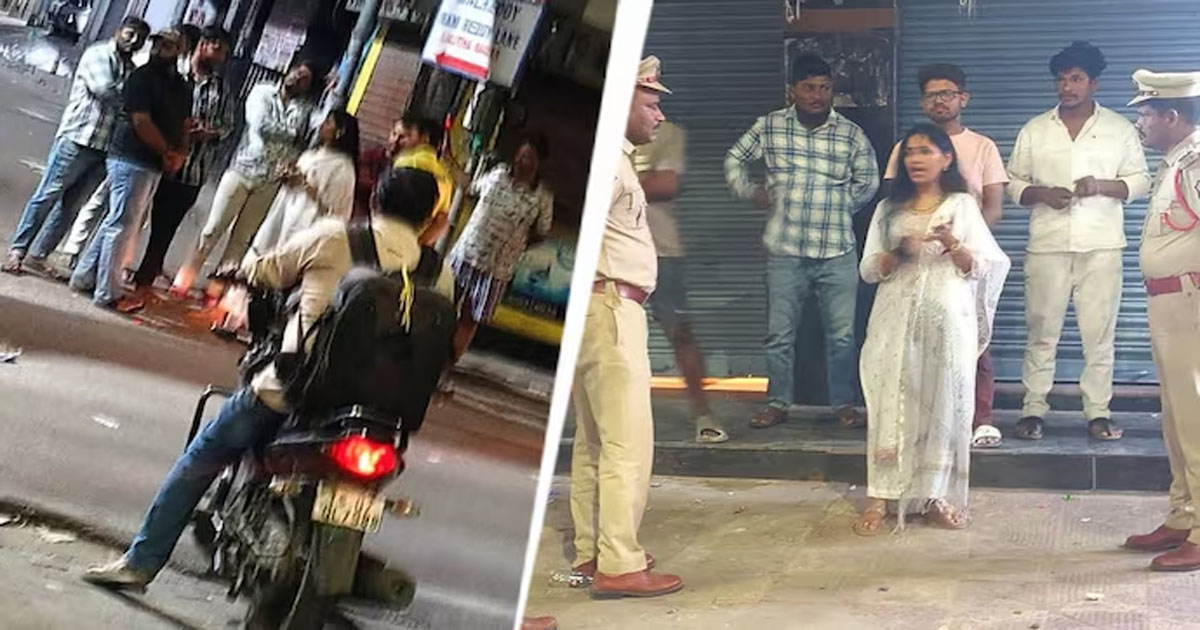
In a late-night undercover operation aimed at assessing women’s safety on the streets, Malkajgiri Commissioner of Police V Sumathi, posed as a regular commuter at a bus stop in Dilsukhnagar between 12.30 am and 3.30 am.
According to police sources, the Indian Police Service (IPS) officer remained alone at the location to observe ground conditions faced by women travelling during late hours.
What followed painted a troubling reality. During the three-hour operation, nearly 40 men allegedly approached her. Several of them were suspected to be under the influence of alcohol or ganja, officials said. The group included young men, some identified as students and private employees.
Plainclothes police teams, already stationed nearby as part of the operation, intervened and detained individuals found behaving in a suspicious or inappropriate manner. Police said action was taken against those who were allegedly involved in harassment or causing disturbance around the bus stop.
The initiative was reportedly conducted to evaluate night patrolling effectiveness, identify vulnerable public spaces, and examine the risks faced by women commuting alone during late hours.
In a parallel account of the operation, it was stated that the commissioner was approached by multiple individuals within minutes of her arrival, following which enforcement teams moved in and detained those suspected of misconduct. Police also carried out counselling sessions as part of a broader women’s safety awareness drive.
Further official details regarding the identities and legal status of those detained are awaited from the police department.
International News
Operation Sindoor: Pakistan’s fake victory spectacle couldn’t hide crisis within terror groups

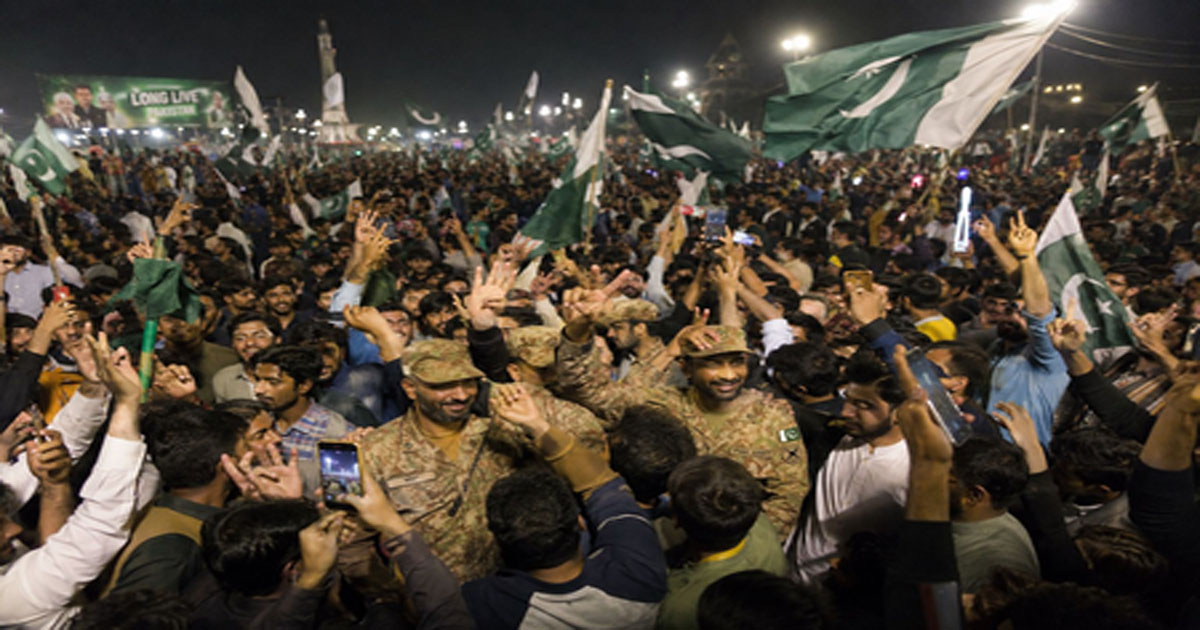
New Delhi, May 8: For Pakistan, ‘Operation Sindoor’ resulted in a loss of face. After terror infrastructure was hit hard by the Indian armed forces who were avenging the Pahalgam terror attack, Pakistan set out a fake narrative of emerging victorious.
Rallies and processions were taken out to create an impression that the Pakistan Army had hit back and won the battle. While the perception was created, the reality was something different.
An official said that events were strategically planned across Pakistan to commemorate fake victory. On the other hand, social media handles run by Pakistanis worked overtime to put out false narratives.
Following the conclusion of ‘Operation Sindoor’, Pakistan’s Army chief instructed the Shehbaz Sharif government to release Rs 500 crore. This money was then distributed evenly to federal governments, business and religious groups. All were asked to organise massive rallies across Pakistan. The programme mandate by the Pakistan Army was titled ‘Ashra-e-Tashakur Fateh-E-Muneeb,’ which means ten days of gratitude for a decisive victory.
To cement the fake claim further, Asim Munir even pressured the Sharif government to make him Field Marshal.
An Intelligence Bureau official said that while these rallies took place on a grand scale for ten days, something more serious was brewing within. Some of the rallies even focussed on thanking the Jaish-e-Mohammad and Lashkar-e-Tayiba for the so-called victory.
However, within the ranks of these two terror groups something serious was simmering. Both Hafiz Saeed and Masood Azhar had started to question the Pakistan Army and the ISI. They wanted to know what happened to the guarantees and protection that they had been assured. These groups have been operating with ease only due to the funds and protection that the Army and the ISI offer them.
During ‘Operation Sindoor’, the Jaish-e-Mohammad lost its Bahawalpur headquarters. Its chief Masood Azhar even lost most of his family members and several other cadres. The Muridke camp, which is the Lashkar-e-Tayiba’s primary training facility was blown to pieces during the Indian operation.
Both these terror groups, which have wrecked havoc in India, had not witnessed such a huge hit. There have been encounters and terrorists have been killed on Indian soil. However never have they been struck so hard and that, too, deep inside Pakistan.
Another official said that the impression that the Pakistan establishment sought to create in the aftermath of the operation worked among a few people, but clearly their proxies were not impressed. They knew what they had lost and the fact that the Army could not even defend them is what left them completely disgruntled. The official also said that many cadres, too, had started questioning their own leadership.
Officials say that all these factors led to rifts within these two terror groups and this explains why they are taking so long to rebuild.
During the numerous processions, the Army insisted that the cadres of the Lashkar-e-Tayiba and Jaish-e-Mohammad should take part. Many of them did, but in their minds, they knew what the reality was. In this desperation to show that Pakistan was victorious, the Army ended up showcasing to the world that globally banned terror groups such as the Jaish-e-Mohammad and Lashkar-e-Tayiba are welcome within the ecosystem of the establishment, the official added.
Pakistan watchers point out that it was nothing but desperation on part of the Army. It had to indulge in this circus and claim a false victory. In reality, the Pakistan Army and its chief were the hardest hit thanks to ‘Operation Sindoor’, the experts also point out.

New Delhi, May 7: US tech giant Apple has announced an investment of Rs 100 crore to support the development of renewable energy infrastructure in India as part of its broader sustainability and carbon neutrality goals.
The company said the investment will be made in collaboration with CleanMax, one of India’s leading renewable energy developers, to help build more than 150 megawatts of new renewable energy capacity across the country.
According to the iPhone maker, the planned capacity would be enough to power nearly 1.5 lakh Indian households annually and may be expanded further in the coming years.
The initiative is aimed at strengthening renewable energy adoption across Apple’s supply chain operations in India and supports the company’s target of becoming carbon neutral across its entire footprint by 2030.
“At Apple, our commitment to the environment is also a driving force for innovation across the company and around the world,” said Sarah Chandler, Apple’s Vice President of Environment and Supply Chain Innovation.
“We are proud to expand our efforts to invest in India’s clean energy economy and protect the country’s precious natural resources,” she added.
Moreover, the US-headquartered firm had earlier partnered with CleanMax on rooftop solar projects to power its offices and retail stores in India with 100 per cent renewable energy.
Apart from renewable energy investments, it also announced new partnerships in India focused on reducing plastic pollution and promoting green entrepreneurship.
The company said it is working with WWF-India to support recycling and waste management initiatives to improve material recovery and reducing plastic leakage into ecosystems.
The iPhone maker is also partnering with Acumen to provide grants and mentorship support to early-stage green enterprises working in areas such as waste management, regenerative agriculture, and circular economy solutions.

Traffic On Mumbai Lalbaug Flyover Disrupted After Tempo Overturns

Gold surges 1.83 pc this week amid persistent tensions in Strait of Hormuz

NESCO Drug Overdose Case: Mumbai NDPS Court Denies Bail To Accused, Says ‘Greed For Money Turned Place Of Amusement Into Graveyard’

Weather Alert, May 9: Hot & Humid Conditions Prevail In Mumbai, MMR; Thane Likely To Sizzle At 40°C Today

Bombay HC Orders Audit Of Slum Areas Act, Says ‘Slum-Free Mumbai’ Dream Remains Unfulfilled

‘Son Falsely Implicated, We Are Well-Educated’: Father Of Accused Tausif Attar Defends Son After Skullcap, Namaz Coercion Allegations Rock TCS Nashik

Asha Bhosle’s son says last respects to be paid at residence in Lower Parel, followed by last rites at Shivaji Park

Mumbai: 15th arrest in Rohit Shetty shooting case, shooter identified, arrested, more arrests possible

‘Scary & Traumatic’: Commuter Alleges Mobbing By Auto Drivers Over Uber Bike Booking In Navi Mumbai

Maharashtra Shock: 22-Year-Old Arrested For Exploiting & Blackmailing Multiple Women In Kolhapur; Love Jihad Angle Suspected
-

 Crime4 years ago
Class 10 student jumps to death in Jaipur
-

 Maharashtra2 years ago
Mumbai Local Train Update: Central Railway’s New Timetable Comes Into Effect; Check Full List Of Revised Timings & Stations
-

 Maharashtra2 years ago
Mumbai To Go Toll-Free Tonight! Maharashtra Govt Announces Complete Toll Waiver For Light Motor Vehicles At All 5 Entry Points Of City
-

 Maharashtra2 years ago
False photo of Imtiaz Jaleel’s rally, exposing the fooling conspiracy
-

 National News2 years ago
Ministry of Railways rolls out Special Drive 4.0 with focus on digitisation, cleanliness, inclusiveness and grievance redressal
-

 Maharashtra1 year ago
Maharashtra Elections 2024: Mumbai Metro & BEST Services Extended Till Midnight On Voting Day
-

 National News2 years ago
J&K: 4 Jawans Killed, 28 Injured After Bus Carrying BSF Personnel For Poll Duty Falls Into Gorge In Budgam; Terrifying Visuals Surface
-

 Crime2 years ago
Baba Siddique Murder: Mumbai Police Unable To Get Lawrence Bishnoi Custody Due To Home Ministry Order, Says Report