
Maharashtra
Government to waive off SGST for business units in Dharavi after development project starts: Mumbai

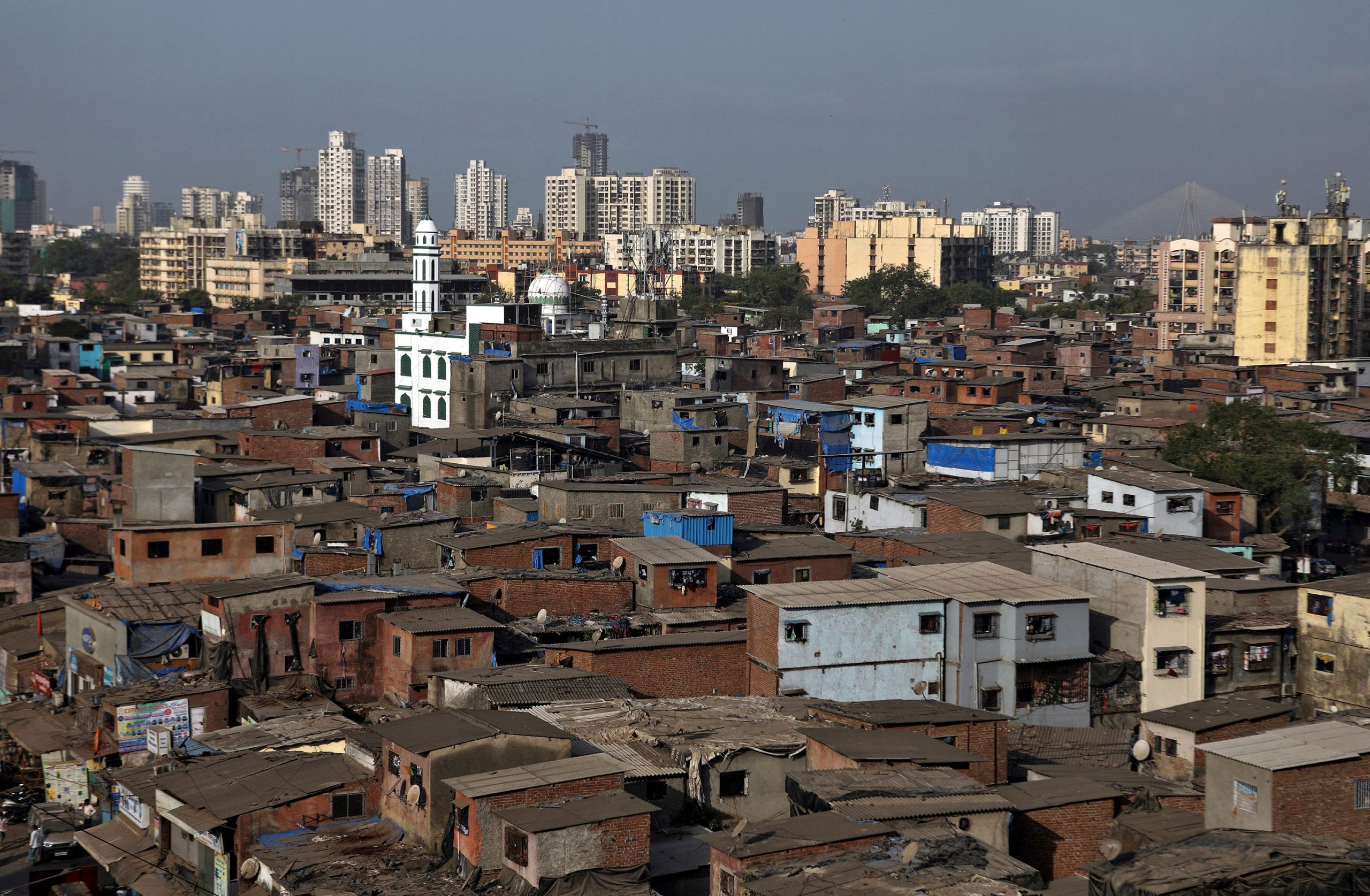
The cottage industry in Dharavi is likely to get financial benefits from the State Government once the project to redevelop Asia’s second largest slum takes off.
The fiscal sop is most likely to come in the form of a waiver of the State Goods and Services Tax or SGST.
SGST is a percentage of tax levied along with an equivalent Central GST on goods and services. SGST is applicable on intra-state supply of goods and services and the revenue goes into the State Government’s coffers.
A senior official involved with the Dharavi redevelopment project said the granular details on how to extend the benefits to the cottage industries in Dharavi are being worked out. This could come as a waiver for commercial units within Dharavi or by way of reimbursement of the SGST paid by the establishments.
The slum colony has a population of more than 12 lakh with almost half operating small-scale businesses across industries and sectors, giving it a unique identity and making it self-sufficient while contributing to the state’s economy.
The small-scale businesses include leather tanneries, footwear, garments, pottery, fried snacks, other edibles, plastic recycling, aluminium brick making, metal scrap recycling, electronic waste segregation and recycling, screen and block printing and fabric dyeing.
Before beginning the ground work, a special purpose vehicle will be formed with Maharashtra holding 20% equity and the rest with bid winner Adani Properties. Once the project execution takes off, the Government plans to roll out the concession to the affected commercial units.
“Their businesses may get impacted during the project execution as they will have to relocate from where they have been operating for decades,” the official explained. “The Government may provide some cushion to reduce the impact in the form of SGST relief.”


Mumbai, Oct 17: In fresh action against an online betting/gaming and cyber fraud syndicate, the Enforcement Directorate (ED) conducted search operations at 20 premises located in Mumbai, Pune, Mehsana, Surat and Hyderabad, ED officials said on Saturday.
During the search operations on October 13, the ED’s Mumbai Zone-2 seized various incriminating documents, digital devices and other material evidence relating to the layering and diversion of proceeds of crime, the official said in a statement.
In addition, multiple bank accounts of the concerned entities and persons have been ordered frozen under the provisions of the Prevention of Money Laundering Act (PMLA), 2002, the statement said.
In the case, the ED had earlier conducted searches at multiple places in Pune, Mumbai and Bengaluru and also arrested Ram U. Ramdhani, founder of Edsom Fintech Private Limited, who remains in judicial custody, it added.
The investigation stems from two predicate offences pertaining to the online gaming and betting platform “All Panel Exchange” (allpanelexch.com) and MGM91 wherein the complainants were induced to deposit funds and were subsequently cheated, the ED said.
The central agency’s investigation under PMLA established that funds collected from victims of both betting platforms were routed and ultimately received in the bank accounts of a Pune-based entity established by Ram U. Ramdhani.
“Edsom had developed and operated an in-house payment intermediary platform called “iPaisa”, through which it onboarded more than 200 shell/front entities — referred to internally as “merchants” — on behalf of online gaming, betting, and cyber fraud operators and their agents, referred to as “Channel Partners/Carry and Forward Agents”,” the ED said.
“Investigation revealed that funds collected from victims of online gaming/betting/cyber fraud platforms were routed through a vast network of mule bank accounts and the controllers of these betting platforms, along with the shell entities used for routing the proceeds of crime, have been identified,” the ED added.
It also emerged that a significant number of persons involved in operating these online betting/gaming platforms were being directed from Dubai based persons, the probe agency said.
The syndicate was further aided by certain cooperative banks, whose infrastructure was used to collect and further layer the illicit proceeds, it added.
“Investigation has also established that the proceeds of crime generated through online betting/gaming and cyber fraud activities were siphoned out through three principal routes: One, by way of remittances disguised as trade transactions through over invoicing; and other, by cash withdrawals from mule accounts opened under the guise of APMC units; and another, by conversion of funds into cryptocurrency for siphoning off the proceeds of crime outside India,” the ED said.
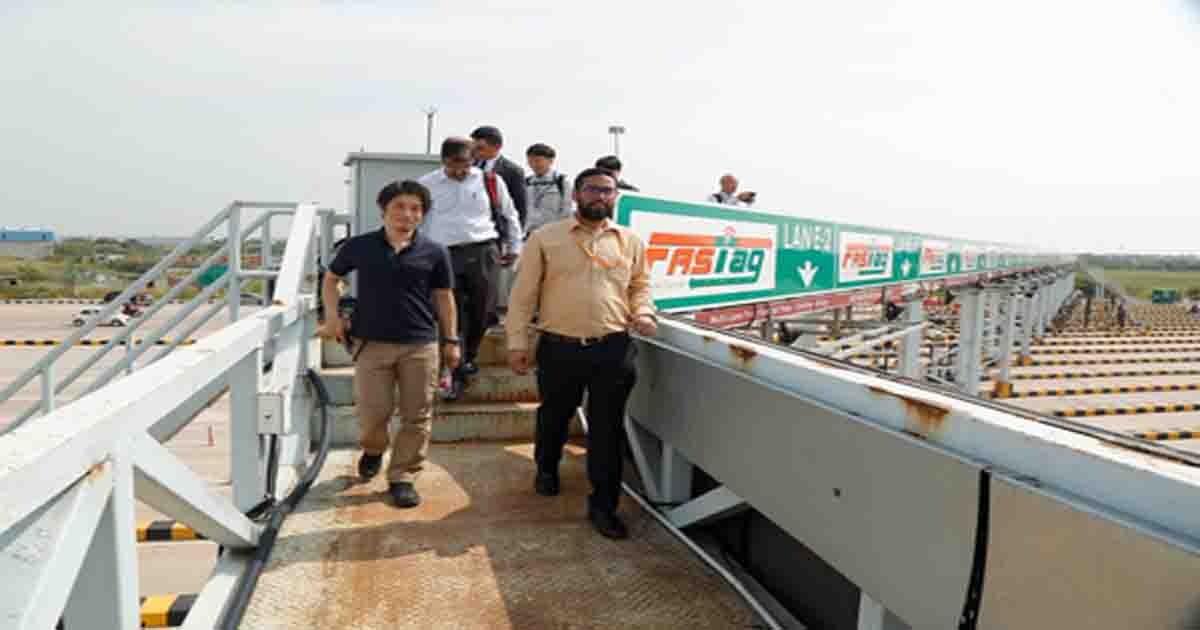
A Japanese delegation visited the Multi-Lane Free Flow (MLFF) tolling system in Mundka-Bakkarwala on Friday on the sidelines of the 12th India–Japan Joint Working Group Meeting on Roads and Road Transportation.
The MLFF system provided insights into India’s technology-driven initiatives for seamless and efficient highway travel.
At the MLFFs, the National Highways Authority of India (NHAI) uses a combination of RFID-based FASTag electronic toll collection, automatic number plate recognition (ANPR) and AI analytics to allow vehicles to pass through charging points without stopping, slowing down or remaining in a designated lane.
MLFFs have already been installed at Choryasi in Gujarat, Mundka in Delhi, Gharaunda in Haryana and Daulatpura and Manoharpura in Rajasthan.
While 12 further locations have been awarded for conversion, tenders have also been launched covering an additional 104 toll plazas around the country.
The MLFF at Choryasi on the Surat–Bharuch section of NH-48 was the first to become operational.
The one at Mundka on Delhi’s Urban Extension Road-II was the second.
The expansion plan represents a significant shift from India’s traditional barrier-based toll plazas.
Rather than moving immediately to satellite-based toll collection, the Indian government has opted to build on the country’s established FASTag system and combine it with ANPR and AI.
Expert committees had recommended further consideration of GPS-based barrier-free tolling because of security, privacy and operational control issues, the Ministry of Road Transport and Highways has indicated.
FASTag and ANPR/AI was thus selected as the technology for the current MLFF programme.
The session of the India–Japan Joint Working Group on Roads and Road Transportation Sector was successfully held at Bharat Mandapam in New Delhi.
Discussions focused on advanced construction technologies, bridge and tunnel engineering, sustainable infrastructure and digital innovations, fostering the exchange of technical expertise and best practices.
“The meeting reaffirmed both nations’ commitment to safe, sustainable and technology-driven road infrastructure, aligned with the vision of Viksit Bharat @ 2047,” the Ministry said in a statement.
Maharashtra
‘Everything exposed’: CM Fadnavis targets Cong, CJP over Prashant Bhushan’s ‘regime change’ remarks

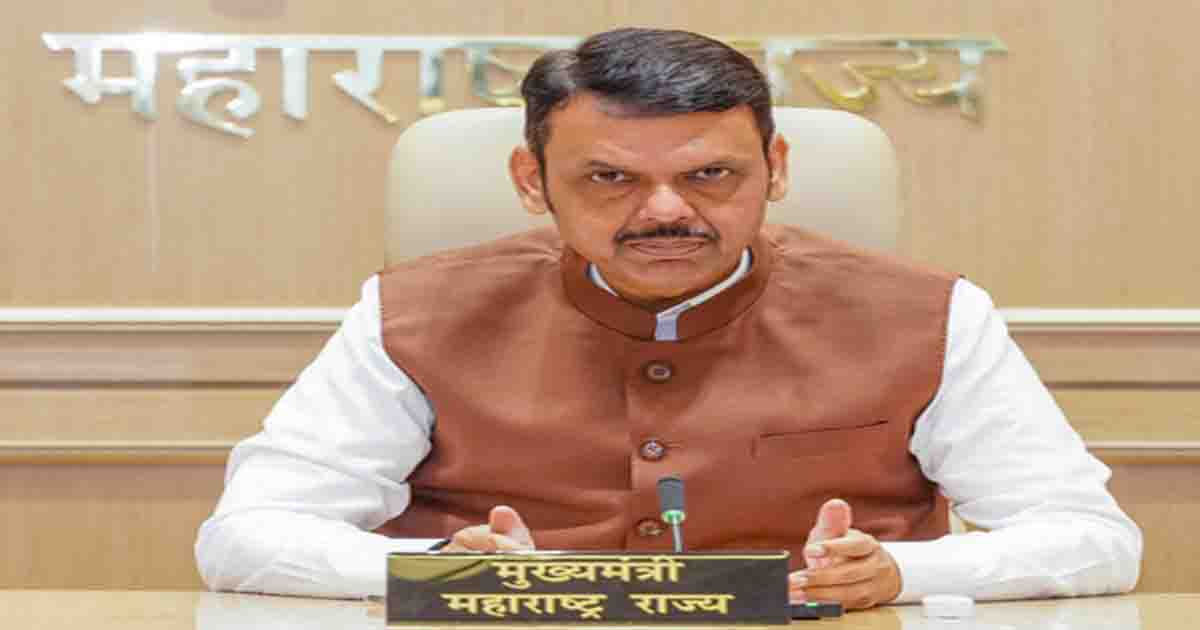
Mumbai, Oct 16: Maharashtra Chief Minister Devendra Fadnavis on Friday launched a scathing attack on the opposition and the CJP, declaring that “the hidden truth is finally out” following the controversial “regime change” statement by senior advocate Prashant Bhushan.
Taking to social media platform X, CM Fadnavis shared a video clip of Bhushan’s remarks, captioning it: “It’s done, bro, everything is exposed!! After all, it was all about ‘Regime Change’.. the hidden thoughts have finally slipped onto the lips.”
CM Fadnavis accused the opposition of using protests as a smokescreen to fuel anarchy and seize power. He alleged that various demonstrations — whether involving students or farmers — alongside campaigns spreading caste and linguistic discord or attempting to tarnish India’s constitutional institutions, are all part of a calculated political game aimed at capturing the seat of power.
The row erupted after Prashant Bhushan, during a press conference alongside CJP representatives and figures like Neha Bora (who previously surfaced during NEET-related protests), openly discussed objectives tied to a “regime change”.
The remarks sparked immediate political fallout. Defence Minister Rajnath Singh also weighed in heavily on the issue, accusing the opposition of exploiting the youth for political mileage and attempting to engineer a Bangladesh-style upheaval in India by undermining key democratic and constitutional institutions.
Following intense backlash and accusations of plotting systemic chaos under the guise of peaceful activism, CJP representatives, including Abhijeet Dipke, scrambled to issue clarifications. In a late-night press conference, Dipke backpedalled on the remarks, asserting that their protests were not aimed at regime change, but rather confined to demanding the resignation of Chief Election Commissioner Gyanesh Kumar. However, ruling coalition leaders maintain that the slip of the tongue has exposed the opposition’s core agenda, providing the Bharatiya Janata Party (BJP) with fresh ammunition to question the motives behind ongoing anti-establishment protests.
Earlier, CM Fadnavis criticised opposition and activist groups while defending Chief Justice of India (CJI) Surya Kant’s decision to decline a meeting with protesters.
Speaking during a media interaction, he accused opposition parties and outfits of running a systematic design to undermine India’s core constitutional institutions and usher in an “ultra-Leftist” brand of anarchy.
Defending the CJI’s refusal to meet demonstrators, CM Fadnavis asked, “Which Constitution states that the Chief Justice of India should meet protesters and marchers?” He emphasised that the CJI acted well within his constitutional rights and praised the judiciary’s stance that grievances must be legally addressed inside courtrooms rather than through street pressure.
CM Fadnavis alleged that a well-crafted conspiracy is underway to systematically devalue independent pillars of democracy, such as the Supreme Court, the Election Commission, and the Reserve Bank of India (RBI). He noted that the ultimate goal of these groups is to convince citizens that constitutional frameworks cannot deliver justice.
Commenting on recent demonstrations — including those by Congress and civil groups — CM Fadnavis distinguished between lawful democratic protest and chaos. Pointing to instances where crowds allegedly crossed the line with provocative sloganeering, he asserted that when thousands with criminal records mobilise to disrupt public order, it amounts to outright anarchy rather than peaceful dissent.

Iran IRGC says supertanker exploded after hitting mine in Hormuz Strait

Neha Sharma warns legal action against AI content without consent: No hiding behind fake account

Attack on democratic rights: INDIA Bloc leaders on detentions of anti-ECI protestors

Online betting: ED conducts searches at 20 premises in Mumbai, Pune, Hyderabad

‘Reclaim Jantar Mantar’ march held to demand restoration of designated protest site; several detained

Rahul, Cong ecosystem want to force regime change: BJP after Neha Bora praises B’desh Gen-Z protest

BJP pays tribute to ex-President Abdul Kalam, recalls his enduring influence on generations of India’s youth

Mumbai Cyber Cell arrests 6 members of organized gang in major operation; Beware of cyber fraudsters; Digital arrest has no legal status; DCP Bajrang Bansode

INDIA bloc begins protest march against ECI

Maha Congress stages agitation against Gyanesh Kumar
-

 Crime4 years ago
Class 10 student jumps to death in Jaipur
-

 Maharashtra2 years ago
Mumbai Local Train Update: Central Railway’s New Timetable Comes Into Effect; Check Full List Of Revised Timings & Stations
-

 Maharashtra2 years ago
Mumbai To Go Toll-Free Tonight! Maharashtra Govt Announces Complete Toll Waiver For Light Motor Vehicles At All 5 Entry Points Of City
-

 Maharashtra2 years ago
False photo of Imtiaz Jaleel’s rally, exposing the fooling conspiracy
-

 National News2 years ago
Ministry of Railways rolls out Special Drive 4.0 with focus on digitisation, cleanliness, inclusiveness and grievance redressal
-

 Maharashtra2 years ago
Maharashtra Elections 2024: Mumbai Metro & BEST Services Extended Till Midnight On Voting Day
-

 National News2 years ago
J&K: 4 Jawans Killed, 28 Injured After Bus Carrying BSF Personnel For Poll Duty Falls Into Gorge In Budgam; Terrifying Visuals Surface
-

 Crime2 years ago
Baba Siddique Murder: Mumbai Police Unable To Get Lawrence Bishnoi Custody Due To Home Ministry Order, Says Report