
International News
Biden approves more military aid as Zelensky visits Washington

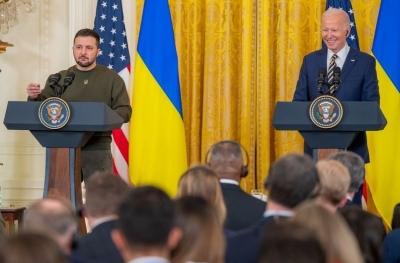
US President Joe Biden pledged to his visiting Ukrainian counterpart Volodymyr Zelensky to offer military aid, mentioning in particular the Patriot surface-to-air missile battery he just approved for Ukraine in a new tranche of security assistance totaling $1.85 billion.
The weapons package approved by Biden, according to a list from the Pentagon, also included “precision aerial munitions”, which it didn’t explain in detail regarding the type and quantity, reports Xinhua news agency.
According to US media reports, they might be the so-called “Joint Direct Attack Munitions,” which would transform the unguided “dumb” bombs into “smart” bombs by the addition of fins and a precision guidance system.
Arriving in the US Wednesday for a visit, his first trip abroad since Russia launched its ongoing invasion of Ukraine on February 24, Zelensky told Biden he wished to “come earlier” but was unable to because of the once difficult situation in his war-torn nation that has now been under control.
Although Zelensky was effusive in his praise for Biden, he didn’t mince words when it came to the Patriot battery — the most advanced weapon system the US has offered and something Zelensky has long asked for.
He told his counterpart that just one such item is not enough for Ukraine.
“We would like to get more Patriots,” Zelensky said to laughter from Biden, who stood next to him during a joint press conference held after their bilateral meeting.
Biden stressed that the US is committed to ensuring that Ukraine continues to have the ability to defend itself “as long as it takes” during the press conference.
Zelensky told reporters that he floated to Biden the idea of a “global formula for a peace summit” and offered “very specific steps what America can do to help us implement them”. He didn’t elaborate further.
The Ukrainian leader said later while delivering a speech at a joint session of Congress that the peace plan he proposed contains “10 points”, that the summit “can be held”, and that “President Biden supported our peace initiative today”.
However, John Kirby, the National Security Council’s coordinator for strategic communication, told CNN during a live coverage prior to Zelensky’s congressional speech that while Biden “obviously wants to seek a just peace in accordance with what Ukrainian President Zelensky desires”, as regards the peace summit, the administration will have to “study that a little bit more”.
In his address to lawmakers, Zelensky requested for more weapons from the US, saying: “We have artillery, yes, thank you. Is it enough? Honestly, not really.”
On Tuesday morning, the House Appropriations Committee released the “Additional Ukraine Supplemental Appropriations Act, 2023”, which will provide Ukraine with $45 billion in emergency assistance.
It is contained in a $1.7 trillion omnibus spending bill to fund the federal government through fiscal year 2023.
That $45 billion sum represents the biggest infusion of Washington’s aid to Kiev, surpassing even the White House’s request made to Congress last month to ask for a $37 billion appropriation aimed at helping Ukraine in the ongoing conflict.
Kevin McCarthy, Republican member of the House who is expected to become the next Speaker, said after attending the joint session that Zelensky gave a “good speech,” but “my position has never changed. I support Ukraine, but I never support a blank check”.



Tehran, Oct 8: Iranian Army spokesman Mohammad Akraminia has said that, if necessary, the country will carry out preemptive military operations to prevent any “aggression by the enemy.”
He made the remarks in an interview with the semi-official Fars news agency, which was published on Wednesday, while stressing that Iranian armed forces had previously launched such operations against the “enemy”, reports Xinhua news agency.
Akraminia said the country has changed its military doctrine from being defensive to offensive and has followed it in the war with the United States and Israel.
He noted among the operations carried out by the Iranian armed forces based on the new doctrine were a missile strike against a US base in Jordan in late July, as well as several missile and drone attacks over the past months against the bases of the “counter-revolutionary and separatist” groups stationed in Iraq’s semi-autonomous Kurdistan region.
He added the strike against the US base, which was preemptive, “wrested the initiative from them and left them unable to take any action.”
Akraminia stressed that carrying out preemptive operations while adhering to principles, such as necessity, urgency, and proportionality, is considered “legitimate.”
Commenting on the possibility of a ground invasion by the United States against Iran, he said, “My assessment is that the Americans will not dare launch a ground invasion.”
Akraminia said Iran’s Army has decided to work on increasing the range of its missiles following the war with the United States and Israel.
“In this war, we came to the conclusion that we must definitely increase the range of our missiles, and we have now embarked on that path,” he noted, adding the reason is that the “enemy” has deployed its forces at a greater distance from Iran’s coasts, up to 1,000 kilometres away, “and we will continue to upgrade these missiles.”
Akraminia underlined that Iran has also significantly upgraded the speed and precision of its missiles, noting that future generations will be even faster and more precise.
On February 28, Israel and the United States launched joint attacks on Tehran and other Iranian cities. Iran responded with waves of missile and drone attacks targeting Israel and US bases and assets in the region, and tightened its grip on the Strait of Hormuz.
A ceasefire was achieved between the warring parties on April 8. On June 18, Iran and the United States signed a memorandum of understanding (MoU) on ending the war in the region on all fronts.
Under the MoU, the two countries were scheduled to hold negotiations within 60 days, ending on August 17, to reach a final agreement. However, the two sides failed to make sufficient progress toward a deal as tensions continued to escalate.
International News
PM Modi thanks world leaders for warm wishes on completing 25 years as head of government

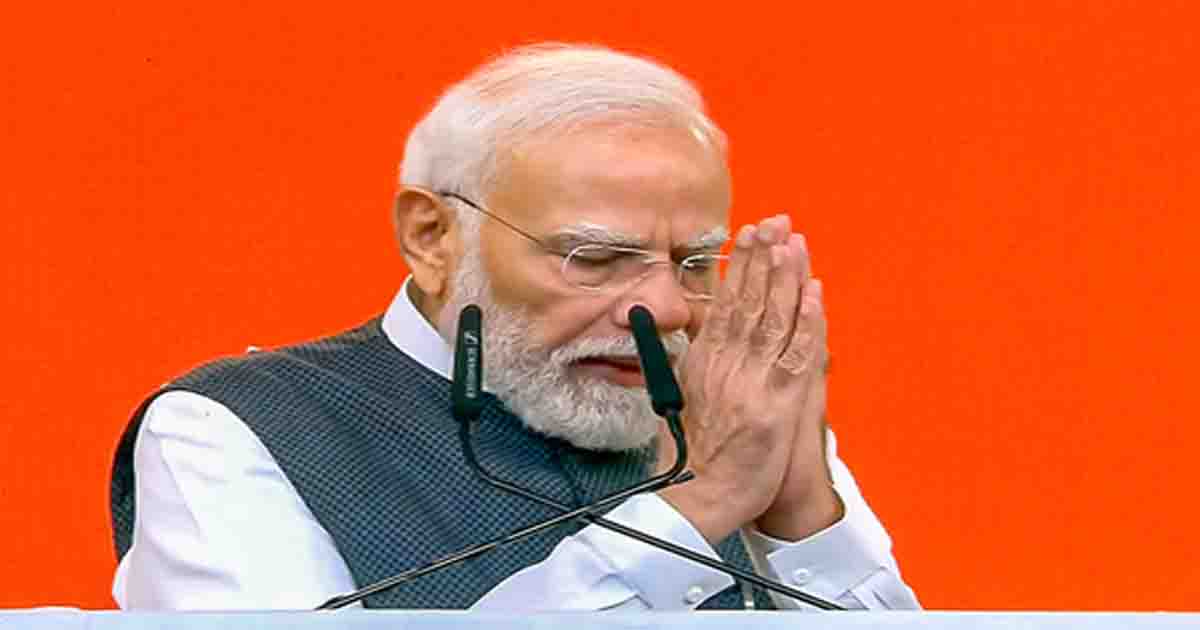
New Delhi, Oct 7: Prime Minister Narendra Modi on Wednesday thanked world leaders for their warm wishes as he completed 25 years as the head of the government.
PM Modi thanked Nigerian President Bola Ahmed Tinubu for the warm wishes and expressed readiness to continue cooperation to further strengthen the Strategic Partnership and advance a shared vision for a more inclusive, prosperous and peaceful world.
“Thank you, President Tinubu. India and Nigeria are close partners and leading voices of the Global South. I look forward to continuing our cooperation to further strengthen our Strategic Partnership and advance our shared vision for a more inclusive, prosperous and peaceful world,” PM Modi posted on X.
He also thanked his Dominica counterpart Roosevelt Skerrit for the warm wishes and noted that India deeply values its partnership with Dominica and looks forward to strengthening it further.
“Thank you, Prime Minister Skerrit, for your warm wishes and thoughtful words. India deeply values its enduring friendship with Dominica. We look forward to further strengthening our partnership and working together for the shared progress and prosperity of the people of our nations,” Prime Minister Modi wrote on X.
PM Modi thanked his Belgian counterpart Bart De Wever for the wishes and expressed readiness to work with him to further strengthen the partnership between India and Belgium.
“Thank you, Prime Minister Bart De Wever, for your wonderful wishes. I look forward to working with you to build on the positive momentum in our relations and further strengthen our bilateral partnership,” he said.
Thanking Philippines President Ferdinand R. Marcos Jr., PM Modi said that India values its Strategic Partnership with the Philippines and looks forward to deepening friendship.
In response to the Philippines President’s wishes on X, PM Modi wrote, “Thank you, President Ferdinand Marcos Jr., for your wishes. India deeply values its Strategic Partnership with the Philippines. I look forward to our continued engagement and further deepening of the friendship between our nations.”
PM Modi thanked Bhutanese counterpart Tshering Tobgay for the heartfelt message and noted that both nations are bound by an “enduring partnership” rooted in mutual trust and understanding.
“Thank you, Prime Minister Tobgay, for the warm and heartfelt message. India and Bhutan are bound by an enduring partnership rooted in mutual trust and understanding. I look forward to continuing our close cooperation to advance our shared vision of Viksit Bharat and a prosperous Bhutan,” PM Modi posted on X.
PM Modi appreciated Botswana President Dumo Gideon Boko’s warm wishes and expressed readiness to work with him to further strengthen close ties.
“I deeply appreciate your warm wishes, President Duma Boko. India greatly values the friendship with Botswana and I look forward to working together to further strengthen our close ties,” PM Modi wrote on X.
The congratulatory messages from world leaders came as PM Modi on Wednesday marks 25 years of uninterrupted leadership as head of government. He began his tenure as Gujarat Chief Minister on October 7, 2001, and became Prime Minister of India in 2014.
In October 2001, PM Modi was chosen to replace Keshubhai Patel as Gujarat Chief Minister at a difficult time for the state, which was still dealing with the aftermath of the devastating Bhuj earthquake as well as political and administrative challenges. He remained Chief Minister until 2014 before moving to national politics.
PM Modi’s tenure as India’s Prime Minister has been marked by an expanded international profile for the country, with the government pursuing greater diplomatic engagement, stronger relations with major powers and a prominent role for India in the Global South.
International News
Belgian PM Wever hails PM Modi’s 25 years of leadership, expresses hopes for stronger partnership
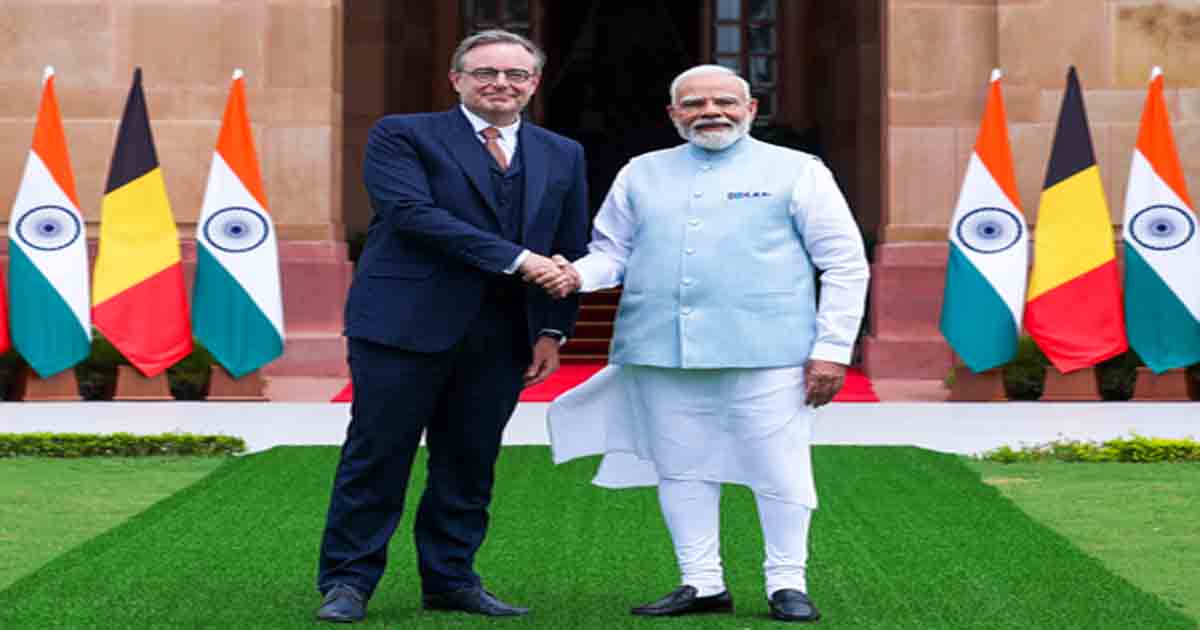
Belgian Prime Minister Bart De Wever on Wednesday congratulated Prime Minister Narendra Modi on 25 years of continuous leadership in government and expressed readiness to deepen the partnership between India and Belgium.
In his congratulatory message, Wever described his recent visit to India as “productive.”
In a post on X, Wever stated, “I warmly congratulate Prime Minister Narendra Modi on 25 years of continuous leadership in government, from Gujarat to New Delhi. Following my productive visit to India last month, I look forward to further deepening the strong partnership between our two countries.”
Bart De Wever’s statement comes as PM Modi marks 25 years of uninterrupted leadership as head of government, beginning with his oath as Gujarat Chief Minister on October 7, 2001, and continuing through three terms as Prime Minister of India.
In October 2001, PM Modi was chosen to replace Keshubhai Patel as Gujarat Chief Minister at a difficult time for the state, which was still dealing with the aftermath of the devastating Bhuj earthquake as well as political and administrative challenges. He remained Chief Minister until 2014 before moving to national politics.
PM Modi’s tenure as India’s Prime Minister has been marked by an expanded international profile for the country, with the government pursuing greater diplomatic engagement, stronger relations with major powers and a prominent role for India in the Global South.
Last month, Bart De Wever was on an official visit to India. It was his first visit to India after assuming office in February last year and also the first visit by a Belgian PM to India in two decades.
During his visit to India, Wever reviewed the full spectrum of bilateral ties with PM Modi during their bilateral talks at the Hyderabad House in New Delhi. The two leaders reaffirmed their commitment to further deepen the partnership between India and Belgium while also discussing regional and global issues of mutual interest.
“The two leaders reviewed the full spectrum of bilateral relations, with a focus on defence, trade, investment, innovation, semiconductors, fintech, critical minerals, people-to-people ties, and academic and research cooperation. They also exchanged views on regional and global issues of mutual interest and reaffirmed their commitment to further deepen the close and multifaceted India-Belgium partnership,” the Ministry of External Affairs (MEA) posted on X.
PM Modi and PM Bart De Wever witnessed the exchange of Memorandum of Understanding (MoUs) in the field of defence, renewable energy, combating crime and establishing diplomatic training between the two nations. The two sides agreed to double the bilateral trade in next five years, establish a business forum, an investment forum and a consular dialogue, the MEA stated.

Akshay Kumar mourns Nana Patekar demise, says ‘it’s hard to believe you’re gone’

Indian equity markets open flat; financial shares drag

Randeep Hooda to late Nana Patekar: When I first saw him in Parinda, didn’t think I was watching an actor

Iran to carry out preemptive strikes if needed to prevent ‘enemy’ attacks: Army

Bold, arrow-sharp voice fallen silent: Maha leaders express grief over Nana Patekar’s demise

Gift to President Putin part of PM Modi bid to globally display India’s heritage

PM Modi’s warm camaraderie with Putin, Xi on full display at BRICS Summit

Complaint against Netflix & Mukesh Chhabra for inappropriate language on ‘India’s Got Latent 2’

INDIA bloc begins protest march against ECI

Maha Congress stages agitation against Gyanesh Kumar
-

 Crime4 years ago
Class 10 student jumps to death in Jaipur
-

 Maharashtra2 years ago
Mumbai Local Train Update: Central Railway’s New Timetable Comes Into Effect; Check Full List Of Revised Timings & Stations
-

 Maharashtra2 years ago
Mumbai To Go Toll-Free Tonight! Maharashtra Govt Announces Complete Toll Waiver For Light Motor Vehicles At All 5 Entry Points Of City
-

 Maharashtra2 years ago
False photo of Imtiaz Jaleel’s rally, exposing the fooling conspiracy
-

 National News2 years ago
Ministry of Railways rolls out Special Drive 4.0 with focus on digitisation, cleanliness, inclusiveness and grievance redressal
-

 Maharashtra2 years ago
Maharashtra Elections 2024: Mumbai Metro & BEST Services Extended Till Midnight On Voting Day
-

 National News2 years ago
J&K: 4 Jawans Killed, 28 Injured After Bus Carrying BSF Personnel For Poll Duty Falls Into Gorge In Budgam; Terrifying Visuals Surface
-

 Crime2 years ago
Baba Siddique Murder: Mumbai Police Unable To Get Lawrence Bishnoi Custody Due To Home Ministry Order, Says Report