
International
Got to shift focus on challenge of playing India in India: Southee

New Zealand skipper Tim Southee wishes for his team to shift its focus from the loss in the final of the ICC Men’s T20 World Cup to the three-match T20I series against India, starting from Wednesday.
He added that the international cricket calender needs a re-look, especially in times of the COVID-19 pandemic. Southee will be captaining New Zealand in the absence of Kane Williamson, who will be focusing on the two-match Test series which comes after the T20Is.
“Guys are disappointed. We played some pretty good cricket throughout the T20 World Cup and are disappointed to have not won the other night. But we got to shift our focus on this series and the new challenge of playing India in India. We will have to adapt slightly to the conditions here in India,” said Southee in the pre-match press conference on Tuesday.
Southee called Williamson’s absence from the T20Is a ‘big miss’. “Kane’s a big miss for this side. He’s a quality player. It is an opportunity for someone else to come in and fill for him. It is always exciting, the challenge and honour to captain New Zealand. Anytime you play cricket in India is always a special occasion.”
Talking about the cramped schedule, Southee remarked, “It’s obviously a pretty busy schedule. We knew that this was going to be the case into the T20 World Cup. We had series in Bangladesh and Pakistan with some guys in the IPL. What’s happened in the last couple of years has made scheduling lot tougher. Guys had to do quarantine and what not. Logistically, it’s been bit of a challenge. But as players, you just got to have a crack on and play what’s in front.
“What’s happened in the world in the last couple of years has made things a lot tougher. With bubbles, quarantine and it does takes a toll after a while. We don’t know what’s gonna happen in the future. Whether we are going to continue to play in bubbles and schedules having the pressure more on with quarantine time as well. It’s something we can’t control. We have to adapt to and get used to. But it does take a toll.
“I know of players who have been in the bubble for a long period of time. Hopefully, we don’t have to deal with bubbles for too much long.”
Southee, who has captained New Zealand in 18 T20Is, mentioned that workload management could be given a look in the T20I series. Apart from him, Kyle Jamieson, Daryl Mitchell, Glenn Phillips and Mitchell Santner will be a part of the Test series as well.
“I guess it’s something we have to look at throughout the series. Three games in five days with travel days in between and then a couple of days before going into Test series. I think the guys will be managed throughout the series. But we have got a squad of fifteen here and were involved with the T20 World Cup, which I am sure will be used throughout the T20 series.”
He signed off by saying that representing the country keeps him going amidst tight schedule.
“It’s busy. We really haven’t got the chance to stop and think. With the final in Dubai, things just sort of finished there. But we got to shift our focus on this series and onto the Tests. Representing your country is a big honour. That’s what keeps me up and gets me going.”


International
Iran vs US-Israel War: India Sets Up MEA Control Room, Shares Embassy Helplines To Assist Citizens Stranded In Gulf Amid Middle East Tensions

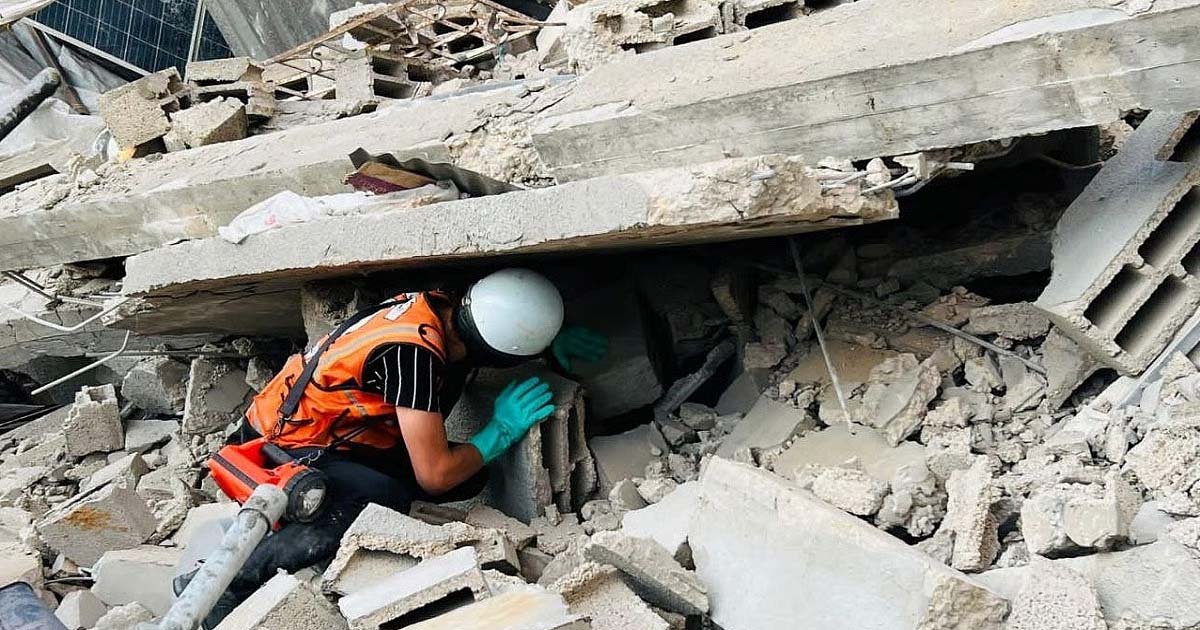
New Delhi: India has intensified efforts to assist its citizens stranded across Gulf countries as tensions continue to escalate in the Middle East. The Ministry of External Affairs (MEA) has set up a dedicated control room to coordinate assistance and provide real-time support to Indian nationals affected by the crisis.
MEA Official Spokesperson Randhir Jaiswal shared the update on X, announcing that the control room will operate daily from 9 am to 9 pm. The helpline numbers issued by the ministry are 1800118797 (toll-free), +91 11 2301 2113, +91 11 2301 4104 and +91 11 2301 7905.
In addition, the MEA released a list of emergency contact numbers for Indian embassies and missions across the region to ensure stranded citizens can seek immediate help. These include Bahrain, Iran, Iraq, Israel, Jordan, Kuwait, Lebanon, Oman, Qatar, Ramallah, Saudi Arabia and the United Arab Emirates.
In a statement issued on Tuesday, the MEA said India has once again strongly called for dialogue and diplomacy to bring an early end to the conflict in West Asia. Jaiswal said New Delhi is ‘raising its voice clearly’ for de-escalation and expressed grief over the large number of lives lost in the violence.
Safety & Well-Being Of Indians Top Priority
He emphasised that nearly one crore Indian citizens live and work in the Gulf region, making their safety and well-being a top priority for the government. “India cannot be immune to developments that negatively affect this region,” Jaiswal said, noting that vital trade routes and energy supply chains pass through West Asia. He warned that any major disruption could have serious consequences for the Indian economy.
The spokesperson also said India is firmly opposed to attacks on merchant shipping, pointing out that some Indian nationals have been killed or are missing following recent incidents at sea. He added that the conflict has not only intensified but also spread to other countries, bringing normal life and economic activity in parts of the region to a standstill.
India had earlier expressed deep concern when hostilities began in Iran and the Gulf region on February 28, urging all sides to exercise restraint and prioritise civilian safety. Jaiswal said it was particularly unfortunate that the situation has worsened during the holy month of Ramadan.
The MEA said Indian embassies and consulates in affected countries remain in close contact with Indian nationals and community organisations, issuing regular advisories and extending all possible assistance to those stranded by the conflict.
International
UNSC asks all countries to cooperate in bringing Pahalgam terrorists, backers to justice
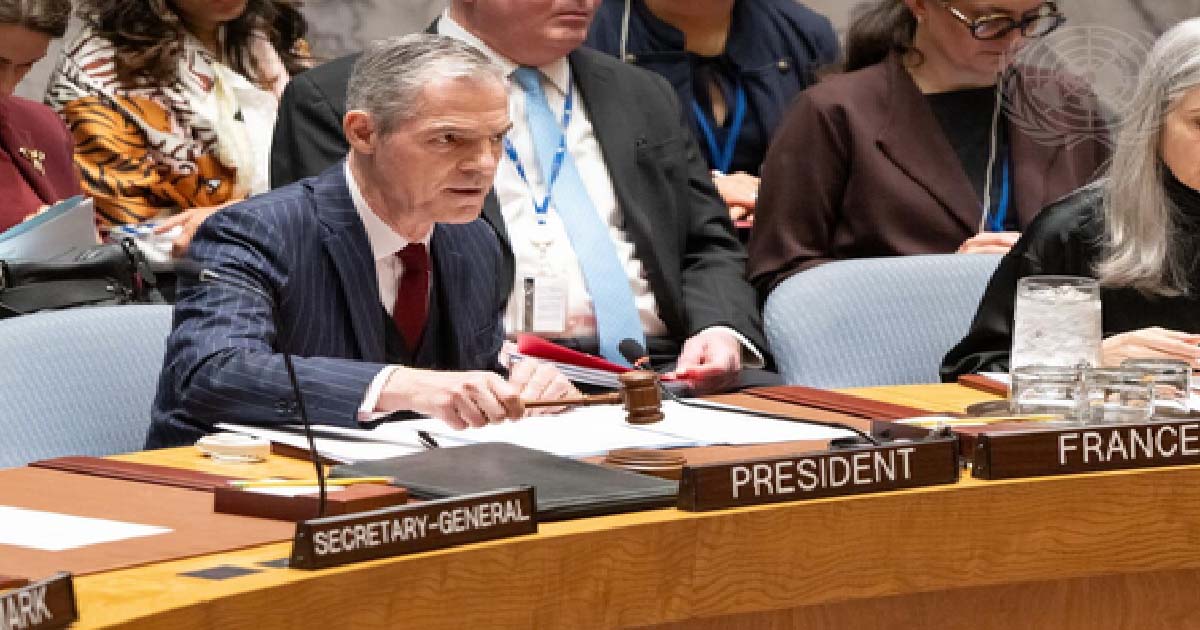
United Nations, April 26: The Security Council has “condemned in the strongest terms” the Pahalgam terrorist attack and urged all countries to cooperate in bringing all those involved in the massacre, to justice.
The members of the Security Council “stressed that those responsible for these killings should be held accountable, and urged all States, in accordance with their obligations under international law and relevant Security Council resolutions, to cooperate actively with all relevant authorities in this regard”, Council President Jerome Bonnafont said in a Press statement on Friday.
A front organisation of the Pakistan-based terrorist group Laskhar-e-Tayiba has owned responsibility for the attack.
The statement issued by France’s Permanent Representative Bonnafont who is the Council president for this month, took a broad view of those involved in the massacre by including the financiers and sponsors.
“The members of the Security Council underlined the need to hold perpetrators, organisers, financiers and sponsors of this reprehensible act of terrorism accountable and bring them to justice”, the statement said.
Pakistan, which is on the Council as an elected member, went along with the other members in endorsing the statement, committing itself – at least on paper – to bringing those involved to justice.
A Press statement expresses the consensus of the Council and carries moral authority, while not being legally binding like a resolution.
The statement also shot down the attempts by some in Pakistan to give terrorist attacks a veneer of justification.
“The members of the Security Council reiterated that any acts of terrorism are criminal and unjustifiable, regardless of their motivation, wherever, whenever and by whomsoever committed”, it said.
The Council members “reaffirmed the need for all States to combat by all means, in accordance with the Charter of the United Nations and other obligations under international law, including international human rights law, international refugee law and international humanitarian law, threats to international peace and security caused by terrorist acts”, the statement added.
Earlier, the spokesperson for Secretary-General Antonio Guterres hinted that a diplomatic effort by him may be afoot.
Asked by a reporter, if Guterres would speak to leaders of India and Pakistan, Spokesperson Stephane Dujarric said that he hoped to have something to share on that later.
Reiterating the condemnation of the terrorist attacks, Dujarric said, “We again urge both the Government of India and the Government of Pakistan to exercise maximum restraint to ensure the situation does not deteriorate further.”
When a reporter asserted that the possibility that “two nuclear countries” might “go to war” was getting insufficient attention, Dujarric said, “I don’t agree with your comment. We are paying very close attention to the situation between India and Pakistan.”
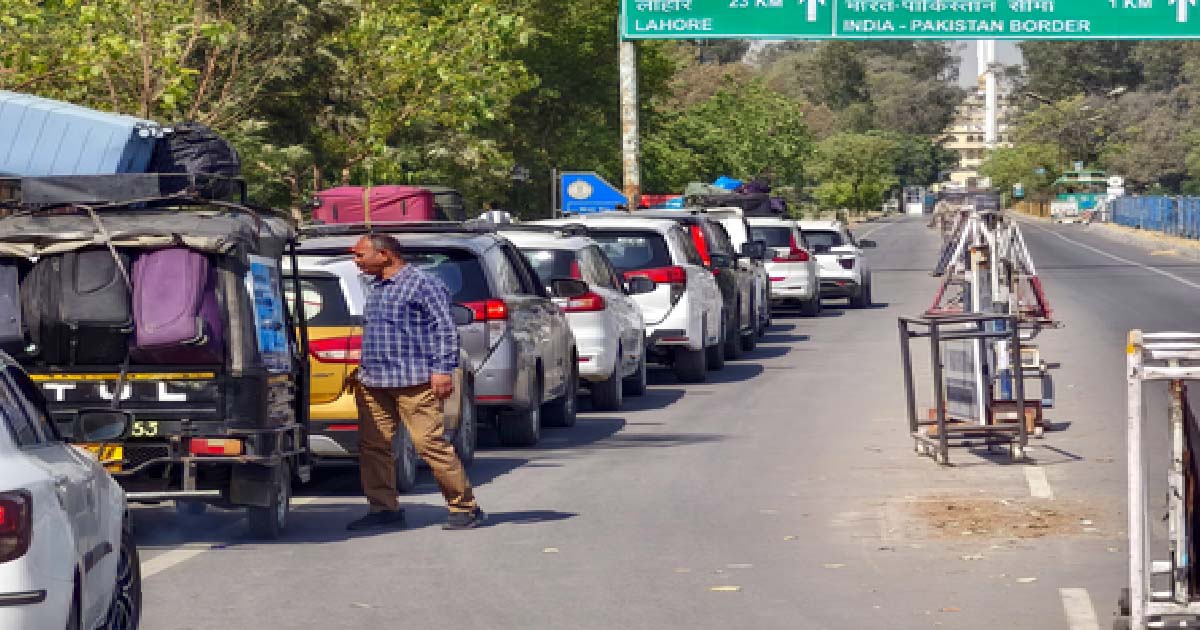
Islamabad, April 25: Pakistan and India’s decision to shut down the Wagah-Attari border crossing after the deadly Pahalgam terror attack has forced several citizens from both countries to cut short their visit and rush back home.
On Thursday, after both countries announced closure of border crossing and gave a deadline for citizens to leave for their respective countries, at least 28 Pakistanis nationals returned from India while 105 Indian citizens in Pakistan crossed over into India.
A Hindu family from Balochistan’s Sibi was reportedly denied entry into India after the closure of border crossing.
“We were on our way to Indore in Madhya Pradesh to attend a wedding. Seven members of our family were excited to join our relatives in India and take part in the celebrations. But upon reaching Wagah, we learned that the border had been sealed. We will spend the night at Dera Sahib in Lahore and head back home tomorrow,” said Akshay Kumar.
Meanwhile, a Sikh family from India, in Pakistan to attend a wedding, decided to leave for India immediately.
“We had come to Pakistan for a wedding. While the ceremony took place, several important rituals remained. Once we heard the border was closed, we decided to return immediately,” said Raminder Singh, an Indian national.
A Hindu family from Ghotki in Pakistan’s Sindh province, now residing in New Delhi, was visiting Pakistan for the last two months to meet their relatives. However, they are now unsure about getting permission to return to India.
“There are five of us, including my young son and daughter, uncle and aunt. We all hold Pakistani passports and were granted No Obligation to Return to India (NORI) certificate by India. But uncertainty looms now, said a family member named Indira.
“Families with cross-border ties often bear the brunt of rising tensions between the two neighbours. With tensions between Pakistan and India once again on the rise, human connections across borders are becoming the first casualty,” said Asif Memood, a Lahore-based journalist.
“The closure of the Wagah-Attari border has left many families in limbo, uncertain when they will next reunite with their loved ones,” he added.

South Korea appoints Ex-ambassador to Kuwait as special envoy to Iran

Bombay HC Clears Redevelopment Of Lincoln House, Dismisses PIL Citing Lack Of Bona Fides

Iranian FM warns US against letting Netanyahu ‘kill diplomacy’

Husband Slits Wife’s Throat At Petrol Pump In Broad Daylight, Arrested In Chhatrapati Sambhajinagar

Mumbai: Special POCSO Court Denies Bail To Cricket Coach In Minor Sexual Assault Case, Cites Risk Of Reoffending

Married Mumbai Woman Mocked In Andheri Society Over ‘Lift Kissing’ CCTV Video, Files Police Complaint

LPG Crisis In Maharashtra: Cyber Crime On Rise Amid Shortage, 2 Women Lose ₹4 Lakh In ‘Gas Update’ Online Scam In Kalyan-Dombivli

Dhurandhar 2 Box Office Collection Day 1: Ranveer Singh Starrer Takes An Exceptional Opening; Crosses ₹100 Crore Mark

Mumbai Police Busts Fake Apple Accessories Racket In Ghatkopar, ₹16.33 Lakh Goods Seized; Six Booked

Thane Horror: Man Slashed With Chopper In Naupada For Refusing ‘Vargani’, Caught On Camera
-

 Crime4 years ago
Class 10 student jumps to death in Jaipur
-

 Maharashtra2 years ago
Mumbai Local Train Update: Central Railway’s New Timetable Comes Into Effect; Check Full List Of Revised Timings & Stations
-

 Maharashtra1 year ago
Mumbai To Go Toll-Free Tonight! Maharashtra Govt Announces Complete Toll Waiver For Light Motor Vehicles At All 5 Entry Points Of City
-

 Maharashtra2 years ago
False photo of Imtiaz Jaleel’s rally, exposing the fooling conspiracy
-

 National News1 year ago
Ministry of Railways rolls out Special Drive 4.0 with focus on digitisation, cleanliness, inclusiveness and grievance redressal
-

 Maharashtra1 year ago
Maharashtra Elections 2024: Mumbai Metro & BEST Services Extended Till Midnight On Voting Day
-

 National News2 years ago
J&K: 4 Jawans Killed, 28 Injured After Bus Carrying BSF Personnel For Poll Duty Falls Into Gorge In Budgam; Terrifying Visuals Surface
-

 Crime1 year ago
Baba Siddique Murder: Mumbai Police Unable To Get Lawrence Bishnoi Custody Due To Home Ministry Order, Says Report