
Business
Global risk-on sentiment buoys indices; PSU banks’ stocks rise


Positive global cues along with rising risk taking sentiment buoyed India’s key equity indices — S&P BSE Sensex and NSE Nifty50 — during Thursday’s late-hour trade session.
Initially, both the indices opened with an upgap and rose for the third consecutive session.
Globally, Asian shares were modestly higher on Thursday after stocks advanced on Wall Street with encouraging reports about the potential impact of the Omicron variant of coronavirus and stronger US economic data.
Similarly, European stock markets had a higher but fairly cautious opening on Thursday, building on gains late in Wednesday’s session.
Consequently, at 3.15 p.m., the S&P BSE Sensex traded at 57,368.79 points, up 0.77 per cent from its previous close.
Similarly, the broader 50-scrip Nifty at the National Stock Exchange (NSE) rose to 17,085.45 points, up 0.77 per cent from its previous close.
“Volumes on the NSE continue to be lower than normal due to holiday mood. Advance decline ratio remains positive,” said Deepak Jasani, Head of Retail Research, HDFC Securities.
“Among sectors, Realty, Oil & Gas, Power and FMCG have gained the most while Telecom and Metals have lost the most.”
According to Gaurav Garg, Head of Research, CapitalVia Global Research: “Domestic Sentiments are impacted as the risk sentiment improved globally after a study showed hospital stay risk for the Omicron variant of Covid-19 is lower than the Delta strain.”
“Among sectors, Realty and PSU banks up 2 per cent each while bank, financial services and FMCG up by 1 per cent each.”


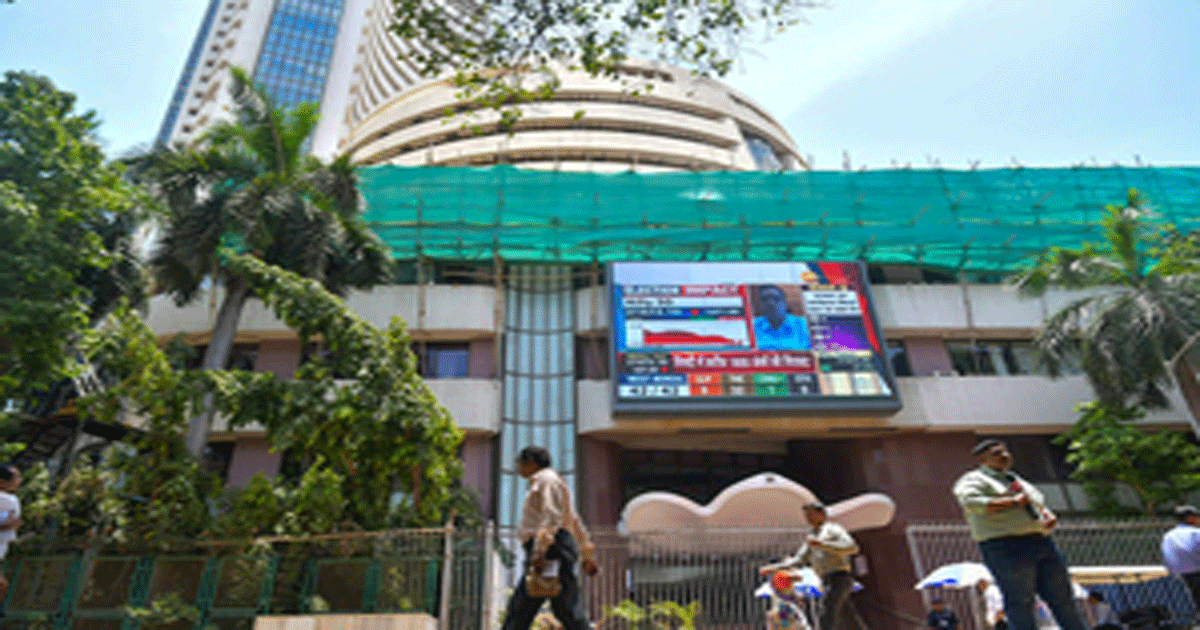
Mumbai, Domestic equity benchmarks opened sharply lower on Friday, tracking weak global cues and elevated Brent crude prices amid fading hopes of a resolution to the Iran conflict.
Nifty opened at 23,173.55, down 132.90 points or 0.57 per cent, while the Sensex fell around 400 points to 74,883.79 in early trade.
Broader markets also remained under pressure, with midcap and smallcap indices traded lower.
Sectorally, most indices traded in the red, led by realty, metal, PSU banks and auto stocks, which fell up to 1 per cent. Financials and consumer durables also witnessed selling pressure.
However, IT and oil and gas stocks bucked the trend and posted modest gains.
Among heavyweights, stocks such as HDFC Bank and Bajaj Finance were among the top laggards.
Market sentiment remained cautious amid ongoing geopolitical tensions. US President Donald Trump said the pause on attacks on Iran’s energy infrastructure would be extended, though uncertainty persists after Iran termed a US proposal “one-sided”.
Global markets also reflected a risk-off mood. US indices ended sharply lower, with the S&P 500 down 1.74 per cent and Nasdaq falling 2.38 per cent. Asian markets followed suit, with Japan’s Nikkei declining over 1 per cent and South Korea’s Kospi dropping around 3 per cent.
Crude oil prices remained volatile, although they eased slightly, with Brent crude falling 2.29 per cent to $105.53 per barrel, while WTI crude declined 2.54 per cent to $92.08.
According to analysts, markets are likely to remain volatile amid global uncertainties. Immediate support for Nifty is seen in the 23,050–23,000 zone, while resistance is placed around 23,450–23,500.
Foreign institutional investors (FIIs) continued to remain net sellers, while domestic institutional investors (DIIs) provided support to the market.
Notably, Indian markets resumed trading on Friday after a holiday on Thursday on account of Ram Navami.
Washington, March 25: Top American lawmakers and experts have warned that the country’s heavy reliance on foreign critical minerals, especially those from China, poses a direct threat to national security, and called for urgent steps to build resilient domestic supply chains.
At a House subcommittee hearing on Wednesday, Congressman Paul Gosar said the “very security of our nation relies heavily on a steady input” of minerals essential for defence systems, electronics and advanced technologies. He pointed to copper, rare earths and lithium as key inputs for fighter jets, missiles and batteries.
Gosar warned that the US remains heavily reliant on imports. “We import half of our supply of 20 of the 60 minerals… and we are entirely reliant on the importation of 13,” he said, adding that China dominates global processing and refining capacity.
Lawmakers from both parties agreed that the supply chain vulnerability has strategic implications. Representative Jared Huffman said the issue was not just about resources but governance, alleging that billions in federal investments lacked transparency and oversight.
Expert witnesses told the panel that China has effectively “weaponised” mineral supply chains. Gracelin Baskaran said the key question was no longer whether China controls critical minerals, but how quickly the US can build alternative supply chains.
“The question is what the United States does about it,” she said, calling for coordinated industrial policy and stronger alliances to secure supply.
Geologist Simon Jowitt said the US has “huge unrealised mineral potential” but remains underexplored due to limited geoscientific data and slow permitting. He stressed that exploration is the foundation of any supply chain and can deliver significant economic returns.
Jowitt also underscored the need for a full domestic ecosystem. “There’s no point in just having mineral deposits without having an entirety of a supply chain,” he said, arguing that processing and refining must accompany mining to ensure security.
National security expert Abigail Hunter highlighted structural challenges, noting that supply chains take years to build while disruptions can occur “overnight”. She said China’s control over processing creates a “choke point” that allows it to influence global markets rapidly.
“Capacity must be built in advance,” Hunter said, warning that relying on imports during crises could leave US defence systems vulnerable.
At the same time, watchdog groups raised concerns about government investment strategies. Faith Williams said federal equity stakes in mining firms could create conflicts of interest and reduce transparency.
“Corruption or the appearance thereof is bad for business,” she said, cautioning that unclear rules could distort markets and increase costs for taxpayers.
Despite political divisions, there was broad agreement that critical minerals underpin both economic growth and military capability. Lawmakers cited their role in everything from semiconductors and smartphones to advanced weapons systems.
The hearing also highlighted the economic stakes. Mining contributes billions to the US GDP and supports nearly two million jobs, with wages significantly above the national average.
Experts said solutions would require a combination of domestic production, allied cooperation and demand-side policies. Baskaran urged creating a “market of 2.6 billion consumers” among US allies to counterbalance China’s dominance.
The issue has gained urgency amid rising geopolitical tensions and growing demand for minerals driven by clean energy, defence modernisation and digital infrastructure, placing supply chain resilience at the centre of US strategic planning.
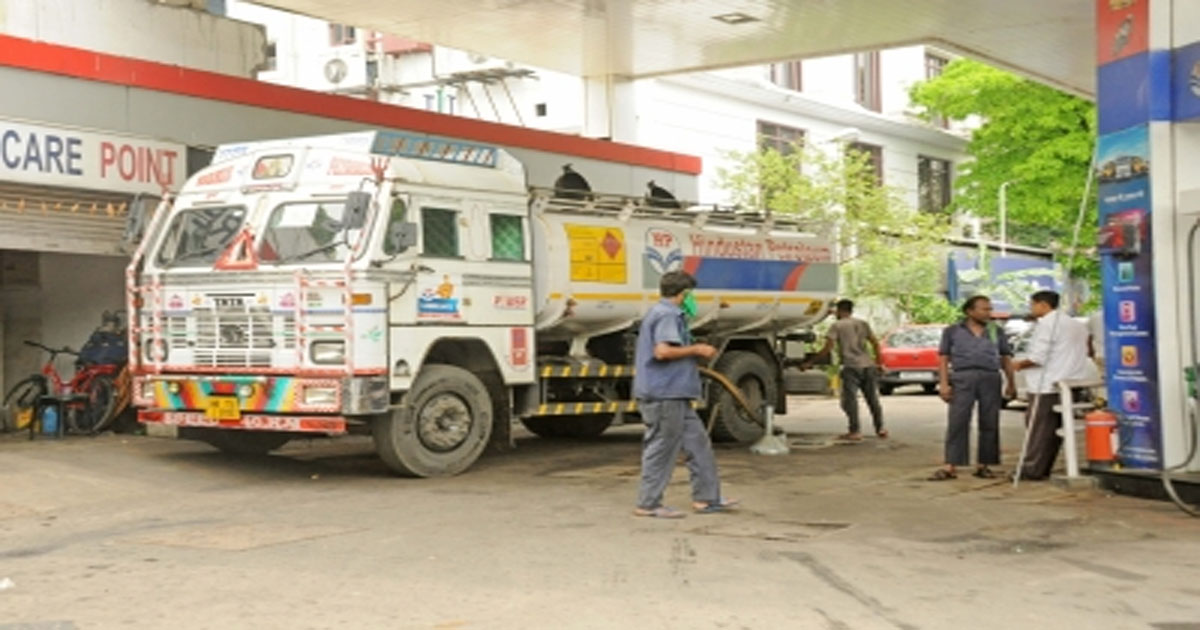
New Delhi, March 26: The government on Thursday categorically stated that India’s petroleum and LPG supply situation is fully secure and under control, calling upon citizens not to be misled by a “deliberately mischievous, coordinated campaign of misinformation” that is being carried out to spread unjustified panic.
India has 74 days of total reserve capacity, and actual stock cover is around 60 days right now (including crude stocks, products stocks and the dedicated strategic storage in caverns), even as “we are on the 27th day of the Middle East crisis”, the Petroleum Ministry said, adding that all retail fuel outlets have enough supplies.
“There is no shortage of petrol, diesel, or LPG anywhere in the country,” it said in a statement, adding that nearly two months of steady supply is available for every Indian citizen, regardless of what happens globally.
“Next 2 months of crude procurement has also been secured. India is completely secure for the next many months, and the quantity in strategic cavern storage becomes secondary in such a supply situation. Therefore, any representation that India’s reserves are depleted or insufficient should be dismissed with the disdain it deserves,” the ministry highlighted.
Across the world, countries are dealing with price increases, rationing, odd-even vehicle restrictions, and forced station closures. Few have declared a “National Energy Emergency”.
“India DOES NOT FEEL THE NEED FOR ANY SUCH MEASURES. While other nations are rationing, there is no shortage of supplies in India. Where isolated instances of panic buying occurred at select pumps, they were driven by deliberate misinformation spread by certain videos on social media,” the ministry emphasised.
Despite the surge in demand at such pumps, fuel was dispensed to all the consumers, and oil company depots have been operational through the night to ramp up supplies.
The ministry further stated that steps have also been taken by oil companies to increase credit to petrol pumps to over 3 days from the earlier allowed 1 day in order to ensure that there is no shortage of petrol and diesel at any pump due to working capital issues of pump owners.
Notably, despite the situation at the Strait of Hormuz, India is today receiving more crude oil from its 41-plus suppliers across the world than what was previously arriving through the Straits.
“Every Indian refinery is running at over 100 per cent utilisation. Crude oil supplies for next 60 days have already been tied up by Indian Oil companies. There is NO supply gap,” the ministry said.
There is also no LPG shortage. Following the LPG Control Order issued by this Ministry, domestic refinery production has been ramped up by 40 per cent, bringing daily LPG output to 50 TMT (more than 60 per cent of our requirement) against a total daily requirement of around 80 TMT.
The net daily import requirement has consequently come down to only 30 TMT — meaning India is now producing much more than it needs to import.
“Over and above domestic production, 800 TMT of assured inbound LPG cargoes are already secured and en route from the United States, Russia, Australia, and other countries, arriving across India’s 22 LPG import terminals — double the 11 terminals that existed in 2014,” the ministry said.
“Approximately one full month of supply is firmly arranged, with additional procurement being finalised continuously,” it added.
Oil companies are successfully delivering over 50 lakh cylinders every day. Commercial cylinder allocations have been raised to 50 per cent in consultation with state governments to avoid hoarding or black marketing.
Moreover, piped natural gas is being promoted — in full coordination with state governments — because it is cheaper, cleaner, and safer for Indian households.
India already produces 92 MMSCMD of natural gas domestically, out of a total daily requirement of 191 MMSCMD, making India far less import-dependent on gas than on LPG.
City gas distribution has expanded from 57 geographical areas in 2014 to over 300 today. Domestic PNG connections have grown from 25 lakh to over 1.5 crore. This transition was well underway before the current situation arose and reflects India’s long-term energy strategy.
“The claim that PNG is being pushed because LPG is running out is misinformation. LPG supply is secure. PNG is simply a better, more affordable and highly convenient fuel for India’s households,” said the ministry.
The ministry urged all citizens to rely only on official government communications for information regarding fuel and gas availability.

Mumbai: ’12 Baje Se Lockdown Hai, Stock Up’, Mumbra Youth’s ‘Panic Buying’ Video Gets Him Rounded Up By Police

Iran issues ‘ultimatum’ to Bahrain, UAE hotels hosting US troops: Report

Mumbai Crime: 21-Year-Old Woman Forcibly Cuts Friend’s Hair In Versova, Films Act Over Boyfriend Row; FIR Against 3

Mumbai: BMC’s ₹2,500 Crore Deonar Bioremediation Project Yet To Start, Awaiting Environmental Clearances

Sensex, Nifty slip in early trade amid global sell-off and oil volatility

Married Mumbai Woman Mocked In Andheri Society Over ‘Lift Kissing’ CCTV Video, Files Police Complaint

Mumbai: JBCN International School In Borivali Gets Bomb Threat, Search Reveals Hoax, Students Safe

Mahayoti’s big gift to the people of Mumbai… Now there is no tax for houses up to 500 square feet, the Municipal Corporation has increased this limit to 700 square feet.

LPG Crisis In Maharashtra: Cyber Crime On Rise Amid Shortage, 2 Women Lose ₹4 Lakh In ‘Gas Update’ Online Scam In Kalyan-Dombivli

Rashmika Mandanna-Vijay Deverakonda Wedding: Virosh Turn Modern Day Prince & Princess For Their Dreamy Sangeet Ceremony
-

 Crime4 years ago
Class 10 student jumps to death in Jaipur
-

 Maharashtra1 year ago
Mumbai Local Train Update: Central Railway’s New Timetable Comes Into Effect; Check Full List Of Revised Timings & Stations
-

 Maharashtra1 year ago
Mumbai To Go Toll-Free Tonight! Maharashtra Govt Announces Complete Toll Waiver For Light Motor Vehicles At All 5 Entry Points Of City
-

 Maharashtra2 years ago
False photo of Imtiaz Jaleel’s rally, exposing the fooling conspiracy
-

 National News1 year ago
Ministry of Railways rolls out Special Drive 4.0 with focus on digitisation, cleanliness, inclusiveness and grievance redressal
-

 Maharashtra1 year ago
Maharashtra Elections 2024: Mumbai Metro & BEST Services Extended Till Midnight On Voting Day
-

 National News2 years ago
J&K: 4 Jawans Killed, 28 Injured After Bus Carrying BSF Personnel For Poll Duty Falls Into Gorge In Budgam; Terrifying Visuals Surface
-

 Crime1 year ago
Baba Siddique Murder: Mumbai Police Unable To Get Lawrence Bishnoi Custody Due To Home Ministry Order, Says Report