
International News
FATF expected to move Pak out of grey list after 52 months

Pakistan expects the much-awaited welcome news as the Financial Action Task Force (FATF) is expected to move the country out of its grey list during the two-day plenary session starting on Friday in Paris.
State Minister for Foreign Affairs Hina Rabbani Khar is currently in Paris to attend the meeting, Geo News reported.
The FATF will hold its first plenary under the two-year Singapore Presidency of T. Raja Kumar on Friday and Saturday.
“Delegates representing 206 members of the Global Network and observer organisations, including the International Monetary Fund, the UN, the World Bank, Interpol and the Egmont Group of Financial Intelligence Units, will participate in the Working Group and Plenary meetings in Paris,” said the Paris-based global watchdog on dirty money.
The watchdog will announce the outcome at a press conference after the meeting concludes.
The country has remained on the ignoble list for almost 52 months, Geo News reported.
In September this year, a 15-member FATF inspection team and its Sydney-based regional affiliate, Asia Pacific Group, flew to Pakistan.
Team members assessed the country’s rules, regulations, and institutional mechanisms.
The FATF team scrutinised arrangements placed by the ministries, relevant departments, regulators, and law enforcement agencies to verify whether or not these systems and procedures were sustainable to combat money laundering and terror financing on a permanent basis.
The plenary will make the final decision after examining the assessment by the on-site team that visited Pakistan last month.
Based on the team’s report, the FATF is expected to provide relief to Pakistan after verifying the country’s steps to implement the plan of action.
Finance Minister Ishaq Dar, speaking to the media in Washington last week, assured that Pakistan will soon move out of the grey list.
The FATF placed Pakistan on its grey list in June 2018 for deficiencies in its legal, financial, regulatory, investigations, prosecution, judicial and non-government sectors to fight money laundering and combat terror financing considered a serious threat to the global financial system, Geo News reported.
Islamabad has attempted to get its name struck from the grey list since.
The FATF tasked Pakistan to implement two different action plans simultaneously, and the country has accomplished the conditions of the watchdog.
In June this year, the FATF expressed satisfaction that the country complied with all 34 points and recommended an onsite visit to verify the progress made by the country.
Islamabad made high-level political commitments to address these deficiencies under a 27-point action plan.
But later the number of action points was enhanced to 34.
The country had since been vigorously working with FATF and its affiliates to strengthen its legal and financial systems against money laundering and terror financing to meet international standards in line with the 40 recommendations of the FATF.

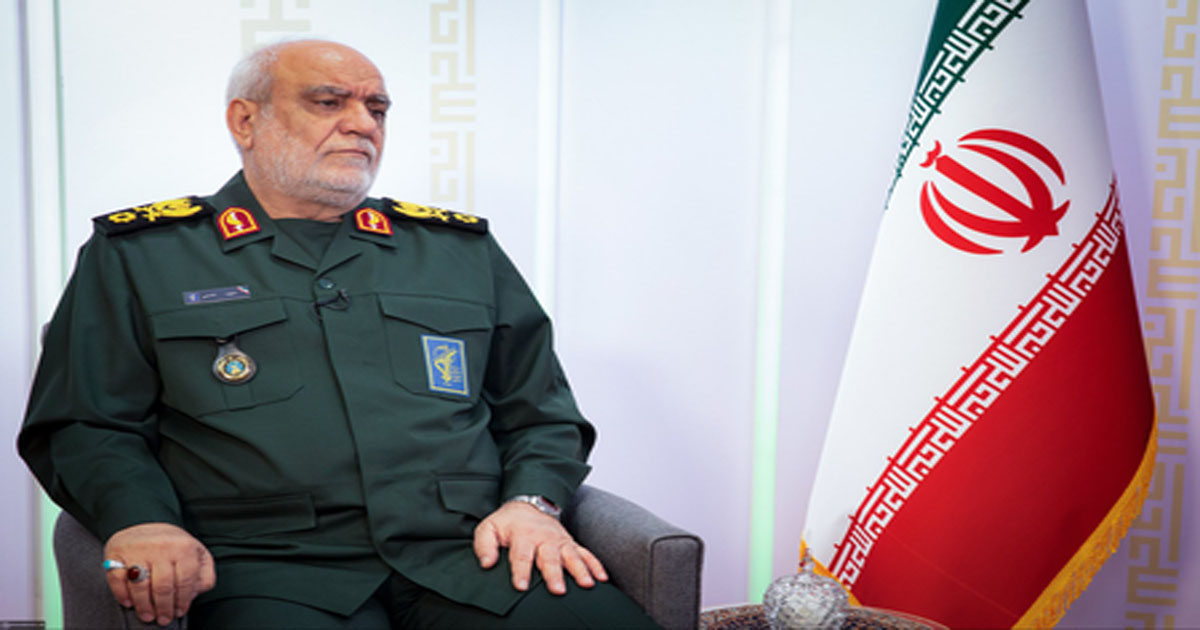
Tel Aviv, April 6: The Israel Defence Forces (IDF) on Monday claimed to have killed Majid Khatem-Hosseini Khadami, Chairman of Iran’s Revolutionary Guards’ (IRGC) intelligence organisation, in an air strike in Tehran on Sunday night.
“Eliminated: Majid Khademi, the Head of Intelligence of the IRGC. Khadami was one of the most important commanders of the Revolutionary Guards and had accumulated military and security experience over the years,” read a statement issued by the IDF.
It mentioned that the Israeli Air Force, under precise intelligence guidance from the Intelligence Directorate, attacked during the night in Tehran and killed Khadami.
According to the IDF, Khadmi was appointed to his position after the assassination of Muhammad Khatami in Operation ‘Am Kalavi’. As part of his role, he worked to gather intelligence to form an intelligence picture for the regime’s senior echelons during Operation ‘Roar of the Harrier’.
“Khademi worked to advance terrorist attacks worldwide, and was responsible for monitoring Iranian civilians as part of the regime’s suppression of internal protests. He was a key figure in the campaign, the intelligence he collected was used to promote and execute terrorist operations,” the IDF stated.
“Alongside this, Khadami worked to promote terrorist acts against the State of Israel and against Jews around the world and took part in attempts to harm American targets, and was even responsible for monitoring Iranian citizens as part of the suppression of internal protests in Iran,” it added.
The Israeli defence ministry mentioned that Khadami’s “elimination” constitutes another serious blow to the command and control systems of the Revolutionary Guards, and to its ability to “conduct terrorist activity” against the State of Israel and countries around the world.
On Sunday, the IDF announced that it had killed Mohammad Reza Ashrafi Kahi, the Head of Commerce at the IRGC’s Oil Headquarters in Tehran.
“Ashrafi managed the commercial operations of the Oil Headquarters, estimated at billions of dollars annually, and advanced the development of the IRGC’s military capabilities, as well as those of the Houthis, Hezbollah & Hamas,” the IDF posted on X.
International News
West Asia conflict Trump’s ‘personal war’, says Iran Supreme Leader’s representative

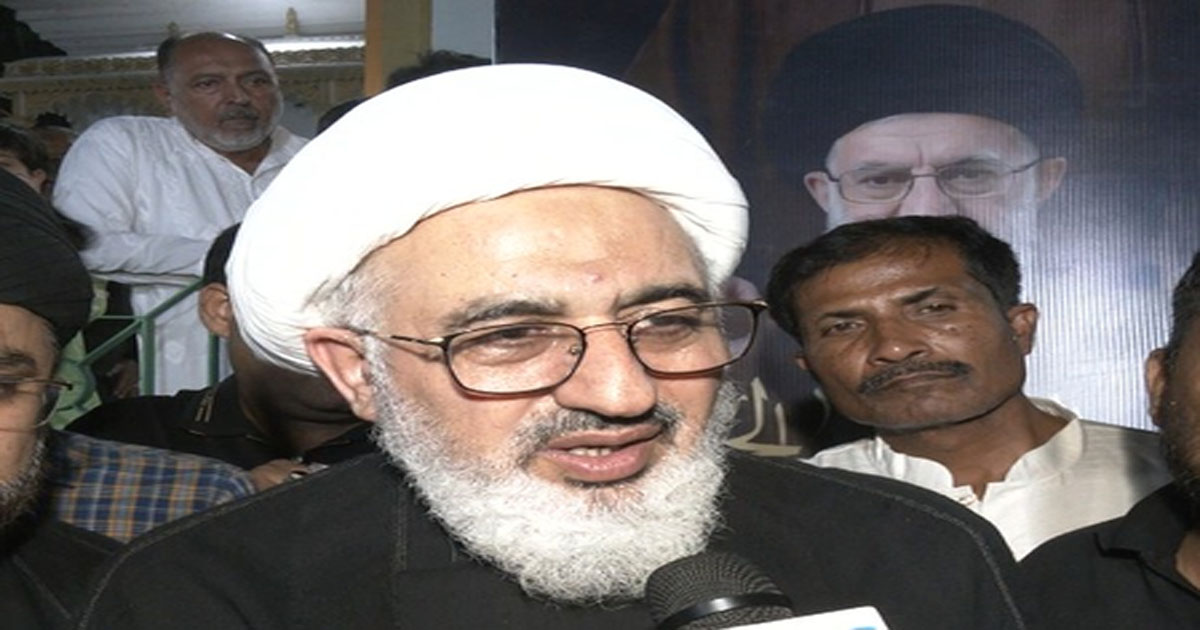
Patna, April 6: Abdulmajid Hakim Elahi, Representative of Iran’s Supreme Leader to India, has said that the Strait of Hormuz has historically remained under Iranian control for thousands of years and that disruptions began only after the recent conflict involving the United States and Israel, which he described as a personal war driven by President Donald Trump against Iran.
The US and Israel carried out joint strikes on February 28, resulting in the death of Ayatollah Ali Khamenei. In response, Iran launched retaliatory strikes targeting Israel, as well as US bases in neighbouring Gulf countries, leading to a broader regional escalation that has led to the Strait of Hormuz crisis and disrupted significant oil and energy supplies.
Speaking to media, Abdulmajid Hakim Elahi said, “This war is President Trump against Iran. Everyone knows that, because this war is not in the interest of Americans. This was his personal war, and now Americans are handling it. And they want out, but they don’t know how they can get out of it.”
On the question of reopening the Strait of Hormuz, he emphasised Iran’s longstanding control over the strategic waterway and blamed the ongoing crisis on the conflict.
“The Strait of Hormuz has been there for thousands of years; it’s under control and dominated by Iran. Iran will continue to do the same now. There wasn’t any crisis or problem before this war. But now they (the US and Israel) have created this war, and they have created a lot of crises and problems through the Strait of Hormuz. We hope that it will finish very soon,” he said.
Elahi also underlined the historical ties between Iran and India, describing the relationship as deeply rooted and longstanding.
“We have a very tight relationship and friendship with India, which dates back over 5000 years,” he said.
Recalling the global response following Khamenei’s death, he said the Iranian leader was respected across communities and faiths.
“Ayatollah Ali Khamenei was a spiritual leader not only for Muslims but also a religious figure and a voice for the voiceless. He is not just for Shia people but also those from other communities, including many Hindus and Christians, who also respected and admired him. When the news of his martyrdom spread, everyone came out in respect and paid their respects and shed their tears, mourning his death,” he added.
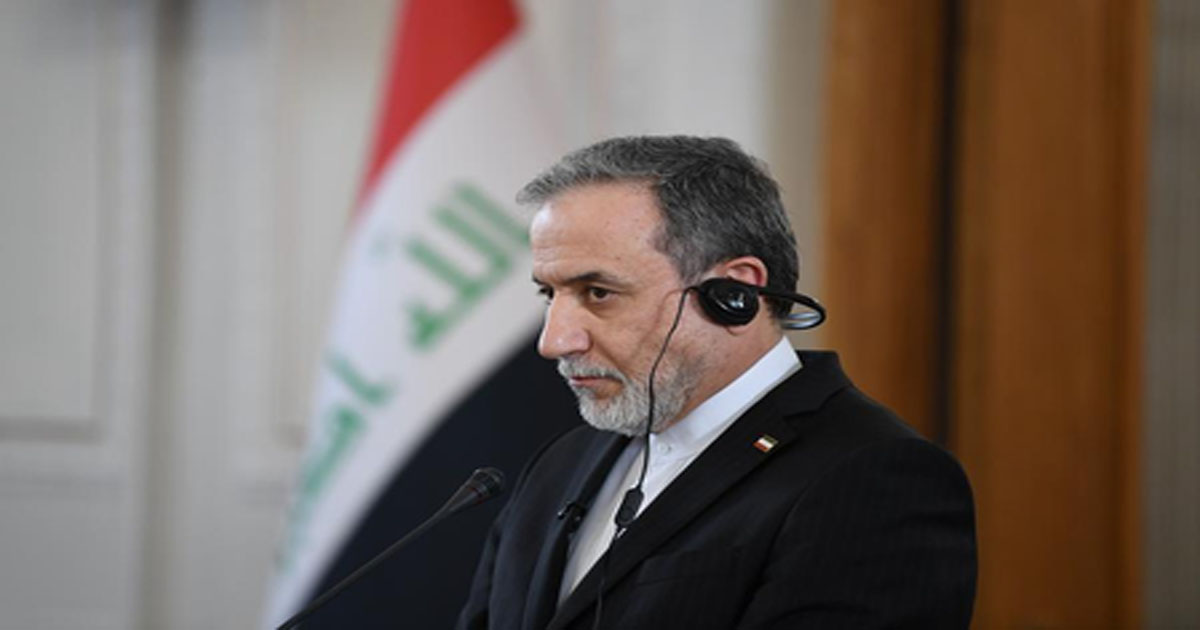
Tehran, April 6: Iranian Foreign Minister Seyed Abbas Araghchi exchanged views with his Russian and Indian counterparts on the ongoing regional conflict involving the United States, Israel and Iran.
In two separate phone calls, Araghchi, on Sunday, discussed the latest developments in the West Asia region as well as the security and economic consequences of the US and Israeli “aggression” with Russian Foreign Minister Sergei Lavrov and Indian Foreign Minister S. Jaishankar, according to statements released by the Iranian Foreign Ministry.
Araghchi elaborated on the “crimes” committed by the United States and Israel against Iran’s people over the past 37 days, including their attacks on Iranian industrial and production infrastructure, hospitals, schools, residential areas as well as nuclear centers and facilities, Xinhua news agency reported.
He urged all influential parties at the UN Security Council to adopt responsible approaches that are based on international law.
He highlighted the firm determination of Iranian people and armed forces to powerfully defend Iran’s national interests and security, warning about the consequences of the US and Israeli “aggression” for the stability and security in the region and the world.
Lavrov, for his part, stressed the need for stopping the “illegal” attacks against civilian targets, especially the Bushehr Nuclear Power Plant in southern Iran, calling for grasping every opportunity to prevent the expansion of the conflict’s scopes.
The Indian foreign minister highlighted the importance of efforts to restore stability and security to the region, expressing his country’s support for the ongoing efforts at the regional and international levels to stop the war.
The phone calls came amid heightened regional tensions following joint US-Israeli strikes on Iran starting on February 28, to which Iran and its regional allies responded with attacks on Israeli and US interests across the Middle East.

Israel says Iran’s intelligence chief killed in Tehran air strike

‘He Kicked Her, Inquired About Her Name & Then Committed Obscene Act’: Navi Mumbai Police Arrest 35-Year-Old Man For Molesting Minor Girl In Rabale

Abu Asim Azmi demands to start new bus service from Mankhurd to Kalina Vidyapeeth

Mumbai: Two arrested for involvement in online terrorist group ‘Soldiers of Khilafat’

‘One Can Consider It…’: Maharashtra Congress Sets ‘Ajit Pawar-Linked’ Condition For Baramati Bypoll Exit

Married Mumbai Woman Mocked In Andheri Society Over ‘Lift Kissing’ CCTV Video, Files Police Complaint

LPG Crisis In Maharashtra: Cyber Crime On Rise Amid Shortage, 2 Women Lose ₹4 Lakh In ‘Gas Update’ Online Scam In Kalyan-Dombivli

Mahayoti’s big gift to the people of Mumbai… Now there is no tax for houses up to 500 square feet, the Municipal Corporation has increased this limit to 700 square feet.

Dhurandhar 2 Box Office Collection Day 1: Ranveer Singh Starrer Takes An Exceptional Opening; Crosses ₹100 Crore Mark

‘Crores Of Indians Await Victory’: Eknath Shinde Wishes Team India Ahead Of T20 Cricket World Cup Final In Ahmedabad Against NZ
-

 Crime4 years ago
Class 10 student jumps to death in Jaipur
-

 Maharashtra2 years ago
Mumbai Local Train Update: Central Railway’s New Timetable Comes Into Effect; Check Full List Of Revised Timings & Stations
-

 Maharashtra1 year ago
Mumbai To Go Toll-Free Tonight! Maharashtra Govt Announces Complete Toll Waiver For Light Motor Vehicles At All 5 Entry Points Of City
-

 Maharashtra2 years ago
False photo of Imtiaz Jaleel’s rally, exposing the fooling conspiracy
-

 National News1 year ago
Ministry of Railways rolls out Special Drive 4.0 with focus on digitisation, cleanliness, inclusiveness and grievance redressal
-

 Maharashtra1 year ago
Maharashtra Elections 2024: Mumbai Metro & BEST Services Extended Till Midnight On Voting Day
-

 National News2 years ago
J&K: 4 Jawans Killed, 28 Injured After Bus Carrying BSF Personnel For Poll Duty Falls Into Gorge In Budgam; Terrifying Visuals Surface
-

 Crime1 year ago
Baba Siddique Murder: Mumbai Police Unable To Get Lawrence Bishnoi Custody Due To Home Ministry Order, Says Report