
International News
Families Of Israeli Hostages Criticise Aid Decision For Gaza

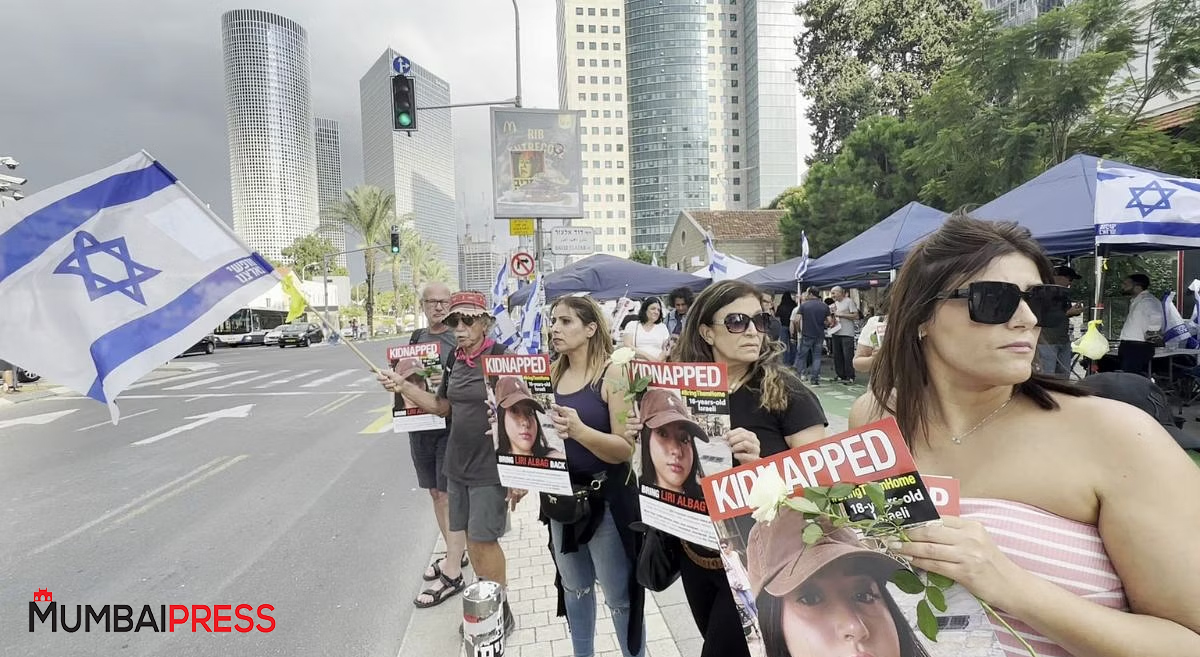
Israeli families with members held captive by Hamas in the Gaza Strip expressed their dismay on Wednesday, following Prime Minister Benjamin Netanyahu’s announcement. He declared that Israel would permit humanitarian aid to be sent into Gaza through Egypt, without demanding any concessions for the captives.
‘Bring Them Home Now’
The advocacy group, ‘Bring Them Home Now’, representing the families of the kidnapped Israelis by Hamas, stated their anger over the decision, saying, “The move to provide humanitarian aid to the inhabitants of Gaza has deeply angered the families of the hostages.” They further pointed out the harsh conditions faced by the kidnapped individuals, stating that they are “held underground like animals without any humane conditions, and yet, the Israeli government is offering treats and medical aid to their captors.”
This decision came after pressure from the U.S., with Israel agreeing on Wednesday to allow essential supplies like water, medicine, and food to be sent to southern Gaza from Egypt. This follows a severe attack by Hamas on October 7, which saw around 2,500 militants breaking through the Israeli security fence, launching thousands of rockets and leading to the death of approximately 1,400 people, primarily civilians. Additionally, at least 199 hostages were taken into Gaza. Israel’s report indicates that around 1,500 Hamas militants were also killed.
Israel’s official stance is that while they will allow humanitarian aid, they will intervene if Hamas accesses any of it. Furthermore, Netanyahu emphasised that no aid would be permitted to enter Gaza through Israeli checkpoints.
Biden’s stand on aid
US President Joe Biden, on a supportive wartime visit to Israel, announced the aid delivery to Gaza’s civilians. Biden stated after a meeting in Tel Aviv, “The Gazan populace requires basic necessities like food, water, and medicine. I’ve requested the Israeli cabinet to consent to sending vital humanitarian aid, under the condition that there will be thorough inspections, ensuring the assistance benefits civilians, not Hamas.”
Subsequently, Biden confirmed discussions with Egyptian President Abdel Fattah el-Sissi, who agreed to open the Rafah Crossing (between Egypt and Gaza) to permit around 20 trucks loaded with humanitarian aid. Since the onset of the war on October 7, Rafah has mostly remained closed.
The UN has estimated that rehabilitating Gaza after Israel’s retaliations would require about 100 aid trucks daily.
150-200 Israelis held captive by Hamas
It’s believed that between 150-200 Israelis and dual nationals have been held captive by Hamas and the Islamic Jihad in Gaza since the October 7 attacks.
Addressing his meeting with Biden, Netanyahu outlined three main points. Firstly, he called for the captives’ return, adding that they are actively working towards it. Secondly, he demanded Red Cross visits for the hostages. Lastly, he clarified that food and medicine from Israeli territories wouldn’t be allowed into Gaza.
Despite this, the government confirmed that it would not obstruct aid from Egypt as long as it was limited to essential supplies for the southern Gaza civilian population, warning that supplies reaching Hamas would be barred.
Families’ group hints at escalating protest
The families’ group hinted at escalating their actions if the aid decision isn’t reversed, although no specifics were provided. Regular protests by these families have taken place near the Kirya military headquarters in Tel Aviv, calling for government intervention.
Biden, before leaving Tel Aviv, underscored that the aid is intended for civilians and warned Hamas against misusing it. He added that the U.S. is coordinating with regional partners to ensure the hostages’ safe return.
Meanwhile, at the Rafah crossing, trucks loaded with aid have been queued up awaiting entry. The UN has reported that around 3,000 tons of aid from Egypt are pending to be sent into Gaza.
Egypt’s foreign minister confirmed on Wednesday evening that a tripartite agreement between Egypt, Israel, and other global players had been reached to allow aid into Gaza via Rafah.


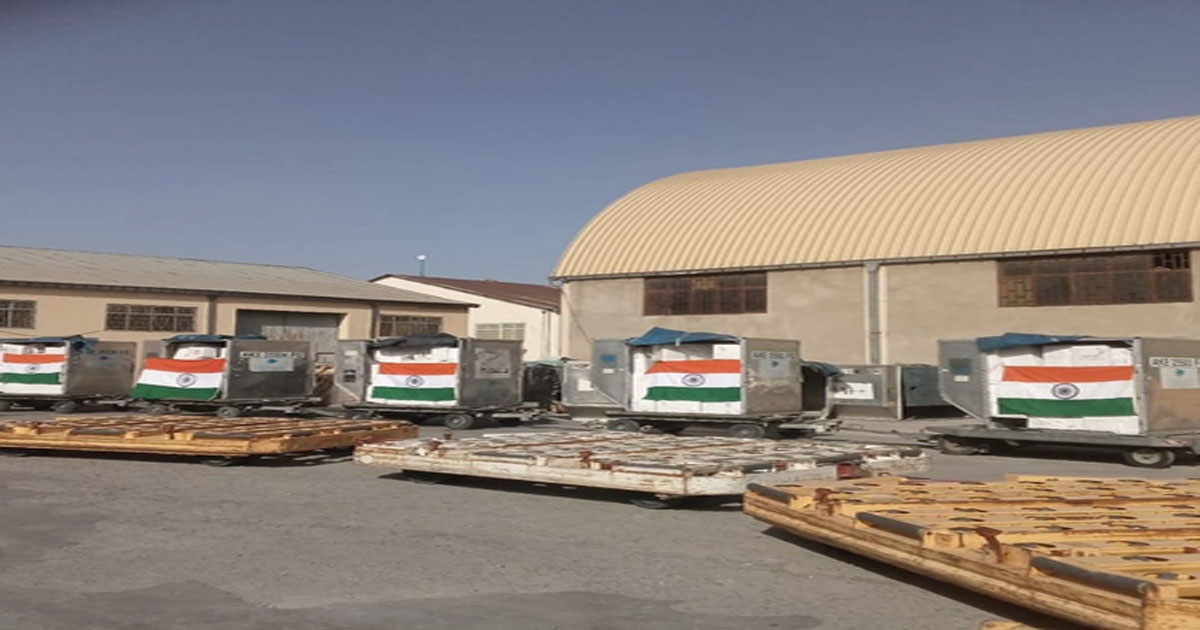
Kabul/ New Delhi, June 17: Continuing with its humanitarian support for Afghanistan, India on Wednesday delivered another 5 tonnes of essential medicines to Kabul, reflecting its long-standing commitment to the welfare and well-being of the Afghan people.
Taking to X, the Ministry of External Affairs (MEA) spokesperson, Randhir Jaiswal, said, “India delivers another 5 tonnes of essential medicines to Kabul, reaffirming its enduring commitment to humanitarian assistance and the well-being of the Afghan people.”
This comes amid India’s sustained efforts to provide humanitarian support to Afghanistan, including through the supply of essential medicines and other aid.
Last week, the MEA reaffirmed New Delhi’s commitment to peace, stability and development in Afghanistan and the wider region, highlighting the enduring civilisational links between India and Afghanistan.
Addressing a weekly media briefing in New Delhi, MEA spokesperson Jaiswal cited India’s recent statement at the United Nations Assistance Mission in Afghanistan (UNAMA) briefing, underscoring India’s continued humanitarian assistance and development partnership with Afghanistan.
“Afghanistan, we had a meeting yesterday in New York where you saw our Permanent Representative (PR); he made a statement on the UNAMA briefing where we have reiterated that India and Afghanistan are contiguous neighbours. As civilisational states, our ties have spanned centuries. We stand in favour of peace and stability in Afghanistan and in the region so as to foster development and stability in the region. We also talked about our development cooperation, our longstanding friendship and development cooperation that we continue to do in Afghanistan on the side of food security, medicine, pharma support and health,” Jaiswal stated.
Earlier on May 22, India delivered 20 tonnes of Bacillus Calmette–Guerin (BCG) and Tetanus & Diphtheria (Td) vaccines to Kabul to boost immunisation efforts among Afghan children.
“India delivers 20 tonnes of critical dry materials for BCG and Tetanus & Diphtheria (Td) vaccines to Kabul to augment Afghanistan’s Child Immunisation Programme. More consignments are underway. India is committed to support the friendly people of Afghanistan in the health sector,” the MEA posted on X.

Evian, June 17: Leaders of the Group of Seven (G7) on Wednesday issued a joint statement on key geopolitical issues, reaffirming their support for Ukraine, welcoming a breakthrough agreement between the United States and Iran, and underscoring their commitment to a free and open Indo-Pacific.
On Ukraine, the G7 leaders said they remain united in their support for Kyiv amid its ongoing conflict with Russia. “We, the Leaders of the G7, stand united in our unwavering support for Ukraine in defending its freedom, sovereignty, and territorial integrity,” the statement said.
The leaders pledged to step up military assistance, including the delivery of additional air defence systems, interceptors and long-range capabilities. They also signalled readiness to support increased military production in Ukraine through licensing arrangements.
Highlighting what they described as a “new momentum” in the conflict, the G7 committed to increasing pressure on Russia through stronger sanctions, particularly targeting the oil and gas sectors. The statement noted that leaders considered it “the right moment to proceed with additional measures” following a deal supported by US President Donald Trump that led to the reopening of the Strait of Hormuz.
On the Middle East, the G7 welcomed a newly announced agreement between the United States and Iran. The leaders described the deal as providing “an historic opportunity to prevent Iran from acquiring any nuclear weapon and tackling the threats related to its regional and ballistic activities.”
The statement reaffirmed the group’s position that “Iran will never obtain a nuclear weapon” and expressed support for a broader diplomatic framework aimed at securing long-term peace and stability in the region.
The G7 also endorsed efforts led by France and the United Kingdom to restore confidence in maritime security in the Strait of Hormuz and facilitate the resumption of commercial shipping. Leaders reiterated that unrestricted transit passage remains “the bedrock of international trade.”
Addressing regional conflicts, the group called for an immediate ceasefire in Lebanon and backed efforts to disarm Hezbollah. In Gaza, the leaders pledged to accelerate humanitarian assistance and reconstruction efforts while calling for an end to violence in the West Bank.
Turning to the Indo-Pacific, the G7 stressed the importance of maintaining a rules-based order and opposed unilateral attempts to alter the status quo through force or coercion.
“We reaffirm our opposition to any unilateral attempts to change the status quo, in particular by force or coercion, in the East and South China Seas and across the Taiwan Strait, which should only be resolved peacefully through dialogue,” the statement said.
The leaders also expressed deep concern over North Korea’s nuclear and ballistic missile programmes, reiterating their commitment to the complete denuclearisation of the Korean Peninsula in accordance with United Nations Security Council resolutions. They also called for coordinated action against North Korean cryptocurrency theft and cybercrime.
The statement concluded by supporting international efforts to address global economic imbalances and welcomed China’s participation in the Global Convergence for Growth Summit hosted by French President Emmanuel Macron earlier this month.
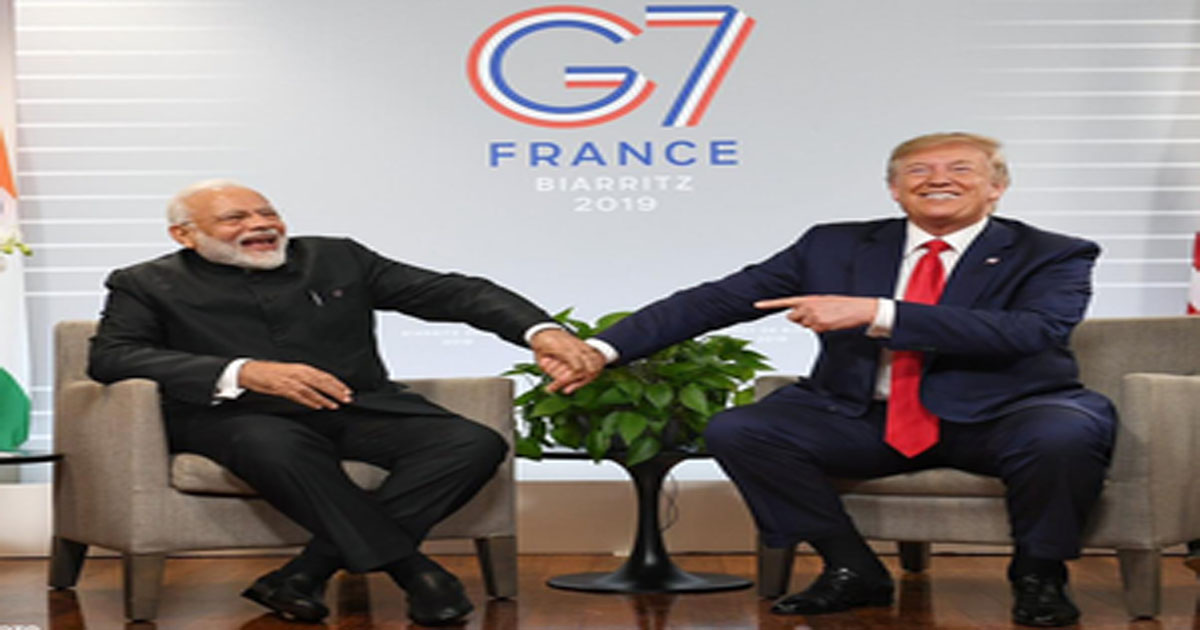
Washington, June 17: US President Donald Trump and Prime Minister Narendra Modi are set to take India-US relations to “new highs” the White House said as the two leaders prepared for bilateral talks in France, with trade, technology, investment and global security expected to top the agenda.
“President Trump and Prime Minister Modi have a close friendship, and under their leadership, the Trump administration and Indian government are set to take our two countries to new highs,” White House spokesman Kush Desai told media.
The meeting in Evian, on the sidelines of the G7 Summit, will be the first in-person meeting between the two leaders since their summit meeting last February. It comes amid discussions on a possible trade agreement and as diplomatic efforts continue to address the crisis in West Asia.
The White House said Trump and PM Modi will meet on the sideline sof the G7 Summit. According to the White House, the two leaders will discuss economic growth, supply chains, artificial intelligence, investment partnerships and a range of global security challenges.
“President Trump has consistently underscored his support for America’s strategic partnership with India,” Desai told media adding that Secretary of State Marco Rubio’s recent visit to India built on Trump’s efforts to deepen cooperation between the two countries on trade and national security.
“Secretary Rubio’s landmark visit to India built on the President’s push to expand bilateral ties and cooperation on trade and national security, including with the signing of a historic MOU on critical minerals,” he said.
Experts say both sides are looking for tangible outcomes as well as strong political messaging.
Aparna Pande, a senior fellow at the Hudson Institute, said expectations are high for the meeting.
“PM Modi and President Trump’s in-person meeting will be their first since last February’s summit meeting,” Pande told media.
“Both sides have high expectations from this meeting, which comes in the backdrop of a possible resolution of the West Asia crisis and amidst discussions over the trade deal.”
Pande said symbolism and substance would both matter. “The optics of the meeting will be critical as well as the substantive part,” she said.
“Both leaders would like to demonstrate that ties between the two democracies remain strong despite the headwinds and that they would be keen to announce some defense and technology related agreements.”
Atman Trivedi, Partner at Albright Stonebridge Group, North America, described the meeting as an opportunity to improve momentum in bilateral ties.
“The leaders’ meeting represents the latest best opportunity to reset ties,” Trivedi told media.
“Their conversation comes after the deaths of Indian sailors in the Gulf of Oman dealt a blow to hopes for reviving bilateral relations.”
Trivedi cautioned against expecting major breakthroughs.
“Expectations should be modest and centered around Trump and Modi reaffirming the importance of each other to longstanding shared interests in energy, defense, and technology cooperation,” he said.
“A positive statement recognizing the significance of an interim trade agreement and urging negotiators to reach a deal in the next month or two should also be achievable.”
Earlier on Tuesday, Trump and Modi exchanged greetings on the sidelines of a G7 outreach session on “Forging New Partnerships and Rebuilding International Solidarity”.
The two leaders shook hands and held a brief conversation before joining discussions attended by G7 countries, partner nations, the World Bank and the African Development Bank.
Upon arriving in Evian, Modi said he looked forward to engaging with world leaders on major global issues.

Municipal Commissioner directed to complete work on Bhandup Water Purification Project to ensure safe water supply to Mumbai

Eknath Shinde’s Operation Tiger was successful… Uddhav Thackeray’s rebellion in Shiv Sena UBT, Sanjay Raut is angry

Muslim students deprived of government schemes… Only Hindu candidates are accepted for drone pilot training scheme: Raees Sheikh

Maharashtra Freedom of Religion Bill 2026: Important seminar in Mumbai on constitutional rights and minority concerns, Justice Abhay Thapsay and legal experts express their views

‘It shows toolkit mindset’, BJP blasts Cong, Rahul over organising stir ahead of NEET re-exams

Trump, Netanyahu hold phone talks after Iranian missile fire: Israeli state media

Virar Citizens Protest Demolition Drive In Arnala; Police Block Lal Bawta March, Sit-in Held On Road

Indian equity markets trade higher as Iran-Israel tensions ease

Israel captures strategic Beaufort Castle in southern Lebanon

Rubio says Hamas disarmament key to Gaza rebuild
-

 Crime4 years ago
Class 10 student jumps to death in Jaipur
-

 Maharashtra2 years ago
Mumbai Local Train Update: Central Railway’s New Timetable Comes Into Effect; Check Full List Of Revised Timings & Stations
-

 Maharashtra2 years ago
Mumbai To Go Toll-Free Tonight! Maharashtra Govt Announces Complete Toll Waiver For Light Motor Vehicles At All 5 Entry Points Of City
-

 Maharashtra2 years ago
False photo of Imtiaz Jaleel’s rally, exposing the fooling conspiracy
-

 National News2 years ago
Ministry of Railways rolls out Special Drive 4.0 with focus on digitisation, cleanliness, inclusiveness and grievance redressal
-

 Maharashtra2 years ago
Maharashtra Elections 2024: Mumbai Metro & BEST Services Extended Till Midnight On Voting Day
-

 National News2 years ago
J&K: 4 Jawans Killed, 28 Injured After Bus Carrying BSF Personnel For Poll Duty Falls Into Gorge In Budgam; Terrifying Visuals Surface
-

 Crime2 years ago
Baba Siddique Murder: Mumbai Police Unable To Get Lawrence Bishnoi Custody Due To Home Ministry Order, Says Report