
Business
Elon Musk, his brother under US SEC probe for insider trading


The US Securities and Exchange Commission (SEC) has opened an investigation into Elon Musk and his brother Kimbal Musk for allegedly violating insider trading regulations with recent share sales.
The Wall Street Journal reported that the regulator is investigating whether recent stock sales by the Tesla CEO and his brother “violated insider-trading rules”.
The SEC probe began last year after Kimbal sold 88,500 Tesla shares worth $108 million, “one day before the Tesla chief polled Twitter users asking whether he should unload 10 per cent of his stake in the electric-car maker and pledging to abide by the vote’s results”, the report said late on Thursday.
Kimbal, who also sits on Tesla’s board of directors, has frequently traded Tesla stock at regular intervals under a plan.
The regulators will now look into whether Musk told his brother about the poll or potential sale before Kimbal sold his shares on November 5, “or if Kimbal otherwise learned of the poll and then traded”, according to the report.
Musk sold more than $16 billion worth shares since early November when he polled Twitter users about offloading 10 per cent of his stake in the electric-car maker.
“Much is made lately of unrealised gains being a means of tax avoidance, so I propose selling 10 per cent of my Tesla stock,” he had posted.
In a tweet late on Thursday, Musk said that he was “building a case” against the SEC and declared, “I didn’t start the fight, but I will finish it.”
The conflict between Musk and the SEC began in September 2018 when the SEC charged Musk with making “false and misleading” statements to investors after he wrote on Twitter in August that he had secured enough funding for a massive private buyout of Tesla at $420 a share.
The stock seesawed all month and the deal Musk alluded to never materialised.
Musk and Tesla had to pay $20 million in fines each, and Musk was forced to step down as Chairman for at least three years as part of a revised settlement agreement the agency reached with the automaker and CEO in 2019.
Earlier this week, Musk (via his attorney) accused the US SEC of leaking information about a federal investigation in retaliation for his public criticism of federal financial regulators.
The letter came after Musk alleged that the SEC was engaged in harassment by continually investigating him, “trying to chill his right to free speech”.



The weakening of the global AI trade and the impressive growth in India’s corporate earnings are the principal factors which have brought the foreign institutional investors (FIIs) back to India, according to analysts.
The FII buying which was picked up early this month has been continuing relentlessly. FPIs have been buyers almost every day this month and the cumulative buying through November 26 stood at Rs 143,284 crore, according to the exchange data.
“This is an all-time record. Almost 50 per cent of the FII money which left India in the previous 10 months has come back just this month, so far,” said Dr VK Vijayakumar, Chief Investment Strategist, Geojit Investments Ltd.
This aggressive buying by the FIIs has made India the best performing market in the world in November. The massive capital inflows helped rupee reach 92.99 to the dollar, making the INR the best performing currency in Asia in November.
FIIs have been big buyers in financials, particularly banks -both private sector and public sector- telecommunications, FMCG, IT and consumer services. Going by the present trends, the FII inflows are likely to continue, said the analyst.
On Tuesday, Guru Nanak Jayanti resulted in a market holiday, therefore there were only 4 trading days this week. Foreign investors continued to invest with the following amounts on each respective day: Monday (5,673 crore); Wednesday (4,479 crore); Thursday (5,843 crore); and Friday (1,634 crore).
“This gave an overall figure of around 17,630 crore, continuing the 19-day investment streak and reaching around 1.33 lakh crore. Gross equity investments were 79,923 crore and equity outflows were 62,293 crore (provisional figures),” said Dheeraj Gaur, Chief Investment Strategy Officer, Choice Wealth.
In addition, having predominantly sold throughout the month to date, domestic institutional investors (DIIs) reversed course and invested a net amount of 6,333 crore last week.
Again, most of this was concentrated on Wednesday and Thursday. For the first time in weeks, both foreign and domestic investors were therefore in agreement on market direction, said analysts.
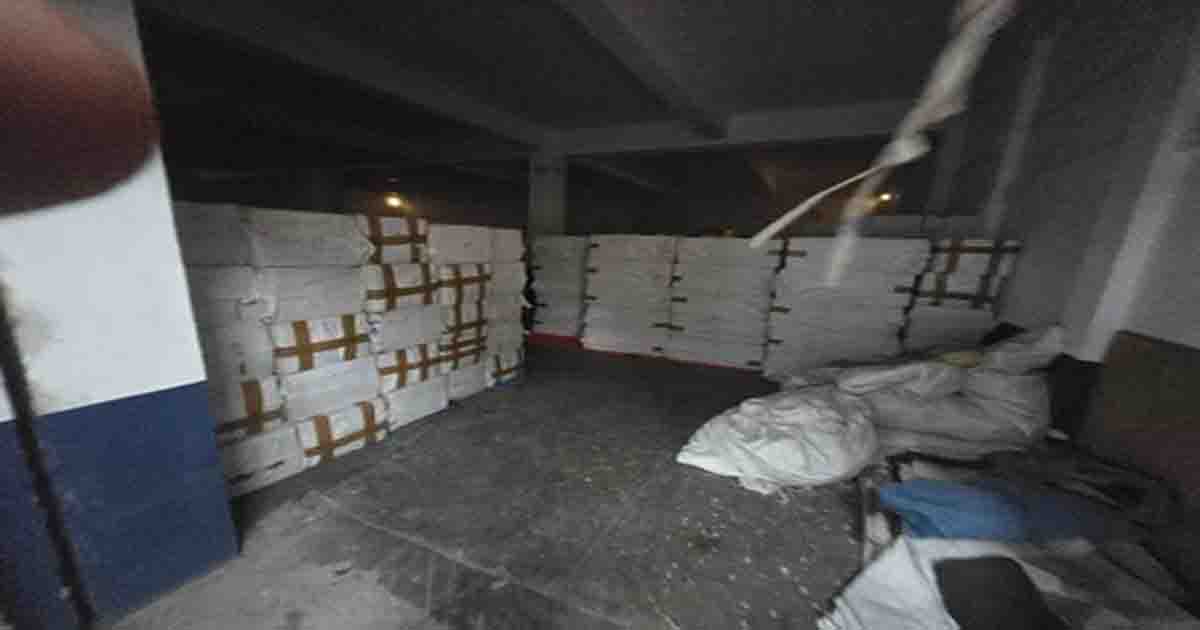
The Directorate General of GST Intelligence (DGGI) has uncovered a major tax fraud linked to the tobacco sector, exposing a syndicate that allegedly claimed more than Rs 88 crore in fraudulent GST refunds, an official statement said on Saturday.
According to the Finance Ministry, the operation was unearthed by the Patna Zonal Unit of the DGGI as part of its continuing crackdown on tax evasion in the cigarette industry.
Investigators found that the syndicate was operating through a network of shell entities that allegedly obtained invoices from dealers of branded cigarettes without receiving the actual goods, the ministry added.
These invoices were then used to fraudulently avail input tax credit in violation of GST provisions.
The probe further revealed that the group sourced substandard cigarettes of unknown origin and supplied them to the Falta Special Economic Zone (SEZ) in West Bengal under the Letter of Undertaking (LUT) route.
Based on these transactions, the entities allegedly claimed GST refunds against accumulated input tax credit.
The syndicate secured refunds exceeding Rs 88 crore over the past two years through the alleged modus operandi.
“Investigation has revealed that the syndicate obtained refunds exceeding Rs 88 crore during the last two years by adopting the aforesaid modus operandi,” according to the government.
Moreover, during searches and inspections, authorities identified around 8.76 crore sticks of suspected counterfeit and substandard cigarettes, packed under the names of well-known brands, at Falta SEZ.
The cigarettes — valued at more than Rs 150 crore based on their aggregate maximum retail price (MRP) — have been placed under prohibition.
The latest case is part of a broader crackdown on illegal activities in the tobacco sector, including clandestine manufacturing, diversion of branded cigarettes, ineligible ITC claims and misdeclaration of products supplied to SEZs.
In September and October alone, DGGI busted two illegal cigarette manufacturing units and seized around 25 lakh cigarette sticks along with cigarette-making and packaging machinery.
According to the government, six cases related to cigarette manufacture and supply have been booked during the current financial year.
Authorities have so far seized more than 10.07 crore sticks of cigarettes valued at over Rs 160 crore, while detecting fraudulent GST refund claims exceeding Rs 110 crore.

Packaged drinking water manufacturer Bisleri International on Saturday said it had already recalled a batch of water from its West Bengal plant following directions from the Food Safety and Standards Authority of India (FSSAI).
The company has asserted that independent laboratory tests had found the batch compliant with applicable safety standards.
However, the company’s statement came after reports that FSSAI had sanctioned prosecution against Bisleri in connection with a packaged drinking water sample collected from its Telipara facility in Jalpaiguri district, West Bengal.
Batch PB201 was withdrawn from the market after FSSAI prohibited its sale on August 12, 2026, according to Bisleri.
The company said regulatory testing had detected the presence of coliform bacteria in the sample collected by authorities.
It also said that subsequently commissioned testing of samples from the same batch at two separate FSSAI-recognised laboratories, both of which reportedly concluded that the water met the prescribed standards for coliform bacteria and complied with all other applicable food safety norms.
The company said the divergence between the regulatory findings and the results of independent testing warranted a detailed review.
“Bisleri calls upon FSSAI to examine the sampling process, testing methodology, laboratory findings and any factors that may have contributed to the variation in results,” the company said and added that it expected the matter to be assessed using standards applied uniformly across the industry.
Bisleri further said it would continue to cooperate fully with the food regulator and remained committed to establishing the facts.
The company’s response follows FSSAI’s move to permit legal proceedings after tests conducted by both the primary and referral laboratories allegedly confirmed the presence of coliform bacteria in samples collected from the West Bengal plant.
The latest case marks the second prosecution-related action involving Bisleri within a week, following a separate matter linked to the company’s Goa facility.
According to sources, the regulator’s investigations also examined other parameters, including bromate and certain contaminants.

Yemen’s Houthis claim five operations targeting Saudi infrastructure

Salman Khan says ‘Badhai Ho’ to Sooraj Barjatya for Ayushmann Khurrana, Sharvari’s ‘Yeh Prem Mol Liya’

Magnitude 5.0 quake rattles Los Angeles, triggers aftershocks; no major damage reported

SP issues whip for LS MPs to oppose Delimitation Bill during special session

Prez Murmu expresses grief over loss of life in Jharkhand road accident

Congress trying to protect 3 crore Bangladeshi infiltrators in voter list: HM Shah

Red Fort car blast probe exposes blueprint for spread of terror modules across India

Trump flags Iran targets as talks continue

‘Conspiracy, not accident’: NCP on Ajit Pawar death

BJP, Shiv Sena slam Mallikarjun Kharge for terming Diwali ‘Khushiyon ka Eid’
-

 Crime4 years ago
Class 10 student jumps to death in Jaipur
-

 Maharashtra2 years ago
Mumbai Local Train Update: Central Railway’s New Timetable Comes Into Effect; Check Full List Of Revised Timings & Stations
-

 Maharashtra2 years ago
Mumbai To Go Toll-Free Tonight! Maharashtra Govt Announces Complete Toll Waiver For Light Motor Vehicles At All 5 Entry Points Of City
-

 Maharashtra2 years ago
False photo of Imtiaz Jaleel’s rally, exposing the fooling conspiracy
-

 National News2 years ago
Ministry of Railways rolls out Special Drive 4.0 with focus on digitisation, cleanliness, inclusiveness and grievance redressal
-

 Maharashtra2 years ago
Maharashtra Elections 2024: Mumbai Metro & BEST Services Extended Till Midnight On Voting Day
-

 National News2 years ago
J&K: 4 Jawans Killed, 28 Injured After Bus Carrying BSF Personnel For Poll Duty Falls Into Gorge In Budgam; Terrifying Visuals Surface
-

 Crime2 years ago
Baba Siddique Murder: Mumbai Police Unable To Get Lawrence Bishnoi Custody Due To Home Ministry Order, Says Report