
Crime
Disha Salian death case: Sanjay Raut questions timing of petition against Aaditya Thackeray

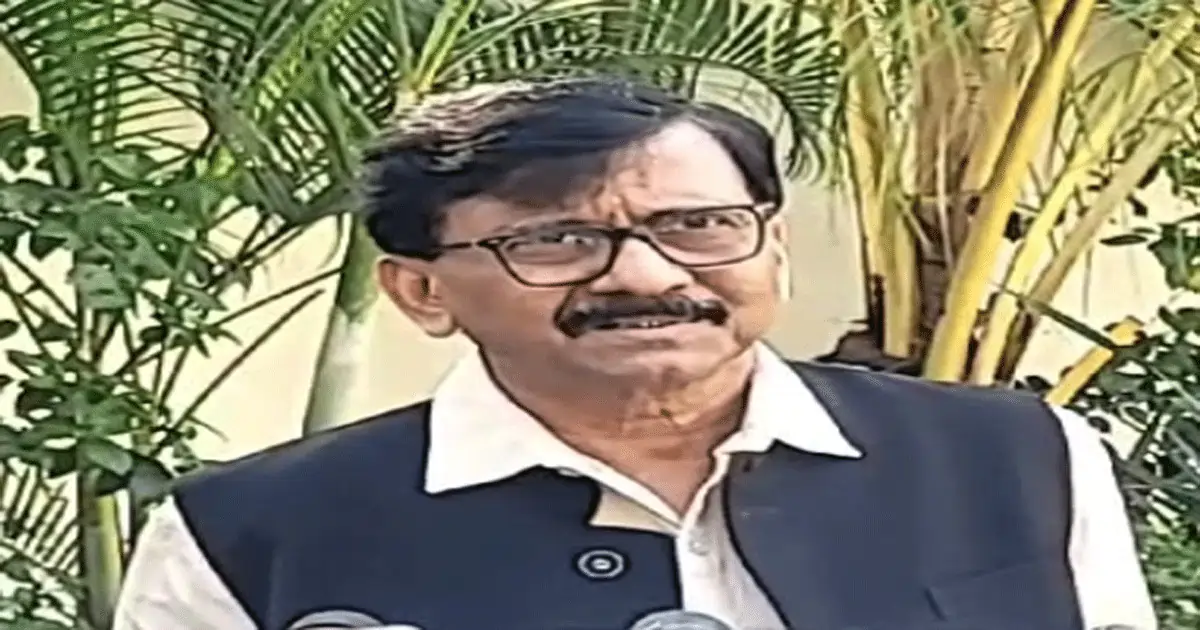
Mumbai, March 20: Shiv Sena-UBT MP Sanjay Raut questioned the timing of the petition filed by the father of Disha Salian, who was late actor Sushant Singh Rajput’s former manager, seeking a CBI probe into the circumstances under which she was found dead in June 2020.
The petitioner has appealed to the court to register an FIR against Shiv Sena-UBT leader Aaditya Thackeray.
Disha Salian’s father Satish has alleged that his daughter was gang raped and murdered.
“I don’t know what is in the petition. But the time chosen for the petition is when the atmosphere in Maharashtra is heated over Aurangzeb. Some power is working behind the petitioner. All powers are behind them. Discussion is being created around that petition, leaving aside the Aurangzeb issue. There is no need to name the people who are behind this,” said Raut.
“The continuous efforts to defame the Thackeray family are visible through this when the Aurangzeb case has turned against the government. There was an attempt to take Aurangzeb out of the grave and release him on us. Therefore, this case has been brewing for the last four days to get rid of Aurangzeb,” alleged Sanjay Raut.
“It is not the culture of Maharashtra to throw mud on the future and career of a young leader in this way. These experiments were done on many leaders like us. Nothing came out of it,” he said.
“Who is behind this? Who has the power? We have all the information about who was moving behind this. If you are going to do politics in this way, then that politics will be a disaster for you,” he warned.
“Many such cases happen in Maharashtra and in the country. Family members and parents come forward for justice. They try to seek justice. They cooperate with the police investigation. This is a tradition. After five years, they say that there was pressure on us. How can you believe this?” he asked.
“The party has digested so many attacks and is moving forward aggressively. The party has emerged anew under the leadership of Uddhav Thackeray. Then if we say that such graves have to be dug up, the graves of Justice Lohia and Sohrabuddin will have to be dug up, just like in Maharashtra, from Ramesh Govekar in Konkan to Ankush Rane and Satyavijay Bhisen, there are hundreds of such graves in the entire state of Maharashtra and their investigation will have to be done anew,” said Raut.
Former Mayor Kishori Pednekar also suspected a conspiracy behind the filing of the petition. She also questioned why the petition was filed almost five years after the CID had investigated it and the SIT probe was underway.



Alert personnel of the Central Industrial Security Force (CISF) detected foreign currency worth approximately Rs 1.14 crore concealed in the hand baggage of two passengers bound for Bangkok at Netaji Subhas Chandra Bose International Airport, Kolkata.
The detection took place around 10:20 a.m. on October 19 during routine security screening at the International Terminal Security Hold Area. A CISF screener noticed suspicious images in the X-ray scans of the hand baggage carried by the two passengers scheduled to travel to Bangkok on Bhutan Airlines flight B3700. The bags were subsequently referred for physical examination.
During the inspection, CISF personnel recovered USD 1,19,900, equivalent to approximately Rs 1,13,64,002, concealed inside false bottoms of the two bags. The foreign currency had been wrapped in newspaper in an apparent attempt to conceal it from security personnel.
Of the total amount recovered, USD 74,900 was found in the hand baggage of one passenger, while USD 45,000 was recovered from the other passenger’s bag.
Following the prescribed formalities, both passengers, along with the seized currency, were handed over to the Air Intelligence Unit (AIU) of Customs for further investigation and necessary legal action.
On October 20, the passenger from whose baggage USD 74,900 was recovered was taken by AIU/Customs officials to the District and Sessions Court for further legal proceedings following the investigation and seizure. The second passenger was released by Customs after the issuance of a detention receipt for the USD 45,000 recovered from the passenger’s baggage.
CISF in a release reiterated its commitment to maintaining aviation security through effective screening procedures, alert surveillance and professional conduct by its personnel. According to officials, the detection stresses the importance of coordinated action between airport security personnel and Customs authorities in addressing suspected financial and currency-related violations.
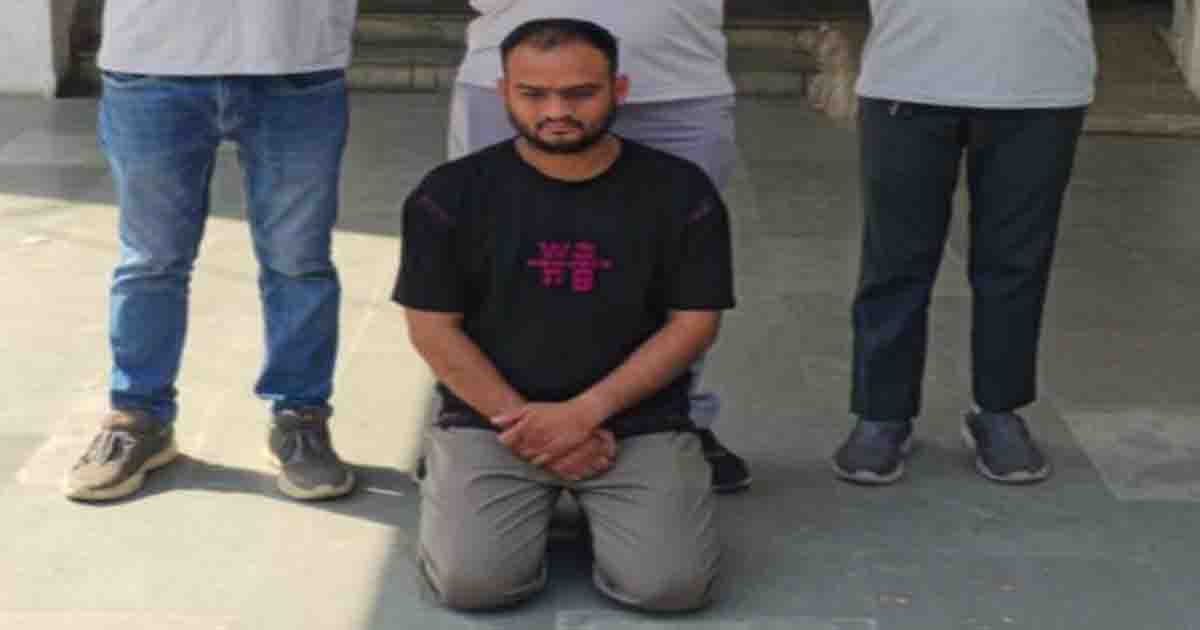
A 27-year-old businessman was arrested by Naroda police after 0.77 grams of suspected mephedrone, valued at Rs 1,540, was found in a parcel being delivered through the Porter application near Nana Chiloda Circle in Ahmedabad, police said on Wednesday.
The case came to light after police received a control-room message about a suspicious parcel that had arrived for delivery through the application.
The substance was examined preliminarily by a Forensic Science Laboratory (FSL) officer in the presence of panch witnesses and was found to be mephedrone, a synthetic drug.
Police seized the substance and initially registered an offence against three unidentified mobile phone holders under Sections 8(c), 22(a) and 29 of the Narcotic Drugs and Psychotropic Substances (NDPS) Act.
During the investigation, they traced and arrested the man suspected of ordering the consignment through the parcel.
The accused was identified as Priyang Sanghvi (27). He is a businessman who lives in Aram Park Flats in the Sabarmati area of the city. He is originally from Shirodi village in Rajasthan’s Sirohi district.
According to the police, the suspected method involved using a mobile phone number belonging to a witness to log in to the Porter application.
Drug consignments were allegedly packed separately in zipper bags and sent through the delivery service. An intermediary was allegedly used to distribute the drugs to different customers for sale.
The police said the arrest followed instructions from senior officers to curb the illegal sale and transportation of narcotic substances and detect offences related to them.
“The operation was conducted by Naroda police personnel under the supervision of Senior Police Inspector B M Katariya,” officials said.
The police seized 0.77 grams of mephedrone, valued at Rs 1,540. The investigation concerns the alleged use of a parcel delivery application to transport the substance and its subsequent distribution through an intermediary.

A 75-year-old man was allegedly stabbed to death, while a woman and her 25-year-old son were injured in a violent clash between neighbours at Rohda Kala village under Barharia police station limits in Bihar’s Siwan district on Wednesday.
The deceased was identified as Rama Nandan Prasad, son of the late Garib Bhagat.
The injured were identified as Baby Devi, 44, and her son Kishan Kumar, 25.
The injured were taken to the Barharia Community Health Centre for treatment. While Kishan received primary medical care, Baby Devi was referred to Siwan Sadar Hospital due to her critical condition.
According to Kishan Kumar, his grandfather was sitting outside the house drinking tea while his mother was cooking, and he was asleep.
Hearing a commotion, he went outside and found his grandfather lying in a pool of blood.
He then heard his mother crying from inside the house and rushed in, where he allegedly saw neighbours attacking her with knives. When he tried to intervene, he was also injured in the attack.
Kishan claimed that he had no prior dispute with the neighbours and said the reason for the attack was unclear.
With the help of residents, two alleged assailants were apprehended and handed over to the police.
After receiving information, the Barharia police reached the village and launched an investigation.
A Forensic Science Laboratory (FSL) team was also called to collect evidence from the scene.
The police have set up a camp in the village amid tension following the incident.
Barharia Station House Officer Chhotan Kumar said a patrolling officer was initially sent to the spot, after which he reached the village to investigate the incident.
He said an FIR has been registered against the named accused based on Kishan Kumar’s statement.
The two detained suspects are being questioned, while the motive behind the incident remains unclear.
Police said further action would be taken based on the investigation.

CISF seizes foreign currency worth Rs 1.13 crore at Kolkata airport

First Russian tanker carrying 40,000 tonnes of diesel to depart in 2-3 days: Putin

Gujarat: Man held after 0.77 grams of mephedrone found in ‘porter’ delivery parcel

Bihar: 75-year-old man stabbed to death; woman and her son injured

Maha Minister instructs submission of village-wise water scarcity action plan by Oct 25

Rahul, Cong ecosystem want to force regime change: BJP after Neha Bora praises B’desh Gen-Z protest

Attack on democratic rights: INDIA Bloc leaders on detentions of anti-ECI protestors

BJP pays tribute to ex-President Abdul Kalam, recalls his enduring influence on generations of India’s youth

INDIA bloc begins protest march against ECI

Maha Congress stages agitation against Gyanesh Kumar
-

 Crime4 years ago
Class 10 student jumps to death in Jaipur
-

 Maharashtra2 years ago
Mumbai Local Train Update: Central Railway’s New Timetable Comes Into Effect; Check Full List Of Revised Timings & Stations
-

 Maharashtra2 years ago
Mumbai To Go Toll-Free Tonight! Maharashtra Govt Announces Complete Toll Waiver For Light Motor Vehicles At All 5 Entry Points Of City
-

 Maharashtra2 years ago
False photo of Imtiaz Jaleel’s rally, exposing the fooling conspiracy
-

 National News2 years ago
Ministry of Railways rolls out Special Drive 4.0 with focus on digitisation, cleanliness, inclusiveness and grievance redressal
-

 Maharashtra2 years ago
Maharashtra Elections 2024: Mumbai Metro & BEST Services Extended Till Midnight On Voting Day
-

 National News2 years ago
J&K: 4 Jawans Killed, 28 Injured After Bus Carrying BSF Personnel For Poll Duty Falls Into Gorge In Budgam; Terrifying Visuals Surface
-

 Crime2 years ago
Baba Siddique Murder: Mumbai Police Unable To Get Lawrence Bishnoi Custody Due To Home Ministry Order, Says Report