
National News
‘Desperate attempt, won’t affect Mahayuti’: BJP mocks Thackeray brothers’ alliance

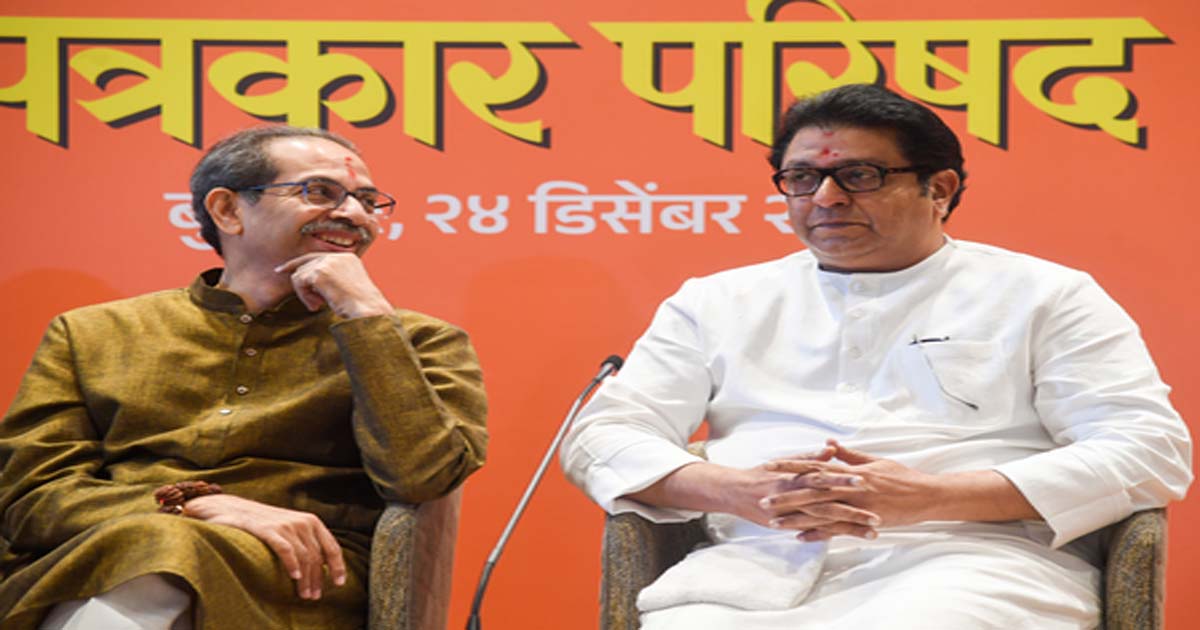
Mumbai, Dec 24: Maharashtra BJP MLA Ram Kadam has taken a sharp dig at the newly announced alliance between the Thackeray cousins ahead of the Brihanmumbai Municipal Corporation (BMC) elections, asserting that the tie-up will have no impact on the BJP-led Mahayuti and claiming that its flag will continue to fly across Mumbai after the polls.
Shiv Sena (Uddhav Balasaheb Thackeray) chief Uddhav Thackeray and Maharashtra Navnirman Sena founder Raj Thackeray on Wednesday formally announced an alliance for the upcoming BMC and Nashik Municipal Corporation elections.
The move is being seen as a significant political realignment aimed at consolidating the Marathi vote bank and mounting a challenge to the BJP-led Mahayuti.
Reacting to the development, Kadam recalled past differences between the two leaders and questioned the credibility of their reunion.
Speaking to Media, he said, “Twenty years ago, on September 27, 2005, Uddhav Thackeray treated Raj Thackeray so badly that he was forced to leave the party. Today, the same Uddhav is standing at his door with a begging bowl, asking for support. This is what destiny means.”
Kadam further dismissed the electoral impact of the alliance, claiming that public rallies and emotional appeals would not convert into votes.
“There will be crowds during their campaigns, but it will not translate into votes. There will be emotional appeals to divide Mumbaikars. However, every citizen of Mumbai knows that during Covid-19, Uddhav Thackeray and his government looted the city,” he alleged.
The BJP leader also credited the current pace of development in Mumbai to the leadership of Deputy Chief Minister Devendra Fadnavis.
“All the development you see in Mumbai today has taken place under the leadership of Devendra Fadnavis. Uddhav Thackeray and his government only played the ’20 per cent commission’ game. Because of his arbitrary actions, we could not hold our heads high in Mumbai,” Kadam said.
The alliance between Uddhav Thackeray and Raj Thackeray is being widely viewed as a strategic attempt to counter the BJP-led Mahayuti, especially in Mumbai, where the Marathi vote base has remained divided since the 2022 split in the Shiv Sena.
By projecting a “unified Thackeray family”, the two leaders are seeking to reclaim the traditional Shiv Sainik support base in the civic body elections.
However, Kadam remained confident about the Mahayuti’s prospects and reiterated his dismissal of the alliance.
“Despite both brothers coming together for the BMC polls, only Mahayuti’s flag will fly across Mumbai, as well as the entire state,” he said.
Questioning the political relevance of the Thackeray name, the BJP MLA remarked, “The Thackeray brand no longer exists. Thackeray was a brand only during the time of Balasaheb Thackeray; now, it’s only a surname. If there were a ‘Thackeray brand’ in reality today, they would not have lost the municipal elections. There is no point in making headlines now.”
BJP leader Navneet Rana also called out the alliance and said that it was formed out of “self-interest” and not for the family.
“I want to point out that the way Uddhav Thackeray and Raj Thackeray are coming together today as a family may look good on the surface, like two brothers uniting, but it is driven by self-interest, not love or familial affection. This alliance is purely for political gain and to revive their influence. Uddhav Thackeray’s party, which once had the strength to form the Chief Minister, now ranks last in municipal and local body elections, with very few chairpersons elected,” she told Media.
Meanwhile, political observers describe the tie-up as a “make-or-break” move for both parties. The electoral strategy seeks to combine Raj Thackeray’s influence among core Marathi voters — estimated at around 26 per cent of Mumbai’s electorate — with Uddhav Thackeray’s expanded support base, including Muslim-majority pockets, following his more inclusive positioning during the 2024 Lok Sabha elections.

National News
CM Adityanath announces renaming of Noida airport as Narendra Modi International Airport

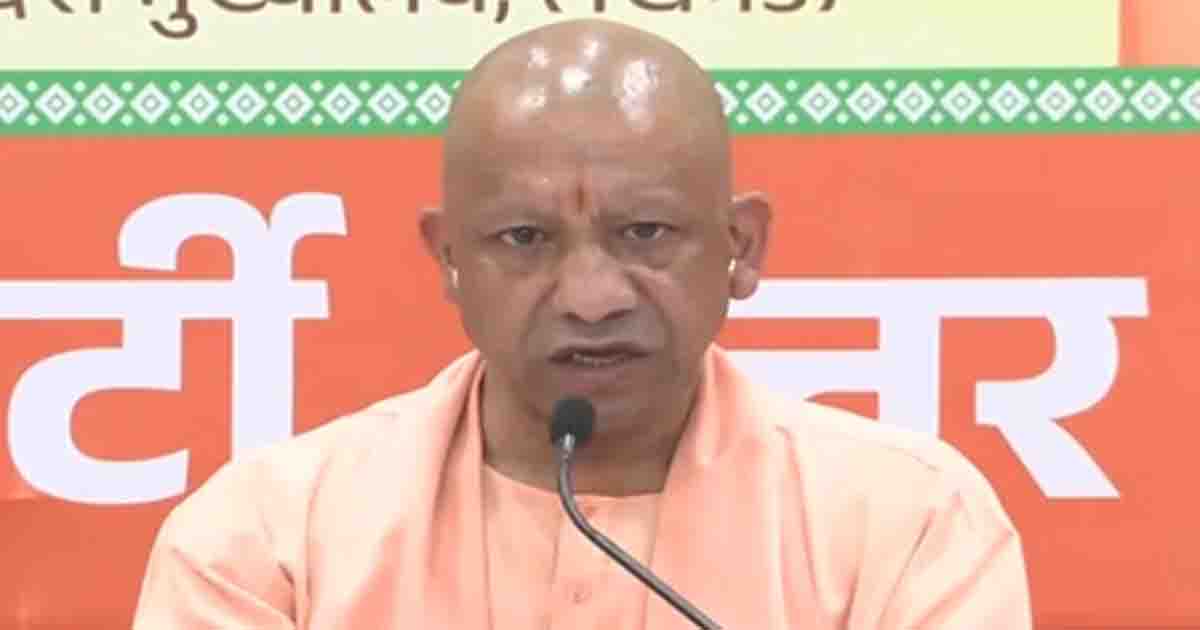
Lucknow, Oct 9: Uttar Pradesh Chief Minister, Yogi Adityanath, on Friday announced the renaming of the Noida International Airport in Jewar to Narendra Modi International Airport, following a resolution passed by his Cabinet to mark PM Modi’s 25 years in public service.
During a meeting on Friday, the Cabinet approved a total of 39 proposals.
While announcing the decision after the meeting, the Chief Minister highlighted the Prime Minister’s 25-year tenure of public service as “pivotal to the development” of both the nation and the state.
Addressing a press conference, the Chief Minister said: “It is a moment of immense pride for the UP Cabinet as it is from the land of UP (Varanasi) that PM Modi was elected as MP.”
He noted that the Prime Minister shares a deep, personal bond with UP, and under his leadership, the state is scaling new heights of development.
Leaders from alliance partners, along with Deputy Chief Ministers Keshav Prasad Maurya and Brajesh Pathak, were present alongside the Chief Minister.
CM Adityanath added that the Prime Minister has made service, dedication, and nation-building his mission, and that India’s global stature has strengthened under his leadership.
Linking the construction of the Ram Temple in Ayodhya to the end of a 500-year wait, the Chief Minister cited the development of the Kashi Vishwanath Corridor and the repatriation and installation of the idol of Goddess Annapurna from abroad as significant examples of the Prime Minister’s efforts.
He observed that while the state lacked basic infrastructure prior to 2017, connectivity has now improved significantly through projects such as expressways, highways, the Metro, and the Regional Rapid Transit System.
“The UP Cabinet is grateful to PM Modi for gifting Noida International Airport to the state, which is UP’s biggest airport and is going to become the country’s biggest aviation hub in the future,” CM Adityanath said.
“Therefore, the Cabinet has passed the resolution to rename the airport as Narendra Modi International airport, Jewar, Noida,” he added.
The development of Jewar Airport is expected to boost UP’s air connectivity and economic activity. PM Modi had inaugurated the first phase of the airport in March this year.
Its initial annual passenger capacity is estimated at approximately 12 million. Upon the completion of all four phases, it is scheduled to rank among Asia’s largest airports.
Highlighting industrial development in the state, CM Adityanath noted that projects such as the BrahMos missile manufacturing unit and the PM MITRA Textile Park in Lucknow will generate new opportunities for investment and employment.
“Uttar Pradesh is also strengthening its position as a logistics hub through improved road and air connectivity,” he mentioned.
Meanwhile, Energy and Urban Development Minister Arvind Kumar Sharma announced that 1,725 new electric buses would be deployed across 18 municipal corporation areas to enhance the urban transport system. Under the established procurement policy, 50 per cent of the buses will be purchased from the company quoting the lowest rate in the tender, while the remaining buses will be sourced from companies manufacturing buses within Uttar Pradesh.
Further, the UP CM highlighted schemes implemented for the poor, farmers, women, and marginalised sections of society. He stated that over 65 lakh houses have been provided under the ‘Pradhan Mantri Awas Yojana’, and free food grains are being distributed to 3.67 crore ration cardholders.
He asserted that the UP Cabinet reaffirms its commitment to work towards realising the vision of ‘Viksit Bharat’ 2027.

Kutch, Oct 9: At least seven workers were killed and more than 20 others injured after a truck collided head-on with a pickup carrying workers inside the Renewable Energy (RE) Park near Khavda in Gujarat’s Kutch district in the early hours of Friday, police said.
The accident occurred around 4 a.m. when the two vehicles, travelling in opposite directions, collided. The impact left the pickup badly mangled, trapping seven workers inside the wreckage.
“A truck and a pickup truck travelling in opposite directions collided. The impact left the pickup truck mangled. All the victims were occupants of the Bolero Camper,” an official said.
The seven trapped workers were extricated with the help of a crane, but all died in the accident. More than 20 injured workers were taken to a hospital by ambulance for treatment.
Preliminary reports indicated that the pickup truck was carrying more than 20 workers at the time of the collision.
However, the exact number of occupants and the identities of those killed were not immediately available in the police account.
Officials said the bodies were being transported from Khavda to Bhuj for post-mortem examinations.
Police have launched an investigation to establish the circumstances leading to the collision and are examining whether negligence contributed to the accident.
The precise cause of the crash and whether any safety violations were involved remain under investigation.
The accident occurred within the Khavda renewable energy development area, where large-scale clean-energy projects are being developed across the arid region of Kutch. The construction activity has brought a substantial workforce and supporting infrastructure to the area.
Investigators are expected to establish how the two vehicles collided and whether any lapses contributed to the deaths and injuries.
Further details, including the identities of the deceased and the condition of those injured, were not immediately available.
Police have not yet disclosed whether any case has been registered against the drivers or whether any arrests have been made in connection with the accident.
National News
No permission for Jantar Mantar protest, Delhi Police seek closure of 57 metro stations
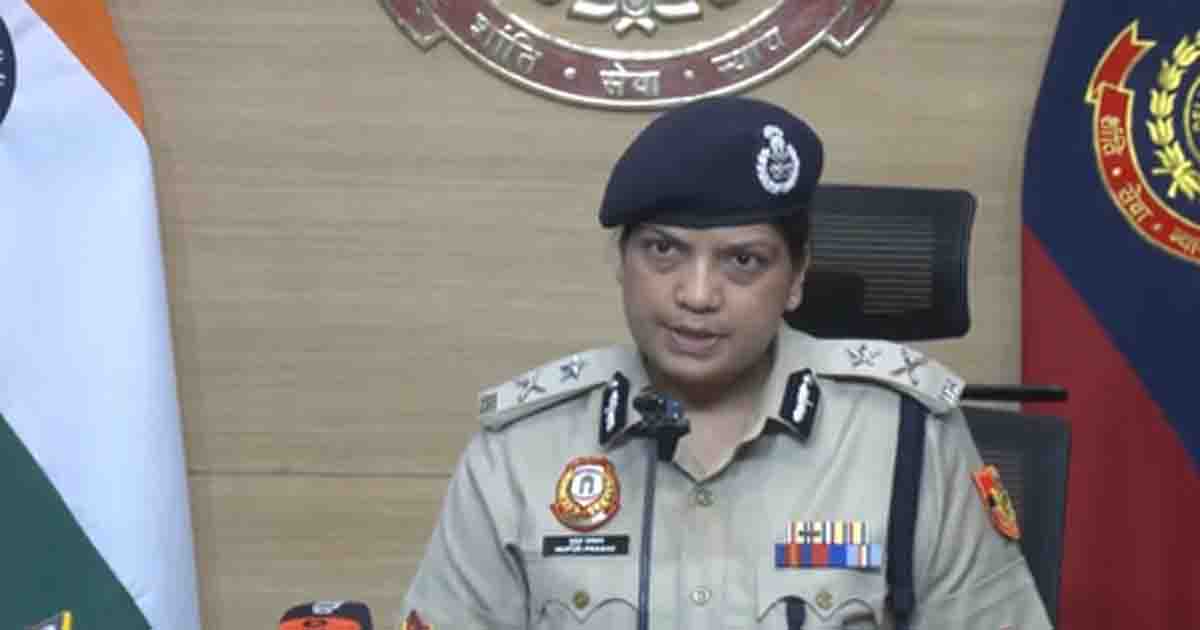
New Delhi, Oct 9: Ahead of the proposed protest by the CJP at Jantar Mantar on October 10, the Delhi Police on Friday said permission for the demonstration has been denied due to the organisers’ failure to comply with legal directions and their own undertakings during an earlier protest.
Citing the prevailing law-and-order situation, public safety and the need to regulate traffic, the police said the decision was taken after considering the circumstances surrounding the proposed demonstration.
Addressing a press conference, Joint Commissioner of Police (New Delhi Range) Nupur Prasad said the police had received an application from Sourav Das, co-convenor of the Cockroach Janta Party (CJP), regarding a proposed protest at Jantar Mantar seeking accountability from the Chief Election Commissioner (CEC).
“The intimation was considered, and it was found that it was given at very short notice. As per the prescribed guidelines, the intimation has to be received 10 days prior to the planned protest,” she said.
Prasad further said that on an earlier occasion, the CJP had been granted permission to hold a protest at the venue, but it had failed to comply with lawful directions and its own undertakings.
“Therefore, due to the failure to follow the legal directions and their own undertakings, and considering the prevailing law-and-order situation, public safety and traffic regulation, permission has been rejected this time,” she said.
The Joint CP also said that Section 163 of the Bharatiya Nagarik Suraksha Sanhita (BNSS) was in force in the New Delhi area, with preventive restrictions imposed to maintain public order and safety.
She warned that appropriate legal action would be taken against anyone found violating the provisions of Section 163 of the BNSS.
The Delhi Police have also proposed closing the entry and exit points of 57 metro stations from 9 p.m. on Friday until Saturday. The proposal has been sent to Delhi Metro Rail Corporation (DMRC) officials, and confirmation is awaited. These include Janpath, Patel Chowk, Supreme Court, ITO, Delhi Gate, Kashmere Gate, Rohini West, Welcome, Shalimar Bagh, Adarsh Nagar, and Hauz Khas.
Police officials said the proposal concerns the closure of entry and exit points, while interchange facilities may remain available to commuters.
The proposed restrictions and transport measures come amid preparations to manage public movement, maintain law and order and minimise traffic disruptions in the national capital during the planned protest.

CM Adityanath announces renaming of Noida airport as Narendra Modi International Airport

Seven killed as truck collides with workers’ vehicle in Kutch

Israel to award brave Indian pilot Captain Smit Machchhar with Presidential Award for Civilian Heroism

No permission for Jantar Mantar protest, Delhi Police seek closure of 57 metro stations

Week after Supernova suicide, 36-year-old man dies after fall from 12th floor of Greater Noida West society

Gift to President Putin part of PM Modi bid to globally display India’s heritage

PM Modi’s warm camaraderie with Putin, Xi on full display at BRICS Summit

Complaint against Netflix & Mukesh Chhabra for inappropriate language on ‘India’s Got Latent 2’

INDIA bloc begins protest march against ECI

Maha Congress stages agitation against Gyanesh Kumar
-

 Crime4 years ago
Class 10 student jumps to death in Jaipur
-

 Maharashtra2 years ago
Mumbai Local Train Update: Central Railway’s New Timetable Comes Into Effect; Check Full List Of Revised Timings & Stations
-

 Maharashtra2 years ago
Mumbai To Go Toll-Free Tonight! Maharashtra Govt Announces Complete Toll Waiver For Light Motor Vehicles At All 5 Entry Points Of City
-

 Maharashtra2 years ago
False photo of Imtiaz Jaleel’s rally, exposing the fooling conspiracy
-

 National News2 years ago
Ministry of Railways rolls out Special Drive 4.0 with focus on digitisation, cleanliness, inclusiveness and grievance redressal
-

 Maharashtra2 years ago
Maharashtra Elections 2024: Mumbai Metro & BEST Services Extended Till Midnight On Voting Day
-

 National News2 years ago
J&K: 4 Jawans Killed, 28 Injured After Bus Carrying BSF Personnel For Poll Duty Falls Into Gorge In Budgam; Terrifying Visuals Surface
-

 Crime2 years ago
Baba Siddique Murder: Mumbai Police Unable To Get Lawrence Bishnoi Custody Due To Home Ministry Order, Says Report