
Crime
Delhi Police apprehends seven overstaying African nationals, deportation proceedings initiated


New Delhi, Aug 8: East District Police has apprehended seven African nationals, including five Nigerians and two Ghanaians, during a special drive against overstaying foreign nationals in Delhi. The operation was carried out by the Special Staff and Anti-Narcotics Squad (ANS) in the jurisdiction of Pandav Nagar police station through Intelligence-based verification and field enquiries.
According to police, all seven foreign nationals were produced before the Foreigners Regional Registration Office (FRRO), Delhi, after completion of the necessary documentation and verification process. FRRO has issued Restriction Orders against all seven individuals under the relevant provisions of the Immigration and Foreigners Act, 2025.
Pending further legal proceedings, their movement has been restricted to Sewa Sadan, Lampur, Narela, Delhi. Deportation proceedings have also been initiated in coordination with the FRRO.
Police said the action was part of a special campaign launched to identify and verify foreign nationals residing illegally in the district after the expiry of their visas or immigration permissions. Dedicated teams of the Special Staff and ANS intensified Intelligence gathering, conducted discreet field enquiries, and verified available records to identify suspected overstayers.
The Special Staff team, led by Inspector Jitendra Malik under the supervision of ACP (Operations) Pawan Kumar, apprehended four foreign nationals from the Pandav Nagar area on August 4. They were identified as Osita Nkemen (54), a Nigerian national; Ngota Cynthia (38), a Nigerian national; James (25), a Ghanaian national; and Livy Otughana (27), a Ghanaian national.
During verification, Ngota Cynthia was found to have a previous criminal case registered against her. Police said she is an accused in FIR No. 48/2021 under Section 22 of the NDPS Act registered by the Narcotics Control Bureau (NCB), Bengaluru, and the matter is currently pending before a court. Further legal action in her case is being taken as per law.
Meanwhile, the Anti-Narcotics Squad, headed by Inspector Arun Kumar and working under the supervision of ACP Pawan Kumar, conducted verification drives in Smaspur Village, Patparganj, under the jurisdiction of PS Pandav Nagar. The operation led to the detention of three Nigerian nationals identified as Kelechi Cornelius (32), Okechukwu Solomon (36), and Chukwudi Alison (43).
Police said the names of Kelechi Cornelius and Okechukwu Solomon were already reflected in the list of overstaying foreign nationals maintained by the authorities concerned.
Following verification of their immigration status, all seven individuals were detained and produced before FRRO. Restriction Orders were subsequently issued, and the deportation process was initiated in accordance with the prescribed legal procedure.
East District Police said it remains committed to the strict enforcement of immigration laws and will continue Intelligence-based verification drives to identify overstaying foreign nationals and take appropriate legal action in coordination with FRRO and other concerned agencies.


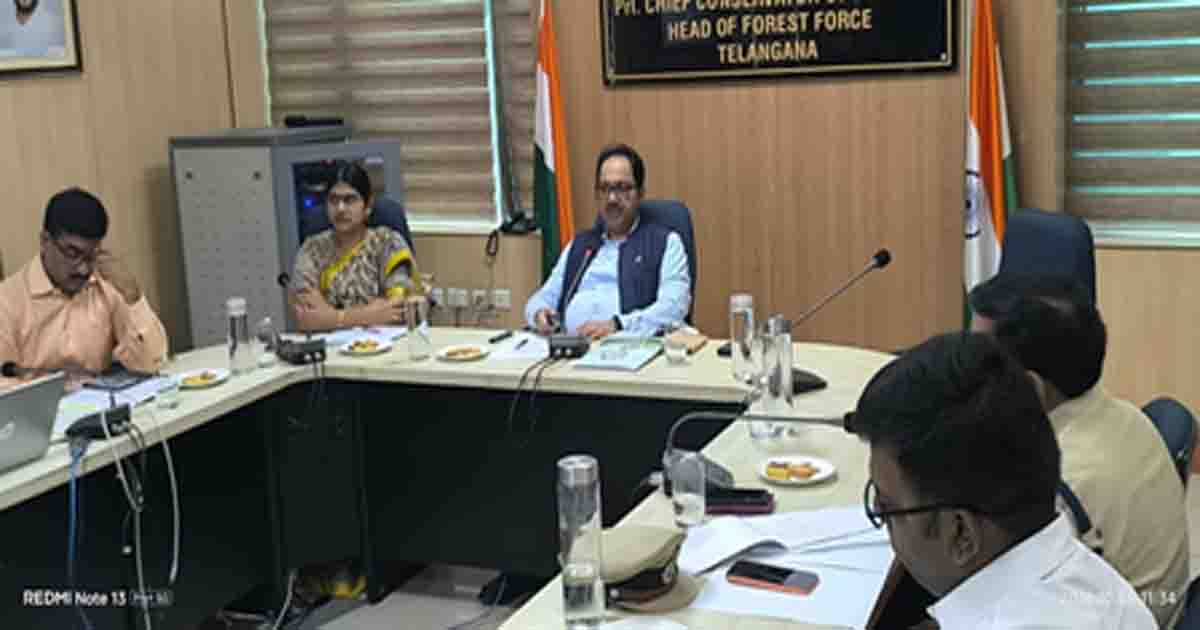
Hyderabad, Oct 9: Licences of shops selling prohibited synthetic manja must be cancelled, Telangana’s Head of Forest Force, Vinay Kumar, on Friday directed officials.
He asked officials to take stringent measures to curb the sale and use of synthetic manja and protect Indian rollers and other wildlife.
He was speaking at a review meeting with senior officials of various government departments held at Aranya Bhavan here on Friday to discuss these issues.
As synthetic manja is being supplied from other States, particularly Rajasthan and Gujarat, Vinay Kumar instructed officials to intensify surveillance on supplies originating from these States.
He directed Greater Hyderabad Municipal Corporation (GHMC) officials to issue instructions to shop owners not to sell synthetic manja and to take stringent action against those violating the rules.
According to an official release, the Head of Forest Force instructed the police to establish special surveillance to prevent the sale of Chinese manja through online platforms.
He emphasised the need to identify sales of synthetic manja on e-commerce websites and coordinate with the concerned organisations to curb such sales.
He also instructed officials to put up posters at all public places, including bus stations, railway stations, markets and other crowded locations, to create public awareness about the ban on synthetic manja.
Vinay Kumar stated that the School Education Department should create awareness among students and their parents about the dangers posed by the use of Chinese manja to human beings and birds.
He further instructed officials to advise bus drivers and conductors to inform the Forest Department helpline if they identify the illegal transportation of synthetic manja or the transportation of Indian rollers and other wildlife on buses.
During the meeting, it was brought to notice that voluntary organisations had lodged complaints regarding the use of Chinese manja at the Kite Festival organised by the Tourism Department.
The Head of Forest Force instructed officials to ensure that synthetic manja was not permitted under any circumstances at this year’s festival and that any synthetic manja identified should be confiscated immediately.
Vinay Kumar directed officials to take measures to prevent Indian rollers from being kept in cages for display at Durga pandals. He instructed Endowments Department officials to ensure that these directions were implemented at all temples. He emphasised that all departments should work in coordination to protect wildlife.
CCFs Priyanka Varghese and Kshitija, CF Prasad, and senior officials from the Police, GHMC, HMDA, School Education, Cinematography, Information and Public Relations, Electricity, Pollution Control Board and Tourism departments, along with officials from other departments, participated in the meeting.
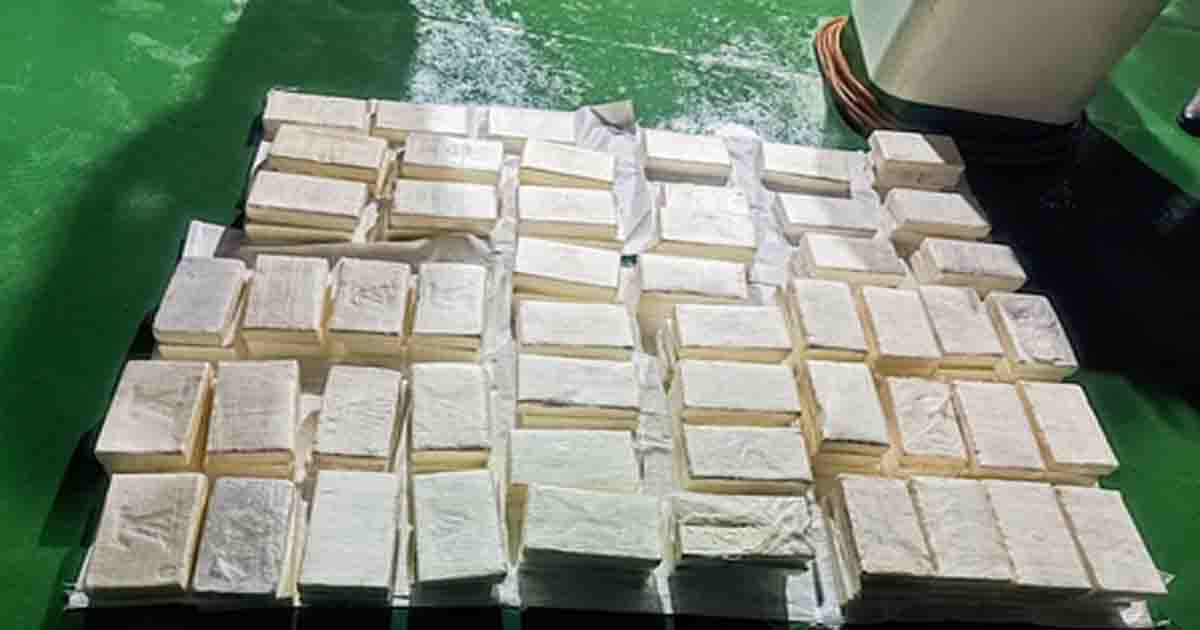
New Delhi, Oct 9: Pakistan-based narcotic cartels are now encouraging their cronies in India to ramp up homegrown production. With agencies such as the Narcotics Control Bureau (NCB) carrying out several drug busts, the cartels from Pakistan have decided to focus more on home-made substances to fuel their trade.
Before the Taliban took control of Afghanistan, poppy fields were in abundance. Opium and heroin were coming out of Afghanistan in large quantities, and Pakistan-based cartels would rely heavily on this product.
The Taliban have taken strict measures and ensured that Afghanistan shall no longer have drug-producing fields. Instead, in the fields of Afghanistan, one gets to see potatoes, grain, and other vegetables being grown.
This decision has resulted in a drop of 95 per cent in the production of drugs. Before the Taliban took over, drugs were being produced or grown on 232,000 hectares.
Following the ban in 2022, Pakistan- and Myanmar-based drug cartels began moving towards synthetic drugs. Drugs such as methamphetamine or meth are in very high demand both in the Indian and international markets.
Unlike opium and heroin, meth can be produced all through the year. This means that the production levels would be ten times higher when compared to heroin or opium. Further, this also ensures that synthetic drugs are cheaper when compared to the field-produced narcotics.
This also drives consumption, as the affordability of such narcotics makes them accessible to a wider section of society.
An Intelligence Bureau official said that drug cartels which had set up massive synthetic drug manufacturing units in Myanmar and Pakistan are now insisting that their recruits in India do the same at home.
“This has been done due to the massive drug busts that have taken place in India in recent months. The new tactic by the narcotic cartels is similar to the one that Pakistan tries to adopt when it comes to terror-related activities,” said the IB official.
There is a major push being made for homegrown terror modules so that Pakistan can have the deniability factor each time a bust takes place, the official added.
Another official said that the creation of multiple homegrown synthetic drug producing units also eliminates the risk of the contraband being intercepted either on Indian or international waters.
The Indian agencies have literally choked every route that is being used by cartels run by the likes of Dawood Ibrahim and Haji Salim.
The Iran war has added to their miseries as the usual routes that would be used to smuggle drugs into India have largely been disrupted.
In 2024, the NCB and Delhi Police busted a clandestine meth lab in Greater Noida, adjacent to the National Capital. During the operation, the NCB seized 95 kg of meth.
Officials say that the cartels would push and also facilitate the setting up of such homegrown drug-producing units in many more parts of the country.
“There is a lot of focus being given to both Tamil Nadu and Kerala. The recent drug busts have affected the southern markets and also the supplies into Sri Lanka and eventually Thailand,” officials say.
The intelligence agencies have learnt that Haji Salim, who controls this route, has been dialling his contacts in Sri Lanka, Kerala and the Maldives. He is also in touch with some of his associates who are behind bars now, the agencies have learnt.
Haji Salim has been instructing them to make all possible arrangements to set up clandestine meth-producing labs in large numbers.
These recent drug busts, which directly affected the southern markets and the other routes leading from there, have put Haji Salim under immense pressure, especially from his international dealers. He feels that ramping up homegrown production will make up for the loss.
Moreover, transporting homegrown drugs is easier than smuggling them in from Pakistan and then through the Indian waters. This, he hopes, would solve the problem, and in case of a bust, Pakistan can always deny any involvement, an official said.

Mumbai, Oct 9: The ED arrested two accused in fresh action against a trans-national organised narcotics trafficking syndicate operated by fugitive don Dawood Ibrahim’s aide Salim Ismail Dola and his associates, an official said on Friday.
The Enforcement Directorate (ED), Mumbai Zonal Office, arrested Pravin alias Nagesh Ramchandra Shinde and Brijesh Kanjibhai Moradiya under Section 19 of the Prevention of Money Laundering Act (PMLA), 2002.
The ED investigation was initiated based on multiple FIRs registered by various law enforcement agencies in Mumbai against Salim Dola and others for offences relating to illicit trafficking of narcotic drugs and psychotropic substances.
The investigation conducted so far has revealed the existence of a highly organised trans-national criminal network engaged in procurement of precursor chemicals, clandestine manufacture of Mephedrone (MD), interstate transportation and distribution of narcotic drugs, international trafficking of narcotic substances, collection and layering of proceeds of crime through hawala channels, and acquisition of movable and immovable assets in the names of associates and other persons, the ED said in a statement.
Investigation revealed that Pravin alias Nagesh Ramchandra Shinde was involved in the illegal clandestine manufacturing of MD and in activities connected with generation, handling, possession, utilisation and movement of proceeds derived from illicit sale of the said narcotic substance, the ED said.
Investigation has further revealed that the illicit proceeds were used to acquire immovable properties and other assets in the names of persons closely associated with him, it said.
The investigation also revealed that Brijesh Moradiya was involved in arranging the procurement and supply of the precursor chemical used for the illicit manufacture of MD.
The cash received from Salim Dola through the Angadiya channel for procuring the precursor chemical was deposited and routed through multiple third-party/family accounts and entities controlled/arranged by him and his associates, then transferred through the banking channel to various chemical companies/entities, thereby facilitating procurement of the precursor chemical.
Simultaneously, amounts involved in these transactions were received by Brijesh Moradiya and his associates/family accounts in the guise of commission from the sale of the chemical and the same were thereafter further transferred, layered and utilised.
The ED had earlier conducted search operations at 21 locations across Mumbai, Surat, Ankleshwar and Rajkot on June 2, 2026 and June 3, 2026 in this case and had covered the entire spectrum of the organised narcotics network of Salim Dola targeting end-to-end nodes of the syndicate including precursor chemical suppliers, chemical traders, manufacturers/distributors of the synthetic narcotic drug Mephedrone (MD), Hawala Operators and persons holding benami properties worth crores of rupees acquired from proceeds generated through the organised drug syndicate.
The searches resulted in the seizure and freezing of cash, foreign currency, gold bars, and bank balances valued at Rs 1.33 crore (approx.), along with $2,200. Additionally, documents relating to immovable properties worth several crores of rupees located in India and Dubai were recovered, indicating substantial investments made from the proceeds of the organised drug syndicate, the statement said.

‘Mobocracy got a reply from democracy’, says BJP amid party’s resounding victory in bypolls

‘No one can stop the youth’: Chirag Paswan on train cancellations for CJP protest

Nepal: School bus plunges off road, kills five in Pokhara

As bypoll results largely favour ruling parties, BJP pulls a surprise in Bengal Rejinagar

Govt disconnects over 82 lakh fraudulent mobile connections via ASTR

Gift to President Putin part of PM Modi bid to globally display India’s heritage

PM Modi’s warm camaraderie with Putin, Xi on full display at BRICS Summit

INDIA bloc begins protest march against ECI

Complaint against Netflix & Mukesh Chhabra for inappropriate language on ‘India’s Got Latent 2’

Maha Congress stages agitation against Gyanesh Kumar
-

 Crime4 years ago
Class 10 student jumps to death in Jaipur
-

 Maharashtra2 years ago
Mumbai Local Train Update: Central Railway’s New Timetable Comes Into Effect; Check Full List Of Revised Timings & Stations
-

 Maharashtra2 years ago
Mumbai To Go Toll-Free Tonight! Maharashtra Govt Announces Complete Toll Waiver For Light Motor Vehicles At All 5 Entry Points Of City
-

 Maharashtra2 years ago
False photo of Imtiaz Jaleel’s rally, exposing the fooling conspiracy
-

 National News2 years ago
Ministry of Railways rolls out Special Drive 4.0 with focus on digitisation, cleanliness, inclusiveness and grievance redressal
-

 Maharashtra2 years ago
Maharashtra Elections 2024: Mumbai Metro & BEST Services Extended Till Midnight On Voting Day
-

 National News2 years ago
J&K: 4 Jawans Killed, 28 Injured After Bus Carrying BSF Personnel For Poll Duty Falls Into Gorge In Budgam; Terrifying Visuals Surface
-

 Crime2 years ago
Baba Siddique Murder: Mumbai Police Unable To Get Lawrence Bishnoi Custody Due To Home Ministry Order, Says Report