
Crime
Pak drug cartels turn to India-made meth labs in Kerala, TN as busts choke smuggling routes


New Delhi, Oct 9: Pakistan-based narcotic cartels are now encouraging their cronies in India to ramp up homegrown production. With agencies such as the Narcotics Control Bureau (NCB) carrying out several drug busts, the cartels from Pakistan have decided to focus more on home-made substances to fuel their trade.
Before the Taliban took control of Afghanistan, poppy fields were in abundance. Opium and heroin were coming out of Afghanistan in large quantities, and Pakistan-based cartels would rely heavily on this product.
The Taliban have taken strict measures and ensured that Afghanistan shall no longer have drug-producing fields. Instead, in the fields of Afghanistan, one gets to see potatoes, grain, and other vegetables being grown.
This decision has resulted in a drop of 95 per cent in the production of drugs. Before the Taliban took over, drugs were being produced or grown on 232,000 hectares.
Following the ban in 2022, Pakistan- and Myanmar-based drug cartels began moving towards synthetic drugs. Drugs such as methamphetamine or meth are in very high demand both in the Indian and international markets.
Unlike opium and heroin, meth can be produced all through the year. This means that the production levels would be ten times higher when compared to heroin or opium. Further, this also ensures that synthetic drugs are cheaper when compared to the field-produced narcotics.
This also drives consumption, as the affordability of such narcotics makes them accessible to a wider section of society.
An Intelligence Bureau official said that drug cartels which had set up massive synthetic drug manufacturing units in Myanmar and Pakistan are now insisting that their recruits in India do the same at home.
“This has been done due to the massive drug busts that have taken place in India in recent months. The new tactic by the narcotic cartels is similar to the one that Pakistan tries to adopt when it comes to terror-related activities,” said the IB official.
There is a major push being made for homegrown terror modules so that Pakistan can have the deniability factor each time a bust takes place, the official added.
Another official said that the creation of multiple homegrown synthetic drug producing units also eliminates the risk of the contraband being intercepted either on Indian or international waters.
The Indian agencies have literally choked every route that is being used by cartels run by the likes of Dawood Ibrahim and Haji Salim.
The Iran war has added to their miseries as the usual routes that would be used to smuggle drugs into India have largely been disrupted.
In 2024, the NCB and Delhi Police busted a clandestine meth lab in Greater Noida, adjacent to the National Capital. During the operation, the NCB seized 95 kg of meth.
Officials say that the cartels would push and also facilitate the setting up of such homegrown drug-producing units in many more parts of the country.
“There is a lot of focus being given to both Tamil Nadu and Kerala. The recent drug busts have affected the southern markets and also the supplies into Sri Lanka and eventually Thailand,” officials say.
The intelligence agencies have learnt that Haji Salim, who controls this route, has been dialling his contacts in Sri Lanka, Kerala and the Maldives. He is also in touch with some of his associates who are behind bars now, the agencies have learnt.
Haji Salim has been instructing them to make all possible arrangements to set up clandestine meth-producing labs in large numbers.
These recent drug busts, which directly affected the southern markets and the other routes leading from there, have put Haji Salim under immense pressure, especially from his international dealers. He feels that ramping up homegrown production will make up for the loss.
Moreover, transporting homegrown drugs is easier than smuggling them in from Pakistan and then through the Indian waters. This, he hopes, would solve the problem, and in case of a bust, Pakistan can always deny any involvement, an official said.



Three members of a family, including a five-month-old child, were killed when a speeding pickup truck collided with their motorcycle in Madhya Pradesh’s Shajapur district, police said on Saturday.
The deceased have been identified as Ajit Panwar, his wife Pooja Panwar and their five-month-old son Shivanshu. They were residents of Indra Colony in Ashta town of neighbouring Sehore district.
The accident occurred in the Salsalai police station area when the family was travelling from Bolai village towards Ayyapur for temple darshan.
According to preliminary investigation, a stray dog suddenly came in front of their motorcycle. Ajit, who was riding the two-wheeler, tried to avoid hitting the animal but lost control of the motorcycle, which swerved into the path of a pickup truck approaching from the opposite direction. The pickup truck hit the motorcycle with considerable force, leaving all three family members critically injured. The motorcycle was badly damaged in the collision. The injured were rushed to a nearby hospital, where doctors declared all three dead.
The family had left home on Saturday to visit a temple and offer prayers to mark the completion of five months of their son Shivanshu. However, they met with the fatal accident before reaching their destination.
“The family was going for temple darshan with their child when a stray dog suddenly came in front of their motorcycle. The rider tried to save the animal but lost control and collided with a pickup coming from the opposite direction,” a police official said.
The pickup driver fled the scene after the accident. Police seized both vehicles and registered a case against the unidentified driver for rash and negligent driving.
“Efforts are underway to trace the absconding driver with the help of CCTV footage and eyewitness accounts. The bodies have been sent for post-mortem examination, and further investigation is underway,” the official added.
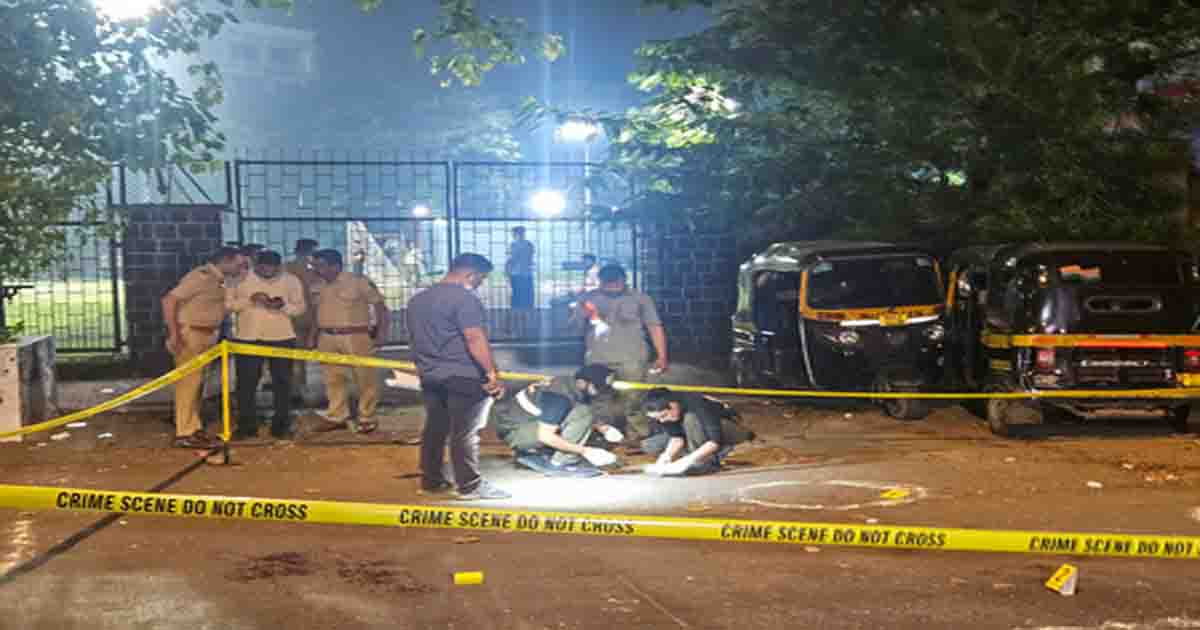
A Mumbai court on Saturday sent Amar, the 12th accused arrested from Haryana’s Sonipat in connection with the firing incident on Bollywood actor Tiger Shroff, to police custody till November 6.
On Thursday, a special Maharashtra Control of Organised Crime Act (MCOCA) court had sent 11 other accused arrested in connection with the firing on Shroff’s car to police custody till November 6.
The latest accused was arrested from Rohna village in Sonipat.
Earlier in the day, the Mumbai Police had produced Amar before a court, which sent him to police custody until November 6.
According to officials, Amar is accused of having transferred money, allegedly used in the commission of the crime, online. The funds were reportedly used for various expenses, including the purchase of a motorcycle and booking hotel rooms linked to the case.
According to the preliminary investigation, Amar is a friend and neighbour of Kunal, who was arrested earlier in the case. Police investigations have revealed that Kunal allegedly transferred Rs 40,000 to Amar’s bank account.
Amar subsequently transferred Rs 12,000 to Radha’s bank account, another accused arrested earlier, allegedly on Kunal’s instructions.
The Mumbai Police are investigating these financial transactions to establish the purpose of the transfers and determine the connections between the accused. The money trail is being examined as part of the wider investigation into the firing incident.
Amar, who studied up to Class 10, works at a supplements shop. His parents reportedly earn their livelihood through daily-wage labour.
Meanwhile, Amar’s family has claimed that he is innocent and alleged that he has been falsely implicated in the case.
With nine of the 12 arrested accused reportedly belonging to Sonipat, the district has emerged as a key focus of the Mumbai Police investigation.
The police are examining the financial dealings and personal connections among the accused to establish the sequence of events and identify the roles played by individual suspects.
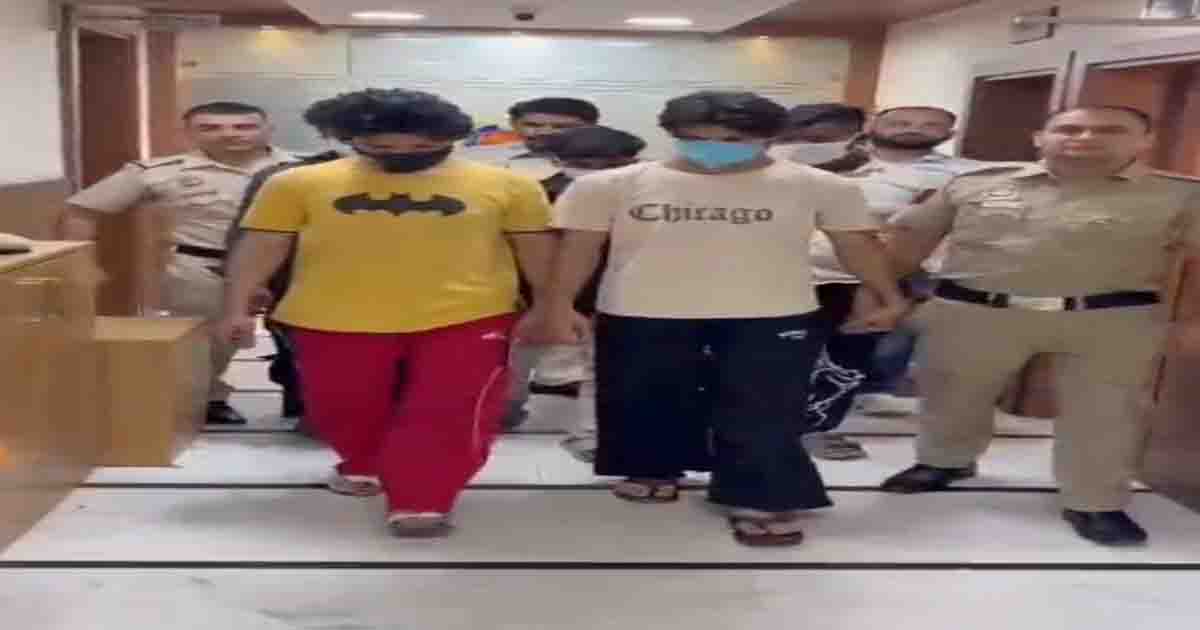
The Cyber Police Station in Delhi’s Shahdara district has busted a gang involved in impersonating Paytm executives and cheating street vendors and small business owners. Five accused have been arrested in connection with a cyber fraud case involving Rs 95,000, police said on Saturday.
According to the police, the accused allegedly targeted unsuspecting vendors and shopkeepers by posing as Paytm representatives and offering assistance with KYC-related issues, QR code updates and soundbox replacement. The investigation has revealed that the gang may have cheated around 50 to 60 victims using a similar modus operandi.
The case was registered as FIR No. 55/26 on October 26 at the Cyber Police Station, Shahdara, under relevant provisions of the Bharatiya Nyaya Sanhita, following a complaint by Ramavtar, a vegetable vendor.
Police said that on October 20, two persons approached Ramavtar claiming to be Paytm executives. On the pretext of resolving KYC-related issues and updating his QR code soundbox, they took possession of his mobile phone. Subsequently, two unauthorised transactions of Rs 50,000 and Rs 45,000 were carried out, resulting in a total loss of Rs 95,000.
The investigation was assigned to Inspector Shweta Sharma. A dedicated team comprising Inspector Sharma, ASI Rajdeep, Head Constables Javed, Deepak and Narender was formed to crack the case.
The team worked under the leadership of SHO Cyber Police Station Vijay Kumar, under the supervision of ACP Operations Avdhesh Kumar and the overall supervision of the Deputy Commissioner of Police, Shahdara.
During the investigation, police analysed the money trail, bank accounts and CCTV footage, which led to the arrest of five accused people.
Two of the accused impersonated Paytm executives to cheat victims, while the remaining three allegedly provided bank accounts to route and withdraw the cheated money.
The arrested accused have been identified as Juned, 23, a resident of Chhaprauli in Uttar Pradesh’s Baraut; Anas, 19, a resident of Sangam Vihar, Wazirabad; Mohit, 24, and Rohit, 19, both residents of Bhalswa Dairy in North Delhi; and Sumit Kumar, 19, a resident of Aya Nagar in South Delhi.
Police said a Paytm employee identity card was found on the mobile phone of Juned, who had previously been associated with the company. The accused are suspected to be involved in 50 to 60 similar incidents, while their bank accounts have been linked to around 20 cybercrime complaints and cases registered across India.
Six mobile phones, seven SIM cards, four ATM cards and three cash withdrawal slips were recovered during the investigation.
Further investigation is underway.

Iran Supreme Leader orders ‘immediate, effective’ response to any enemy threat

Bihar: Minor girl raped in Sheikhpura; accused arrested

PM Modi leads ‘National Unity Pledge’ at Ekta Nagar; BSF woman officer commands national flag guard

Couple, 5-month-old son killed as pickup truck hits motorcycle in MP Shajapur

Assam CM Sarma mocks Congress, invokes Rahul Gandhi’s potato-to-gold remark

Rahul, Cong ecosystem want to force regime change: BJP after Neha Bora praises B’desh Gen-Z protest

Attack on democratic rights: INDIA Bloc leaders on detentions of anti-ECI protestors

BJP pays tribute to ex-President Abdul Kalam, recalls his enduring influence on generations of India’s youth

INDIA bloc begins protest march against ECI

Online betting: ED conducts searches at 20 premises in Mumbai, Pune, Hyderabad
-

 Crime4 years ago
Class 10 student jumps to death in Jaipur
-

 Maharashtra2 years ago
Mumbai Local Train Update: Central Railway’s New Timetable Comes Into Effect; Check Full List Of Revised Timings & Stations
-

 Maharashtra2 years ago
Mumbai To Go Toll-Free Tonight! Maharashtra Govt Announces Complete Toll Waiver For Light Motor Vehicles At All 5 Entry Points Of City
-

 Maharashtra2 years ago
False photo of Imtiaz Jaleel’s rally, exposing the fooling conspiracy
-

 National News2 years ago
Ministry of Railways rolls out Special Drive 4.0 with focus on digitisation, cleanliness, inclusiveness and grievance redressal
-

 Maharashtra2 years ago
Maharashtra Elections 2024: Mumbai Metro & BEST Services Extended Till Midnight On Voting Day
-

 National News2 years ago
J&K: 4 Jawans Killed, 28 Injured After Bus Carrying BSF Personnel For Poll Duty Falls Into Gorge In Budgam; Terrifying Visuals Surface
-

 Crime2 years ago
Baba Siddique Murder: Mumbai Police Unable To Get Lawrence Bishnoi Custody Due To Home Ministry Order, Says Report