
National News
Protest politics: Can dissent coexist with public convenience?

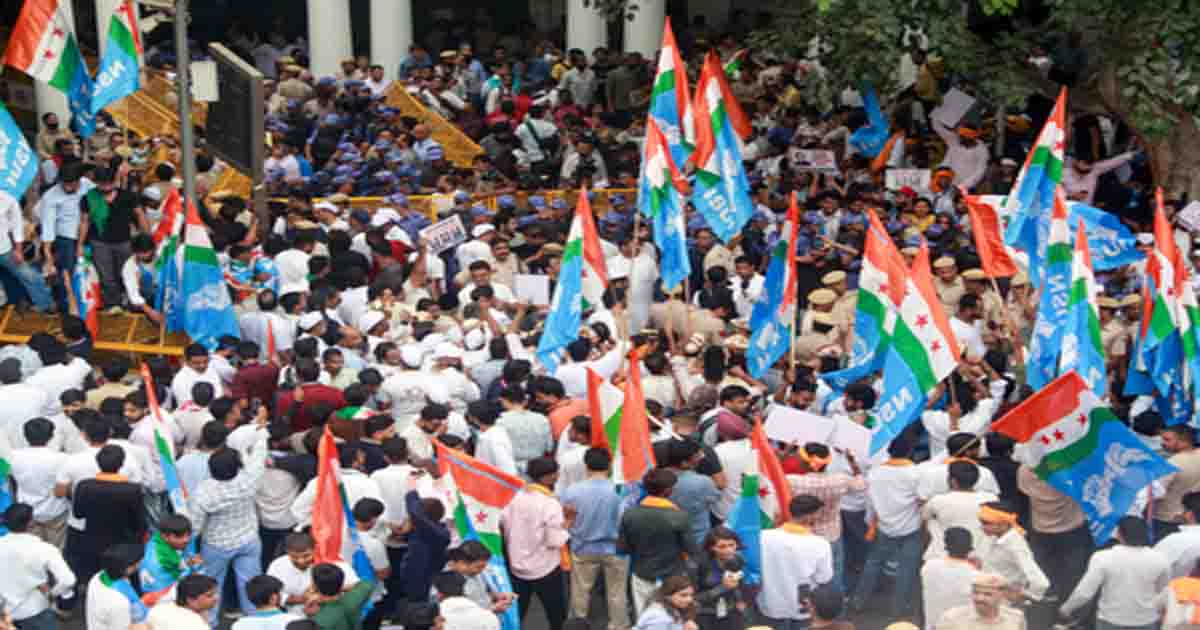
New Delhi, Oct 9: The Opposition’s intensified campaign against Chief Election Commissioner (CEC) Gyanesh Kumar, alleging irregularities in electoral roll revisions and claiming that the exercise has disproportionately benefited the ruling Bharatiya Janata Party (BJP), has revived the debate over the right to protest in a parliamentary democracy and the responsibility to safeguard public convenience.
The agitation has spread across several cities and has again brought the Cockroach Janta Party (CJP) onto the streets along with Opposition leaders, activists, and student organisations.
In a constitutional democracy, citizens and political parties have the right to protest against government policies, public institutions, and administrative officials.
Protestors thus argue that raising concerns over the conduct of elections is not only political, but a democratic obligation. In fact, many landmark reforms in India have come after pressure from civil society movements, parliamentary resistance, judicial intervention, and public demonstrations, furthering the right to dissent as indispensable.
However, questions arise when the exercise of one’s right infringes upon the rights of others. With demonstrations intensifying, authorities have responded with large-scale security arrangements.
Earlier protests in central Delhi led to the closure of several major Metro stations, including Rajiv Chowk, Central Secretariat, Janpath and New Delhi, while large sections of the city faced traffic restrictions and barricading.
For any demonstration planned or anticipated, especially over Friday and Saturday, security agencies have now proposed heightened strictures.
The Delhi Police recommended closure of entry and exit gates at 57 Metro stations beginning Friday night, citing concerns about crowd mobilisation and attempts to enter high-security zones. Train frequency at affected stations was also proposed to be reduced.
Meanwhile, the Railways announced cancellation of trains as a precaution against anticipated congestion or trouble around the capital’s railway hubs.
Authorities justified the move by referring to earlier disruptions in which thousands of passengers reportedly struggled to reach stations because of road blockades and crowding.
Such traffic snarls also put commuters at a disadvantage on roads. On the other hand, protestors argue that governments rarely respond to peaceful petitions, memoranda, or symbolic protests; they even cancel assemblies at designated locations.
According to this view, public disruption becomes necessary because authorities act only when the political cost of ignoring grievances becomes too high. There are indeed examples that lend some support to this argument. However, the counterargument is equally compelling.
Rights and duties are often described as two sides of the same coin. The right to assemble peacefully exists alongside the duty to respect the rights of fellow citizens.
Freedom of expression does not eliminate responsibility. The constitutional promise of liberty is accompanied by an expectation of civic restraint. If a protest disrupts public transport, prevents citizens from commuting, or imposes costs on people who have no direct role in the dispute, the balance between democratic dissent and public responsibility becomes increasingly difficult to maintain.
Sometimes, the inconvenience may be indirect, coming as security restrictions imposed by authorities. Yet, the outcome remains the same for the common citizen.
Protests should occur in a democracy; criticism of public institutions should be allowed; but what matters are the methods by which dissent is expressed. While governments need to avoid dismissing criticism until demonstrations become impossible to ignore, protest organisers must recognise that, with intensity, they also need to mobilise public support without imposing high costs on the common people.
As the confrontation over the Election Commission continues, the dispute is likely to remain politically charged. The right to protest is fundamental; but so is the right of millions of citizens to go about their daily lives without avoidable disruption. The challenge is not about choosing one over the other, but ensuring that both can coexist.


The growth rate of India’s core sector industries surged to 10.9 per cent in October this year, compared to the same month of the previous year, driven by the strong performance of the iron ore, coal, electricity, cement and steel sectors, according to figures released by the Ministry of Commerce and Industry on Friday.
The production of iron ore surged by as much as 26.4 per cent, while coal production went up by 23.1 per cent, and electricity generation grew by 21.6 per cent during October.
The cement sector clocked a robust growth of 15.4 per cent while steel production was up 7.3 per cent during the month, as demand stayed buoyant due to large government investments in big-ticket infrastructure projects such as highways, ports and railways.
The output of refinery products increased by 7.3 per cent during the month as demand for petroleum goods rose due to the higher level of economic activity. However, fertilisers, natural gas, and crude oil witnessed negative growth in October.
The final index for the month of September 2026 has been revised to 8.2 per cent, according to an official statement.
The cumulative growth rate of the index of core industries (ICI) during April-October 2026 works out to 6 per cent compared to the correspond figure of 2.3 per cent in the same period of the previous year.
The Office of Economic Adviser, Department for Promotion of Industry and Internal Trade (DPIIT) released the revised series of Index of Core Industries (ICI) with Base Year 2022-23 for the first time in July this year. The new series has replaced the earlier series of ICI with Base Year 2011- 12.
Owing to intensive use of iron ore in the production process, and its contribution to industrial development, it has been included in the list of core industries as a new item in the revised series of the index of core industries (ICI). Accordingly, the number of core industries increased from eight to nine in the new series.
Crime
ED raids 12 locations in Kolkata in money laundering probe against TMC ex-MLA Sabyasachi Dutta

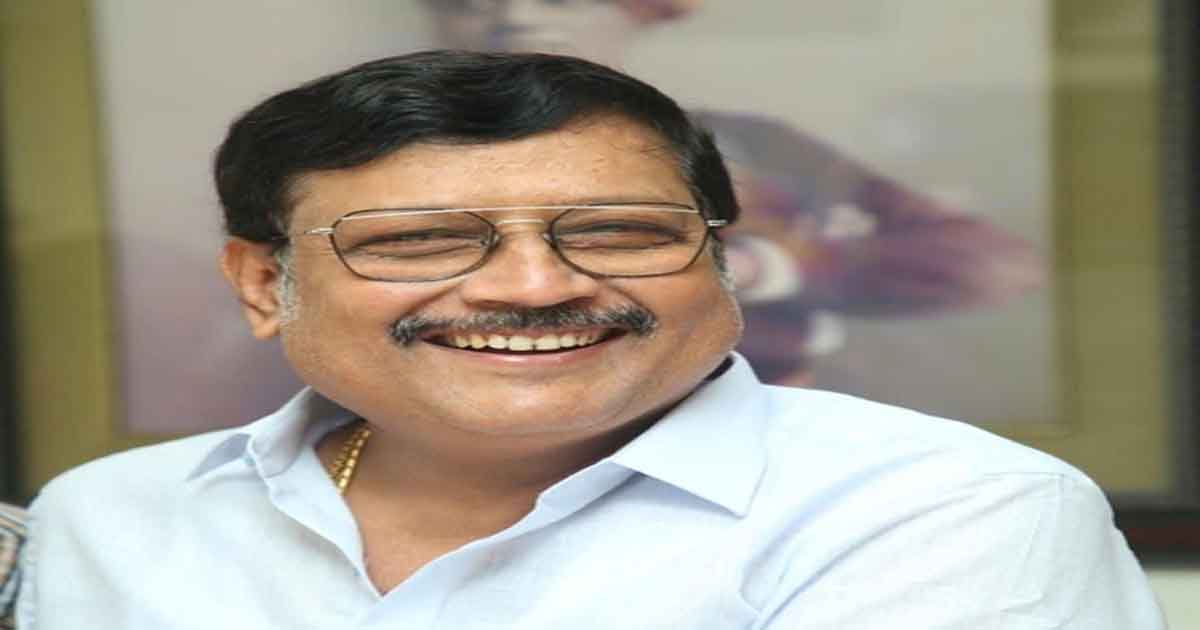
The Enforcement Directorate (ED) on Friday launched simultaneous raids and search operations at 12 locations in and around Kolkata in connection with its money laundering investigation against former Trinamool Congress legislator and former Bidhannagar Municipal Corporation (BMC) Mayor Sabyasachi Dutta.
Sources familiar with the development said the locations being searched include the residences of several businessmen reportedly close to Dutta during the previous Mamata Banerjee-led Trinamool Congress government in West Bengal.
The primary objective of the searches is to gather documentary evidence to establish how the alleged proceeds of crime were channelled into local businesses and the construction sector, sources said.
The ED initiated its investigation after registering an Enforcement Case Information Report (ECIR) under the Prevention of Money Laundering Act (PMLA), following Dutta’s arrest by the West Bengal Police earlier this year. The central agency’s probe is based on an FIR registered by the state police against the former legislator.
Dutta was arrested on June 8 by officers of Bidhannagar-North Police Station under Bidhannagar City Police in connection with a 2018 extortion case. A local businessman had accused him of demanding Rs 1 crore as extortion money.
According to the complaint, Dutta had allegedly sent his associates to the businessman to collect the demanded amount. The complainant claimed that he could pay only Rs 2.30 lakh, following which pressure was allegedly mounted on him to arrange the remaining amount.
Acting on the complaint, the police arrested Dutta and subsequently conducted searches at several addresses linked to him as part of the investigation.
The ED later registered an ECIR and began examining the alleged financial transactions and the possible movement of proceeds of crime. Officials of the central agency had earlier conducted raids and searches at multiple locations in connection with the case.
Dutta was granted bail by the Calcutta High Court on October 13. However, while granting him relief, the court directed him to extend full cooperation to the investigating agency during the course of the probe.
The former legislator has denied the allegations against him since the beginning.

Prime Minister Narendra Modi on Friday spoke with Uttar Pradesh Chief Minister Yogi Adityanath and expressed his condolences over the demise of his mother, Savitri Devi.
Union Home Minister Amit Shah and Defence Minister Rajnath Singh also expressed their grief over the passing of Savitri Devi and extended their condolences to the bereaved family.
Taking to the social media platform X, Amit Shah said, “The passing of Smt. Savitri Devi Ji, the mother of Uttar Pradesh Chief Minister Yogi Adityanath Ji, is deeply saddening. A mother’s passing is a loss in life that can never be made up for. In this hour of grief, my condolences are with Yogi Ji and the entire bereaved family. I pray to God to grant the departed soul a place at His divine feet and give the grieving family the strength to bear this immense sorrow.”
Rajnath Singh also expressed his condolences, saying, “I was saddened to hear of the passing of Smt. Savitri Devi Ji, the revered mother of Uttar Pradesh Chief Minister Yogi Adityanath Ji. The loss of a mother’s sheltering presence at any stage of life is the greatest and most unbearable blow. At this time of grief, my condolences are with Yogi Ji and the entire family. I pray to God to grant this virtuous soul a place at His divine feet.”
Chief Minister Yogi Adityanath’s mother, Savitri Devi, passed away at the age of 91 on Friday at her ancestral village of Panchur in Uttarakhand’s Pauri Garhwal district.
She breathed her last at around 11 a.m. on Friday, leaving the family in deep mourning.
According to reports, her last rites will be performed in Haridwar on Saturday.
The news of her demise prompted condolences from several political leaders, who expressed grief over the loss and extended their sympathies to the bereaved family.

India’s core sector growth surges to 10.9 pc in Oct

Maha CM stresses land management, farm productivity at NITI Aayog meeting

ED raids 12 locations in Kolkata in money laundering probe against TMC ex-MLA Sabyasachi Dutta

PM Modi speaks to CM Yogi; Amit Shah, Rajnath Singh condole his mother demise

Siraj not selected in India XI because of his name, says Cong MP; BJP calls remark ‘hateful’

Congress trying to protect 3 crore Bangladeshi infiltrators in voter list: HM Shah

Red Fort car blast probe exposes blueprint for spread of terror modules across India

Trump flags Iran targets as talks continue

‘Conspiracy, not accident’: NCP on Ajit Pawar death

BJP, Shiv Sena slam Mallikarjun Kharge for terming Diwali ‘Khushiyon ka Eid’
-

 Crime4 years ago
Class 10 student jumps to death in Jaipur
-

 Maharashtra2 years ago
Mumbai Local Train Update: Central Railway’s New Timetable Comes Into Effect; Check Full List Of Revised Timings & Stations
-

 Maharashtra2 years ago
Mumbai To Go Toll-Free Tonight! Maharashtra Govt Announces Complete Toll Waiver For Light Motor Vehicles At All 5 Entry Points Of City
-

 Maharashtra2 years ago
False photo of Imtiaz Jaleel’s rally, exposing the fooling conspiracy
-

 National News2 years ago
Ministry of Railways rolls out Special Drive 4.0 with focus on digitisation, cleanliness, inclusiveness and grievance redressal
-

 Maharashtra2 years ago
Maharashtra Elections 2024: Mumbai Metro & BEST Services Extended Till Midnight On Voting Day
-

 National News2 years ago
J&K: 4 Jawans Killed, 28 Injured After Bus Carrying BSF Personnel For Poll Duty Falls Into Gorge In Budgam; Terrifying Visuals Surface
-

 Crime2 years ago
Baba Siddique Murder: Mumbai Police Unable To Get Lawrence Bishnoi Custody Due To Home Ministry Order, Says Report