
Business
Companies committed to cut emissions represent $38 trillion economy


A record number of companies are committing to and setting science-based climate targets, according to a new research by the Science-Based Targets Initiative (SBTi), the global body enabling businesses to set emissions reduction targets in line with science.
The SBTi has launched its third annual assessment of the initiative’s impact since its launch in 2015. The 2021 Progress Report ‘Scaling Urgent Corporate Climate Action Worldwide’ reveals that the SBTi has entered a period of exponential growth with SBTi companies now representing over a third of global market capitalization, worth $38 trillion, up from 20 per cent in 2020.
In 2021, the number of SBTi companies doubled to 2,253, including 1,082 companies with approved targets and 1,171 that committed to set science-based targets. These companies cover 70 countries and 15 industries, with the growth rate averaging at 110 new companies per month in 2021, compared to 31 in 2020. These figures include 117 financial institutions, which have committed to set science-based targets since 2015.
Between January and March 2022, almost 500 companies have set or committed to set science-based targets.
Luiz Fernando do Amaral, CEO of the SBTi, said: “The world today is faced with many challenges, there’s the devastating Russian war in Ukraine, the ongoing pandemic and the increasingly urgent climate crisis. At this critical time, we cannot let ourselves be divided.
“In the face of these existential crises, the SBTi will continue to work with governments, companies and NGOs, through strong collaboration, healthy debate and scientific research to reinforce 1.5 degrees Celsius corporate climate action as the new normal.
“The science is clear, we are already experiencing the impacts of climate change, and continuing on the current trajectory equals catastrophe. This report shows that the value the SBTi brings to society is more needed now than ever before, we must continue to drive the exponential growth of science-based targets and make them abusiness as usual’ for companies and financial institutions worldwide.”
As the first assessment of the SBTi’s progress since the COP26 climate summit in Glasgow, the report’s findings evidence a growing wave of international momentum towards science-based targets.
The necessity of this momentum is reflected in the latest UN Intergovernmental Panel on Climate Change (IPCC) WGIII report, which concluded that peak global emissions along with rapid and urgent reductions is required before 2025 to keep global heating under 1.5 degrees Celsius.
In October 2021, the SBTi launched the Net-Zero Standard, the world’s first framework for corporate net-zero target setting in line with climate science. It includes the guidance, criteria, and recommendations companies need to set science-based net-zero targets consistent with limiting global temperature rise to 1.5 degrees.
The Net-Zero Standard has accelerated the shift towards 1.5 degrees aligned targets as the new normal for corporates. The report indicates almost 80 per cent of 587 new targets approved in 2021 were aligned with a 1.5 degrees trajectory.
In April 2022, the initiative celebrated a round of new, net-zero approved targets with the total number of companies committed to the Net-Zero Standard surpassing 1,000.
The SBTi’s ‘ambition update’ also announced that the global initiative will only accept target submissions aligned with 1.5 degrees from July 2022, driving companies to go further and faster with their emissions reductions.
Lila Karbassi, Chair of the SBTi board and Senior Programme Officer at the UN Global Compact, said: “The global economy must halve emissions before 2030 to reach the Paris goal of 1.5 degrees Celsius, and it is currently not on track to do so.
“This goal is reflected in the most recent IPCC report, which poses a clear message, we must implement rapid and urgent emissions reductions or face planetary catastrophe. The climate action we’re seeing from companies is grounds for optimism, but we must all go further and faster to close the emissions gap.”


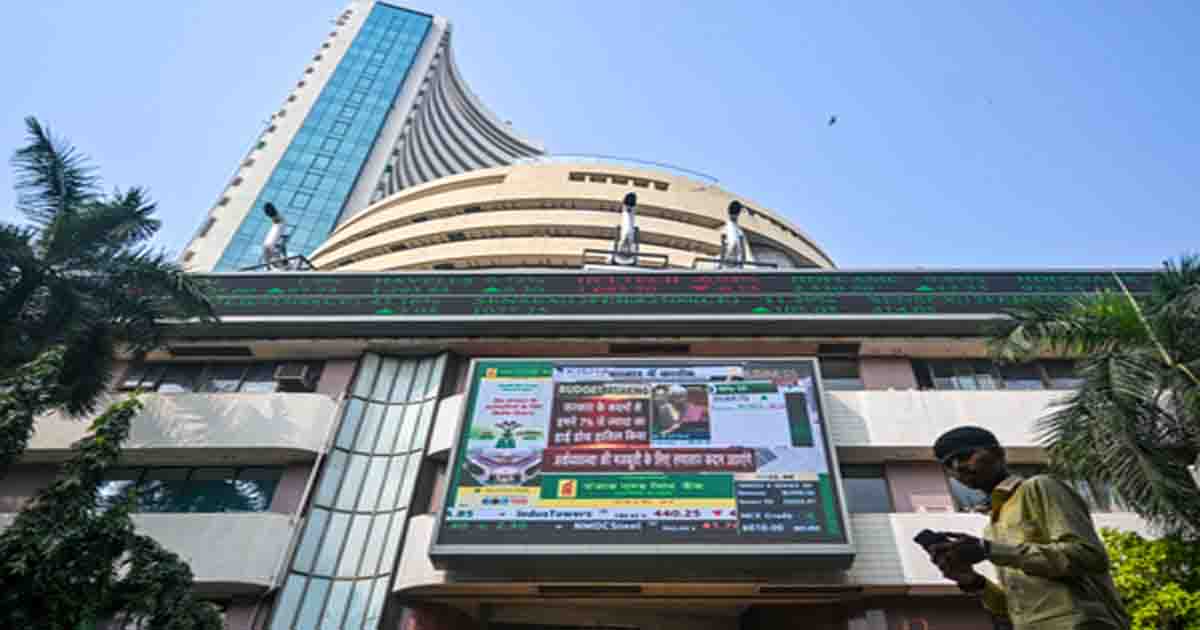
The macroeconomic environment remains challenging, with crude oil emerging as a key source of uncertainty for domestic markets, analysts said on Saturday, as the Indian equities endured a challenging, holiday-shortened week, with benchmark indices extending their losses.
Nifty 50 and Sensex recorded weekly declines of approximately 2.4 per cent and 2.2 per cent, respectively.
Both benchmark indices extended their losing streaks to four consecutive sessions.
The sell-off spread beyond large-cap stocks, with mid-cap and small-cap indices experiencing sharper declines as investors reduced exposure amid rising uncertainty, said market participants.
The Nifty 50 ended the week under pressure, after declining for four consecutive sessions. Persistent selling has weakened the short-term technical structure, with the index struggling to sustain its earlier recovery.
The immediate resistance zone is placed around 22,800, followed by 23,000, said analysts. For the Sensex, on the downside, 72,600–72,500 forms the immediate support zone.
The broader market took the brunt of the de-risking, as valuation concerns and the unwinding of leveraged positions triggered a disproportionately sharp correction in mid- and small-caps, while large-caps held up comparatively better.
Across sectors, IT was the lone pocket of resilience, recovering from early selling to end the week largely unchanged on improving earnings visibility and renewed investor appetite.
However, rate-sensitive sectors such as consumer durables, metals and realty saw the heaviest selling as input-cost and margin worries resurfaced, said analysts.
Brent crude oil rose to a six-month high on Friday. Brent futures gained 3.1 per cent to close at $116.72 a barrel, highest since April 29. US West Texas Intermediate added 3.8 per cent to settle at $103.27 a barrel.
Brent added 6.2 per cent for the week, while WTI advanced 2 per cent for the week.
According to analysts, sustained increases in crude prices could raise energy and transportation costs, weigh on consumption and intensify pressure on oil-sensitive sectors.

The Enforcement Directorate (ED) has provisionally attached an immovable property spread over approximately 14.51 acres in Kolkata valued at Rs 85.20 crore, in connection with a bank fraud and money laundering case involving M/s Unity Infraprojects Ltd. (UIL) and others, the agency said on Friday.
According to the ED, the attached land, located at Mouza Chakgaria in Kolkata, is held in the name of M/s Suburban Agriculture Dairy & Fisheries Pvt. Ltd. (SADAFPL). The attachment was made under the provisions of the Prevention of Money Laundering Act (PMLA), 2002.
The money laundering investigation stems from an FIR registered by the CBI’s Bank Securities & Fraud Branch in Mumbai on a complaint lodged by the State Bank of India.
The FIR alleges that UIL, in connivance with its promoters, directors and associated entities, defrauded a consortium of 23 banks by availing credit facilities of around Rs 3,200 crore. The total outstanding dues, including interest, are estimated at approximately Rs 3,800 crore.
According to investigators, the fraud involved fictitious transactions, round-tripping of funds, manipulation of financial records, and diversion of funds through shell entities.
The ED said its probe revealed that funds from UIL were routed through its wholly owned subsidiary, Unity Realty & Developers Ltd. (URDL), and subsequently used to acquire and hold assets through associated companies. SADAFPL was identified as a step-down subsidiary of UIL through URDL.
Further investigations established a trail linking the Chakgaria land parcel to funds originating from UIL and its group entities, indicating diversion and layering of proceeds generated from the scheduled offences. The property was attached under Section 5(1) of the PMLA to prevent its transfer or disposal pending confiscation proceedings.
The agency noted that in July 2025 it had conducted searches at residential and commercial premises, as well as bank lockers, linked to UIL, its former directors and their family members. During those operations, movable assets worth Rs 31.21 crore were seized or frozen.
The ED had also attached land parcels and flats valued at about Rs 1,493 crore through three separate provisional attachment orders, all of which were later confirmed by the Adjudicating Authority under the PMLA.
With the latest attachment, the total value of movable and immovable assets attached or frozen in the case has risen to about Rs 1,609 crore, the agency said.
The ED further informed that it filed a prosecution complaint before the Designated Special Court, City Civil and Sessions Court, Greater Bombay, Mumbai, on March 27, 2026.
Further investigation is underway.
Adani Power Ltd — India’s largest private thermal power generator — on Friday reported a 141.5 per cent year-on-year jump in consolidated profit after tax (PAT) to Rs 7,019.32 crore for the second quarter of FY27, compared to Rs 2,906.46 crore in Q2FY26.
Total reported revenue rose 39.4 per cent to Rs 19,950.60 crore from Rs 14,307.79 crore a year ago, while reported EBITDA jumped 45.7 per cent to Rs 8,743.22 crore.
On a continuing operations basis, revenue from operations grew 29.8 per cent to Rs 17,014.06 crore, while continuing EBITDA was up 18.5 per cent to Rs 6,320.97 crore.
Apart from that, PAT nearly doubled to Rs 11,885.92 crore from Rs 6,211.59 crore in H1 FY27, while reported revenue rose 36 per cent to Rs 39,272.90 crore.
Commenting on the results, CEO S B Khyalia said, “Adani Power continues to grow from strength to strength, achieving newer milestones in profitability and project execution. The primacy of domestic coal-based power in meeting India’s long-term power needs has become clearer every day.”
On industry trends, the company said India’s power demand grew 11.5 per cent to 502 BU in Q2 FY27, with coal and lignite-based generation accounting for 66 per cent of supply. Peak demand reached 270 GW, up 18 per cent year-on-year.
The company sold 26.4 billion units (BU) in Q2 FY27, up from 23.7 BU a year ago. Plant Load Factor (PLF) improved to 70.1 per cent from 62.8 per cent, while operating capacity stood at 18,150 MW.
Meanwhile, power sales under PPAs grew 29.7 per cent to 23.4 BU, with tariff realisation improving 12.7 per cent to Rs 6.4/kWh.
Merchant and short-term realisation improved 33.1 per cent to Rs 7.2/kWh, though volumes were 43 per cent lower due to incremental tie-ups of open capacity in medium-term contracts.

Maharashtra ATS arrests suspected Jaish-e-Mohammed associate in Mumbai Mahim area

‘Bigg Boss 20’: Rohit Shetty questions Lovepreet Gill, Scout’s closeness

Indian equities extend losses this week as Brent crude oil rises to 6-month high

Tiger Shroff firing case: Shooters received real-time updates from handler, monitored TV news

FIR registered after posters questioning govt performance found pasted inside Delhi Metro

Rahul, Cong ecosystem want to force regime change: BJP after Neha Bora praises B’desh Gen-Z protest

BJP pays tribute to ex-President Abdul Kalam, recalls his enduring influence on generations of India’s youth

Attack on democratic rights: INDIA Bloc leaders on detentions of anti-ECI protestors

INDIA bloc begins protest march against ECI

Maha Congress stages agitation against Gyanesh Kumar
-

 Crime4 years ago
Class 10 student jumps to death in Jaipur
-

 Maharashtra2 years ago
Mumbai Local Train Update: Central Railway’s New Timetable Comes Into Effect; Check Full List Of Revised Timings & Stations
-

 Maharashtra2 years ago
Mumbai To Go Toll-Free Tonight! Maharashtra Govt Announces Complete Toll Waiver For Light Motor Vehicles At All 5 Entry Points Of City
-

 Maharashtra2 years ago
False photo of Imtiaz Jaleel’s rally, exposing the fooling conspiracy
-

 National News2 years ago
Ministry of Railways rolls out Special Drive 4.0 with focus on digitisation, cleanliness, inclusiveness and grievance redressal
-

 Maharashtra2 years ago
Maharashtra Elections 2024: Mumbai Metro & BEST Services Extended Till Midnight On Voting Day
-

 National News2 years ago
J&K: 4 Jawans Killed, 28 Injured After Bus Carrying BSF Personnel For Poll Duty Falls Into Gorge In Budgam; Terrifying Visuals Surface
-

 Crime2 years ago
Baba Siddique Murder: Mumbai Police Unable To Get Lawrence Bishnoi Custody Due To Home Ministry Order, Says Report