
Business
CNG Prices Hiked Again By ₹2: Have Rates Increased In Mumbai Too? Find Out Here


Mumbai: CNG consumers have received temporary relief as Compressed Natural Gas (CNG) prices in the city have not been increased despite another fuel hike announced in Delhi and the NCR on Tuesday.
While Indraprastha Gas Limited (IGL) raised CNG prices in Delhi by Rs 2 per kg, taking rates to Rs 83.09 per kg from May 26, Mahanagar Gas Limited (MGL) has kept CNG prices unchanged across Mumbai and the Mumbai Metropolitan Region (MMR).
This means CNG in Mumbai continues to remain priced at Rs 84 per kg, following the earlier hike implemented by MGL earlier this month. The latest Delhi revision marks the fourth CNG price increase in less than two weeks amid rising global energy prices and pressure on domestic fuel retailers.
Although there has been no fresh hike in Mumbai today, auto-rickshaw unions in the city have already renewed their demand for a fare revision after the previous Rs 2 per kg increase announced by MGL on May 14.
Mumbai’s auto unions have argued that rising fuel costs and inflation have increased operating expenses for drivers. Union representatives recently met transport department officials and submitted revised fare calculations based on recommendations of the B Khatua Committee.
At present, the minimum auto-rickshaw fare in Mumbai stands at Rs 26, while passengers are charged Rs 17.14 per kilometre after the base fare. According to union calculations, the per-kilometre fare should now increase to Rs 18.17.
“The expenses on fuel have increased substantially for auto-rickshaw drivers. Inflation and higher Consumer Price Index levels have also affected daily running costs,” Mumbai Rickshawmen’s Union General Secretary Thampi Kurien had said while demanding a fare hike.
The latest developments come at a time when petrol and diesel prices have witnessed repeated hikes across the country over the past two weeks, increasing concerns over transportation costs and inflationary pressure in Mumbai and other metro cities.
Despite today’s relief for Mumbai commuters, transport operators and auto unions are closely monitoring fuel pricing trends amid fears that further increases in global crude oil and gas prices could eventually impact CNG rates in the city as well.


Business
Adani Group’s consolidated portfolio revenue stands at Rs 2.92 lakh crore in FY26: Chairman

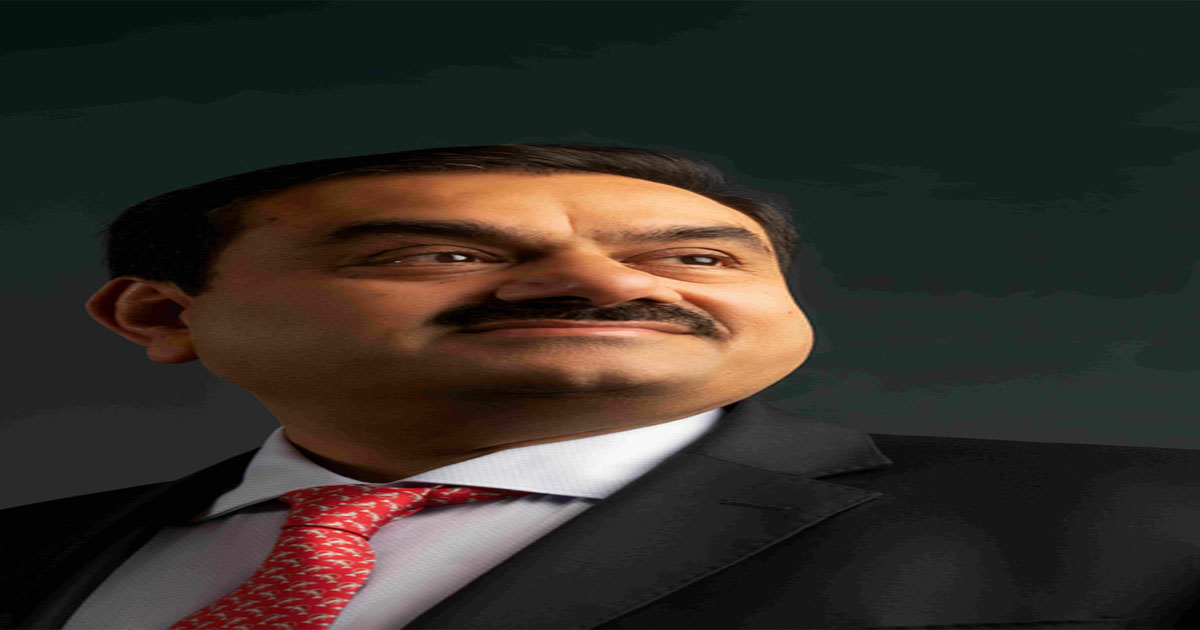
Ahmedabad, June 24: Gautam Adani, the Adani Group Chairman, on Wednesday said that FY2025-26 was another year of disciplined growth and strong execution for the Group, and its consolidated portfolio revenue stood at Rs 2.92 lakh crore, thereby reflecting a year-on-year growth of 7.4 per cent.
Addressing shareholders at the Adani Group’s 34th Annual General Meeting (AGM) 2026, Gautam Adani said they are now one of the very few global companies that are not reacting to the future but are prepared for it.
“At Adani Energy Solutions, our transmission order book rose to Rs 72,000 crore. We secured several major projects, including the Khavda South Olpad HVDC line, reinforcing our position as India’s only private sector player with proven HVDC capability,” the billionaire industrialist told the gathering.
“At Adani Power, we are implementing India’s largest ever private sector power capex programme of over Rs 2 lakh crore, with a target of reaching 45 GW of capacity over the next five years. We are also honoured to be partnering with the Government of Bhutan’s Druk Green Power Corporation. As part of this partnership, the Adani Group and the DGPC will jointly develop 5,000 megawatts of hydropower projects in Bhutan,” the Adani Group Chairman explained.
The Group’s entry into nuclear energy through Adani Atomic Energy is another confident step towards securing India’s long-term energy future.
“With land identified and a 10 GW targeted capacity by 2035, we are positioning ourselves early to serve the growing national demand for clean, round-the-clock power,” Gautam Adani noted.
“At Adani Total Gas, we accelerated and crossed the significant milestone of over 1.1 million Piped Natural Gas home connections. Given the current geopolitical situation, we are further ramping up our PNG projects to meet India’s rising demand for more accessible gas. Coming to connectivity and logistics, Adani Ports handled over 500 million tonnes of cargo in FY 2025-26, setting an unmatched benchmark for the nation and creating a clear pathway to one billion tonnes by 2030,” Gautam Adani highlighted.
The integrated network of ports, SEZs, logistics assets and expanding maritime services “places us in a unique position to keep gaining market share while lowering the cost and complexity of India’s trade”, the Adani Group Chairman noted.
“I am proud to specifically say that Vizhinjam, one of the most strategic ports on the global maritime route, delivered a record first year by crossing one million TEUs. This is the fastest pace ever achieved by any Indian port and a strong signal of India’s arrival on the global transshipment map,” said Gautam Adani during his speech.
In airports, the Group achieved two defining milestones with the opening of Navi Mumbai International Airport and the new integrated terminal building at Guwahati Airport, both inaugurated by Prime Minister Narendra Modi.
“Earlier this year, both these airports made it to the list of the World’s Seven Most Beautiful Airports. The commencement of operations at Navi Mumbai in December 2025 also marked a proud moment in India’s aviation landscape, with a 90-million-passenger-capacity-airport built in a world-record time of just over four years,” said Gautam Adani.
In digital and industrial infrastructure, the Group’s Data Centre business is firmly on the path to building a 3 GW platform by 2030.
“The binding MoU for a gigawatt-scale data centre with Google in Visakhapatnam reflects both the scale of the digital demand ahead, and the confidence that global technology leaders such as Google, Microsoft, Uber and Flipkart are placing on us,” the Adani Group Chairman noted.
“At Adani Cement, we contributed to iconic national projects ranging from the Chenab Railway Bridge to Navi Mumbai International Airport and the Umiya Dham foundation in Ahmedabad. Over the past year, our cement platform expanded significantly, with total capacity increasing to 110 MMTPA,” Gautam Adani added.
The Adani Group Chairman further added that in defence and aerospace, “our ambition became even bolder”.
“Our partnerships with Leonardo and Embraer are helping lay the foundation for integrated helicopter and regional aircraft manufacturing ecosystems in India. We are building a national aerospace platform that spans manufacturing, MRO, services and pilot training,” Gautam Adani said.
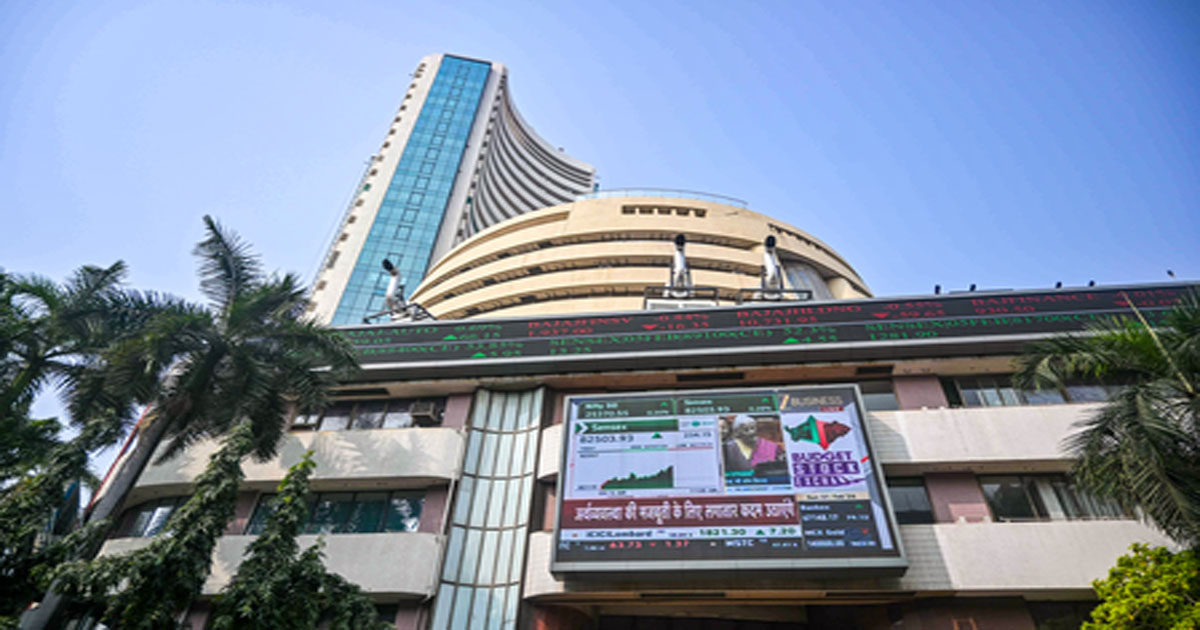
Mumbai, June 24: Indian equity benchmarks traded in a narrow range on Wednesday morning for a second consecutive session amid decline in crude oil prices.
Sensex was trading at 76,348.95, up over 100 points or 0.19 per cent in early deals, while Nifty was at 23,853.75, higher by 30 points or 0.12 per cent.
Sector-wise, Nifty IT led the gains, rising nearly 1 per cent, followed by Nifty MidSmall IT & Telecom (0.72 per cent), Nifty Pharma (0.68 per cent), Nifty Healthcare (0.57 per cent) and Nifty Realty (0.3 per cent).
Financial and banking stocks also remained in positive territory, with Nifty Private Bank and Nifty PSU Bank advancing 0.23 per cent and 0.21 per cent, respectively.
On the downside, metal and auto stocks witnessed selling pressure, with Nifty Metal declining 0.23 per cent and Nifty Auto slipping 0.21 per cent.
“The crash in Brent crude has removed the macro headwinds for India. The rupee has stabilised and FII selling appears to have tapered off,” analysts said, adding that these developments are positive for the market.
However, they cautioned that a weak monsoon remains a concern. Rainfall has been deficient by 43 per cent so far, raising fears of a marginal impact on economic growth and corporate earnings.
The analysts advised investors to align their portfolios with the emerging risks, noting that sectors such as FMCG and entry-level two-wheelers could be affected by lower rural incomes. “Pharmaceutical stocks, with their relatively inelastic demand profile, are likely to remain resilient and could even outperform in a monsoon-deficient environment,” they said.
On the commodities front, international benchmark Brent crude fell more than 1 per cent to around $76 a barrel, while US West Texas Intermediate (WTI) crude declined 1.5 per cent to about $72 a barrel.
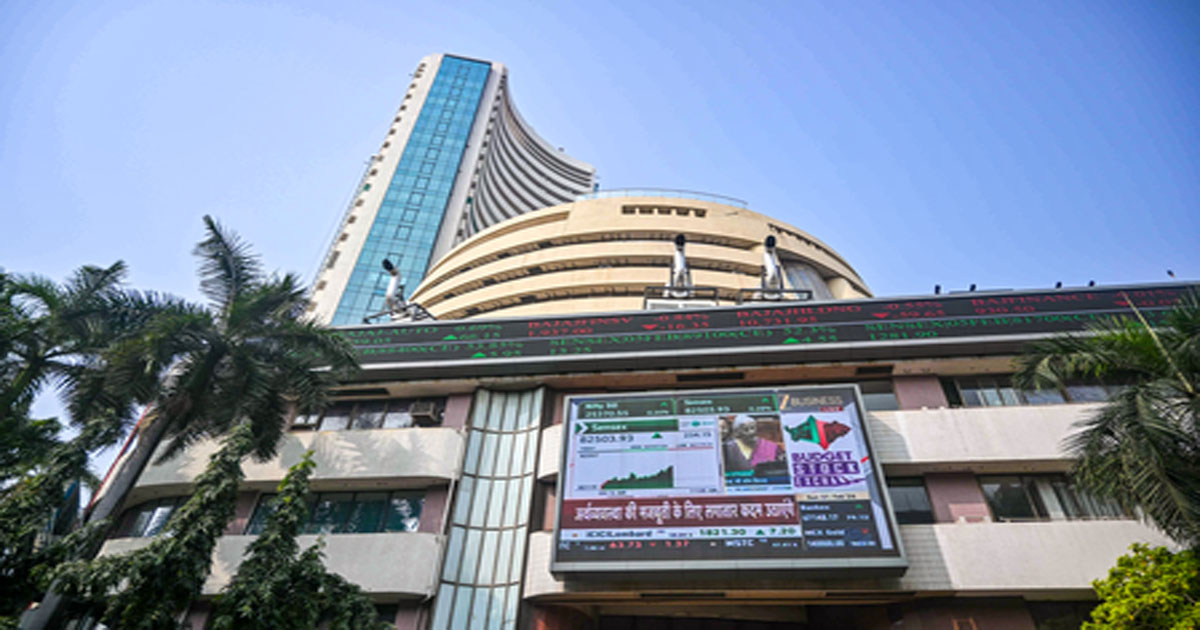
Mumbai, June 23: Indian equity markets opened on a flat note on Tuesday after a multi-session rally driven by easing tensions in West Asia.
Sensex opened at 77,086.05, down 8 points or 0.01 per cent, while Nifty started the session at 24,071.30, lower by 31.60 points or 0.13 per cent.
Sector-wise, Nifty Pharma was top gainer, rising 0.41 per cent, followed by Nifty MidSmall Healthcare (up 0.40 per cent), Nifty 500 Healthcare and Nifty Media, both gaining 0.29 per cent.
While Nifty Cement and Nifty Oil & Gas also advanced 0.27 per cent and 0.18 per cent, respectively.
In contrast, Nifty Metal was the worst-performing sector, declining 0.8 per cent, followed by Nifty IT, which fell 0.77 per cent.
Among Nifty 50 constituents, Infosys, Hindalco Industries, TCS, HCLTech, Tech Mahindra, Tata Steel and Wipro were the top losers in early trade.
The broader market remained resilient, with smallcap and midcap indices outperforming the benchmarks.
Nifty Smallcap 50 rose 0.34 per cent, while Nifty Smallcap 250 and Nifty Smallcap 500 gained 0.33 per cent and 0.28 per cent, respectively.
Meanwhile, India VIX — the market’s fear gauge — declined 0.7 per cent to 12.75.
According to market experts, easing tensions in West Asia and the sharp correction in Brent crude prices below $80 per barrel have improved the outlook for India’s GDP growth and corporate earnings in FY27.
They noted that stability in the rupee and a moderation in foreign portfolio investor (FPI) selling remain key positives for equities.
However, they cautioned that the progress of the monsoon will be closely watched, as a prolonged rainfall deficit could weigh on rural demand, inflation and sectors such as FMCG.
In the commodities market, international benchmark Brent crude fell 0.5 per cent to $77.51 per barrel, while US West Texas Intermediate (WTI) crude declined 0.35 per cent to $73.60 per barrel.

NEET paper leak: Judicial custody of kingpin PV Kulkarni, coaching director extended till July 8

The government should immediately withdraw the FIRs registered against schools in Mumbai’s slum areas, make them permanent by relaxing the conditions: Abu Asim Azmi

Fake BMC Deputy Commissioner Altaf Sheikh arrested

Murder in Mumbai local train over dispute over closing door during rain

Mumbai-Gurgaon mobile theft gang exposed, one arrested, stolen goods recovered, 7 police claim to have solved the mystery

G7 Summit: PM Modi, Prez Trump discussed West Asia, India-US trade deal & bilateral cooperation across sectors: MEA

Trump, Netanyahu hold phone talks after Iranian missile fire: Israeli state media

Indian equity markets trade higher as Iran-Israel tensions ease

Rubio says Hamas disarmament key to Gaza rebuild

Israel captures strategic Beaufort Castle in southern Lebanon
-

 Crime4 years ago
Class 10 student jumps to death in Jaipur
-

 Maharashtra2 years ago
Mumbai Local Train Update: Central Railway’s New Timetable Comes Into Effect; Check Full List Of Revised Timings & Stations
-

 Maharashtra2 years ago
Mumbai To Go Toll-Free Tonight! Maharashtra Govt Announces Complete Toll Waiver For Light Motor Vehicles At All 5 Entry Points Of City
-

 Maharashtra2 years ago
False photo of Imtiaz Jaleel’s rally, exposing the fooling conspiracy
-

 National News2 years ago
Ministry of Railways rolls out Special Drive 4.0 with focus on digitisation, cleanliness, inclusiveness and grievance redressal
-

 Maharashtra2 years ago
Maharashtra Elections 2024: Mumbai Metro & BEST Services Extended Till Midnight On Voting Day
-

 National News2 years ago
J&K: 4 Jawans Killed, 28 Injured After Bus Carrying BSF Personnel For Poll Duty Falls Into Gorge In Budgam; Terrifying Visuals Surface
-

 Crime2 years ago
Baba Siddique Murder: Mumbai Police Unable To Get Lawrence Bishnoi Custody Due To Home Ministry Order, Says Report