
Business
Cloud reduces turnaround time essential for dynamic business like ours: Zomato CTO

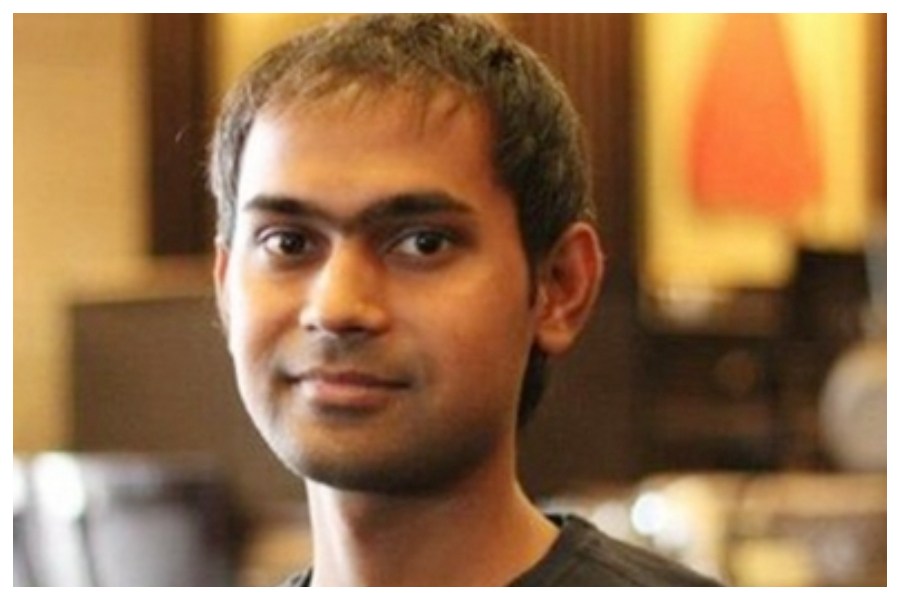
As the quick-commerce growth story takes shape in India, Zomato, which just acquired Blinkit for about $568 million, feels that quick commerce is a natural extension of its food delivery business.
India’s quick commerce market is all set to witness 15 times growth by 2025, reaching a market size of nearly $5.5 billion, according to reports.
The total addressable market for quick commerce in India stands at $45 billion, and urban areas are driving this market on the back of mid-high-income households.
Gunjan Patidar, Chief Technology Officer (CTO), Zomato, told IANS that when it comes to online ordering, faster turnaround time leads to a better customer experience and improves customer retention and here, a flexible and scalable Cloud reduces the overall turnaround time, which is essential for a dynamic business like theirs.
Here are the excerpts from the interview:
Q: There has been a mixed reaction to Zomato’s newly announced 10-minute delivery model. What is the strategic thinking behind this? Also, tell us more about the underlying technology that will make this possible.
A: We have witnessed that a faster turnaround time leads to a better customer experience and improves customer retention. It’s simple, you order food when you’re hungry, so it makes much more sense to get it as quickly as possible.
The underlying technology that enables us to deliver within 10-minutes is more or less what we already do in online ordering. The real game-changer is the process at the back. Time optimisation happens at our finishing stations through both technology and operational speed. Please note that no time optimisation occurs on the road, and the delivery partners aren’t informed of whether it is a 10-minute or 30-minute delivery.
Further, no incentive is provided for timely deliveries, and neither are the delivery partners penalised for late deliveries.
Q: The recent ‘pure tech’ IPOs have failed to impress public market investors. Even globally, high growth US tech stocks are stumbling (e.g. DoorDash). What are the secular tailwinds, key upcoming business initiatives etc. which should keep us upbeat about Zomato’s growth prospects?
A: As an organisation, we focus more on long-term initiatives than worrying about what’s the current sentiment. Even during the most critical of times, more than half of our engineers are working on projects that will change the course of Zomato in upcoming years. Coming to the current situation, we feel it’s more like a global phenomenon rather than something particular to Zomato or other tech companies. It’s a market sentiment and part of a regular business cycle. It’s not the first time and won’t be the last. Every time this happens, the market takes some time to correct itself, and things eventually fall back in place.
Our long-term initiatives are customer-centric, wherein we are currently focusing on Hyperpure growth, and deeper penetration in the cities we already operate in, to name some.
Q: How are you managing to attract and retain top talent?
A: While hiring and retaining the best engineers is still challenging, Zomato has always found the right pool. One of the reasons why we’re able to do this is because we focus more on vision than skills. While skills are essential, what distinguishes great engineers from the good is how aligned they are with the organisation’s vision. And it’s something that we gauge when we are hiring for our engineering and product teams. Our idea is to get onboard the candidates who feel connected with Zomato’s mission and vision. These people are excited to change the food industry for the better, want to play a pivotal role in where we are heading, and are keen to build something that will make people’s lives easier and better.
We also highly emphasise on-the-job learning wherein they can always learn new skills that not only help in doing the current job better but also prepare them for the future. While these things help get the right kinds of people, the culture makes people stay. Getting to work on various projects at once (be it dining or food delivery or Hyperpure) or working in an open environment empowers people in many ways. For Zomans, it’s more about qualitative growth than quantitative one.
Q: How are you using AI/ML, data analytics etc. to serve the customer better?
A: Food delivery is a high-frequency business wherein we are constantly working with multi-layered problems, for example, predicting food preparation time or estimated time of arrival. Another is balancing the demand and supply of delivery partners, especially during monsoons or festivals. Since the supply of delivery partners can be unpredictable, it becomes one of the crucial problems for our data science team. Besides these, we use machine learning to personalise our customer experiences to improve their overall experience.
For example, predicting what customers may like based on their order history or which restaurants we should recommend on the homepage or how items can be prioritised on the search page is done via data science teams.
Q: Tell us about your journey on the cloud? What has cloud technology allowed you to do that you couldn’t do before?
A: We have been using cloud technology for a long time. We started this in 2014 when we first hosted our data on Amazon Web Services (AWS). It reduces the overall turnaround time, which is essential for a dynamic business like ours.
For instance, traffic may be very different at one hour of the day from the other or during special occasions like New Year’s Eve or monsoon. All these patterns are significantly different from each other, and having a cloud enables us to be flexible and optimize basis the need. It also helps in saving a tremendous cost as we don’t have to use the peak capacity every time. We can reduce it during nighttime when there are fewer orders and scale up when the demand is high.
Q: What are the qualities that make you stay ahead of the curve as a CTO?
A: One of the founding principles is to stay connected to the technical landscape, say what the different kinds of tools and technologies teams use across departments. Then, one is being aware of the pain points and arranging or offering solutions to the team faster. One should also stay ahead of the current ecosystem. One should be mindful of conversations in the market, how work cultures are evolving, what tools are being used that enhance efficiency, and what new tech innovations are happening across the globe.
You also must be on top of the organisation’s pulse at any time, what different teams are working upon, the kind of developments they have made in the last few months and the upcoming projects. We keep doing regular catch-ups or organising group events like team lunches, showcases, and off-sites to build better team morale, management and coordination.

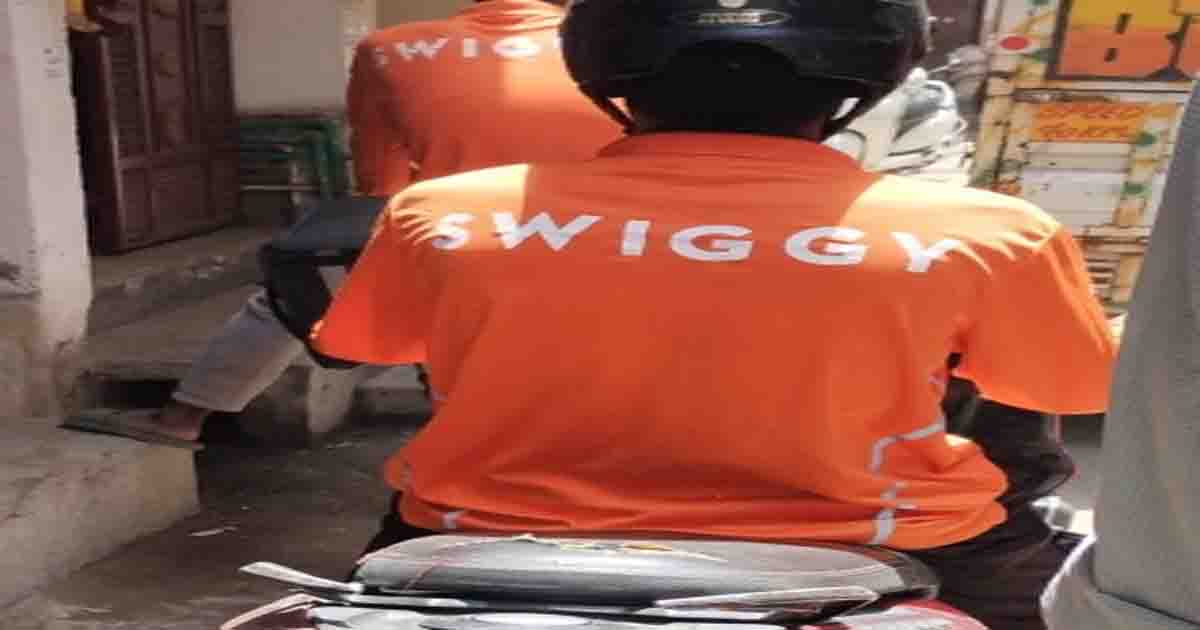
Food delivery and quick-commerce platform Swiggy on Thursday reported a consolidated net loss of Rs 922 crore for the quarter ended September 2026 (Q2 FY27), compared with a loss of Rs 791 crore in the preceding quarter (Q1 FY27).
However, the company’s losses narrowed from Rs 1,092 crore recorded in the corresponding period last financial year (Q2 FY26), according to its stock exchange filing.
Revenue from operations increased 36.1 per cent year-on-year to Rs 7,571 crore from Rs 5,620 crore, driven by growth across food delivery, quick commerce and out-of-home consumption segments.
Despite the robust revenue growth, total expenses climbed to Rs 8,703 crore from Rs 6,711 crore a year ago, as per its regulatory filing.
Swiggy’s core food delivery business continued to strengthen profitability during the quarter. Gross order value (GOV) for the segment rose 17.7 per cent year-on-year to Rs 10,054 crore, while adjusted EBITDA improved by Rs 101 crore to Rs 341 crore.
The adjusted EBITDA margin stood at 3.4 per cent of GOV, marking the business’s highest-ever profitability and margin performance.
The company’s out-of-home consumption business also maintained momentum, with GOV growing 34.9 per cent year-on-year to Rs 1,508 crore.
The segment reported its seventh consecutive quarter of profitability, delivering an adjusted EBITDA margin of 0.5 per cent of GOV.
Meanwhile, quick-commerce arm Instamart continued its expansion push. Net order value (NOV) rose 31.4 per cent year-on-year and 13.4 per cent sequentially to Rs 6,954 crore.
During the quarter, Instamart added 69 dark stores, taking its total network to 1,240 stores nationwide. However, the aggressive expansion continued to weigh on profitability. Instamart reported a loss of Rs 895 crore for the quarter.
Its contribution margin improved by 157 basis points year-on-year to minus 1 per cent of GOV, though it declined by 82 basis points on a sequential basis.
The segment’s adjusted EBITDA margin improved marginally to minus 9.7 per cent from minus 9.8 per cent in the previous quarter.
Business
Adani Energy Solutions profit more than doubles to Rs 1,364 crore in Q2, revenue rises 51 pc

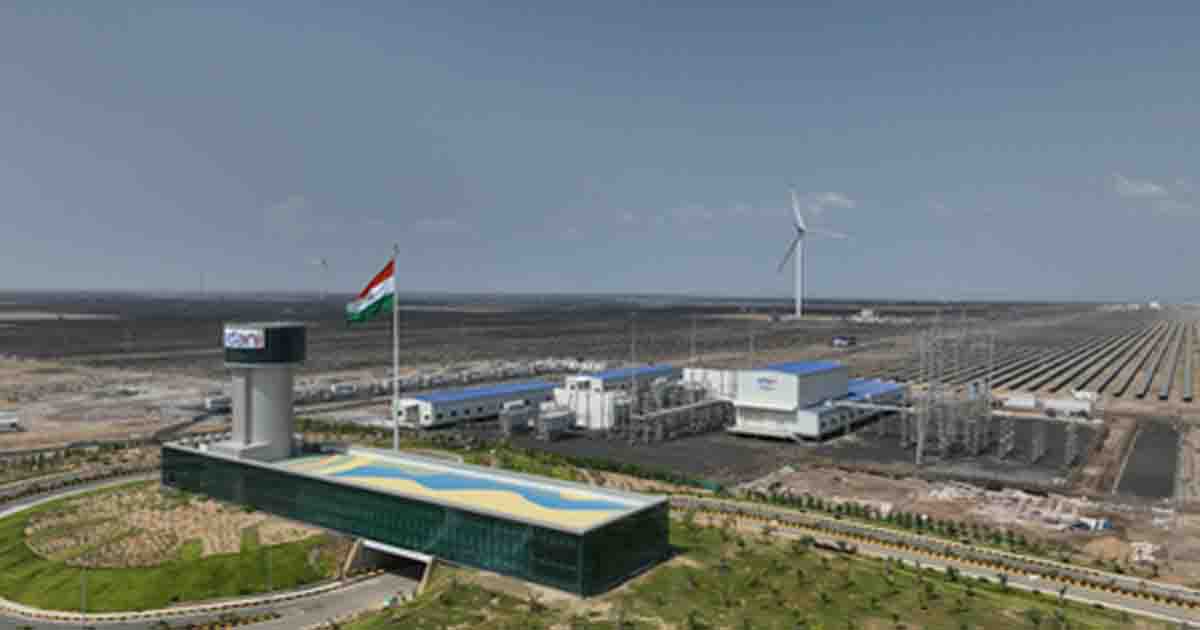
Adani Energy Solutions Ltd (AESL) on Thursday reported a 145 per cent year-on-year rise in consolidated net profit to Rs 1,364 crore for the quarter ended September 30, 2026, delivering record performance.
According to the company’s exchange filing, total income rose 51 per cent to Rs 10,239 crore in Q2 FY27 from Rs 6,767 crore in Q2 FY26.
Meanwhile, operational revenue grew 51 per cent to Rs 7,167 crore driven by healthy contribution from the transmission and energy solutions platform.
In Q2FY27, EBITDA stood at Rs 3,548 crore, an increase of 67 per cent year-on-year, while operating EBITDA rose 68 per cent to Rs 3,070 crore. This is an all-time high quarterly EBITDA for the company.
In addition, consolidated PAT jumped 137 per cent to Rs 2,600 crore for H1 FY27, while total income rose 46 per cent to Rs 20,092 crore.
Commenting on the earnings, Adani Energy Solutions CEO Kandarp Patel said, “AESL closed the first half of the fiscal year with strong financial and operational momentum, laying a robust foundation for future growth. We significantly expanded our growth pipeline by winning the strategic Vizag and Satara transmission assets, elevating our active order book to around Rs 87,000 crore.”
He said operationally, the Mumbai distribution business grew by about 11 per cent in units sold, while the smart metering platform scaled its installation base to approximately 15 million meters.
“A significant 2.5 GW RTC power supply contract with MSEDCL reinforced AESL’s core competencies in multi-source energy aggregation and power supply optimisation for customers,” Patel said.
“Backed by robust quarter-on-quarter performance across all business segments and strict financial prudence, we are well-positioned to convert this massive project pipeline into long-term stakeholder value,” he added.
Segment-wise, the company’s transmission operating revenue rose 17 per cent year-on-year to Rs 1,521 crore in Q2, while distribution (AEML and MUL) revenue grew 2 per cent to Rs 3,181 crore.
Smart metering operating revenue (Ind AS) surged 129 per cent to Rs 267 crore and energy solutions revenue stood at Rs 2,197 crore.
Shares of Adani Energy Solutions ended at Rs 1,293 on the BSE. The Adani Group stock has recorded a 52-week high of Rs 1,789 and a 52-week low of Rs 804.70, according to the exchange data.

Indian equity benchmarks opened lower on Thursday tracking weak Asian markets and concerns over elevated crude oil prices and high US bond yields.
Sensex opened 366.36 points or 0.50 per cent lower at 73,343.33, while Nifty began the trading session at 22,687.75, declining 123.60 points or 0.54 per cent.
Sector-wise, most indices traded in the red with auto, metal and healthcare shares leading losses in early trade.
Nifty Auto, Nifty Metal and Nifty Healthcare declined up to 0.98 per cent. Meanwhile, Nifty Pharma also slipped 0.78 per cent.
Broader weakness was also visible across FMCG, realty, cement and financial stocks.
Analysts said the recent trend of large-cap stocks outperforming mid and small caps appears to be gathering momentum as valuation concerns emerge in the broader market.
“The broader market resilience in recent months has been more a function of liquidity than earnings. This has created a paradox of overvalued mid and small caps coexisting with attractively valued large-caps. This trend is now getting corrected and is likely to sustain,” they said.
The eperts also pointed to external headwinds, including rising crude prices and elevated US Treasury yields which are encouraging traders to build short positions despite continued institutional buying.
“Sectoral churn towards fairly valued large caps is the ideal investment strategy now. It may take time, but this strategy will certainly be rewarded,” they added.
Technical analysts said the recent sharp decline and the breach of the 22,700 level on the Nifty raised the risk of a deeper correction.
“Recovery hopes rest on the ability of 22,590 to hold, but a move back above 22,840 will be needed to confirm renewed upside strength,” according to them.
On Wednesday, foreign institutional investors (FIIs) turned net buyers and purchased equities worth about Rs 1,022 crore. Domestic institutional investors (DIIs) also remained buyers with net purchases of around Rs 1,614 crore.
In Asian markets, major indices remained under pressure. Japan’s Nikkei, Hong Kong’s Hang Seng and South Korea’s Kospi dropped up to 2 per cent in early trading.
Overnight, Wall Street ended higher led by technology shares. The Nasdaq advanced around 1 per cent after strong corporate earnings boosted sentiment around artificial intelligence-related stocks, while the S&P 500 gained 0.58 per cent.
Meanwhile, Brent crude futures rose more than 1 per cent to trade around $110 per barrel, adding to inflation concerns and weighing on investor sentiment.

Netanyahu speaks with PM Modi, invites him for Israel’s Independence Day along with heroic Indian pilot

Aasif Khan’s wife reveals actor suffered major heart attack, calls out Qazi Touqeer for mocking him

Four more arrested in Tiger Shroff firing case; two women accused of supplying weapons, accused remanded to police custody till October 26.

Swiggy’s Q2 net loss widens sequentially to Rs 922 crore

12 injured in attack on Dalit family in Patna, two critical

Rahul, Cong ecosystem want to force regime change: BJP after Neha Bora praises B’desh Gen-Z protest

Attack on democratic rights: INDIA Bloc leaders on detentions of anti-ECI protestors

BJP pays tribute to ex-President Abdul Kalam, recalls his enduring influence on generations of India’s youth

INDIA bloc begins protest march against ECI

Maha Congress stages agitation against Gyanesh Kumar
-

 Crime4 years ago
Class 10 student jumps to death in Jaipur
-

 Maharashtra2 years ago
Mumbai Local Train Update: Central Railway’s New Timetable Comes Into Effect; Check Full List Of Revised Timings & Stations
-

 Maharashtra2 years ago
Mumbai To Go Toll-Free Tonight! Maharashtra Govt Announces Complete Toll Waiver For Light Motor Vehicles At All 5 Entry Points Of City
-

 Maharashtra2 years ago
False photo of Imtiaz Jaleel’s rally, exposing the fooling conspiracy
-

 National News2 years ago
Ministry of Railways rolls out Special Drive 4.0 with focus on digitisation, cleanliness, inclusiveness and grievance redressal
-

 Maharashtra2 years ago
Maharashtra Elections 2024: Mumbai Metro & BEST Services Extended Till Midnight On Voting Day
-

 National News2 years ago
J&K: 4 Jawans Killed, 28 Injured After Bus Carrying BSF Personnel For Poll Duty Falls Into Gorge In Budgam; Terrifying Visuals Surface
-

 Crime2 years ago
Baba Siddique Murder: Mumbai Police Unable To Get Lawrence Bishnoi Custody Due To Home Ministry Order, Says Report