
National News
Childhood sexual harassment can lead to psychosocial problems: Delhi HC

In view of insurmountable long-term effects of childhood sexual harassment, the Delhi High court has observed that the well-being of a child with vulnerable mental psyche has to be prioritised.
The court made the observations as it dismissed a physics teacher’s appeal, accused of sexual harassment and molestation of a Class 9 girl at a private school in 2006.
The division bench of Chief Justice Satish Chandra Sharma and Justice Subramonium Prasad said: “An act of sexual harassment, therefore, has the potential to cause mental trauma to the child and may dictate their thought process for the years to come. It can have the effect of hindering the normal social growth of the child and lead to various psychosocial problems which could require psychological intervention.”
The teacher had challenged a single judge order which upheld the orders of Delhi School Tribunal dated December 13, 2011 and Disciplinary Authority imposing the penalty of compulsory retirement on him.
The teacher had contended that the Disciplinary Committee member, who had also imposed the penalty, was not a part of teaching staff in the school.
However, the judge had rejected the argument and said that the woman was an employee of the school and was only sent on deputation and said that no prejudice was caused to the teacher because of the fact that the woman was a part of the Disciplinary Committee.
“Nothing cogent has been brought on record by the Appellant to substantiate that the finding of the Inquiry Officer, as upheld by the Disciplinary Authority, the Tribunal and the learned Single Judge of this Court, is perverse which would warrant interference from this court,” the court said, while upholding the decisions of the single judge, disciplinary authority and tribunal.


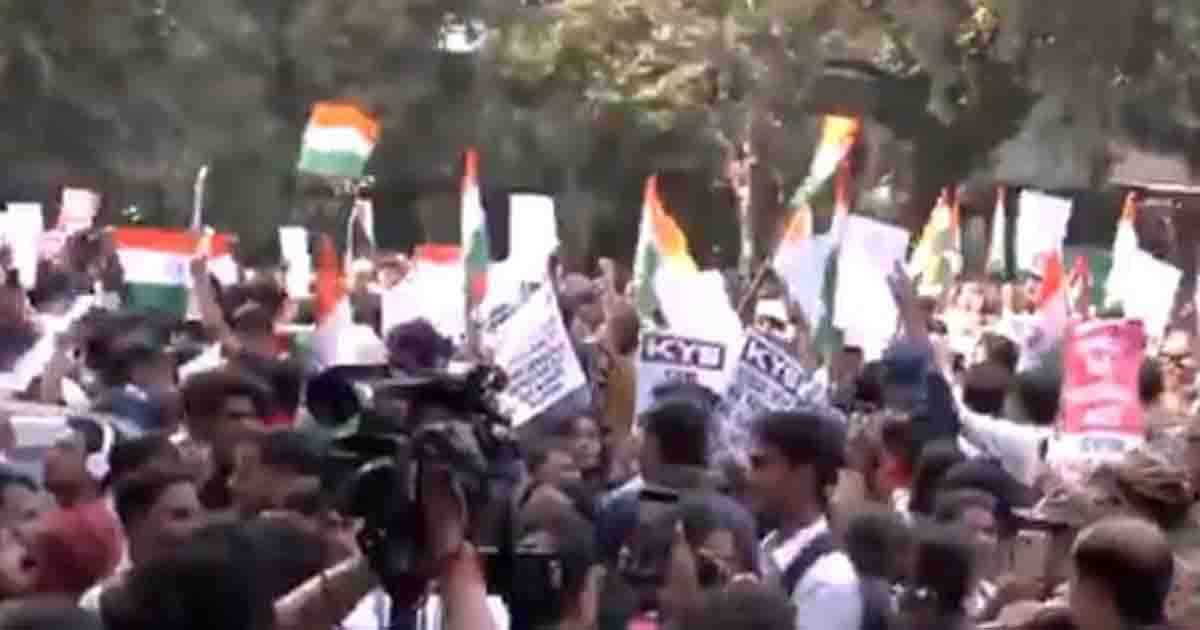
Several Left-Wing organisations, student leaders and civil society members on Friday took part in a protest march towards the Election Commission of India (ECI) headquarters in the national Capital amid heavy security, demanding the resignation of Chief Election Commissioner (CEC), Gyanesh Kumar, over alleged irregularities in the Special Intensive Revision (SIR) of electoral rolls.
The participants, including members of Left-Wing’s All India Students’ Federation (AISF) and All India Youth Federation (AIYF), gathered near Bangla Sahib Gurdwara at Delhi’s Connaught Place to march to the Election Commission’s headquarters near Patel Chowk.
CPI(M) leader Brinda Karat, CPI leader P Sandosh Kumar and political activist Yogendra Yadav also took part in the protest.
Speaking to reporters, Yadav said: “The protests will continue uninterrupted. If you shut down one Jantar Mantar, hundreds of Jantar Mantars will emerge. You may silence one person, but you cannot silence the people. This movement will continue in its own form because it is about the most basic democratic rights of the people of this country.”
P Sandosh added: “…We will intensify our movement in the coming days, and there will be larger gatherings. We will continue our agitation until the resignation of Mr. Gyanesh Kumar. No one can save him for sure.”
Heavy security deployment was also witnessed outside the ECI headquarters and several protesters were detained by the police.
Earlier in the day, the Delhi Traffic Police had advised commuters to avoid affected routes in view of the protest march.
In a post on ‘X’, the Delhi Traffic Police said: “In connection with the anticipated movement of a large number of people from Bangla Sahib Gurudwara towards Jantar Mantar today, traffic diversions will be in place from 1:00 P.M. to 5:00 P.M.”
“Commuters are advised to avoid affected roads, plan their journeys in advance and follow traffic police instructions,” it said.
Further, the Traffic Police appealed to motorists to remain patient, follow rules and cooperate with traffic personnel deployed in the area. “Please follow diversion signs and traffic directions to avoid congestion,” it said.
The protests demanding the resignation of CEC Kumar gained momentum following a media report claiming differences within the poll panel regarding procedures related to the SIR.
Earlier this month, the agitations against the CEC were led by the Opposition INDIA Bloc and the Cockroach Janta Party (CJP), leading to brief detentions of several leaders.
Meanwhile, the BJP has launched a nationwide campaign titled ‘Save democracy, remove anarchy’ to counter the Opposition’s criticism of the SIR.
National News
One killed as freight train hits pickup van at unmanned railway crossing in MP Anuppur

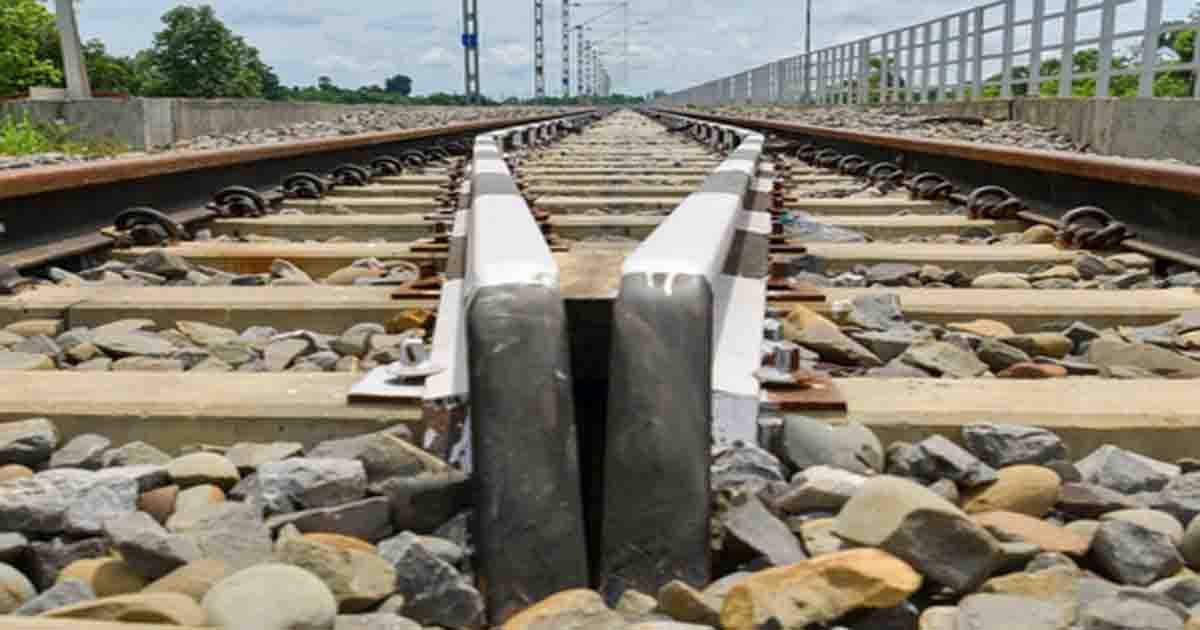
A 25-year-old man was killed, and six others were injured when a freight train collided with a pickup vehicle in Madhya Pradesh Anuppur district, officials said on Friday.
The incident happened late Thursday night, police said. The accident occurred near Sanjay Nagar Double Story in the Chachai police station area when the pickup, carrying seven people returning to their village after delivering DJ equipment, was hit by a train heading towards Sangwa siding to collect coal for the Amarkantak Thermal Power Plant.
The deceased, Ravi Barman, a resident of Chakethi village, was trapped inside the vehicle and died on the spot. The impact was so severe that his head was severed from his body. His body was later removed with the help of a JCB machine.
The six injured, including the pickup driver, were taken to the district hospital in Anuppur. They were later assured better treatment in Jabalpur.
The pickup driver said the crossing had neither a railway gate nor a gatekeeper. The injured were identified as Arjun Kol (17), Vikas Singh (22), Shivam Baig (18), Kanhaiya Verma (25), Karan Kol (19) and Rajesh Singh (26). All six are residents of Chakaithi village.
According to police, several occupants jumped out after seeing the approaching locomotive, but Ravi got trapped inside the vehicle and could not escape.
The locomotive pilot reportedly fled the spot, leaving the engine running.
The accident raised questions about safety arrangements along the railway line used for transporting coal.
Following the accident, Ravi’s family demanded compensation and a job for one of his brothers at the power plant.
After a meeting involving district and police officials, villagers and power plant representatives, assurances were given that compensation would be provided as per applicable rules, and a gate would be installed at the crossing.
Anuppur Sub-Divisional Officer of Police Sujit Kumar said the body would be sent for post-mortem examination, and an accidental death case would be registered. “Further action will be taken after the investigation,” he said.
Adani Power Ltd — India’s largest private thermal power generator — on Friday reported a 141.5 per cent year-on-year jump in consolidated profit after tax (PAT) to Rs 7,019.32 crore for the second quarter of FY27, compared to Rs 2,906.46 crore in Q2FY26.
Total reported revenue rose 39.4 per cent to Rs 19,950.60 crore from Rs 14,307.79 crore a year ago, while reported EBITDA jumped 45.7 per cent to Rs 8,743.22 crore.
On a continuing operations basis, revenue from operations grew 29.8 per cent to Rs 17,014.06 crore, while continuing EBITDA was up 18.5 per cent to Rs 6,320.97 crore.
Apart from that, PAT nearly doubled to Rs 11,885.92 crore from Rs 6,211.59 crore in H1 FY27, while reported revenue rose 36 per cent to Rs 39,272.90 crore.
Commenting on the results, CEO S B Khyalia said, “Adani Power continues to grow from strength to strength, achieving newer milestones in profitability and project execution. The primacy of domestic coal-based power in meeting India’s long-term power needs has become clearer every day.”
On industry trends, the company said India’s power demand grew 11.5 per cent to 502 BU in Q2 FY27, with coal and lignite-based generation accounting for 66 per cent of supply. Peak demand reached 270 GW, up 18 per cent year-on-year.
The company sold 26.4 billion units (BU) in Q2 FY27, up from 23.7 BU a year ago. Plant Load Factor (PLF) improved to 70.1 per cent from 62.8 per cent, while operating capacity stood at 18,150 MW.
Meanwhile, power sales under PPAs grew 29.7 per cent to 23.4 BU, with tariff realisation improving 12.7 per cent to Rs 6.4/kWh.
Merchant and short-term realisation improved 33.1 per cent to Rs 7.2/kWh, though volumes were 43 per cent lower due to incremental tie-ups of open capacity in medium-term contracts.

Action under the ‘Pedestrian First’ initiative by the ‘G-North’ ward of the Mumbai Municipal Corporation

ED files FIR, foils bid to trespass flat attached in extortion case against Dawood’s brother

ED attaches Rs 85.2 crore Kolkata land linked to Unity Infraprojects bank fraud case

Left parties, student groups march towards EC HQ, demand Gyanesh Kumar resignation

Maha: Raj Thackeray demands impartial probe in Rs 500 crore audio clip row

Rahul, Cong ecosystem want to force regime change: BJP after Neha Bora praises B’desh Gen-Z protest

BJP pays tribute to ex-President Abdul Kalam, recalls his enduring influence on generations of India’s youth

Attack on democratic rights: INDIA Bloc leaders on detentions of anti-ECI protestors

INDIA bloc begins protest march against ECI

Maha Congress stages agitation against Gyanesh Kumar
-

 Crime4 years ago
Class 10 student jumps to death in Jaipur
-

 Maharashtra2 years ago
Mumbai Local Train Update: Central Railway’s New Timetable Comes Into Effect; Check Full List Of Revised Timings & Stations
-

 Maharashtra2 years ago
Mumbai To Go Toll-Free Tonight! Maharashtra Govt Announces Complete Toll Waiver For Light Motor Vehicles At All 5 Entry Points Of City
-

 Maharashtra2 years ago
False photo of Imtiaz Jaleel’s rally, exposing the fooling conspiracy
-

 National News2 years ago
Ministry of Railways rolls out Special Drive 4.0 with focus on digitisation, cleanliness, inclusiveness and grievance redressal
-

 Maharashtra2 years ago
Maharashtra Elections 2024: Mumbai Metro & BEST Services Extended Till Midnight On Voting Day
-

 National News2 years ago
J&K: 4 Jawans Killed, 28 Injured After Bus Carrying BSF Personnel For Poll Duty Falls Into Gorge In Budgam; Terrifying Visuals Surface
-

 Crime2 years ago
Baba Siddique Murder: Mumbai Police Unable To Get Lawrence Bishnoi Custody Due To Home Ministry Order, Says Report