
Sports
Calm KL Rahul excels in adaptability as finisher, gets desired success in Champions Trophy

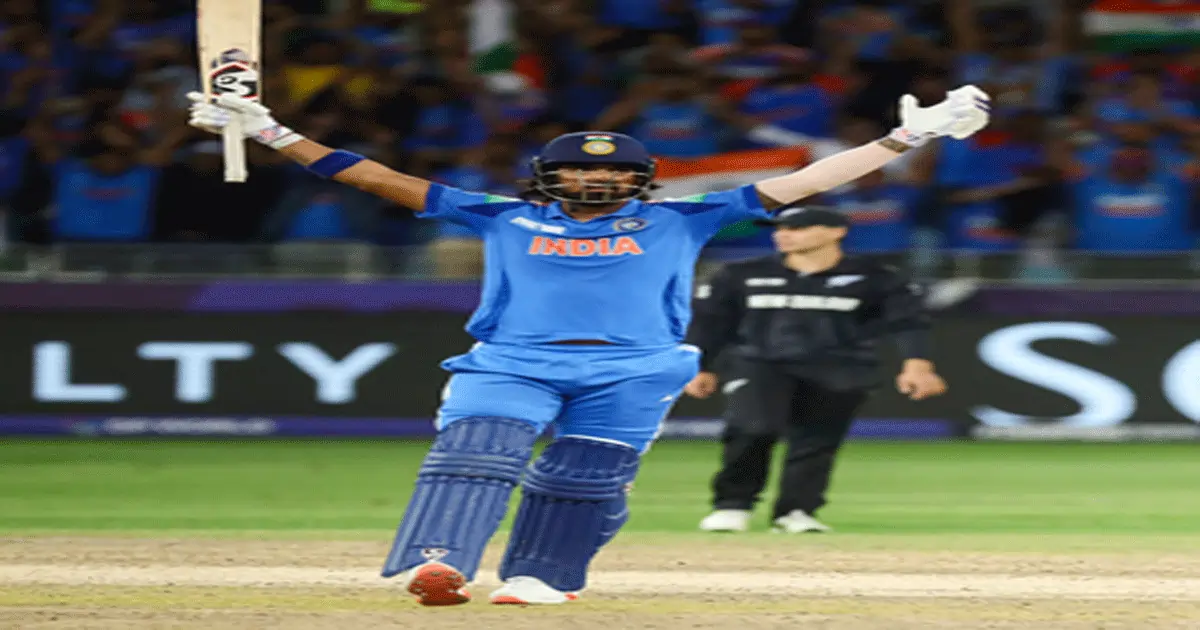
New Delhi, March 12: Oscillatory motion is characterised by the repetitive back-and-forth movement of an object about a fixed point, as exemplified by a clock pendulum. In a competition to find the most oscillatory player in the Indian team, KL Rahul would end up as the unanimous choice.
Rahul’s masterful cover drives and effortless flicks off his wrists, when at his best, are simply poetry in motion. But it isn’t easy being Rahul – the ups and downs in his batting positions have been challenging, similar to a pendulum’s back-and-forth movement.
Rahul’s success in finishing matches for India during their 2025 Champions Trophy triumph exemplifies this. Rahul faced a new ODI challenge when he was moved to the sixth spot, the finisher’s position after Axar Patel took his usual number five slot. Add to it, in the ODI series against England, there were always questions over why Rahul was preferred ahead of Rishabh Pant.
Rahul’s success in that role for India in the Champions Trophy was marked by his calm, humble, and proactive adaptability—qualities that have become second nature to him. While his 136 tournament runs may seem insignificant, they don’t tell the whole story of his vital role in India’s lower middle order.
“He didn’t complain whenever he was sent down the batting order. He used to ask me how I could be better and why should I play in that way. See, whenever he goes to bat at number six, or seven, it is hardly a few balls. He has always opened the batting, wherever he played.”
“So the change of the mindset and adapting to the situation, it is all new. He has played different roles, but this role was different and he started working for it. The planning and preparation was good, so that is how he could play well. He understood his role, and if you watched the final, when the left-arm spinners were bowling, he would easily take the singles between point, cover and extra cover.”
“His planning was good, and he planned it in a way that ‘Yes, I have to do that. I have to cross the line and win match for the country’. Except for that little bit of misunderstanding in running between the wickets with Axar, where he was a little hesitant, he otherwise played beautifully.”
“It was like a symphony – he was playing and that grace was there in running, and hitting the ball. So, it was very natural for him, and I will tell you, that patience and calmness is God’s gift for him,” said Samuel Jayaraj, KL Rahul’s childhood coach.
Similar to his renowned namesake from Bengaluru, who thrived in diverse roles in the ODI set-up, including wicketkeeping, Rahul has proven to be equally adaptable. “It is fantastic to see a player to go down anywhere and play. I think this name Rahul – they will fit in anywhere they play. The senior Rahul also did that for the country, and now this boy also is doing it.
“He enjoys doing it, not even one day there was no loose talk or any complaint – nothing. He said, ‘Sir, I enjoy it’. We never discussed on the points like where here is going to do the batting. He would also say, ‘I have to be ready. I am going to count the number of balls left and I have got a plan like this’,” added Jayaraj.
India’s Champions Trophy win over Bangladesh, Australia, and New Zealand coming via chases were significantly aided by Rahul’s adaptability and taking charge in a tricky situation. His vital scores of 41, 42 not out, and 34 not out on the slow Dubai wickets were worth its weight in gold in guiding India to success under pressure. Rahul’s success in those three chases, according to Jayaraj, stemmed from his smart strategic preparation.
“If you are playing against a left-arm spinner, you practice for facing that in a game. If you are playing against a leg-spinner, you prepare to play for that. These are all things that everybody does. In present day cricket, there is no wasting time. Every second is very, very important when you practice.
“See, he has matured, and for me, he is very intelligent too. He is always a very thoughtful cricketer. So, it became easy for him, and he had that willingness in him to perform, win and finish matches. Plus, a very important thing was in his mind – on how he could play better.
“Comparatively, I think Virat, Shubman Gill, and Rohit played very well, but they were playing in different matches. When it comes to Rahul, he didn’t bat against Pakistan, and in the rest of the matches, he got runs for us.
“Against Australia also, he had that patience of playing long and waiting for the loose ball. We all say we work very hard and all, but I think he has worked smarter and harder this time,” he elaborated.
Rahul’s cricketing career summary wouldn’t be complete without mentioning India’s loss to Australia in the 2023 ODI World Cup final in Ahmedabad. Rahul scored a 66 in the final, the slowest half-century for India in the tournament, and faced significant social media criticism as a result.
He later recounted in a YouTube chat with Ravichandran Ashwin about his uncertainty on the timing of taking down Mitchell Starc. But winning the Champions Trophy on March 9 could now comfort Rahul, a perspective Jayaraj supports.
“When we lost to Australia in the World Cup final, I think he took all the blame saying I should not have got out, that was a wrong timing, and I played a bad shot. That’s how an awakening call comes, and you get better from there. You start thinking, why it happened? How can I overcome it? So, all these thoughts were there.
“But he’s now got a trophy for the country, and it’s a very proud moment. When you lose a wicket in your match, then you start thinking, yes, I have to be a better player, my batting has to improve and I have to play more balls, as well as take the soft-handed singles, which he did in the final. It’s more about how well he built his innings, and even against Australia, he didn’t panic as there was so much of calmness,” he added.
Jayaraj also praised captain Rohit Sharma and the team management for supporting Rahul’s success in a new position. “The planning of the coaches was beautiful – they set the things correctly. If you ask me, I will give all my hats off to the coaches who have planned that.
“They wanted somebody to hold the innings there, and they believed in KL. They didn’t change when they could have sent KL up and would have asked Axar to come there. They didn’t do that as they believed in their set plan to go with that batting order.
“There was a lot of talking and understanding between the senior players and coaches. It gives you a lot of confidence as the team, captain, coach, management and selectors believe yes he will do it, and it was on purpose. I feel very proud now because he is doing lower middle order now,” he said.
Although the cricketing world is currently captivated by Rahul’s adaptable and cool-headed batting style in the Champions Trophy triumph, Jayaraj observed the tournament showcased the real Rahul – evoking memories of the time he saw him as a calm, disciplined, and obedient boy who was enthusiastic about batting.
“Everybody told me that against Australia, he played a fantastic game and I said, yes. I had gone out with my family for lunch on Sunday afternoon when somebody came and said, ‘Rahul has to play’. I said, ‘he has to perform’. I mean, it is his job, and if you start enjoying your job, and if you are happy there, you will perform.
“Whenever he batted in this Champions Trophy, I saw the real Rahul – when he was in his younger days – that focus, and batting grace. I have seen a lot of matches of his younger days, and really enjoyed seeing it. Even against Australia, he played very well. It was more of a mature innings in the final.”
“For me, he is always blessed, a good cricketer, and a good human being who enjoys his cricket. His humbleness and calmness are two of his great things, and I keep on telling him that. I could make out from his face that he enjoyed playing to his role, and that he was very, very happy in that phase, right from planning to preparation. He deserves all of this for the hard work and 10 years of good cricket he has played at the highest level,” he signed off.

Sports
‘My role was limited to unknowingly promoting a few brands…’: Shefali Bagga on alleged role in betting app case


New Delhi, Oct 8: Television sports presenter Shefali Bagga, who was under investigation for her alleged role in the Mahadev betting app case, issued a clarification on her involvement in the hight-profile case and said she ‘unknowingly’ promoted the betting app and has co-operated in the investigation with the authorities.
As per the latest Enforcement Directorate (ED) chargesheet, Shefali surrendered Rs 1.20 crore, the balance sum she is accused of receiving to promote betting apps on the Mahadev platform, after being questioned in the case.
“My role was limited to unknowingly promoting a few brands on social media similar to the promotional engagements undertaken by many public figures and celebrities. Beyond this, I had no involvement or association with any other activities or operations relating to those brands or any other entity. I have cooperated with the department’s investigation, surrendered the money and have full faith in our law,” Shefali told media.
According to the chargesheet, the ED found that Shefali had received around Rs 1.5 crore for making promotional videos for the Mahadev betting app syndicate. During the search at her residence in Delhi, ED officials seized Rs 30 lakh in cash, the agency said.
The Mahadev Book, also known as Mahadev Betting App, has emerged as one of the largest online betting platforms in India in recent years. It facilitates illegal betting worth crores of rupees on sports like cricket and football through mobile apps and websites.
The network has spread nationwide and reportedly involves several high-profile individuals. In previous investigations, the ED had seized property worth several crores and arrested individuals connected to the scam.
The Mahadev Betting App has grown into a sprawling illegal enterprise. The ED continues to expand its investigation into this nationwide betting network.
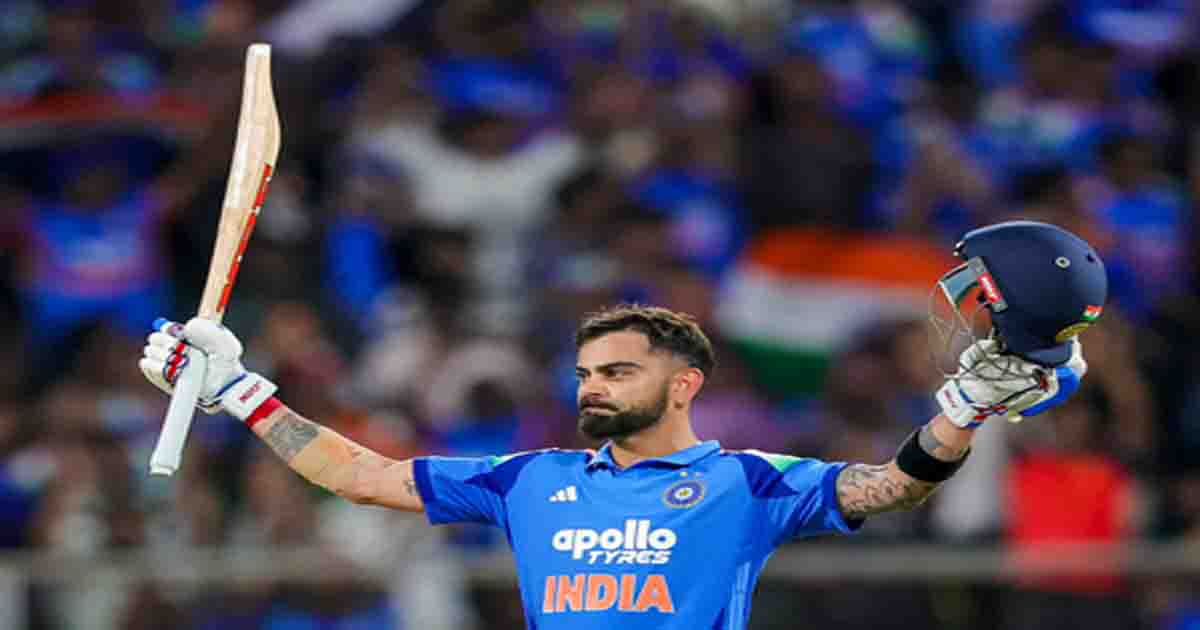
Thiruvananthapuram, Sep 28: Former West Indies fast bowler Ian Bishop believes the cricketing fraternity will only fully grasp the sheer magnitude of Virat Kohli’s monumental achievements once the Indian batting maestro calls time on his illustrious playing career.
Tearing into the West Indies bowling attack at the Greenfield International Stadium to give India a comfortable eight-wicket victory in the series opener, Kohli breached the 15,000-run mark in ODIs while making an unbeaten 139 on Sunday, while bringing up his 55th ton in the format – his third-fastest overall. He now stands as only the second player in history to cross 15,000 men’s ODI runs after the legendary Sachin Tendulkar.
“You have to love what you do to evolve as he has done over such a long period of time. I think this puts him in a rarefied atmosphere, given that he has achieved 15,000 runs in 74 fewer innings than the great Sachin Tendulkar, whom I hold in high regard, having played against him.
“Where his legacy will end, he certainly has to be one of the greatest, if not the greatest, batter in this format of the game. I mean, this is extraordinary. A lot of these fans watching on television and here on the ground appreciate it, but I don’t think we will fully appreciate it until some time after he concludes his playing days,” Bishop said on JioHotstar.
Bishop, the acclaimed commentator, was particularly left in awe of Kohli’s unmatched consistency and his legendary prowess in acing run-chases. “Virat is different in that respect, the appetite that he has for runs, his calculation of how to chase a total, I think that is unsurpassed in this game.
“Virat has a sense of occasion that he may not confess to, but again, that’s his evolution. I still can’t believe 15,000… I know Sachin got there, but that’s a heck of a lot of runs. So, if I had flowers right now, I’d give them to him because he certainly deserves his flowers,” he added.
Calling on the younger generation of cricketers to draw inspiration from Kohli’s work ethics, Bishop urged players across all disciplines to step outside their comfort zones and constantly refine their skills, regardless of age or experience.
“It’s something that we’re all very aware of, because I have grown tired of hearing players say, ‘This is the way I play,’ and people outside the game saying, ‘When you reach a certain age, you can’t learn new tricks.’
“If I were to take one thing away from what Virat Kohli has been doing over the years, it’s that he’s saying it’s never too late to evolve his attacking game, to adapt to how T20 or white-ball cricket has moved, to develop his power game and hit the number of sixes that he has done here at his age.
“It shows that where there is a will, many times, if you’re smart enough, you will find a way. And if any cricketer can take anything away from this, that is what I want them to remember: don’t stay in your comfort zone. Batter, bowler, fielder, captain, get out of your comfort zone,” he concluded.
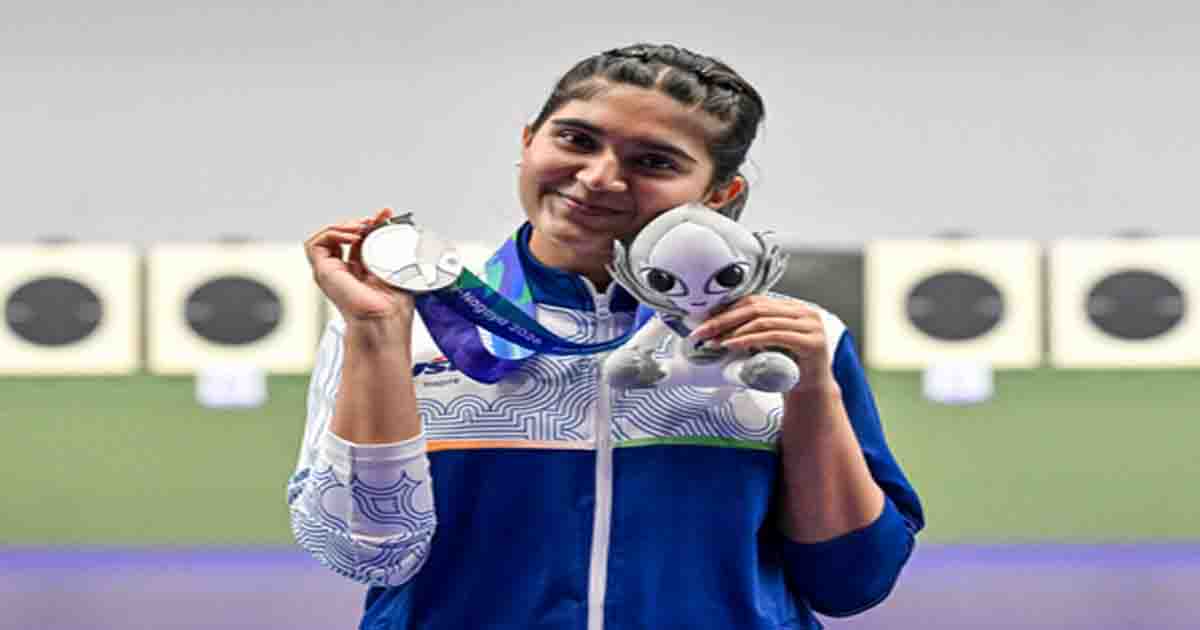
New Delhi, Sep 28: President of India Droupadi Murmu congratulated Esha Singh on Monday after the Indian shooter won the silver medal in the women’s 25m pistol event at the Asian Games 2026 in Aichi-Nagoya, praising her skill, precision and consistency after a dramatic final that featured multiple shoot-offs.
“I extend my heartiest congratulations to Esha Singh on winning the Silver Medal in the Women’s 25m Pistol event at the Asian Games 2026. Your exceptional performance has reflected great skill, precision and consistency. This medal is a proud addition to your sporting journey. My best wishes for many more laurels,” the President wrote on X.
Esha’s medal came after a tense contest in which she had to repeatedly fight to stay in contention. The Indian entered the final after qualifying eighth and eventually secured her place in the gold-medal shoot-off following a series of eliminations and shoot-offs.
The final stage brought Esha up against China’s Xiao Jiaruixuan. With the two separated by a single hit, Esha produced four hits to force a shoot-off. Both shooters then registered four hits apiece, sending the contest into another decisive exchange. Xiao eventually prevailed, leaving Esha with silver.
The result added another Asian Games medal to Esha’s record and drew praise from senior political leaders, with Murmu highlighting the performance as another significant milestone in the shooter’s career.
Defence Minister Rajnath Singh also hailed the Indian’s performance, pointing to the qualities behind her medal-winning display.
“A shining example of dedication and perseverance! Esha Singh has secured a silver medal women’s 25m pistol event at the Asian Games 2026. Her exceptional performance is a testament to her talent and hard work. Congratulations to her and best wishes for her future endeavours,” he said.
Uttar Pradesh Chief Minister Yogi Adityanath focused on Esha’s ability to withstand the pressure of the final, particularly during the shoot-offs.
“A fighting performance from Esha Singh in Shooting! Congratulations to Esha Singh on winning the silver medal in the women’s 25m pistol event at the Asian Games 2026. After battling through multiple shoot-offs, Esha held her nerve to secure another Asian Games medal in the event. A remarkable display of composure and determination,” he said.

Drug dealer arrested in Mumbai with 1.5 kg of charas (cannabis resin)

Lawrence Bishnoi gang shooters had practised shooting in the Aarey Colony forest before opening fire at Tiger Shroff’s residence.

PM Modi witnesses IAF’s air show, inaugurates garment facility in Varanasi

Major action by Mumbai ANC: Drug peddlers arrested.

Delhi Police bust Jamtara-based cyber fraud syndicate, 2 held for credit card fraud

Rahul, Cong ecosystem want to force regime change: BJP after Neha Bora praises B’desh Gen-Z protest

BJP pays tribute to ex-President Abdul Kalam, recalls his enduring influence on generations of India’s youth

Attack on democratic rights: INDIA Bloc leaders on detentions of anti-ECI protestors

INDIA bloc begins protest march against ECI

Maha Congress stages agitation against Gyanesh Kumar
-

 Crime4 years ago
Class 10 student jumps to death in Jaipur
-

 Maharashtra2 years ago
Mumbai Local Train Update: Central Railway’s New Timetable Comes Into Effect; Check Full List Of Revised Timings & Stations
-

 Maharashtra2 years ago
Mumbai To Go Toll-Free Tonight! Maharashtra Govt Announces Complete Toll Waiver For Light Motor Vehicles At All 5 Entry Points Of City
-

 Maharashtra2 years ago
False photo of Imtiaz Jaleel’s rally, exposing the fooling conspiracy
-

 National News2 years ago
Ministry of Railways rolls out Special Drive 4.0 with focus on digitisation, cleanliness, inclusiveness and grievance redressal
-

 Maharashtra2 years ago
Maharashtra Elections 2024: Mumbai Metro & BEST Services Extended Till Midnight On Voting Day
-

 National News2 years ago
J&K: 4 Jawans Killed, 28 Injured After Bus Carrying BSF Personnel For Poll Duty Falls Into Gorge In Budgam; Terrifying Visuals Surface
-

 Crime2 years ago
Baba Siddique Murder: Mumbai Police Unable To Get Lawrence Bishnoi Custody Due To Home Ministry Order, Says Report