
Business
‘BSNL Ready, Bharat Ready’: State-Owned Telecom Giant To Roll Out 4G/5G-Compatible SIMs With No Geographical Restriction


The Department of Telecommunications on Saturday (August 10) announced a new initiative that the state-owned telecom giant Bharat Sanchar Nigam Limited (BSNL) is preparing to launch a new 4G and 5G ready SIM platform.
In a recent post on the social media platform X, formerly Twitter, Department of Telecommunications (DoT India) wrote, “BSNL ready. Bharat ready.” with a hashtag ‘coming soon’.
The DoT India also shared a post, “STATE-RUN TELECOM firm Bharat Sanchar Nigam Ltd will roll out 4G and 5G compatible over-the-air (OTA) and Universal SIM (USIM) platform, which will enable subscribers to choose their mobile numbers as well as replace SIMs without geographical restrictions.”
The rollout of this advanced SIM platform is part of a broader strategy to modernise BSNL’s services. This initiative is included in the third revival package approved by the Union Cabinet last year, chaired by Prime Minister Narendra Modi. The package, valued at Rs 89,047 crore, was designed to revitalise BSNL and ensure its sustainability in the competitive telecom sector.
Revival Packages
In the recent years, the state owned telecom giant has faced several financial challenges, leading the government to implement three major revival packages to stabilise the telecom provider.
First Revival Package (2019)
Amount: Rs 69,000 crore
Purpose: To provide stability to BSNL and MTNL.
Second Revival Package (2022)
Amount: Rs 1.64 lakh crore
Purpose: To support capital expenditure, address financial distress, settle AGR dues, and merge BBNL with BSNL.
Third Revival Package (2023)
Amount: Rs 89,047 crore
Purpose: To allot 4G/5G spectrum and increase BSNL’s authorized capital from Rs 1.5 lakh crore to Rs 2.1 lakh crore.
Since the implementation of the first two packages, BSNL has reported operating profits starting from FY 2021-22. The company’s debt has been reduced from Rs 32,944 crore to Rs 22,289 crore.
Netizen Reactions
The announcement has sparked a wave of reactions on social media platform.


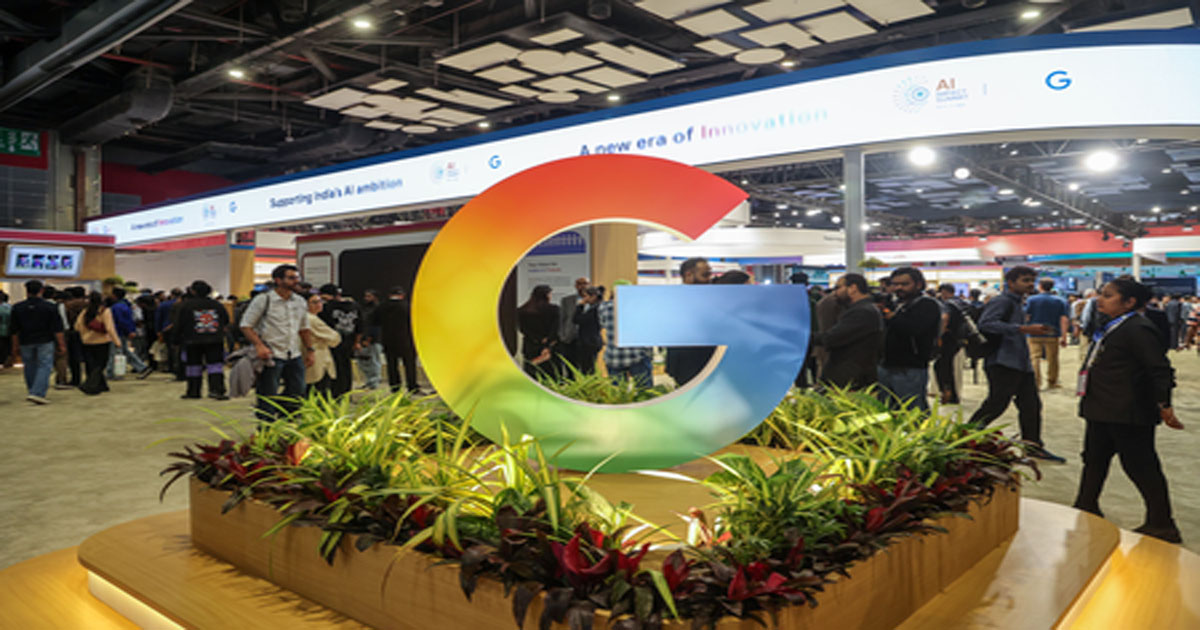
New Delhi, April 25: US tech giant Google plans to invest up to $40 billion in the artificial intelligence (AI) firm Anthropic, as global technology giants accelerate their push into advanced AI models and infrastructure.
The proposed investment includes an initial $10 billion infusion at Anthropic’s latest valuation of $380 billion, with the remaining $30 billion tied to performance-based milestones, the companies confirmed, according to multiple reports.
The move has built on a multi-year partnership between the two firms, under which Google provides cloud infrastructure and access to Anthropic’s AI models, including its Claude suite.
Moreover, Anthropic also leverages Google’s custom tensor processing units (TPUs) as an alternative to widely used graphics processing units.
The latest agreement between the tech firms came amid surging demand for generative AI tools across enterprises, developers and consumers, which has placed increasing pressure on computing infrastructure.
Notably, Anthropic recently secured 5 gigawatts of compute capacity through collaborations involving Google and Broadcom, with additional expansion planned.
However, despite their collaboration, the companies remain competitors in the AI space, with Google’s Gemini models vying against Anthropic’s offerings in the rapidly evolving market.
Additionally, Google has been steadily increasing its stake in Anthropic since 2023, when it first invested $300 million for roughly a 10 per cent holding. Subsequent funding rounds pushed its total investment beyond $3 billion, with reports suggesting a stake of about 14 per cent prior to the latest deal.
The investment has underscored intensifying competition among major technology firms, which are committing tens of billions of dollars to leading AI labs such as Anthropic and rivals, including OpenAI.
Anthropic was founded in 2021 by former OpenAI researchers and has seen rapid growth in adoption of its AI products, particularly its Claude models, with annualised revenue crossing $30 billion.
The deal has followed a similar arrangement with Amazon, which recently invested $5 billion in Anthropic and committed up to $20 billion more, linked to specific commercial milestones.
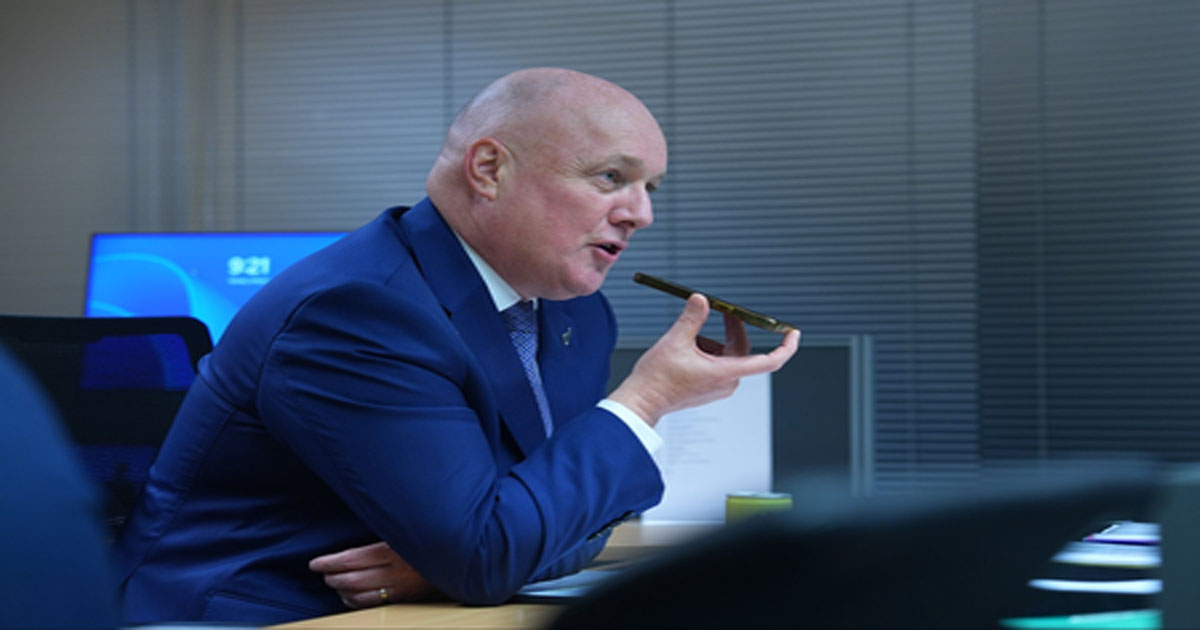
New Delhi, April 24: As India and New Zealand prepare to sign a Free Trade Agreement (FTA) on Monday, both sides are expected to benefit from expanded trade ties and improved market access, New Zealand Prime Minister Christopher Luxon has said.
Taking to the social media platform X, Luxon said, “We will sign a Free Trade Agreement with India on Monday.”
In a video message, Luxon said the agreement would improve market access for New Zealand exporters, particularly manufacturers of marine jet systems used in boats and exported to over 70 countries.
He added that the deal would help reduce trade barriers and strengthen commercial engagement between the two countries.
He also noted that certain exporters currently face tariffs while accessing the Indian market, and said the agreement would gradually ease such duties, improving competitiveness and supporting higher trade flows.
Luxon said the FTA would support increased business activity, employment opportunities and economic growth in New Zealand, while also strengthening bilateral trade linkages with India.
He added that the agreement would bring ‘more jobs, higher wages and more opportunities,’ highlighting the broader economic impact of the deal.
Once signed, the FTA is expected to expand trade and investment ties between the two countries and enhance export opportunities on both sides in a large and growing global market environment.
Earlier this month, legal verification of the New Zealand-India FTA was completed, with both countries agreeing to sign the pact on April 27 in the presence of a large contingent of business representatives, New Zealand Trade and Investment Minister Todd McClay said.
In a statement, McClay described the agreement as a “once-in-a-generation opportunity,” saying it would strengthen bilateral trade relations and provide improved access to each other’s markets.
He said that amid global economic and geopolitical uncertainty, strengthening trade partnerships remains important for long-term economic stability.
McClay added that signing the FTA would allow New Zealand to formally initiate parliamentary treaty examination, enabling public scrutiny of the agreement.

Mumbai, Gold and silver prices started the session on a weaker note on Friday, with both precious metals declining by nearly 1 per cent in early trade on the Multi Commodity Exchange (MCX).
Gold futures for June 5 opened 0.39 per cent or Rs 594 lower at Rs 1,51,167 per 10 grams compared to the previous close of Rs 1,51,761.
Later, the yellow metal touched an intra-day low of Rs 1,50,750, down 0.66 per cent or Rs 1,011. At the last count, it was trading at Rs 1,51,449, a decrease of Rs 312 or 0.21 per cent. During the session so far, gold has touched an intra-day high of Rs 1,51,457.
On the other hand, silver futures for May 5 declined as much as 0.95 per cent or Rs 2,313 to Rs 2,39,200, an intraday low. The white metal was trading at Rs 2,41,345, down Rs 168 or 0.07 per cent. It recorded an intraday high of Rs 2,41,382, down 0.05 per cent or Rs 131.
In the international market, precious metals also witnessed selling pressure. COMEX gold was down nearly 1 per cent at $4,684 per ounce, while COMEX silver also slipped around 1 per cent to $74.81 per ounce.
According to commodity analysts, gold and silver prices are under pressure due to a stronger US dollar, rising bond yields, and uncertainty over geopolitical tensions in the Middle East.
They further said that crude oil moving back above $100 per barrel has raised inflation concerns, adding to pressure on precious metals.
Moreover, Brent crude was trading at more than $100 per barrel or 2 per cent higher.
Equity benchmarks Sensex and Nifty also traded up to 1 per cent lower in early trade on Friday.

Mumbai MGL Scam: APK File Download Tricks Over 100 Users, Including Teachers, Govt Employees; ₹2.7 Crore Lost In A Month: Report

Six Police Personnel Suspended in Raigad; Action by SP Anchal Dalal Creates Stir

‘Gunman carried shotgun, knives,’ police say after shooting at White House event

‘A dangerous profession’: Many US presidents have faced assassination attempts

Kalyan Traffic Chaos Triggers Political Firestorm As Shiv Sena (UBT) Accuses Police Of Nexus With Auto Drivers

Bharti Airtel Receives ₹1,74,000 Penalty Notice From DoT For Subscriber Verification Lapses

Dhurandhar 2 Box Office Collection Day 9: Ranveer Singh Starrer Earns ₹41.55 Crore On Its Second Friday; Enters ₹700 Crore Club

PM Modi & US President Donald Trump Hold Crucial Talks As West Asia Crisis Deepens; Musk Joins Call

Mumbai Local Train Tragedy: Fatal Accident Reported At Bhayandar Station’s Platform No 1 – Disturbing Video Surfaces

Iran-Israel Conflict Hits India’s Real Estate: Supply Disruptions & Rising Costs Delay Project Possessions
-

 Crime4 years ago
Class 10 student jumps to death in Jaipur
-

 Maharashtra2 years ago
Mumbai Local Train Update: Central Railway’s New Timetable Comes Into Effect; Check Full List Of Revised Timings & Stations
-

 Maharashtra2 years ago
Mumbai To Go Toll-Free Tonight! Maharashtra Govt Announces Complete Toll Waiver For Light Motor Vehicles At All 5 Entry Points Of City
-

 Maharashtra2 years ago
False photo of Imtiaz Jaleel’s rally, exposing the fooling conspiracy
-

 National News2 years ago
Ministry of Railways rolls out Special Drive 4.0 with focus on digitisation, cleanliness, inclusiveness and grievance redressal
-

 Maharashtra1 year ago
Maharashtra Elections 2024: Mumbai Metro & BEST Services Extended Till Midnight On Voting Day
-

 National News2 years ago
J&K: 4 Jawans Killed, 28 Injured After Bus Carrying BSF Personnel For Poll Duty Falls Into Gorge In Budgam; Terrifying Visuals Surface
-

 Crime2 years ago
Baba Siddique Murder: Mumbai Police Unable To Get Lawrence Bishnoi Custody Due To Home Ministry Order, Says Report