
Business
‘Something Big Soon’: After Report On Adani, Hindenburg Research Hints Another Indian Target


Hindenburg Research has alluded to another ‘big’ India revelation following the Adani bombshell of the previous year. The American short seller stated, ‘Something big soon, India,’ in a post on X (formerly Twitter) on Saturday.
Shortly before Adani Enterprises’ scheduled share sale, on January 24, last year, Hindenburg Research released a report that was highly critical of the Adani Group. The report caused a substantial sell-off of Adani Group’s overseas-listed bonds and resulted in a 7.21 lakh crore (USD 86 billion) decline in the market value of the company’s stocks.
In the ongoing Hindenburg saga, the Securities and Exchange Board of India (SEBI) has disclosed new developments that provide insight into the relationship between New York hedge fund manager Mark Kingdon and US-based short-seller Heinrich Research.
About two months prior to the report’s public release, Hindenburg allegedly gave Kingdon an advance copy of its report on the Adani Group, allowing for large gains through clever trading, according to SEBI.
Stock nosedive
Following the report’s release on January 24, 2023, AEL’s stock price experienced a sharp decline, falling by 59 per cent in just one month, from Rs 3,422 to Rs 1,404.85 per share.
Hindenburg research
Famously, Hindenburg has pursued numerous prestigious companies after claiming to have done in-depth research on them.Most recently, they had taken aim at the Adani group in India, and the latter even sent them a defamation notice.
Nathan Anderson launched the US “investment research firm,” as they refer to themselves, in 2017, and the company can be compared to a short-selling David taking on corporate Goliaths.


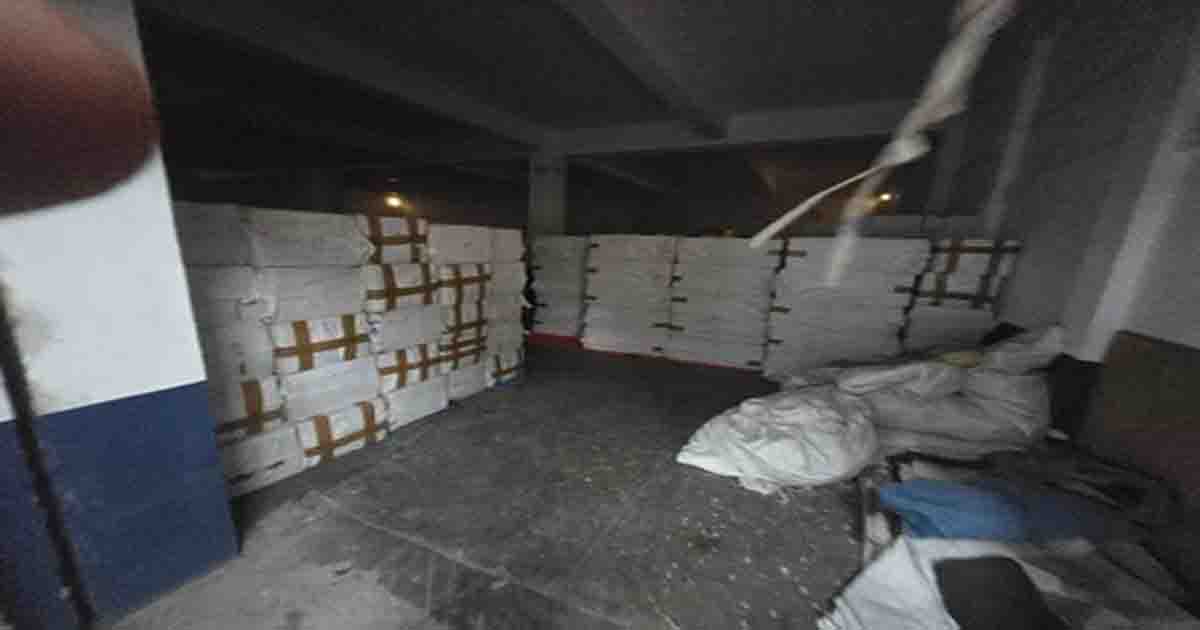
The Directorate General of GST Intelligence (DGGI) has uncovered a major tax fraud linked to the tobacco sector, exposing a syndicate that allegedly claimed more than Rs 88 crore in fraudulent GST refunds, an official statement said on Saturday.
According to the Finance Ministry, the operation was unearthed by the Patna Zonal Unit of the DGGI as part of its continuing crackdown on tax evasion in the cigarette industry.
Investigators found that the syndicate was operating through a network of shell entities that allegedly obtained invoices from dealers of branded cigarettes without receiving the actual goods, the ministry added.
These invoices were then used to fraudulently avail input tax credit in violation of GST provisions.
The probe further revealed that the group sourced substandard cigarettes of unknown origin and supplied them to the Falta Special Economic Zone (SEZ) in West Bengal under the Letter of Undertaking (LUT) route.
Based on these transactions, the entities allegedly claimed GST refunds against accumulated input tax credit.
The syndicate secured refunds exceeding Rs 88 crore over the past two years through the alleged modus operandi.
“Investigation has revealed that the syndicate obtained refunds exceeding Rs 88 crore during the last two years by adopting the aforesaid modus operandi,” according to the government.
Moreover, during searches and inspections, authorities identified around 8.76 crore sticks of suspected counterfeit and substandard cigarettes, packed under the names of well-known brands, at Falta SEZ.
The cigarettes — valued at more than Rs 150 crore based on their aggregate maximum retail price (MRP) — have been placed under prohibition.
The latest case is part of a broader crackdown on illegal activities in the tobacco sector, including clandestine manufacturing, diversion of branded cigarettes, ineligible ITC claims and misdeclaration of products supplied to SEZs.
In September and October alone, DGGI busted two illegal cigarette manufacturing units and seized around 25 lakh cigarette sticks along with cigarette-making and packaging machinery.
According to the government, six cases related to cigarette manufacture and supply have been booked during the current financial year.
Authorities have so far seized more than 10.07 crore sticks of cigarettes valued at over Rs 160 crore, while detecting fraudulent GST refund claims exceeding Rs 110 crore.

Packaged drinking water manufacturer Bisleri International on Saturday said it had already recalled a batch of water from its West Bengal plant following directions from the Food Safety and Standards Authority of India (FSSAI).
The company has asserted that independent laboratory tests had found the batch compliant with applicable safety standards.
However, the company’s statement came after reports that FSSAI had sanctioned prosecution against Bisleri in connection with a packaged drinking water sample collected from its Telipara facility in Jalpaiguri district, West Bengal.
Batch PB201 was withdrawn from the market after FSSAI prohibited its sale on August 12, 2026, according to Bisleri.
The company said regulatory testing had detected the presence of coliform bacteria in the sample collected by authorities.
It also said that subsequently commissioned testing of samples from the same batch at two separate FSSAI-recognised laboratories, both of which reportedly concluded that the water met the prescribed standards for coliform bacteria and complied with all other applicable food safety norms.
The company said the divergence between the regulatory findings and the results of independent testing warranted a detailed review.
“Bisleri calls upon FSSAI to examine the sampling process, testing methodology, laboratory findings and any factors that may have contributed to the variation in results,” the company said and added that it expected the matter to be assessed using standards applied uniformly across the industry.
Bisleri further said it would continue to cooperate fully with the food regulator and remained committed to establishing the facts.
The company’s response follows FSSAI’s move to permit legal proceedings after tests conducted by both the primary and referral laboratories allegedly confirmed the presence of coliform bacteria in samples collected from the West Bengal plant.
The latest case marks the second prosecution-related action involving Bisleri within a week, following a separate matter linked to the company’s Goa facility.
According to sources, the regulator’s investigations also examined other parameters, including bromate and certain contaminants.

The Indian equity markets ended the week in the red, snapping a four-week winning streak amid profit-booking, rising crude oil prices and renewed global uncertainty.
Nifty shed 0.75 per cent during the week and lost 1.07 per cent on the last trading day to reach 25,607. At close, Sensex was down 989 points, or 1.17 per cent, at 81,592. It dipped 0.69 per cent during the week.
Markets remained volatile through the week, with an early sell-off, a mid-week recovery and weakness on Friday erasing a large portion of the gains. The correction followed the recent rally that had pushed the benchmarks towards key resistance levels, particularly near 26,000 levels of Nifty.
Banking stocks, which drove the recent rally, saw significant profit-taking as Bank Nifty declined nearly 2.47 per cent week-on-week to close at 63,041, marking its first weekly decline in five weeks after touching a record high of 65,193 on Monday.
Sectoral performance remained mixed, with Nifty IT emerging as the strongest performer for the week, gaining approximately 4.6 per cent, while media declined around 4.6 per cent.
PSU Banks and metals also remained under pressure, falling approximately 4 per cent and 3 per cent, respectively. Realty, pharma and defence stocks showed relative resilience, highlighting selective buying interest amid broader market volatility.
Foreign institutional investors (FIIs) drove Indian markets’ rebound, with cumulative November inflows reaching about Rs 1,29,580 crore. However, domestic institutional investors (DIIs) recorded net outflows of about Rs 55,455 crore.
Broad market indices showed slight divergence from benchmark indices. Nifty Midcap100 dipped 0.30 per cent and Nifty Smallcap100 gained 0.20 per cent during the week.
Crude oil and currency movements emerged as fresh concerns towards the end of the week. WTI crude rose above $86 a barrel amid supply concerns and geopolitical uncertainty, before retreating to around $83 ahead of the OPEC+ policy meeting. The rupee also weakened to around 93 against the US dollar, reversing part of its recent gains.
Market participants are keen on RBI’s monetary policy decision on December 4, with expectations of a possible rate hike adding to macroeconomic uncertainty.
Any shift towards a tighter policy stance or signals that interest rates may remain higher for longer, could weigh on rate-sensitive sectors such as banking, auto and real estate, analysts said.
The immediate resistance for Nifty 50 is placed around 25,800–26,000, and 25,600 forms the immediate support zone. The immediate resistance for Bank Nifty is placed around 64,000–64,200 and 63,000 forms the immediate support zone, they added.

Javed Akhtar questions fairness of proposed delimitation exercise

Rahul Gandhi escalates electoral manipulation charges linking proposed Delimitation Bill

‘Pawar’s Jantar-Mantar’: Raj Thackeray calls NCP-SP chief’s support for delimitation bill

Shiv Sena backs the Delimitation Bill, passes resolution under Eknath Shinde’s leadership, MPs directed to reach Delhi by Sunday.

Goods seized from unauthorised lodges along Ghatkopar-Mankhurd Link Road and in Chembur and Mankhurd; water and electricity meters disconnected.

Congress trying to protect 3 crore Bangladeshi infiltrators in voter list: HM Shah

Red Fort car blast probe exposes blueprint for spread of terror modules across India

Trump flags Iran targets as talks continue

‘Conspiracy, not accident’: NCP on Ajit Pawar death

BJP, Shiv Sena slam Mallikarjun Kharge for terming Diwali ‘Khushiyon ka Eid’
-

 Crime4 years ago
Class 10 student jumps to death in Jaipur
-

 Maharashtra2 years ago
Mumbai Local Train Update: Central Railway’s New Timetable Comes Into Effect; Check Full List Of Revised Timings & Stations
-

 Maharashtra2 years ago
Mumbai To Go Toll-Free Tonight! Maharashtra Govt Announces Complete Toll Waiver For Light Motor Vehicles At All 5 Entry Points Of City
-

 Maharashtra2 years ago
False photo of Imtiaz Jaleel’s rally, exposing the fooling conspiracy
-

 National News2 years ago
Ministry of Railways rolls out Special Drive 4.0 with focus on digitisation, cleanliness, inclusiveness and grievance redressal
-

 Maharashtra2 years ago
Maharashtra Elections 2024: Mumbai Metro & BEST Services Extended Till Midnight On Voting Day
-

 National News2 years ago
J&K: 4 Jawans Killed, 28 Injured After Bus Carrying BSF Personnel For Poll Duty Falls Into Gorge In Budgam; Terrifying Visuals Surface
-

 Crime2 years ago
Baba Siddique Murder: Mumbai Police Unable To Get Lawrence Bishnoi Custody Due To Home Ministry Order, Says Report