
disaster
Nepal PM calls for global response to rising Himalayan climate risks

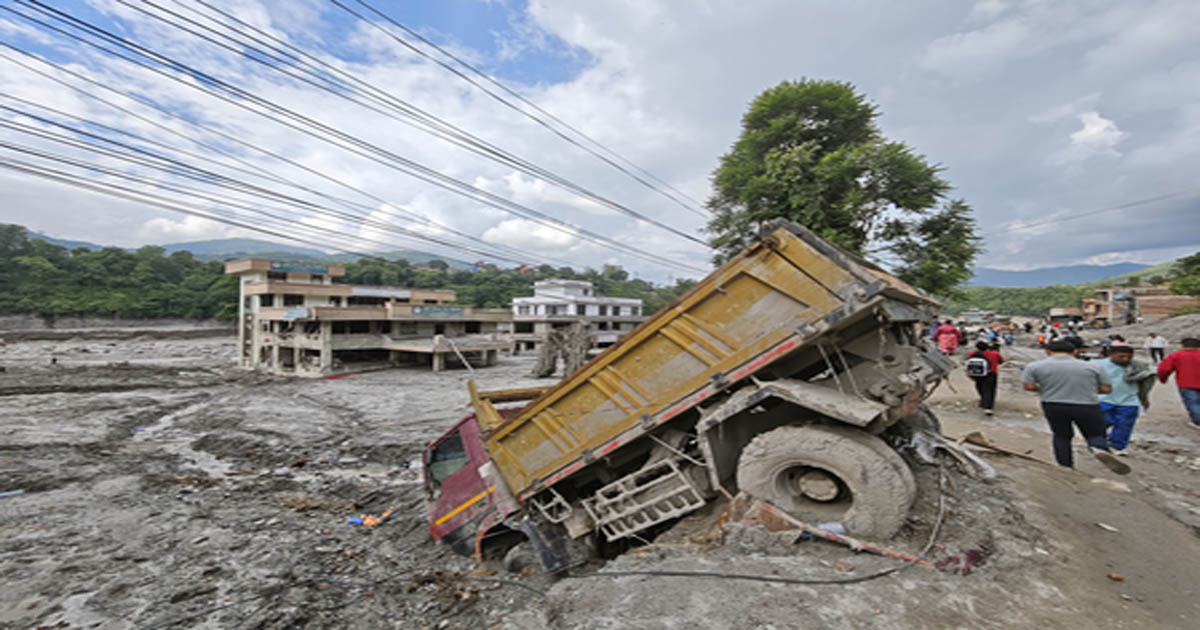
Kathmandu, Sep 2: Nepal Prime Minister Balendra Shah on Wednesday called for stronger international attention to growing climate-related risks in the Himalayan region as the death toll from devastating floods in the Bhotekoshi River crossed 1,100.
Addressing the House of Representatives, Shah said Nepal must highlight more forcefully the disasters it is facing due to climate change.
At least 1,114 bodies swept away by last week’s floods had been recovered by 9 am Wednesday, according to the National Disaster Risk Reduction and Management Authority (NDRRMA). Around 3,916 people remain out of contact.
Experts said an avalanche blocked the Lengde Khola, a tributary of the Bhotekoshi River near the Nepal-China border. The accumulated water later breached the natural barrier, triggering a massive flood that swept downstream towards the Trishuli River and devastated settlements and infrastructure.
Shah said the disaster had raised questions about how such an event occurred and what it meant for Nepal’s future.
“The huge disaster, whose impacts of climate change we have suddenly experienced, has kept us working around the clock to manage the damage. At the same time, another profound question has arisen in our minds: How did this disaster come upon us?” he said.
Referring to expert assessments, Shah said the incident was a serious warning that climate change was increasing risks in the Himalayan region.
“We must make the international community aware of the disasters we are experiencing as a result of climate change. Climate change is a global challenge. Its impacts and efforts to mitigate and manage them are the shared responsibility of the global community,” he said.
Shah also defended the government’s response to questions over whether timely warnings were issued to the public.
“As soon as we received information that the flood was approaching, our security personnel were deployed to alert residents. However, they themselves went missing during the operation,” he said.
Some media reports had suggested that the Nepali government was reluctant to accept international assistance for the rescue and relief of flood victims.
Seven days after the disaster, Shah told Parliament that the government had never adopted a policy of refusing international assistance during major disasters.
“We had been coordinating with international countries from the very beginning to seek assistance as needed in the affected areas. We had also tried to expedite the process of receiving international assistance,” Shah said.
“Our friendly neighbours, India and China, had already sent technical experts. They had been conducting reconnaissance from the very first day, including on the first and second days,” he said.
Shah told Parliament that the flood was accompanied by huge amounts of mud and debris, making it impossible for even foreign rescue teams that arrived at the outset to land at the affected sites.
“After conducting reconnaissance and monitoring to determine whether they could reach the sites, they concluded that it was not immediately possible to land there. The Indian and Chinese technicians, along with Nepali technicians and the Army, could reach the sites only after conditions became suitable for them to do so,” Shah said. “This was an exceptional situation.”
The Prime Minister also said excavators could not be deployed initially because of the heavy mud and debris.
“There was no stable ground not only for excavators but also for personnel from the Army and Armed Police Force. That is why they tried to reach the sites by crawling as much as possible,” Shah said.“Rescue operations began only after stable ground was available for excavators and suitable places were available for helicopters to land.”
Shah also thanked countries and international organisations for supporting Nepal’s flood response, naming India, China, the US, the UK, Australia, Japan, South Korea, the UAE, Qatar, Switzerland, Singapore, Pakistan, Sri Lanka and Bangladesh, as well as the Asian Development Bank, World Bank, European Union and United Nations.
Several other friendly countries and international organisations have also pledged further assistance, he said.


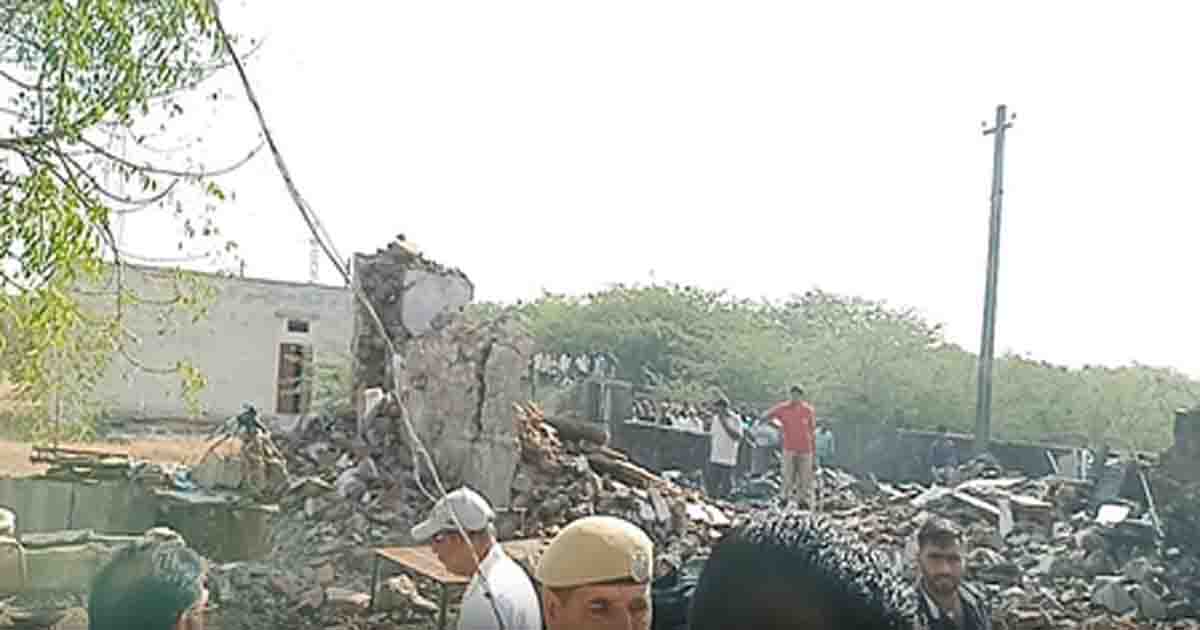
At least two people were burned to death and two others critically injured in an explosion at a gunpowder manufacturing unit in Rajasthan Nagaur district on Thursday morning.
The blast occurred at around 9:40 a.m. in the Badli area, triggering fears that more workers could still be trapped inside the premises. The explosion was so powerful that its sound was heard nearly half a kilometre away, triggering panic among local residents.
Police and fire brigade teams rushed to the spot and launched rescue operations. According to preliminary information, the warehouse belongs to a person identified as Amin.
The exact cause of the explosion has not yet been ascertained. More details and the official version are awaited.
Two young men died on the spot, while two others were found critically injured during the rescue operation. Their identities have not yet been established.
A stock of finished firecrackers was also found in one section of the warehouse where the explosion occurred. Local residents said gunpowder is manufactured at the facility by mixing potassium nitrate.
Soon after receiving information about the incident, fire brigade teams and Kotwali police rushed to the spot. Firefighters immediately launched efforts to bring the blaze under control, while police personnel took charge of relief and rescue operations.
According to preliminary information, a fire broke out among firecrackers and quickly intensified, eventually triggering a massive explosion. More casualties and extensive property damage are feared in the incident.
Meanwhile, official confirmation regarding the exact cause of the explosions, the identities of those feared dead, and the extent of the damage is still awaited.
Locals said that the owner has a valid permanent licence for firecracker-related activities. However, there is no official information yet about the authorised storage capacity under the licence or the exact quantity of firecrackers and potassium nitrate stored at the premises.
Rescue teams are trying to establish how many workers were present inside the warehouse when the explosion occurred. Authorities have not ruled out the possibility of more casualties as search and rescue operations continue.

Delhi Home and Urban Development Minister, Ashish Sood, has ordered a magisterial enquiry into a building collapse in New Seemapuri that claimed four lives earlier this month, an official said on Friday.
The enquiry will be led by the District Magistrate (North-East), said the official in a statement, adding that it will also check for lapses on the part of government agencies and officials and fix responsibility.
Sood said, “This is a deeply tragic incident that has cost precious lives. We have ordered a magisterial enquiry to investigate every single aspect of this collapse. No guilty person or lax official will be spared.”
“Our immediate priority is to support the affected families, and our long-term goal is to enforce strict structural safety rules so that such an accident never happens again in Delhi,” he said.
A five-storey residential building (House No. E-402, built on a small plot of 20-25 square yards) collapsed on October 7 around 3 p.m. in New Seemapuri, Delhi.
Three adjacent structures suffered major damage, were declared unsafe by the Municipal Corporation of Delhi (MCD), and were evacuated.
Initial local enquiries indicate that demolition work using heavy, vibration-causing machinery on an adjacent unauthorised construction site triggered the collapse.
Nearby residential structures in the area have also been found to be weak buildings constructed on tiny plots without proper structural columns or beams.
Sood said the magisterial enquiry into the collapse has the mandate to ascertain the exact facts, circumstances, and root causes of the building collapse.
It will also identify violations of laws, building rules, and safety stipulations by owners, tenants, or private individuals and also check for lapses or omissions on the part of government departments, civic agencies, and their officers to fix accountability.
Sood said the enquiry will also recommend strict legal action against all erring individuals, agencies, or officials and examine the implementation of the National Disaster Management Act, 2005, and suggest permanent preventive measures to avoid such tragedies in the future.
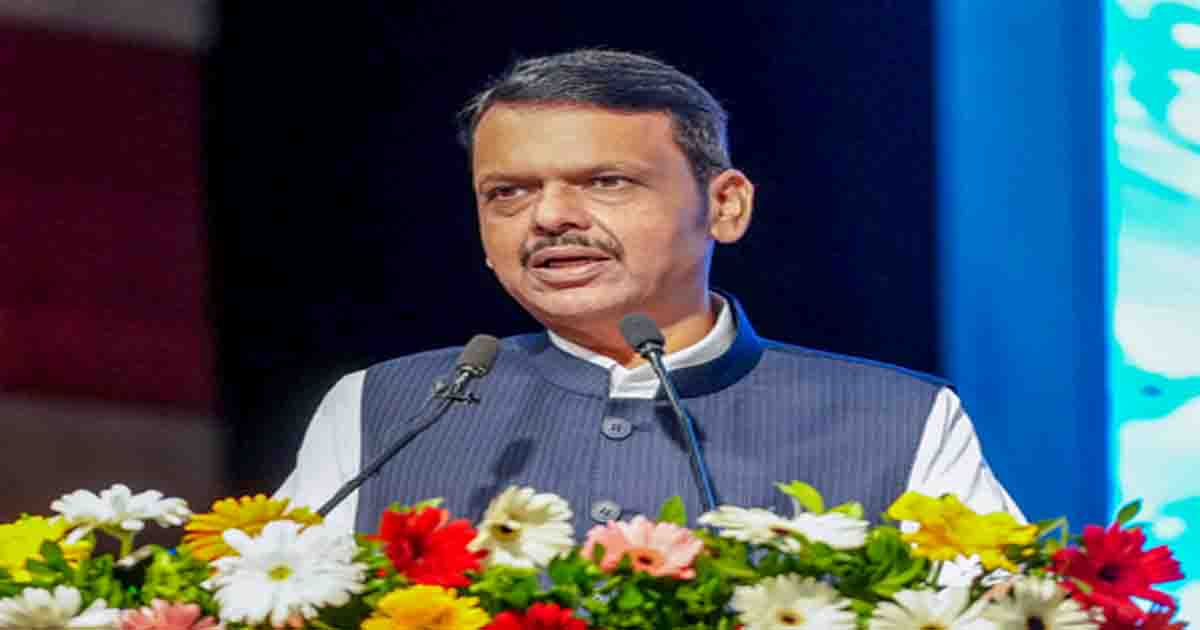
The Maharashtra Cabinet, chaired by Chief Minister Devendra Fadnavis, on Tuesday, decided to directly deposit Rs 5,000 into the bank accounts of each of the 1.5 crore farmers across 304 drought-affected talukas before Diwali. The advance will be distributed across the board to all farmers who have suffered crop losses exceeding 33 per cent.
In a move to mitigate severe agricultural distress across Maharashtra, CM Fadnavis, after the weekly cabinet meeting held on October 13, had announced that each affected farmer will receive Rs 5,000 directly into their bank accounts as advance aid prior to Diwali.
The government has finalised a list of 3.5 lakh farmers for the loan waiver scheme, with processing underway. In the Tuesday cabinet meeting, a formal approval was given to provide an advance of Rs 5,000 to drought-hit farmers before Diwali. This is part of the government’s proposed relief package, which will be announced after the assessment of the damage caused by the drought in 304 talukas.
According to the government sources, groundwater levels in Marathwada have plummeted by over three metres. Adequate water tankers will be deployed, equipped with GPS tracking to prevent mismanagement. Over 16,000 illegal water connections have already been disconnected. The government has already issued strict instructions to banks and microfinance institutions against forcefully collecting loan repayments or electricity bills. The government will directly purchase fodder and encourage fodder-crop cultivation among farmers to maintain livestock.
CM Fadnavis highlighted that historically, drought declarations and subsequent relief measures were pushed to November and December. However, recognising the severity of the current crisis, the state government accelerated administrative protocols to issue notifications in October itself. “We are well aware that this Diwali brings severe hardship for our farmers. Central government relief protocols involve procedures and timelines that cannot be finalised before Diwali. Understanding this urgency, the state cabinet decided to step in immediately, using state resources. The Rs 5,000 advance transfer will ensure our farmers have immediate liquidity in hand during the festive season,” he stated.
The Cabinet approved revisions to the Maharashtra Public-Private Partnership (PPP) Policy to streamline project screening, in-principle approvals, Request for Proposals (RFP), transaction structuring, tendering, and bidding stages.
Further, the state cabinet gave approval to extend the Matoshri Gramsamriddhi Sheti-Panand Road Scheme, which will continue through coordination with various programmes, including the Viksit Bharat – Gramin Road Initiative. The state-level scheme has been granted recognition as a district-level scheme, enabling funding through the District Planning Committee (DPC). A state-level committee has been authorised to resolve operational and field-level challenges for smooth execution.
The Cabinet approved allocating 1 per cent of the District Annual Plan (General) specifically for the welfare, rehabilitation, and empowerment of persons with disabilities across the state.
The Cabinet approved a revised administrative structure comprising 39,722 posts across five corporations and regional offices, along with office restructuring. The Cabinet gave clearance for the development of a national-level exhibition centre on the lines of New Delhi’s Bharat Mandapam at Lohegaon, Pune. The modification of the reservation status for the playground plot in the Pune Municipal Corporation’s approved Development Plan at Lohegaon will facilitate rapid construction.
Further, the Cabinet approved Rs 66.82 crore for Bajaj Auto Limited under the Maharashtra Electric Vehicle Promotion Policy to boost local EV manufacturing. The Cabinet cleared the resumption of direct flights connecting Navi Mumbai – Chipi (Sindhudurg) and Chipi (Sindhudurg) – Navi Mumbai. It also approved 100 per cent Viability Gap Funding (VGF) to airline operators to revitalise air connectivity for the region.
The Cabinet approved the transfer of 289 hectares and 69 ares of land at Raver village to the Regional Officer, Maharashtra Industrial Development Corporation (MIDC), Dhule, for industrial estate expansion.

Bangur Nagar: Drugs worth ₹21 crore seized, two accused arrested.

Iran’s IRGC says two ‘violating’ oil tankers disabled by blasts in Hormuz Strait

Aaditya Thackeray slams Centre over pollution crisis; demands PM-led ‘council of climate change’

Aadinath Kothare recalls school days with Ranbir Kapoor, reveals interesting Kapoor family connection

Elections for 23 ULBs in Andhra Pradesh to be held on November 26

Rahul, Cong ecosystem want to force regime change: BJP after Neha Bora praises B’desh Gen-Z protest

BJP pays tribute to ex-President Abdul Kalam, recalls his enduring influence on generations of India’s youth

Attack on democratic rights: INDIA Bloc leaders on detentions of anti-ECI protestors

Congress trying to protect 3 crore Bangladeshi infiltrators in voter list: HM Shah

Online betting: ED conducts searches at 20 premises in Mumbai, Pune, Hyderabad
-

 Crime4 years ago
Class 10 student jumps to death in Jaipur
-

 Maharashtra2 years ago
Mumbai Local Train Update: Central Railway’s New Timetable Comes Into Effect; Check Full List Of Revised Timings & Stations
-

 Maharashtra2 years ago
Mumbai To Go Toll-Free Tonight! Maharashtra Govt Announces Complete Toll Waiver For Light Motor Vehicles At All 5 Entry Points Of City
-

 Maharashtra2 years ago
False photo of Imtiaz Jaleel’s rally, exposing the fooling conspiracy
-

 National News2 years ago
Ministry of Railways rolls out Special Drive 4.0 with focus on digitisation, cleanliness, inclusiveness and grievance redressal
-

 Maharashtra2 years ago
Maharashtra Elections 2024: Mumbai Metro & BEST Services Extended Till Midnight On Voting Day
-

 National News2 years ago
J&K: 4 Jawans Killed, 28 Injured After Bus Carrying BSF Personnel For Poll Duty Falls Into Gorge In Budgam; Terrifying Visuals Surface
-

 Crime2 years ago
Baba Siddique Murder: Mumbai Police Unable To Get Lawrence Bishnoi Custody Due To Home Ministry Order, Says Report