
National News
Four killed, eight injured in two accidents on Delhi-Mumbai Expressway in MP


Ratlam, Sep 29: At least four people were killed and eight others injured in two separate road accidents on the Delhi-Mumbai Expressway in Madhya Pradesh’s Ratlam district on Tuesday, police said.
The accidents occurred within a span of about two hours on the eight-lane expressway under the jurisdiction of Jaora Industrial police station, with both cars plunging into a 30-40 feet deep gorge after hitting the central median.
The first accident took place around 4:30 a.m. when a car carrying a family from Punjab, travelling from Ambala in Haryana to Mumbai, hit the median railing.
The vehicle broke through a portion of the railing and fell into the gorge, police said. Narendra Kaur (67) and her daughter-in-law Manpreet Kaur (32), both from Punjab, died in the accident. Three other occupants, including an elderly man and two children, were injured.
“Prima facie, it appears that the driver may have become drowsy while driving at high speed and lost control of the vehicle, causing it to hit the railing,” Jaora Industrial police station in-charge Prakash Gadariya said.
Police reached the spot after receiving information from other motorists and shifted the injured to a hospital in Jaora.
They were later referred to Ratlam Medical College for further treatment. While police personnel were examining the site of the first accident, another car carrying a family from Dahod in Gujarat met with an accident around 6:30 a.m., police said.
The second vehicle, bearing registration number GJ20 CB 4610, reportedly went airborne after hitting the central median and fell into the gorge.
The railing at the spot had been damaged in the first accident. Ravi Hatila (35), who was driving the second car, and Ramesh Makwana (50), both from Dahod, were killed. Four to five other occupants of the vehicle were injured.
“The railing had been damaged in the first accident, and while our personnel were conducting an inspection at the spot, the second car hit the median and fell into the gorge,” Gadariya said.
The Gujarat family was returning to Dahod after travelling to Uttar Pradesh for medical treatment of a family member.
Police have launched an investigation into the circumstances surrounding both accidents, including the condition of the road infrastructure and the factors that led to the vehicles losing control.


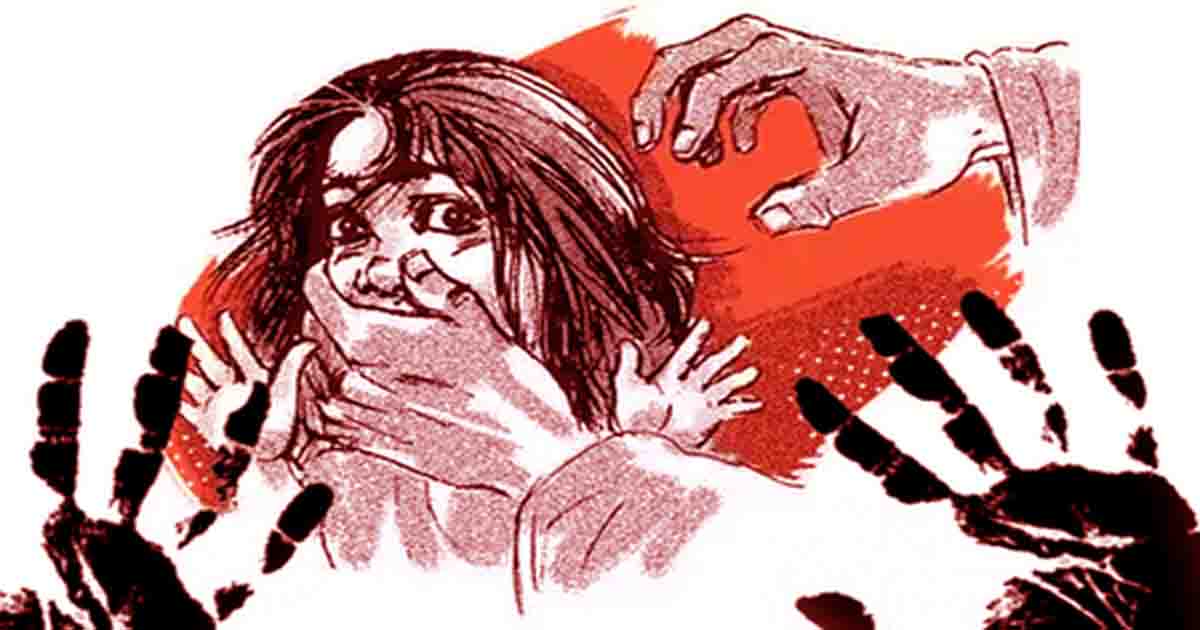
A man has been arrested in West Bengal North 24 Parganas district for allegedly sexually assaulting his minor daughter over the past year, police said on Monday.
The incident took place in the Habra police station area of North 24 Parganas district. The matter came to light after the elder daughter noticed a change in her younger sister’s behaviour after she fell sick.
The elder daughter told her maternal aunt and grandmother about the issue and later lodged a complaint with the police against the man. Based on the complaint, the police arrested the man, who has been identified as Dipan Halder.
According to local residents, the mother of both the girls died in an accident about eight years ago. Since then, only the father and two daughters have been in the family.
Allegedly, the father used to physically and mentally torture the minor daughter, taking advantage of the fact that no one else was home. The girl is now 17 years old. According to the police, she said that her father has been sexually assaulting her for the past year.
Not only that, but there is also an allegation that the father would threaten the daughter with worse consequences if she told anyone about this.
According to the police, he also physically assaulted his daughter. Despite enduring such torture day after day, she remained silent.
The matter surfaced a couple of days ago after the victim’s sister shared details of the alleged abuse with their aunt and grandmother. After speaking with the girl and hearing her account, the aunt lodged a written complaint with Habra police.
“Based on that complaint, the police arrested the accused. He will be produced before the Barasat court on a seven-day police custody application. A case has been registered under the Protection of Children from Sexual Offences (POCSO) Act, 2012. Investigation is on,” said a senior officer of Barasat Police District.
Business
Viksit Bharat and Samunnat Nepal: 10-pillar roadmap to reshape, deepen ties between India and Nepal

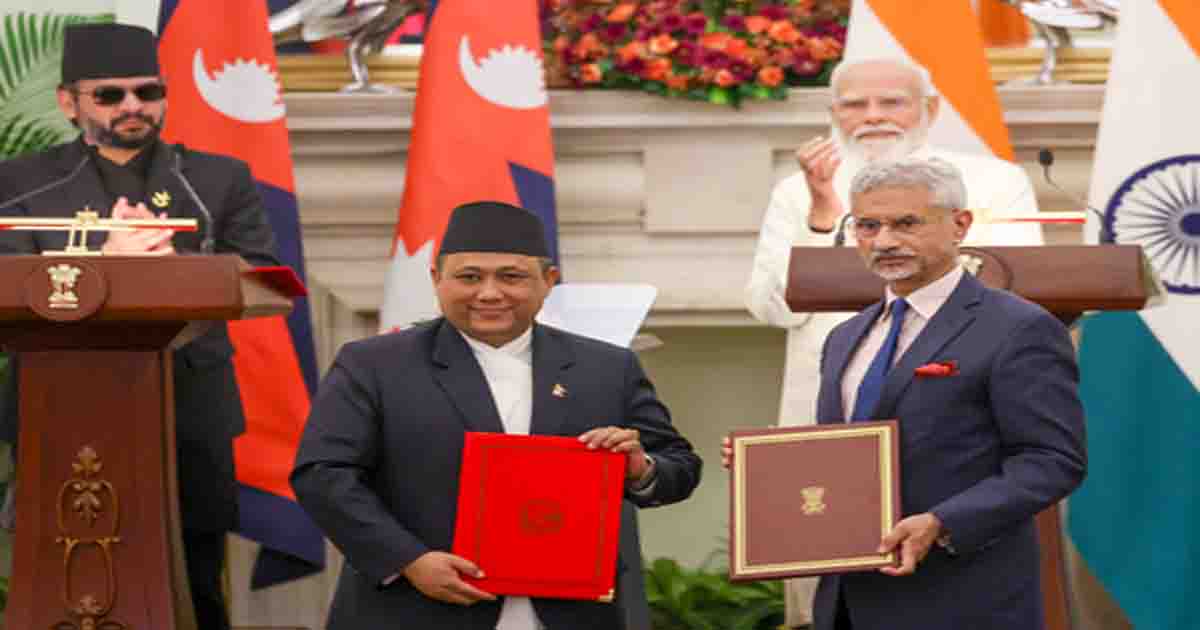
Nepal and India on Monday unveiled a 10-pillar joint vision aimed at reshaping their bilateral partnership and providing a roadmap for future cooperation.
The 10 pillars of the joint vision cover economic and development cooperation, physical and digital connectivity, energy and water resources, climate resilience, good governance, technology and innovation, education and skills development, sports, culture and tourism, health, and agriculture.
Titled ‘Viksit Bharat and Samunnat Nepal: Re-imagining the Partnership’, the joint vision was adopted during Nepali Prime Minister Balendra Shah’s two-day State Visit to India at the invitation of his Indian counterpart, Prime Minister Narendra Modi.
The first pillar of the joint vision document is ‘Comprehensive Economic and Development Partnership’. Under this pillar, the two countries agreed to review existing frameworks and agreements governing trade and investment to facilitate a more comprehensive economic partnership. They will also explore new transit connectivity arrangements and air routes to improve access between the two countries.
The document states that India’s national vision of ‘Viksit Bharat 2047’ and Nepal’s aspiration of ‘Samunnat Nepal’ have several complementarities that could be leveraged to further strengthen the extensive economic ties between the neighbouring countries.
Under this pillar, the two countries will cooperate in establishing cross-border special economic zones and industrial parks near the Nepal-India border. These zones are expected to promote export-oriented manufacturing and strengthen links with regional supply chains in manufacturing and other processing industries.
Under the second pillar, titled ‘Physical and Digital Connectivity’, the two sides will also cooperate in developing information technology parks, while India will encourage investment in Nepal’s priority sectors.
The joint vision document says that arrangements will be pursued to enhance investor confidence and improve the ease of doing business in Nepal.
Nepal and India have agreed to accelerate several cross-border connectivity projects, including railway links, integrated check posts, petroleum pipelines and digital payment systems, with a view to strengthening economic cooperation and people-to-people ties.
The third pillar is ‘Energy, Water Resources and Climate Resilience’. The two countries have agreed to strengthen cooperation in hydropower development, cross-border electricity trade, water resources management and climate resilience, with a focus on promoting investment, accelerating multipurpose projects and improving disaster preparedness.
Good Governance is the fourth pillar of the joint vision document. Under this pillar, the two countries have agreed to strengthen cooperation through the exchange of digital technology, technical expertise and best practices, while expanding training opportunities for civil servants and cooperation between government institutions.
Under the agreement, India and Nepal will exchange technical expertise and best practices in digital public infrastructure, covering digital identity, payment systems and e-governance. Such cooperation will be pursued in accordance with globally recognised principles of digital sovereignty and data protection and will support the implementation of Nepal’s Digital Nepal Framework.
The fifth pillar is ‘Technology, Space and Innovation’. Under this pillar, the two countries have agreed to deepen cooperation in technology, innovation and space research, including plans to establish a Startup Centre of Excellence in Kathmandu and a Digital Nomads and Innovation Hub in Pokhara, in western Nepal.
The sixth pillar is ‘Education and Skill Development’. Under this pillar, the two countries have agreed to strengthen cooperation in education and skill development, including exploring the establishment of a branch campus of an Indian Institute of Technology (IIT) in Nepal and expanding scholarship opportunities for Nepali students in emerging academic disciplines.
Sports is the seventh pillar of the joint vision. Nepal and India have agreed to strengthen cooperation in sports development, including establishing a national cricket coaching and training academy in Nepal with Indian support and expanding opportunities for Nepali players to train in India.
Under the agreement, India will support the establishment of a national cricket coaching and training academy in Nepal, alongside the development of cricket infrastructure at both national and provincial levels.
Players from Nepal’s provincial cricket teams will also be given opportunities to train at national cricket training academies in India.
Nepal and India have agreed to strengthen cultural and tourism cooperation by developing cross-border religious tourism circuits, organising annual youth cultural festivals and promoting collaboration between universities and tourism entrepreneurs.
These initiatives are outlined under the eighth pillar, titled ‘Culture and Tourism’. The two countries will work together to develop religious tourism circuits and new destinations by linking important cultural and pilgrimage sites in both countries.
The proposed initiatives include a Ramayana circuit connecting Janakpur in Nepal with Ayodhya in India; a Buddhist circuit linking Lumbini, Bodhgaya, Sarnath and Kushinagar; and a Shiv-Shakti circuit connecting Kathmandu’s Pashupatinath Temple with Varanasi. Sister-city agreements will also be pursued to strengthen these links.
Under the ninth pillar, ‘Health’, the two countries have agreed to strengthen cooperation in the health sector, including upgrading Nepal’s National Medical Laboratory, establishing Jan Aushadhi Kendras to provide affordable medicines and expanding healthcare infrastructure across the country.
The 10th pillar is ‘Agriculture’. Under this pillar, the two countries have agreed to strengthen cooperation in agriculture and livestock development, including establishing an agro-industrial park in Chitwan with grant assistance from India to promote value addition to Nepali agricultural products.
The proposed agro-industrial park will aim to increase the value of agricultural products by supporting processing and other value-addition activities. The document states that India will provide grant assistance for its establishment.
The two countries have also agreed to expedite the implementation of the 2026–2030 Work Plan between India’s Indian Council of Agricultural Research (ICAR) and Nepal’s Nepal Agricultural Research Council (NARC).
As part of efforts to strengthen Nepal’s agricultural and livestock sectors, India will organise specialised training programmes for Nepali government officials, farmers and other agriculture-related professionals.
The two countries have also agreed to activate a High-Level Monitoring Group to accelerate the implementation of bilateral projects and initiatives. The mechanism will meet at least once every six months.
The monitoring group will be led by Nepal’s Foreign Secretary and India’s Ambassador to Nepal. It will oversee the implementation of projects and initiatives envisaged under the joint vision document and facilitate the necessary clearances and approvals to expedite their execution.
The two Prime Ministers also agreed that the monitoring group will submit its reports to the India-Nepal Joint Commission, which is co-chaired by the foreign ministers of both countries.
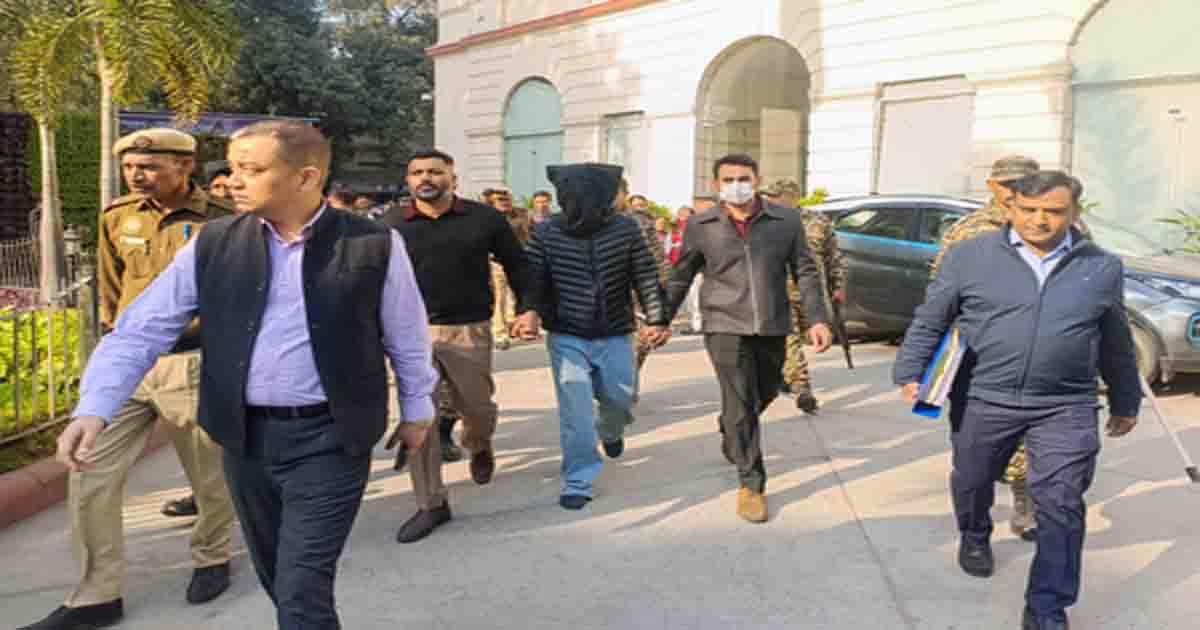
The Supreme Court on Monday dismissed a plea filed by Jasir Bilal Wani alias Danish, an accused in the Red Fort blast case, seeking default bail on the ground that the National Investigation Agency (NIA) had failed to file its chargesheet within the 90-day period of custody.
A Bench of Justices Prashant Kumar Mishra and Shree Chandrashekhar refused to interfere with the Delhi High Court’s decision rejecting Wani’s claim for default bail, observing that the High Court had rightly applied the law governing the extension of the investigation period under the Unlawful Activities (Prevention) Act (UAPA), read with Section 187 of the Bharatiya Nagarik Suraksha Sanhita (BNSS).
Wani had contended that he was entitled to default bail after 90 days of custody, as the NIA had not filed the chargesheet within the statutory period. He argued that following the enactment of the BNSS, the extended investigation period of up to 180 days under Section 43D(2) of the UAPA could no longer be invoked in his case.
Earlier, the Delhi High Court, in its judgment passed on August 18, held that the provision allowing the investigation period to be extended up to 180 days under the UAPA continued to apply even after the enactment of the BNSS.
The High Court had ruled that the reference to Section 167 of the erstwhile Code of Criminal Procedure (CrPC) in Section 43D(2) of the UAPA must be construed as a reference to the corresponding provision under Section 187 of the BNSS in terms of Section 8(1) of the General Clauses Act, 1897. “Thus, the Appellant is not entitled to default bail after 90 days merely because there is no reference to Section 187 of the BNSS in Section 43D(2) of the UAPA,” the High Court had observed.
The High Court further held that Wani had lost his right to challenge the extension of the investigation period by failing to assail the initial extension order at the appropriate stage. It found that the trial court had granted the first extension on February 13, 2026, but Wani challenged it only subsequently, after the second extension and rejection of his default bail application.
The NIA had initially sought an extension of the investigation period beyond 90 days, citing the need for further investigation. The trial court granted an additional 45 days on February 13, 2026, taking the period to 135 days, and subsequently allowed another extension of 45 days on March 27, 2026, extending the permissible period to 180 days.
Wani had moved an application seeking default bail on February 15, 2026, under Section 187(3) of the BNSS. However, the trial court rejected his plea on March 30, 2026, following which he approached the Delhi High Court challenging the extension orders and denial of default bail.
During the pendency of the matter before the High Court, the NIA filed its chargesheet against Wani on May 14, 2026. A Bench of Justices Prathiba M. Singh and Vikas Mahajan subsequently held that he could not claim default bail on the basis of the expiry of the initial 90-day period.
Wani was arrested on November 17, 2025, in connection with the November 10, 2025, vehicle-borne improvised explosive device (VBIED) blast near the Red Fort in Delhi, which claimed 11 lives and left several others injured.
The NIA has named Wani among the 10 accused in its 7,500-page chargesheet in the case. The anti-terror agency has alleged that the accused were associated with Ansar Ghazwat-ul-Hind (AGuH), an outfit considered an offshoot of Al-Qaida in the Indian Subcontinent. The alleged mastermind, Dr Umer Un Nabi, was killed in the explosion.

MoSPI briefs data users on new series of GDP, CPI and IIP

Security in Hormuz can be restored if US fulfils commitment: Iran

Tracking drug addicts in Mumbai now easier: Advanced van deployed at Mahalaxmi concert; action taken against 12 drug users.

Public hearing on proposed UCC in Thane; Muslim delegations strongly protest.

Mumbai self-styled police arrested for duping foreign nationals

Congress trying to protect 3 crore Bangladeshi infiltrators in voter list: HM Shah

Red Fort car blast probe exposes blueprint for spread of terror modules across India

Trump flags Iran targets as talks continue

‘Conspiracy, not accident’: NCP on Ajit Pawar death

BJP, Shiv Sena slam Mallikarjun Kharge for terming Diwali ‘Khushiyon ka Eid’
-

 Crime4 years ago
Class 10 student jumps to death in Jaipur
-

 Maharashtra2 years ago
Mumbai Local Train Update: Central Railway’s New Timetable Comes Into Effect; Check Full List Of Revised Timings & Stations
-

 Maharashtra2 years ago
Mumbai To Go Toll-Free Tonight! Maharashtra Govt Announces Complete Toll Waiver For Light Motor Vehicles At All 5 Entry Points Of City
-

 Maharashtra2 years ago
False photo of Imtiaz Jaleel’s rally, exposing the fooling conspiracy
-

 National News2 years ago
Ministry of Railways rolls out Special Drive 4.0 with focus on digitisation, cleanliness, inclusiveness and grievance redressal
-

 Maharashtra2 years ago
Maharashtra Elections 2024: Mumbai Metro & BEST Services Extended Till Midnight On Voting Day
-

 National News2 years ago
J&K: 4 Jawans Killed, 28 Injured After Bus Carrying BSF Personnel For Poll Duty Falls Into Gorge In Budgam; Terrifying Visuals Surface
-

 Crime2 years ago
Baba Siddique Murder: Mumbai Police Unable To Get Lawrence Bishnoi Custody Due To Home Ministry Order, Says Report